
As more companies offer online services around the clock and publish web sites, applications and APIs on the internet, the possibility that a service will not be available when needed increases. Such a failure is the exclusive objective of a Distributed Denial of Service (DDoS) attack. The attack floods the target with a huge amount of traffic, which - depending on its volume - can either prevent access to the required services with unacceptable delay or even prevent access to them at all.
Missing sales, lower productivity and loss of customer trust are immediate problems for you. In highly competitive markets even a few instances of downtime can lead to a long term loss of customers and resulting damage to your business's reputation.
While attacks are getting bigger and more complex to deal with, traditional security measures are no longer sufficient to protect online services against new threats. Effective protection must be able to detect abnormal traffic, block malicious requests and ensure that legitimate users are able to use online services smoothly.
When a DDoS attack occurs, the first thing to do is to protect your network and choose the right defense strategy to fight the type of DDoS attack that is launched. This article covers all the available features of the DDoS mitigation solutions on the market and the different solutions that are offered. It also reviews some of the workable long-term protection solutions for your network.
Blog contents
What Are DDoS Protection Solutions?
Advanced features of your network security solution can also be used to protect yourself from Distributed Denial of Service (DDoS) attacks. Such functions detect, manage and defend by constantly monitoring traffic, by identifying patterns of abusive behavior and by filtering out or redirecting harmful requests so that they do not consume resources on your system.
Anycast filtering has two uses: forwarding valid traffic and dropping packets during a DDoS attack. Anycast filtering can occur at any point in the network stack and is configured for attack prevention and attack defense.
Why DDoS Protection Solutions Are Critical for Modern Businesses
Server-based standard security functions are not sufficient to protect against DDoS attacks. With the digitalization of businesses more and more areas of a company are migrating to the cloud, via APIs or via web applications. Cyber-criminals have a huge target surface.
"Under a deluge of traffic", once a hallmark of a DDoS attack, today these words are more likely to convey the intention of a DDoS attack, a strategic and targeted cyber-attack that can be used as a means to an end, and typically launched in conjunction with other types of cyber-attacks and related tactics. As with other types of cyber-attacks, if an organization is not protected against a DDoS attack, it can suffer serious damage.
- Prolonged downtime and revenue loss
- Damage to brand reputation
- Loss of customer trust
- Legal and compliance issues
Protecting your customers' and clients' networks and online transactions from the malicious threat of DDoS attack is critical. Our DDoS protection and mitigation solutions enable organizations to remain online. DDoS mitigation is no longer a luxury, it is a business necessity.
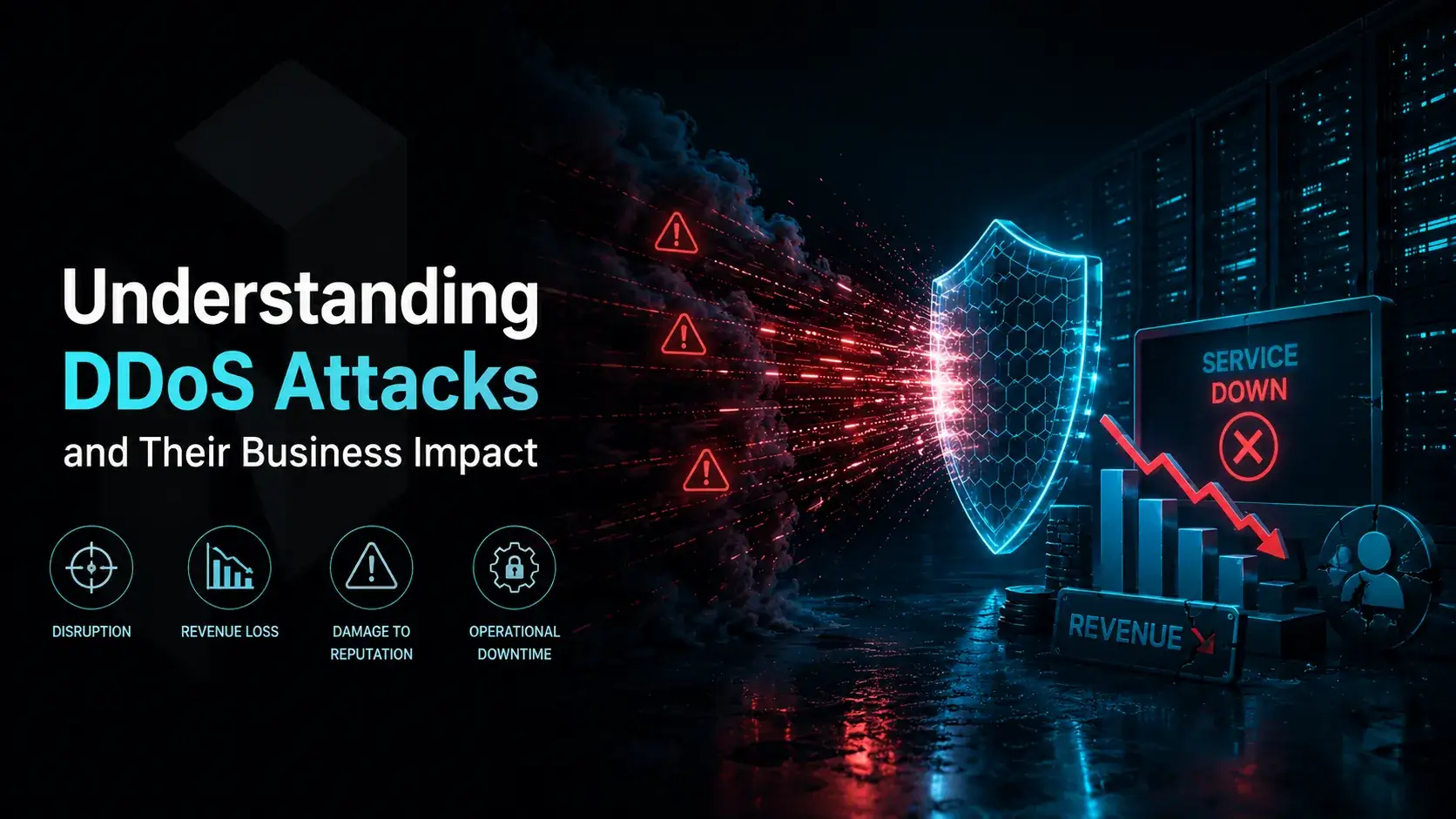
Understanding DDoS Attacks and Their Business Impact
To compare the value of a DDoS protection service first it is necessary to get a basic understanding of DDoS attacks and their possible impact on your network.
Common Types of DDoS Attacks
To effectively defend against Distributed Denial of Service (DDoS) attacks, it is first important to have an adequate understanding of how these attacks can occur. Simply overloading a company’s bandwidth is not the sum total of DDoS threats, as attackers can also target bandwidth of server resources or even specific applications. With an understanding of these approaches organizations can select an adequate level of DDoS protection, and be better equipped to respond to, and combat DDoS attacks.
Volumetric Attacks
A volumetric Distributed Denial of Service (DDoS) attack attempts to consume bandwidth of a network by flooding a target with traffic. Utilizing large volumes of computers in a botnet, the attack can overwhelm an organization’s internet bandwidth, rendering critical services to legitimate users inoperable.
Protocol Attacks
The following protocol attacks let a persistent hacker exploit the weaknesses of the TCP/IP protocol suite to consume the resources of a firewall or server. These persistent attacks are not to be confused with a packet flood, where so many packets are sent to a target that it can no longer process them. Instead, these attacks exhaust a network's ability to process packets. As a result, a server or firewall may still be running but be severely impaired and provide substantially reduced service.
Application Layer Attacks
These are threats that are disguised as legitimate user requests such as HTTP requests towards a web application / server. The threats are hard to detect because they appear to be genuine and can be intended to gradually use up all of a server's resources. This would cause the application to eventually run slower and drop connections without explanation, even as the volume of traffic to the server seems to remain within normal bounds.
Amplification Attacks
Amplification attacks in cyber attacks scale up attack traffic volume by pointing the attack traffic from the Attacker’s IP address to a Third Party IP address. By leveraging protocols and services such as DNS or NTP, small query packets are sent to the target and a much larger packet is elicited as a response, amplifying the attack traffic volume. These large, spoofed packets are often challenging to detect, analyze, and block.
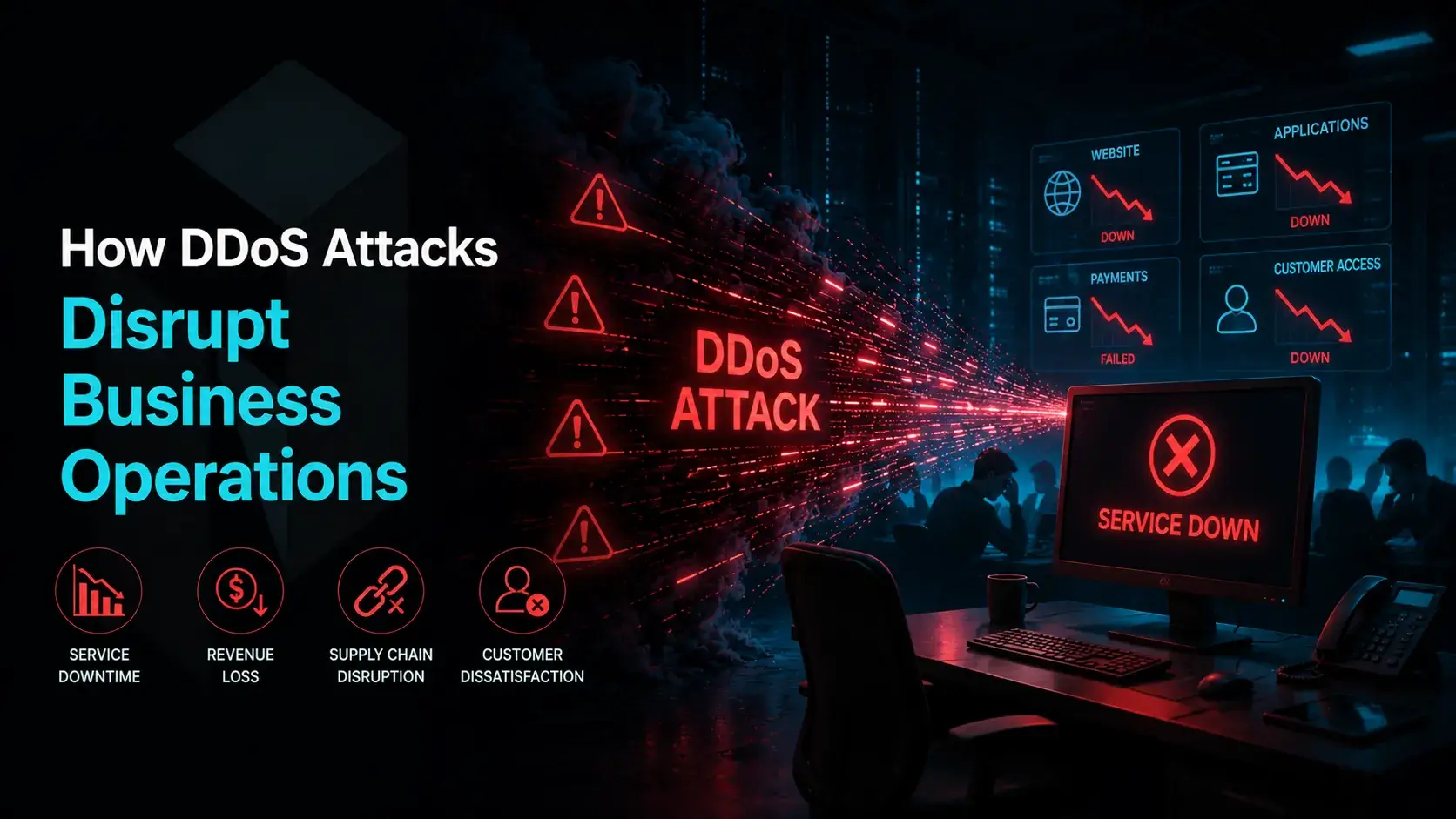
How DDoS Attacks Disrupt Business Operations
DDoS attacks disrupt a company’s operations by flooding their network, system or application with a large amount of traffic making it unavailable to their customers and clients. This can result in lost revenue and decreased customer loyalty due to erosion of trust. More importantly, businesses face significant financial penalties due to failure to meet service level agreements (SLAs). The effects of even a brief service disruption can be long lasting, leading to increased operational costs to recover from an attack and increased risk to businesses over the long term due to increased vulnerability to cyber attacks and resulting lost revenue and damage to reputation.
Downtime Costs
A DDoS attack can cause serious problems on networks that are being used by organizations such as e commerce sites, SaaS providers, financial services and others. These organizations operate 24/7 in very high stakes environments and can lose revenue and experience increased costs as a result of even a minute or two of downtime. In addition to the initial crisis that the DDoS attack creates, there are subsequent costs to bring systems back on line and to re-build the part of the network that was affected by the DDoS attack. There are also additional costs to provide protection to that part of the infrastructure in the future by scaling out.
Customer Trust
Attacks enable hackers to disrupt valuable services that customers pay for resulting in damage to customers and brand reputation. Users expect services to be available 24/7. In highly competitive markets those providers who periodically suffer outages are likely to loose customers to competitors offering always available service. In a competitive environment, trust is everything and a high profile incident can cause long term damage to a brand’s reputation.
SLA Violations
For Service Providers who have entered into a Service Level Agreement (SLA) with their customers, not meeting the specified levels of uptime or performance during a DDoS attack has serious consequences including incurring financial penalties while failing to meet the terms of your contract, damage to business through formal contractual disputes or worst case scenario - loss of customers and severe damage to business through irreparable harm to business relationships with customers. Protecting your customers from DDoS attacks and ensuring that you are meeting the service level agreements you have promised is critical to your business and its integrity and reputation.
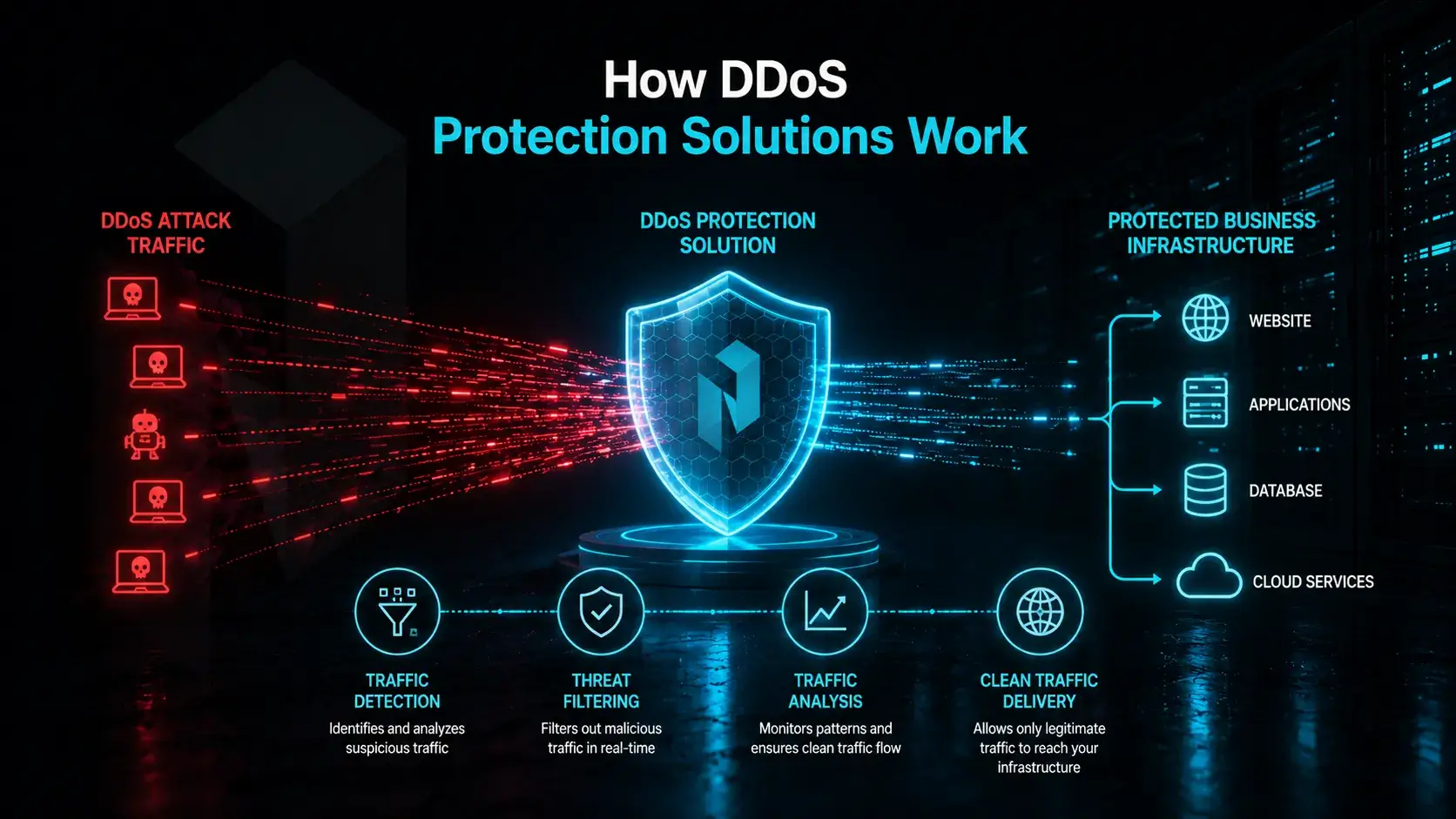
How DDoS Protection Solutions Work
Today's security solutions are able to detect and contain attacks in real-time using the latest technologies and methods.
Traffic Monitoring and Anomaly Detection
The core of DDoS protection is visibility. Without appropriate monitoring tools the administrator has no idea what kind of traffic is going through his servers. Thus he can't recognize peaks in traffic and other anomalies.
A network traffic identification system can be based on heuristics or models (e.g. statistical models) in order to identify legitimate or malicious network traffic. The main design goal of a network traffic identification system is detection speed.
Traffic Filtering and Attack Mitigation Techniques
Mitigation actions can be implemented as soon as an attack is detected, in order to stop the attack. These methods of mitigation are:
- Rate limiting
- IP blacklisting
- CAPTCHA challenges
- Deep packet inspection
Block malicious traffic and good users will not experience any problems.
Load Balancing and Traffic Distribution
Load balancing is a critical function to keep services up and running. It distributes user requests, or load, across multiple servers to improve responsiveness and to make sure no single server is overwhelmed by too many requests. data centers, businesses can handle more customers and avoid overload.
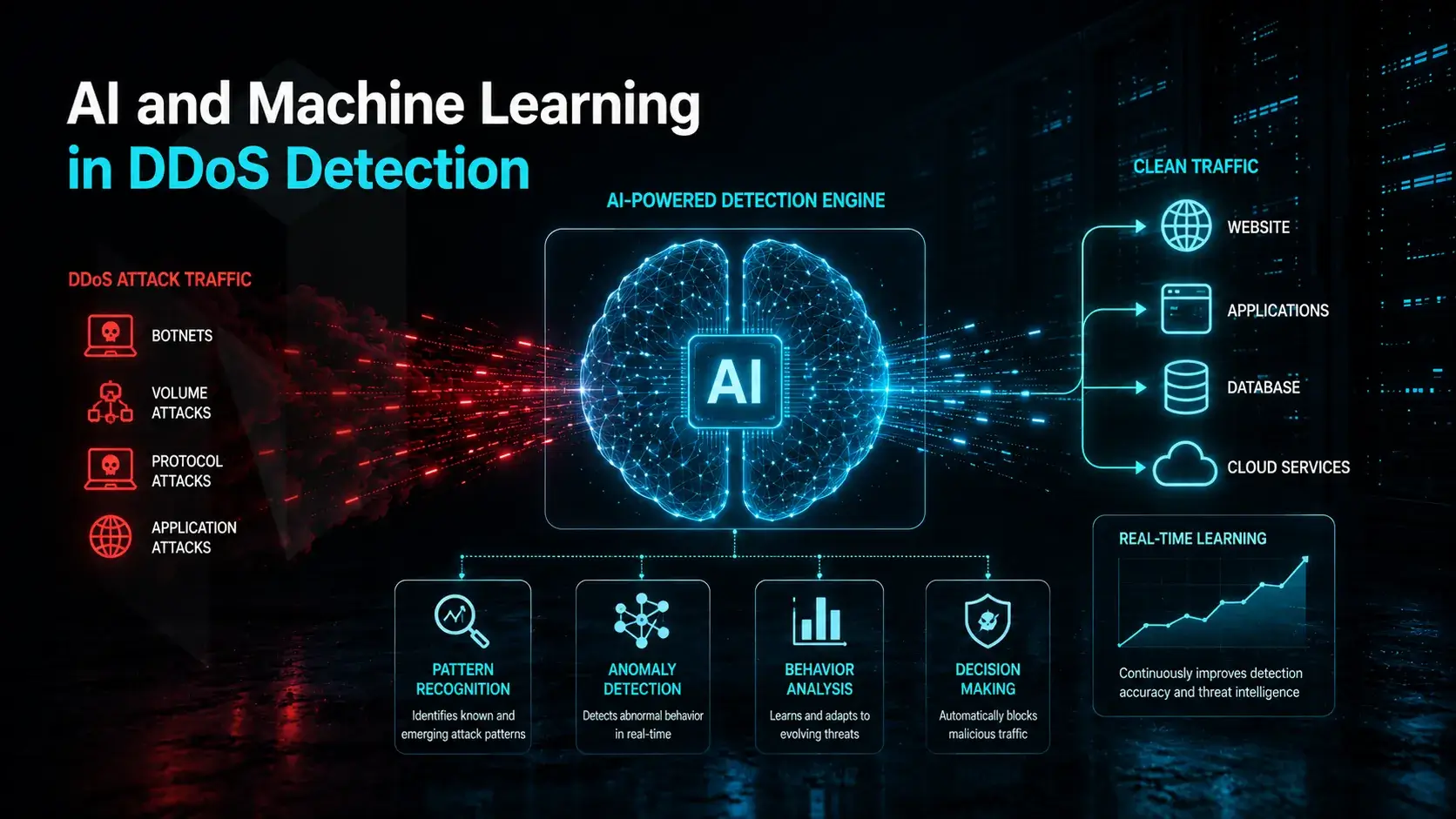
AI and Machine Learning in DDoS Detection
Modern security solutions increasingly rely on the latest technologies, including artificial intelligence and machine learning. These technologies enable:
- Faster detection of new attack patterns
- Reduced false positives
- Adaptive defense mechanisms
AI driven systems learn from the traffic data and keep getting more accurate the more they run.
Key Features of Effective DDoS Protection Solutions
A system to combat DDoS attacks is efficient if it is able to detect and mitigate them as well as adapt to changing attack patterns in real time, without any disruptions to other traffic. Such DDoS protection systems comprise traffic monitoring, intelligent traffic filtering and scalable IT infrastructure. The most efficient protection solutions are multi-layered and draw on global threat information. Ideally, they are fully automated and are able to respond to any attack in real time. This is particularly critical for companies operating in highly volatile digital environments and which require business continuity.
Real time Traffic Analysis and Threat Detection
Real time traffic analysis is critical for spotting the unusual patterns that point to a DDoS attack. By monitoring incoming data continuously, these systems build a baseline of normal behavior and quickly flag deviations such as sudden traffic spikes or odd request patterns. Catching an attack straight away allows for faster mitigation, which lowers the risk of downtime and means malicious activity is dealt with before it impacts business operations.
Multi Layer Protection Across Network Levels
DDoS attacks can be launched on different layers of the network stack. In order to provide adequate protection a protection solution has to work on several levels, for example on network level, on transport level and on application level. A multi layer protection solution is able to detect and to mitigate volumetric traffic floods as well as subtle attacks on application level. A multi layer protection solution offers complete protection and does not allow attacks to exploit vulnerabilities of a single point in the infrastructure.
Intelligent Traffic Routing and Attack Handling
Intelligent traffic routing manages incoming traffic in the most efficient way during a high volume attack. The system reroutes traffic intelligently based on real time conditions, so performance is maintained and overload is prevented. This way legitimate users can keep using the service, while malicious traffic is isolated and managed in the background.
Advanced Traffic Routing Systems
Advanced traffic routing systems use algorithms and real time analytics to distribute traffic across multiple servers or data centers data centers. This avoids bottlenecks and makes full use of available resources during peak loads or attack scenarios, keeping services available and resilient even under significant stress.
Automated Traffic Diversion Techniques
Automated traffic diversion: Automatically divert suspicious or malicious traffic to a filtering service, known as a scrubbing center. The scrubbing center performs cleaning of the traffic in real time and after cleaning, it is allowed to enter the intended network without human intervention. The scrubbing center is able to handle large volumes of traffic under attack.
Global Threat Intelligence and Adaptive Defense
Global threat intelligence helps to enhance DDoS protection. Global threat intelligence contains information on the latest types of attacks as well as known attackers from all over the world. It enables us to proactively block threats on the Internet before they even reach your network. Our adaptive defense system is continuously improved by learning from new data, in the long run providing the best possible protection against cyber threats that are constantly changing.
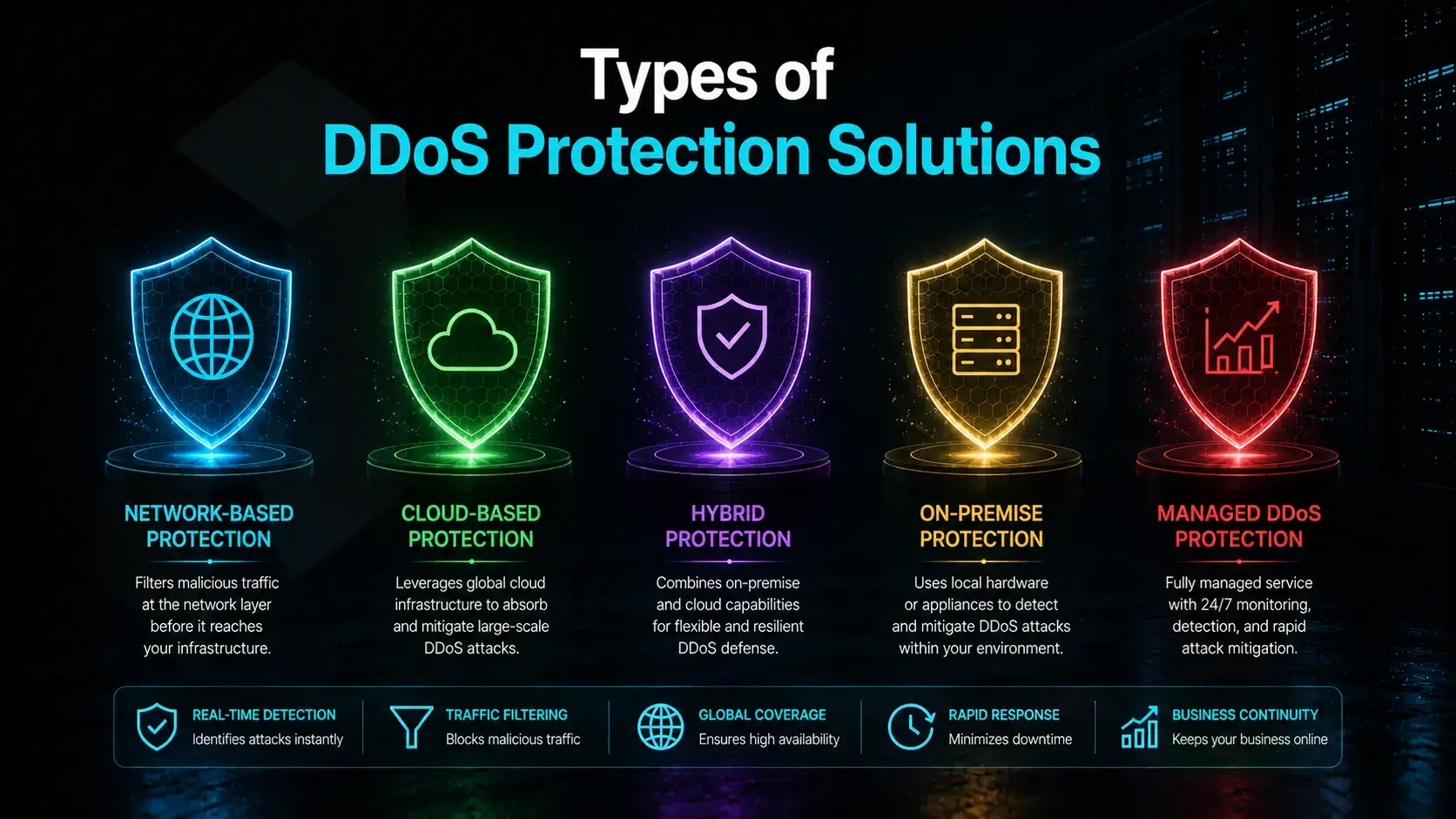
Types of DDoS Protection Solutions
DDoS protection come in several deployment models, each designed to address different business needs, risk levels, and infrastructure environments. Choosing the right type depends on factors such as traffic volume, application architecture, and required level of control. The three primary types Cloud based, On Premises, and hybrid offer varying levels of scalability, flexibility, and responsiveness to attacks.
Cloud based DDoS Protection Solutions
Cloud based protection routes traffic through a distributed network of high capacity servers that absorb and filter malicious traffic before it reaches your infrastructure. These solutions are highly scalable, making them ideal for handling large scale volumetric attacks, and they offer rapid deployment without requiring significant hardware investment. Businesses benefit from global coverage, real time threat intelligence, and minimal maintenance overhead.
On Premises DDoS Protection Appliances
On Premises DDoS protection appliances are deployed within an organization’s own data center, providing direct control over traffic inspection and mitigation. These solutions are effective for detecting and blocking attacks at the network edge with low latency, making them suitable for organizations with strict security or compliance requirements. However, their capacity is limited by hardware constraints, which can make them less effective against massive attacks.
Hybrid DDoS Protection Solutions
Hybrid approaches combine on premises appliances with cloud based mitigation services to deliver comprehensive protection. In this model, smaller attacks are handled locally for speed and efficiency, while larger attacks are redirected to the cloud for large scale filtering. This approach provides both control and scalability, making it a preferred option for enterprises with complex and high risk environments.
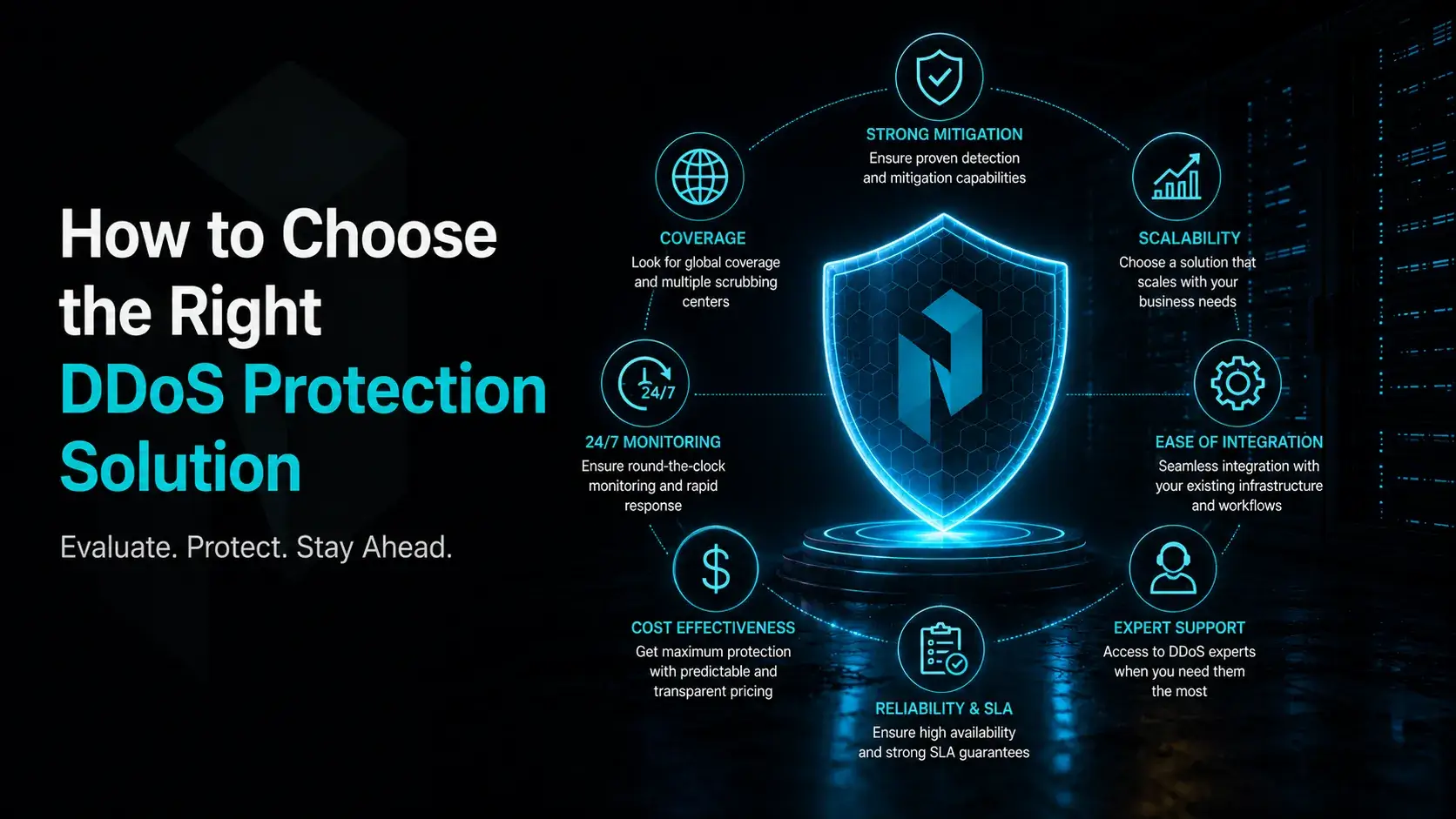
How to Choose the Right DDoS Protection Solution
Selecting the right DDoS protection solution requires a strategic evaluation of your organization’s infrastructure, threat exposure, and business priorities. There is no one size fits all approach, so decision makers must balance performance, cost, scalability, and operational complexity to ensure effective and sustainable protection.
Assessing Your Risk and Traffic Profile
Understanding your typical traffic patterns and potential risk exposure is the first step in choosing a solution. Businesses should analyze peak traffic volumes, geographic distribution of users, and critical applications to determine their vulnerability to different types of DDoS attacks. This assessment helps identify the level of protection required and ensures the solution aligns with real world usage.
Comparing Cloud vs On Premises Solutions
The choice between Cloud based and On Premises solutions depends on operational priorities such as control, scalability, and latency. Cloud solutions offer rapid scalability and ease of deployment, while On Premises systems provide greater control and customization. Organizations must weigh these trade offs based on their infrastructure, compliance needs, and tolerance for risk.
Scalability and Performance Considerations
An effective DDoS protection solution must handle sudden spikes in traffic without degrading performance. Scalability is especially important for businesses with unpredictable or high volume traffic, such as e commerce or SaaS platforms. The solution should maintain low latency and high availability even during active attacks.
Budget and Cost Efficiency
Cost considerations should include not only initial setup but also ongoing operational expenses and potential cost savings from avoided downtime. Businesses should evaluate pricing models, including subscription based cloud services versus capital investment in hardware, to determine the most cost effective approach. A well chosen solution balances affordability with robust protection and long term value.
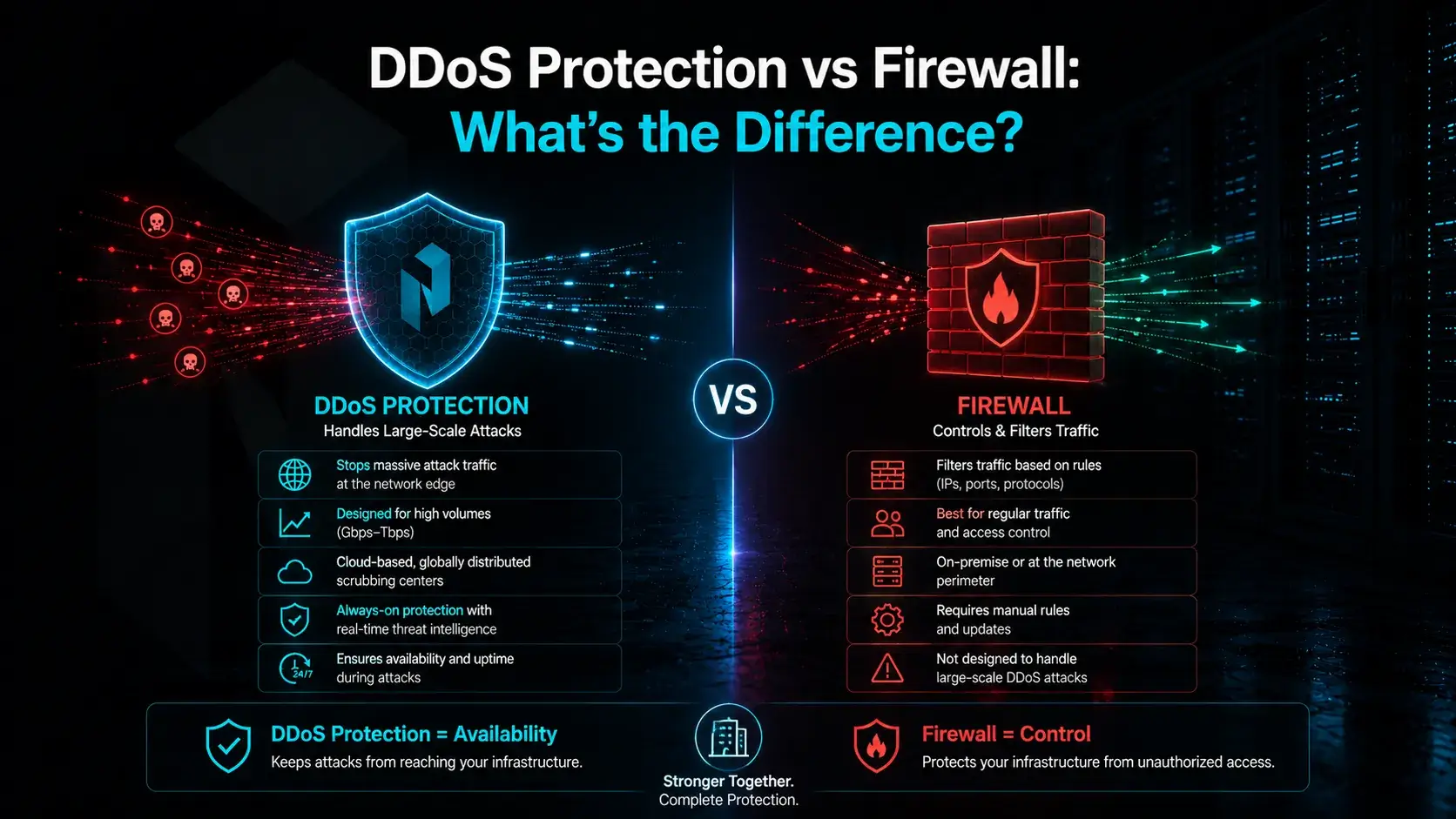
DDoS Protection vs Firewall: What’s the Difference?
While both firewalls and DDoS protection solutions are essential for network security, they serve different purposes. A firewall is designed to control access by filtering traffic based on predefined rules, blocking unauthorized or suspicious connections. Dedicated mitigation systems are built to handle large scale traffic floods, using advanced techniques like traffic analysis, rate limiting, and scrubbing to keep services online during an attack. Firewalls act as gatekeepers, while these systems ensure your infrastructure can withstand high volume malicious traffic without disruption.
| Feature | DDoS Protection Solutions | Firewall |
| Purpose | Mitigate large scale traffic attacks | Control access and block unauthorized traffic |
| Scope | Handles high volume attacks | Focuses on rule based filtering |
| Traffic Handling | Designed for massive traffic spikes | Limited capacity under heavy load |
| Detection | Behavioral and anomaly based | Rule based |
| Scalability | Highly scalable | Limited scalability |
Best Practices for Strengthening Your DDoS Defense Strategy
A strong DDoS defense strategy requires a proactive, layered approach that combines visibility, resilience, and rapid threat detection capabilities. Organizations should focus on understanding their network traffic, protecting high value assets, and ensuring their systems can withstand sudden spikes in demand. By aligning security measures with business priorities, companies can ensure business continuity and minimize disruption to critical business operations even during sophisticated DDoS attacks.
Identify Normal vs. Malicious Traffic Patterns
Establishing a clear baseline of normal network traffic is essential for detecting anomalies that may signal DDoS traffic. By analyzing historical data, businesses can identify typical patterns and quickly detect unusual spikes, irregular HTTP requests, or abnormal behavior. This enables faster threat detection and more accurate filtering of malicious activity without impacting legitimate users.
Protect Critical Infrastructure and Applications
Not all systems carry equal importance, so prioritizing protection for critical infrastructure such as customer facing platforms, APIs, and online services is essential. Implementing advanced security solutions, including web application firewalls and bot management, helps safeguard these assets from layer attacks and targeted disruptions.
Increase Network Resilience and Bandwidth
Improving capacity and redundancy across your network infrastructure helps absorb large volumes of DDoS traffic, including volumetric floods. Leveraging CDNs, load balancers, and a distributed global network ensures resilience and reduces the risk of outages. This approach strengthens overall network stability and supports continuous uptime.
Implement Proactive Monitoring and Alerts
Continuous monitoring combined with real time alerts enables faster response to threats. Advanced event management systems and intelligent automation can detect anomalies early and trigger mitigation workflows. This proactive approach allows organizations to prevent attacks from escalating and reduces the risk of downtime or lost business.
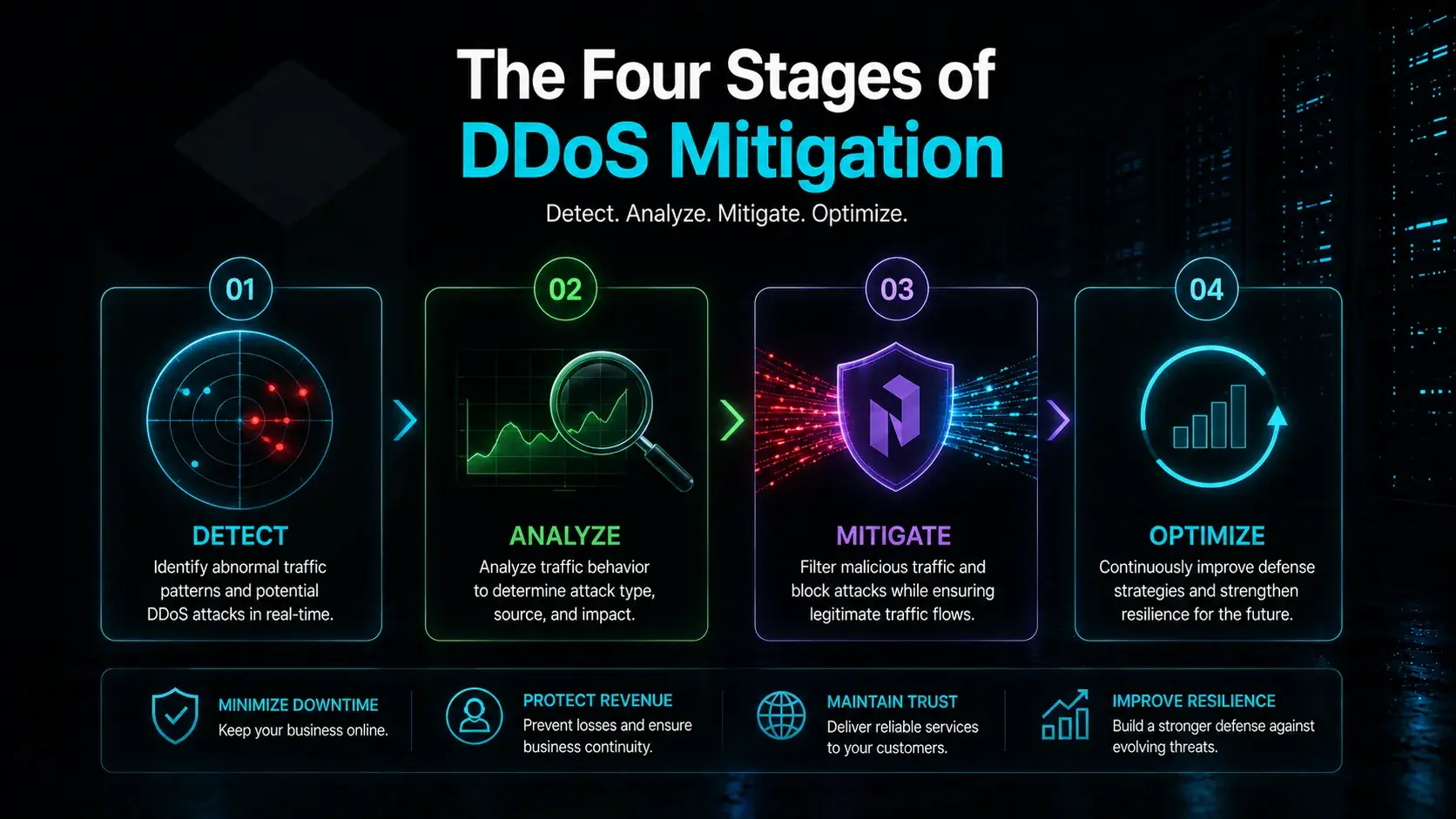
The Four Stages of DDoS Mitigation
Effective DDoS mitigation follows a structured lifecycle that includes identifying, responding to, and learning from attacks. These stages detection, response, filtering, and analysis work together using advanced mitigation tools to maintain service availability and defend against evolving threats.
Detection
Detection is the first and most critical step, involving the identification of abnormal network traffic patterns that indicate potential DDoS traffic. Advanced monitoring systems and threat detection tools analyze behavior across the network layer and application layer to identify anomalies early.
Response
Once an attack is detected, a rapid response is required to contain its impact. This may involve activating on demand mitigation services, rerouting traffic, or engaging scrubbing centers within a global network. A well prepared response plan ensures minimal disruption to business operations.
Filtering
Filtering separates malicious traffic from legitimate user activity. Techniques such as rate limiting, IP blocking, and inspection of HTTP requests are used to remove harmful traffic. Advanced filtering also helps mitigate attacks like DNS amplification by analyzing traffic from DNS servers.
Analysis
After mitigation, analysis provides insights into attack patterns, including sophisticated DDoS attacks and layer attacks. Reviewing data helps refine adaptive protection strategies and improve future response capabilities.
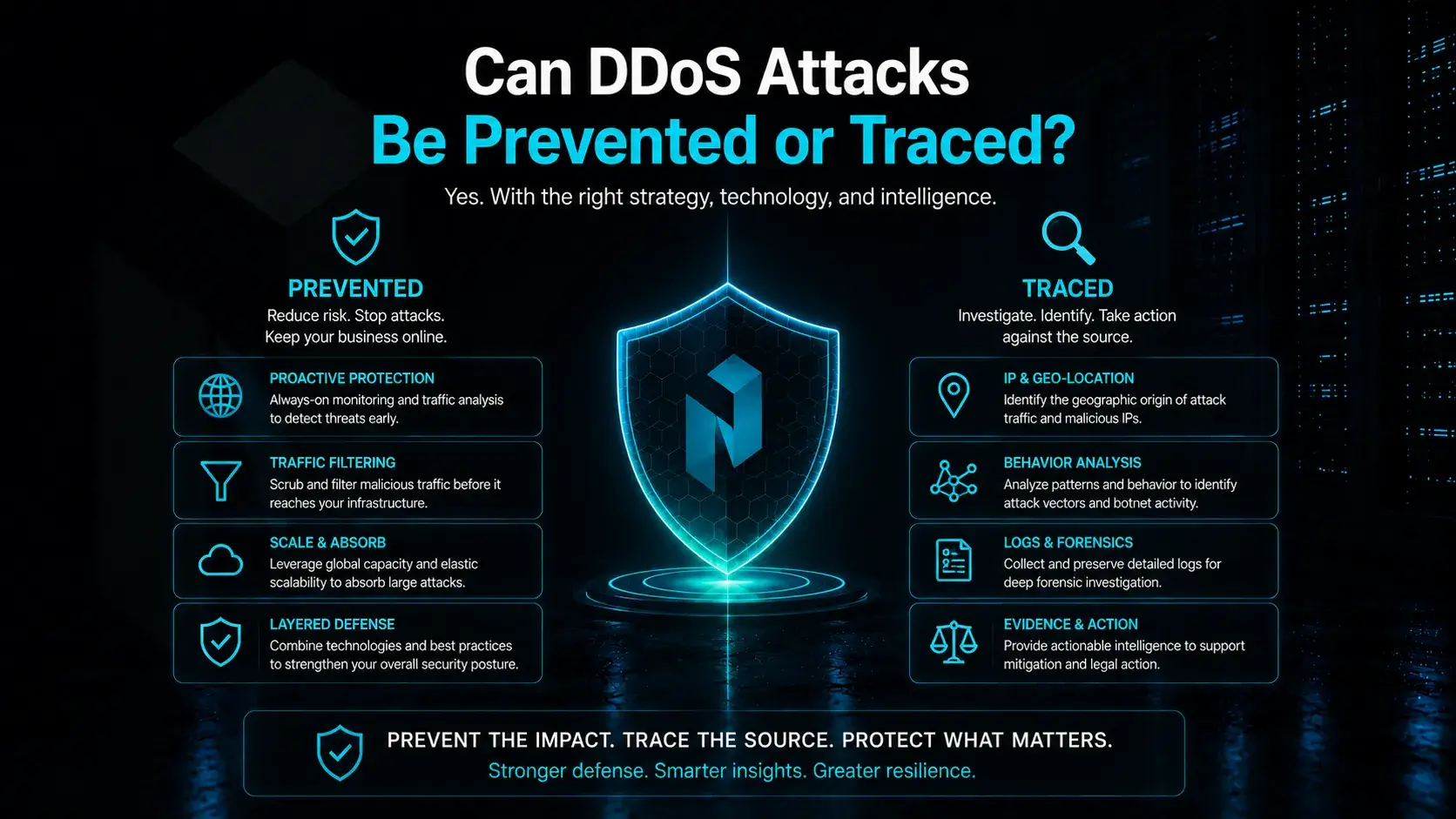
Can DDoS Attacks Be Prevented or Traced?
Completely preventing DDoS attacks is difficult due to their distributed nature, but organizations can significantly mitigate DDoS attacks using the right security solutions. While prevention focuses on reducing risk, tracing attackers remains complex due to the use of global botnets and distributed systems.
Challenges in Tracing Attack Sources
DDoS attacks often rely on botnets and compromised devices spread across a global network, making attribution difficult. Techniques like IP spoofing and DNS amplification further obscure origins, especially when attackers exploit vulnerable DNS servers.
Can Firewalls Stop DDoS Attacks?
Traditional firewalls cannot fully handle volumetric floods or large scale DDoS traffic. While they can filter some malicious requests, they are not designed to reliably stop high volume attacks on their own.
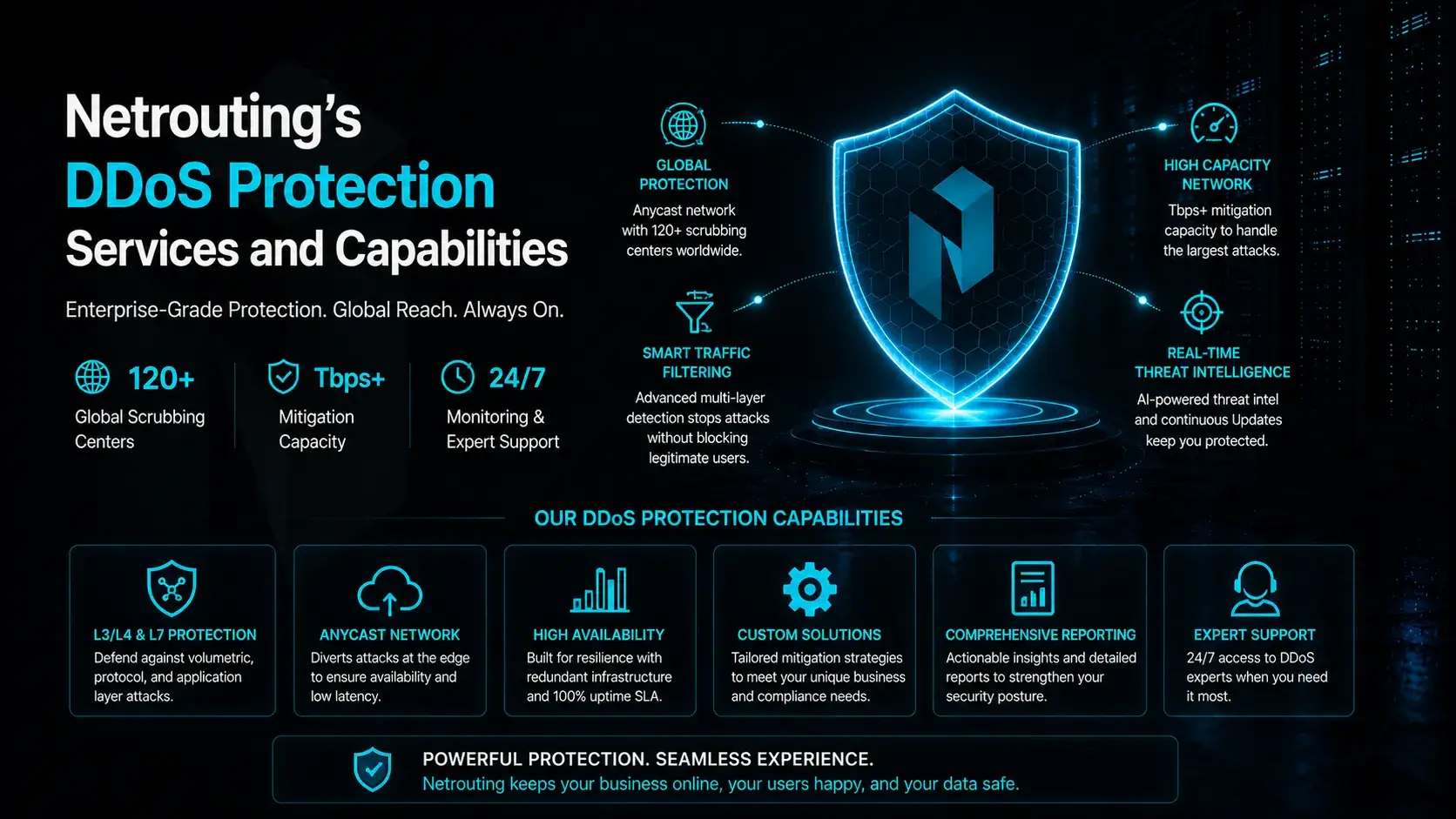
Netrouting’s DDoS Protection Services and Capabilities
Netrouting provides advanced DDoS protection and security solutions designed to defend against modern threats. Their platform focuses on real time threat detection, automated mitigation, and scalable infrastructure to protect online services and maintain continuous uptime.
Core Capabilities of Netrouting’s DDoS Protection
Netrouting delivers multi layered protection across the network layer and application layers, using advanced mitigation tools and adaptive protection strategies to stop DDoS traffic before it impacts systems.
Real Time Detection and Automated Mitigation
With real time monitoring and intelligent automation, Netrouting can detect anomalies and mitigate DDoS attacks instantly. Automated workflows ensure rapid response without manual intervention.
Scalable Infrastructure and Global Coverage
Netrouting leverages a high capacity global network with significant global capacity to absorb large scale attacks, including volumetric floods. This ensures reliable protection regardless of attack size or origin.
Flexible Deployment Options (Cloud & On Premises)
Organizations can deploy solutions on demand via cloud, on premises, or hybrid models. This flexibility allows businesses to align protection strategies with their existing network infrastructure and operational requirements.
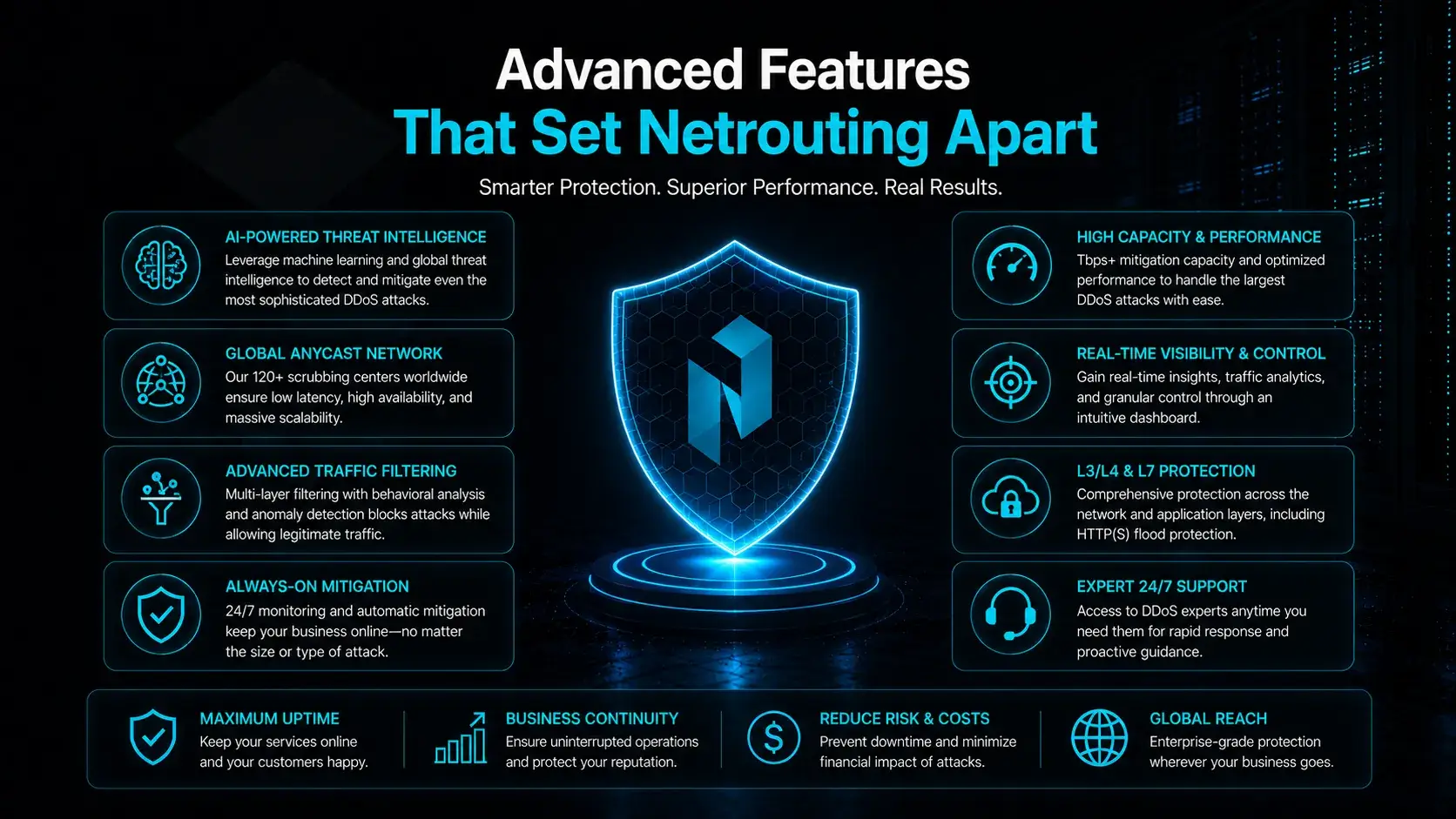
Advanced Features That Set Netrouting Apart
Netrouting differentiates itself through advanced capabilities that enhance accuracy, scalability, and efficiency in handling sophisticated DDoS attacks while maintaining performance for legitimate users.
Reduced False Positives with Smart Filtering
Smart filtering uses behavioral analysis and intelligent automation to distinguish between legitimate and malicious traffic, reducing disruptions to users and improving overall protection.
Real Time Signature Creation for Emerging Threats
Netrouting continuously generates new attack signatures based on live data, enabling rapid response to evolving threats and strengthening adaptive protection capabilities.
Encrypted Traffic and SSL Attack Mitigation
Advanced inspection tools analyze encrypted traffic to detect hidden threats, ensuring that attackers cannot exploit SSL/TLS channels to bypass security solutions.
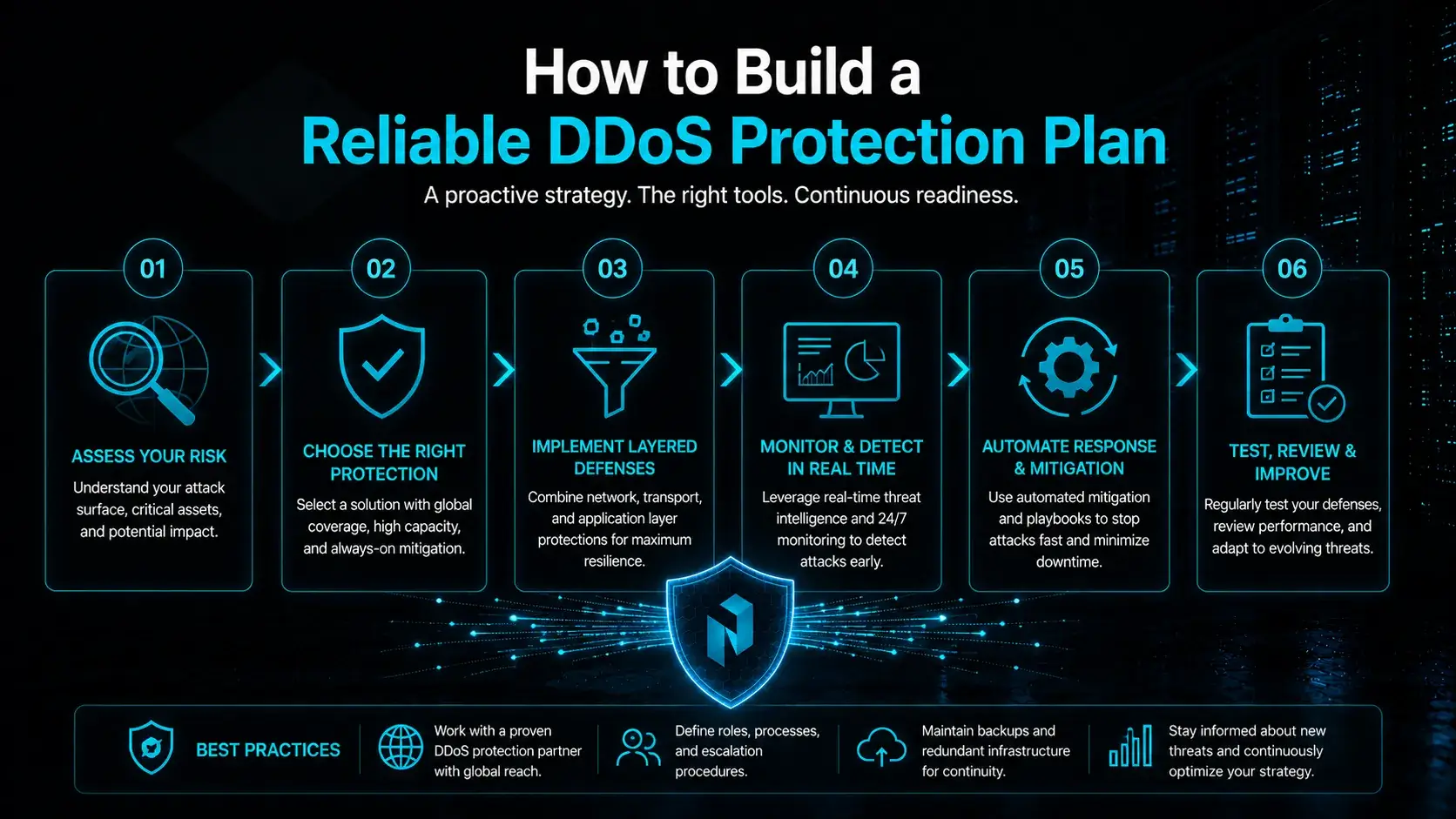
How to Build a Reliable DDoS Protection Plan
Building a reliable plan requires aligning technology, processes, and strategy to effectively prevent attacks and respond to threats. Organizations must consider key risks, infrastructure capabilities, and long term scalability.
Risk Assessment and Attack Preparedness
A thorough assessment identifies vulnerabilities in your network infrastructure and evaluates exposure to DDoS traffic. This helps prioritize defenses and prepare for potential disruptions.
Selecting the Right Protection Strategy
Choosing the right solution involves evaluating key considerations such as scalability, cost, and deployment model. Businesses should select solutions that align with their operational needs and risk tolerance.
Continuous Monitoring and Optimization
Ongoing monitoring and optimization ensure that defenses remain effective against evolving threats. Leveraging event management, analytics, and adaptive protection improves long term resilience.
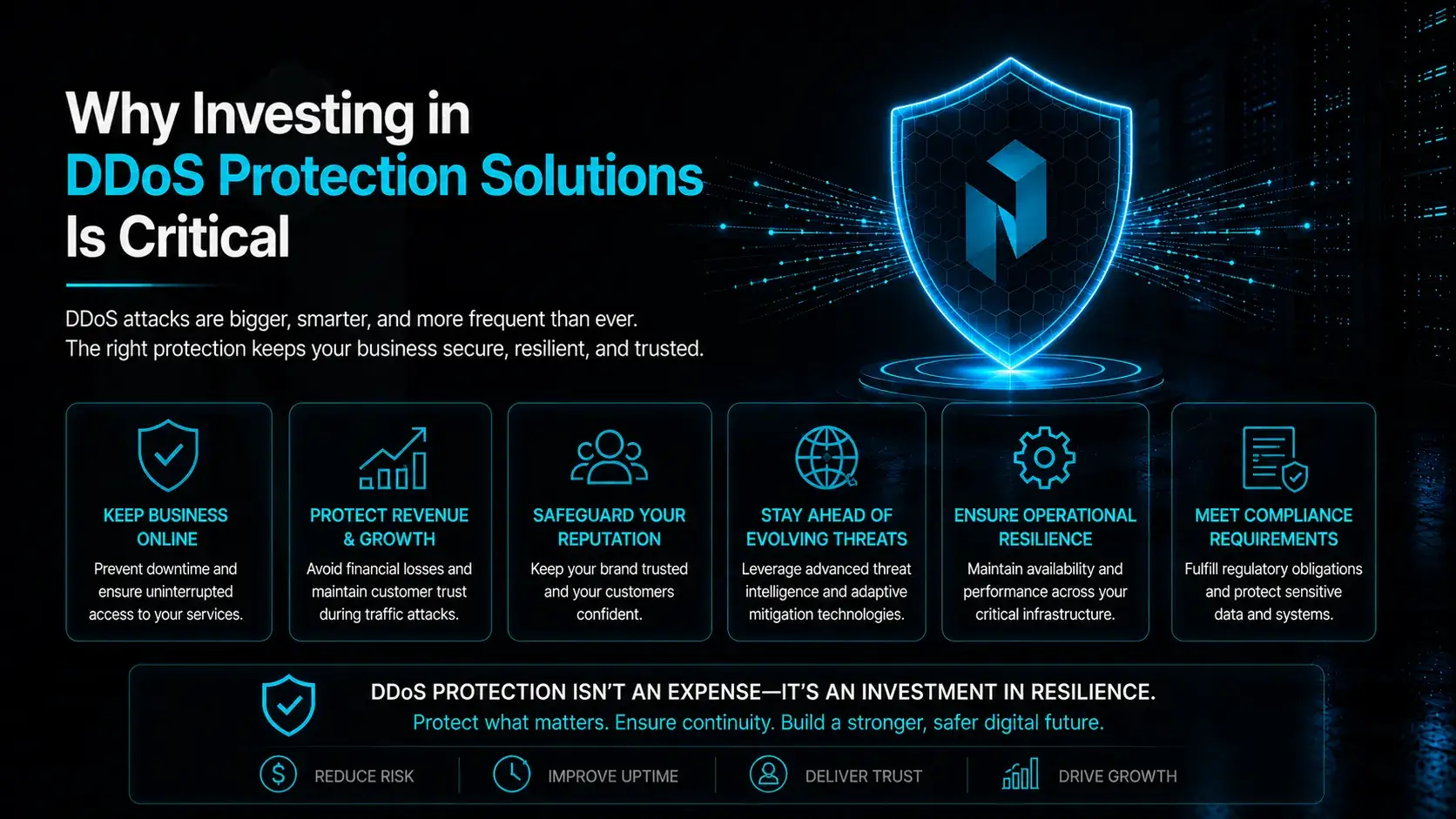
Why Investing in DDoS Protection Solutions Is Critical
Investing in DDoS protection is essential to safeguard business operations, reduce reputational damage, and prevent lost business. As threats grow more advanced, organizations must adopt robust security solutions to maintain stability and trust.
Business Continuity
DDoS protection ensures continuous uptime and uninterrupted access to online services, helping organizations ensure business continuity even during attacks.
Compliance
Implementing strong security solutions helps meet regulatory requirements and protects sensitive systems within critical infrastructure.
Competitive Advantage
Reliable protection strengthens customer trust, reduces risk of downtime, and positions businesses ahead of competitors by ensuring consistent performance and security.
DDoS attacks represent a significant and growing threat to modern businesses. As digital ecosystems expand, the potential impact of these attacks becomes more severe. Implementing robust defenses is no longer optional it has become a strategic imperative.
By understanding how these solutions work, evaluating available options, and adopting best practices, organizations can build resilient defenses against even the most sophisticated attacks. Investing in the right DDoS protection strategy not only safeguards operations but also strengthens long term business success in an increasingly digital world.
FAQ
- What is an ICMP flood attack? An ICMP flood is a type of DDoS attack that overwhelms a target with large volumes of ICMP (ping) requests, consuming bandwidth and causing slow performance or complete service disruption.
- How can businesses mitigate DDoS attacks effectively? To mitigate DDoS attacks, businesses should use layered security solutions such as traffic filtering, rate limiting, load balancing, and cloud based scrubbing services that detect and block malicious traffic in real time.
- What is DDoS mitigation and why is it important? DDoS mitigation refers to the process of detecting, managing, and reducing the impact of DDoS attacks. It is essential for maintaining service availability, protecting infrastructure, and ensuring uninterrupted user access.
- What role do GRE tunnels play in DDoS protection? GRE tunnels are used to redirect incoming traffic to external scrubbing centers where malicious traffic is filtered out. Clean traffic is then sent back to the original network, helping maintain service availability during attacks.
- Why do DDoS attacks cause slow performance? DDoS attacks overload servers or network resources with excessive traffic, leaving little capacity for legitimate requests. This results in slow response times, degraded user experience, or complete downtime.