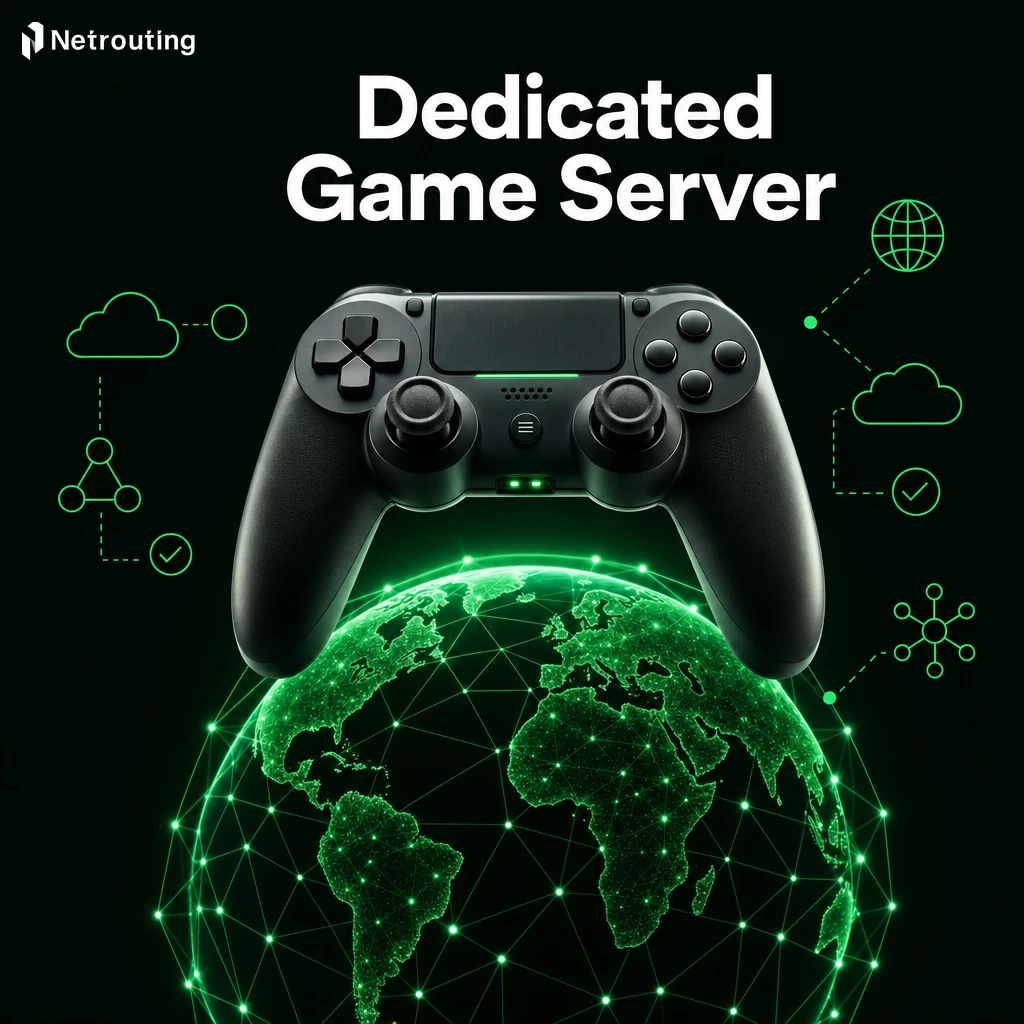
The player experience is tied to the server(s) hosting the game. The worst game experience is to have to deal with lag spikes, rubber banding or disconnects in the middle of a match. The result of having to deal with these issues is that players churn (i.e. quit playing the game). A dedicated gaming server removes the root cause of these issues: other resources on the machine competing for CPU cycles and bandwidth at the worst possible time.
Investing in a stable, high-performance hosting environment is essential to delivering the best gaming experience and keeping your community engaged long-term. Delivering a smooth game server hosting experience requires eliminating these technical pain points through purpose-built infrastructure that prioritizes stability and performance above all else. For more context, see Explore Netrouting's gaming infrastructure.
Unlike cloud servers that ‘burst’ in unpredictable fashion and then throttle back, dedicated servers provide a fixed environment that you can depend on. When you rent dedicated servers you have complete control over the key specifications including the speed of the CPU, the amount of RAM, the network configuration and even the OS and its configuration.
Blog contents
This allows for very consistent performance, unlike cloud servers that struggle to support stable ping times, varying from 20ms to 200ms or more at peak times. In most cases, this predictability translates to stable frame times and consistent tick rates that competitive multiplayer titles require. Dedicated infrastructure also eliminates packet loss caused by resource contention, ensuring that every player action reaches the server without dropped frames or missing inputs. Stable ping times directly translate to reliable player connections, which competitive titles depend on to maintain fair matchmaking and ranked integrity.
In this guide we cover the important technical decisions when choosing a dedicated multiplayer server host, including the physical server required to support your game engine, the network requirements to ensure low latency for your gamers, the best locations to place your servers relative to your gamer base.
Whether you running a single game or a multi region infrastructure serving thousands of concurrent gamers. There are some fundamental principles to getting it right, starting with a clear understanding of what a purpose-built game server actually is.
For a complete overview, explore our dedicated game server guide.
What Is a Dedicated Game Server?
A dedicated hosting server is a computer running a game and is the authoritative source for a game. The game runs on a dedicated server, meaning no player is hosting the game and therefore no player has control over the game.
All actions a player performs are validated by the game on the server before the game world is updated. For community perspectives on game servers, see Homeserver.
How Dedicated Game Server Hosting Works
In game server hosting, the server receives input from every client and processes it authoritatively on the server. The server then broadcasts the result to all clients. The load of the game is never on any single player’s machine, thus eliminating the typical latency spikes and rubber banding found in traditional peer to peer gaming architectures. Unlike dedicated servers, a peer to peer environment means a single player's poor connection will typically cause problems for the other gamers.
Why Dedicated Game Servers Outperform Listen Servers
Instead of a listen server running on the player's own machine splitting resources between hosting and playing the game, dedicated bare-metal infrastructure is always on. Always authoritative and not bound to a single player's connection, which is what happens when a player drops and the current server for that session disappears.
The Case for Game Dedicated Servers Hardware
- Tick rates remain constant and are not affected by CPU contention from the player’s local OS.
- Predictable packet delivery, low jitter network paths reduce desync.
- Le système reste en marche en permanence, les sessions restent actives après chaque déconnexion.
With the architecture established, the next important question is what dedicated machine can actually deliver these guarantees under load. The right hardware must deliver consistent frame processing and tick rates even during peak concurrent player loads without throttling or resource contention.
DDoS Protection: Keeping Your Game Servers Online Under Attack
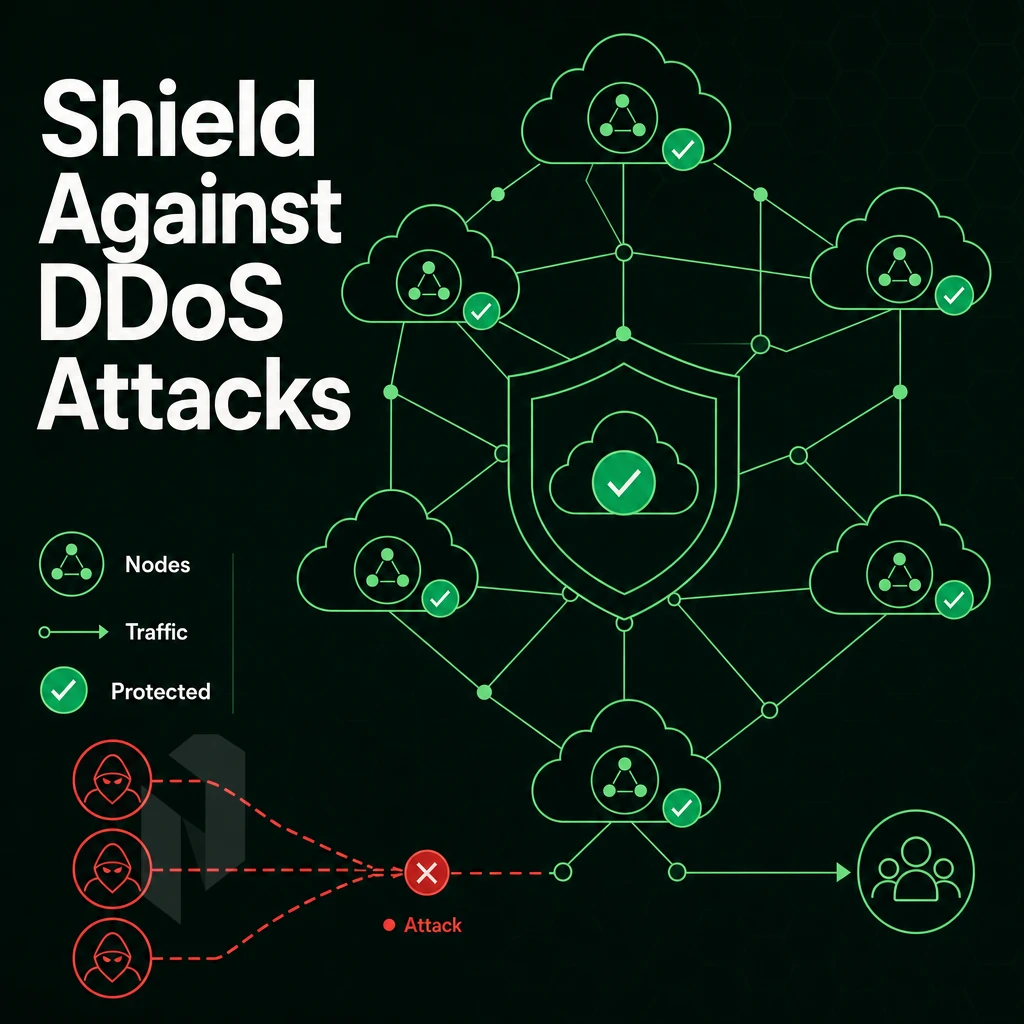
Game servers are critical and valuable to companies that host games for others, for rivals. For griefers and people looking to extort money from game developers by sending loads of junk traffic to the host, causing game lag. Additionally, Mass disconnects of all players. Even a brief attack on dedicated servers can be very damaging to game companies that depend on retention of playing customers.
Why High Performance Game Servers Attract Attacks
In game server hosting, pipeline traffic from UDP-based game protocols can easily be spoofed and/or amplified. This can cause a denial of service to a player’s connection as well as put a large strain to a server. All this can be done against game servers without the need of an exploit, simply by overwhelming the host channel with a large volume of traffic.
DDoS Protection at Every Layer for Game Servers
All services from Netrouting are equipped with always-on L3/L4 mitigation. Malicious traffic is automatically detected and blocked at the pathway edge before it can affect the host servers. For very critical applications, a reputable hosting provider implements advanced L7 security filtering on top of the basic filter to handle application-specific cleaning and even enforce custom rules. For more context, see Game server.
Netrouting is able to mitigate over 1 Tbps with less than 40% port usage, providing the right amount of headroom when needed to handle a volumetric attack.
Game Servers Security Without Compromise
Our support team designed Baseline protection to be mostly invisible, adding no latency when traffic is clean. But 24/7, someone is monitoring your game servers and your cloud servers for anomalies to prevent problems from occurring before they become a problem for your players and for you.
Once your server is protected from external threats, the next level of control is to how you run your server, i.e. how you configure, mod, and manage your server and its environment. Installing custom mods allows server administrators to extend gameplay mechanics, introduce new content, and tailor the player experience to their community's preferences.
Frequently Asked Questions About Game Servers
What Are Dedicated Servers and Why They Give Full Control?
A dedicated gaming hosting server is a physical or virtual machine running game software full-time, handling all match logic, player state, and system traffic independently of any player's client. Unlike peer-to-peer sessions, dedicated game server hosting means no single player's node or connection acts as host. Every player connects to the same authoritative server, which eliminates host-advantage lag and keeps the game running even when individual players disconnect. This architecture is identical whether players connect from PC, console, or mobile devices, ensuring fair competition across all platforms. The server executes all game logic independently, ensuring that physics calculations, collision detection, and state updates remain consistent regardless of individual client performance or network conditions.
How do I set up and host my own dedicated servers for gaming?
Start by choosing a dedicated bare-metal server with enough processor cores and RAM for your target player count and game engine. Install the game's official server software, most titles publish a dedicated server tool, then configure ports, map rotation, and player limits. Deploy on bare-metal servers close to your player base to minimize latency. Hosting provider Netrouting offers bare-metal servers across ten locations in Europe, North America, and Asia, provisioned in under 60 minutes, with unmetered 10 Gbps connectivity included for minimal latency across regions. Accurately estimating how many players your server will support simultaneously helps you right-size CPU cores and memory allocation from the start. The official server tool provided by most games includes baseline settings that work out of the box, though you'll want to tune tick rate and simulation parameters for competitive play.
How Much RAM Do Dedicated Servers Need for a Great Gaming Experience?
For small servers hosting 10-30 fellow gamers, 8-16 GB of RAM is typically sufficient. Large competitive or modded low latency servers with global reach, 100+ concurrent players, custom plugins, or heavy world simulation should target 128 GB or more. Always check the game developer's official server requirements first, CPU clock speed and single-threaded performance often matter as much as raw RAM capacity. Game developers often publish minimum and recommended specifications in their documentation, which should guide your initial provisioning decisions.
What does it typically cost to host game servers on dedicated servers?
Cost depends on physical computing resources tier, player count, and bandwidth requirements. A small community server on entry-level bare metal is cost-effective and predictable month to month. High-population or tournament-grade servers running on multi-core Intel Xeon or AMD EPYC server resources with unmetered high-speed connectivity carry a higher but still transparent monthly cost, no surprise egress fees. Contact Netrouting sales for game server hosting configured to match your player count and title. Choosing the right hosting provider ensures transparent pricing with no hidden fees for bandwidth overages or DDoS mitigation, which can unexpectedly inflate monthly bills.
A purpose-built application hosting server is only as good as three things: the dedicated computing resources, the networking, and the DDoS protection. If you get all three right you can have the software of your choice, modded to your hearts content with admin settings to lock down the server to your exact requirements. Admin panels and command-line tools give you granular control over player permissions, whitelist management, and real-time performance monitoring without relying on third-party dashboards.
This level of autonomy ensures you maintain full control over every aspect of your hosting environment, from kernel tuning to firewall rules. Optimized low latency networking infrastructure ensures that player inputs are processed and synchronized across all clients with minimal delay, directly impacting competitive fairness and player satisfaction.
Full root access is at the core of what we do. With root access, you have full control of your server and aren’t forced to share resources with other users. You can configure your server however you see fit.
Netrouting's dedicated servers are built for exactly this workload, high-clock-speed Intel Xeon and AMD EPYC physical machines, unmetered 10 Gbps connectivity, always-on L3/L4 DDoS protection included as standard, and bare metal provisioned in under 60 minutes. Dedicated servers across Europe, North America, and Asia put low-latency reach where your players actually are. Explore Netrouting dedicated server configurations and find the right fit for your platform.
Each location operates from carrier-neutral data centers with redundant power and cooling to ensure your game stays online even during infrastructure failures. Redundant power and cooling infrastructure ensures your game remains accessible even during facility maintenance or unexpected outages, minimizing unplanned downtime. Each server includes enterprise-grade nvme drives for rapid map loading and minimal world-state serialization delays during high-traffic sessions.