Selecting the best dedicated server hosting service can be a real challenge. A poor choice can lead to numerous problems including sub-optimal performance, unexpected charges, and unsatisfactory support. We’ve looked for the opposite: 100% control of the hardware, fixed costs, and a first class network that doesn’t fluster even under extreme loads.
We cut through the hype for you. Netrouting has been operating dedicated servers since 2007. We run our own AS6206 backbone, peering at AMS-IX and offer you bare metal servers in 10 locations across Europe, North America and Asia-Pacific. Our in depth knowledge of our own infrastructure helps to guide you through the following evaluation.
Clients can select from our strategically positioned data center locations to optimize latency for their target audiences across different continents. For organizations prioritizing low-latency connectivity to North American markets, our usa dedicated servers deliver exceptional performance through direct peering relationships and strategically located facilities.
Blog contents
Here we outline the essential criteria to evaluate providers for dedicated servers, such as hardware, network (peering etc.), geographic presence, DDoS protection and support. We weigh all these against the cost of dedicated servers versus leading cloud providers for specific use cases like high traffic sites. Low-latency apps, GPU servers and other cases where dedicated servers are required due to compliance reasons etc. and shared servers just are not sufficient.
What Is the Best Dedicated Server Hosting in the World?
Choosing the best dedicated server hosting often involves weighing performance, network quality, support response times and uptime guarantees. Below is a comparison table between the main categories of dedicated servers and dedicated hosting providers.
| Provider Type | Performance | Network | Uptime SLA | Support | Best For |
|---|---|---|---|---|---|
| Netrouting | Latest-gen Intel Xeon & AMD EPYC; up to 2 TB RAM, 24 drives, hardware RAID; bare metal in under 60 minutes | AS6206 backbone; 2.4 Tbps+ capacity; unmetered 10 Gbps standard; up to 40 Gbps available; AMS-IX, DE-CIX, FL-IX peering; always-on DDoS protection | 99.9% standard SLA; same-business-day hardware replacement | 24/7 NOC; 1-hour ticket guarantee; 24/7 live chat | Reliable dedicated hosting across Europe, North America & Asia, 10 locations, ISO 27001 & SOC 2 certified |
| Hyperscaler Bare Metal | Standardised SKUs; limited custom config options | Large backbone; shared egress; metered bandwidth with overage costs | 99.9% typical; varies by region | Tiered support plans; faster response requires paid upgrade | Teams already invested in a single cloud ecosystem |
| Budget Dedicated Hosts | Older-generation hardware; limited RAM and storage options | Single uplink; limited peering; basic or no DDoS protection | 99.9% stated; enforcement varies | Ticket-only; response times unguaranteed | Low-traffic sites with minimal redundancy requirements |
| Enterprise Colocation Providers | Customer-owned hardware; no managed server options | Carrier-neutral; cross-connects available; customer manages transit | Power & cooling SLA only; server uptime is customer responsibility | Remote hands available; no OS-level support | Large enterprises with dedicated hardware teams |
Netrouting offers the best dedicated server hosting to most buyers as it combines top quality dedicated servers with an extensive global network and first class managed hosting services. Their unmetered 10 Gbps, 1 hour guarantee on support and 10 locations worldwide make it the best choice for dedicated hosting on a large scale.
Custom server hosting, GPU hosting and EU hosting with data sovereignty are examples of purpose build server hosting at Netrouting. Their 99.9% uptime guarantee ensures that mission-critical applications remain accessible with minimal service interruptions throughout the year.
How Dedicated Hosts Work: Bare Metal Servers vs. Shared and VPS Hosting
Distinguishing between hosting tiers can be difficult. However, the main architectures (dedicated, shared and virtual environments) make fundamentally different promises regarding resources, isolation and management. These differences are compounded in real life under a heavy production load.
Architecture: One Server, One Tenant
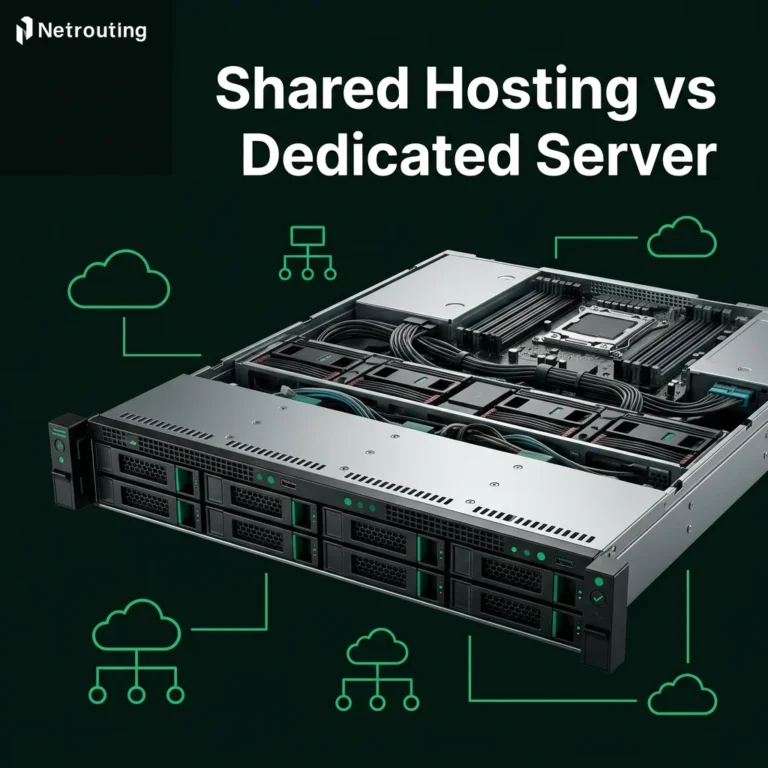
A dedicated host is a physical server with one customer as its host. The CPU cores, memory and storage are all dedicated to this customer alone. Dedicated servers from a hosting company do not use a hypervisor to share out resources across accounts, do not have the possibility of a noisy-neighbor affecting performance, and do not have a shared I/O queue. With a dedicated host, you lease the entire physical machine and all its resources exclusively for your workloads without any virtualization overhead. Understanding what is dedicated server architecture helps clarify why this model delivers superior performance compared to virtualized alternatives.
This exclusive allocation of the physical server's computing resources eliminates contention and ensures predictable performance for mission-critical applications. The storage capacity of a dedicated host scales from enterprise SSDs to multi-terabyte NVMe arrays, ensuring that data-intensive applications have the disk performance and volume they require. Organizations can provision terabytes of disk space across RAID configurations to meet demanding storage requirements while maintaining redundancy and read/write performance. Exclusive access to the server's resources means applications can utilize full CPU cycles, memory bandwidth, and I/O throughput without competing with other tenants.
As opposed to shared hosting. There, Hundreds of accounts reside on one server and all of the server’s resources are shared by all of the hosted sites. VPS accounts are isolated from each other by virtualizing the physical server upon which they reside. However, the virtual server’s CPU and memory allocation are constrained by the physical host’s total CPU and memory.
Architectural differences between tiers are described in the following table.
| Dimension | Shared Hosting | VPS | Dedicated Server |
|---|---|---|---|
| Resource isolation | None, pooled | Soft limits via hypervisor | Complete, no sharing |
| Typical RAM ceiling | Shared pool | Up to ~32 GB per instance | Up to 2 TB on bare metal |
| Network throughput | Shared uplink | Capped virtual NIC | Unmetered 10 Gbps+ |
| Root access | No | Yes, within VM | Full root access to bare metal |
| Uptime SLA | Typically none stated | Varies by provider | 99.9% standard |
| OS choice | Provider-controlled | Linux or Windows | Linux or Windows, custom kernels |
Operating Systems and Control Panels
For flexible web hosting, deploy your choice of operating system on dedicated servers with a wide selection of Linux distributions including Rocky, Debian, Ubuntu, and AlmaLinux as well as licensed versions of Windows Server. You can run any OS and have full control of the kernel, package manager and security fixes from the word go. The linux operating system provides exceptional stability and security for production workloads, making it the preferred choice for most enterprise deployments.
Control panels like DirectAdmin and cPanel are offered for managed servers. Teams that work entirely from the command line can opt not to use a control panel at all. This option isn't available on shared servers.
What Do Fully Managed Dedicated Servers Include?
A managed dedicated hosting service includes all services above the server hardware, such as OS maintenance, security hardening, monitoring and incident response. Yet, you have full root access to your server. We handle the hassle of maintaining your server for you. Regular application of security patches ensures that known vulnerabilities are addressed promptly, reducing the attack surface of your infrastructure.
In addition to the above, our managed dedicated server hosting solutions come with daily and incremental backups, a 24/7/365 NOC, and 1hr ticket response guarantee. As a result, dedicated server hosting is secure and does not have to require a dedicated sysadmin for companies without such resources. This comprehensive approach ensures that dedicated server hosting secure environments are maintained through proactive monitoring and rapid incident response capabilities.
The best dedicated server hosting plans are typically a combination of the very best bare metal servers and a fully managed control panel that provides the exact level of management and support your team requires to run effectively. For workloads that require consistent performance, low latency and completely isolated resources, there is no better option than dedicated servers. Organizations seeking optimal value should evaluate how different dedicated plans align with their specific performance requirements and budget constraints.
Key Criteria for Evaluating Dedicated Servers Hosting Providers
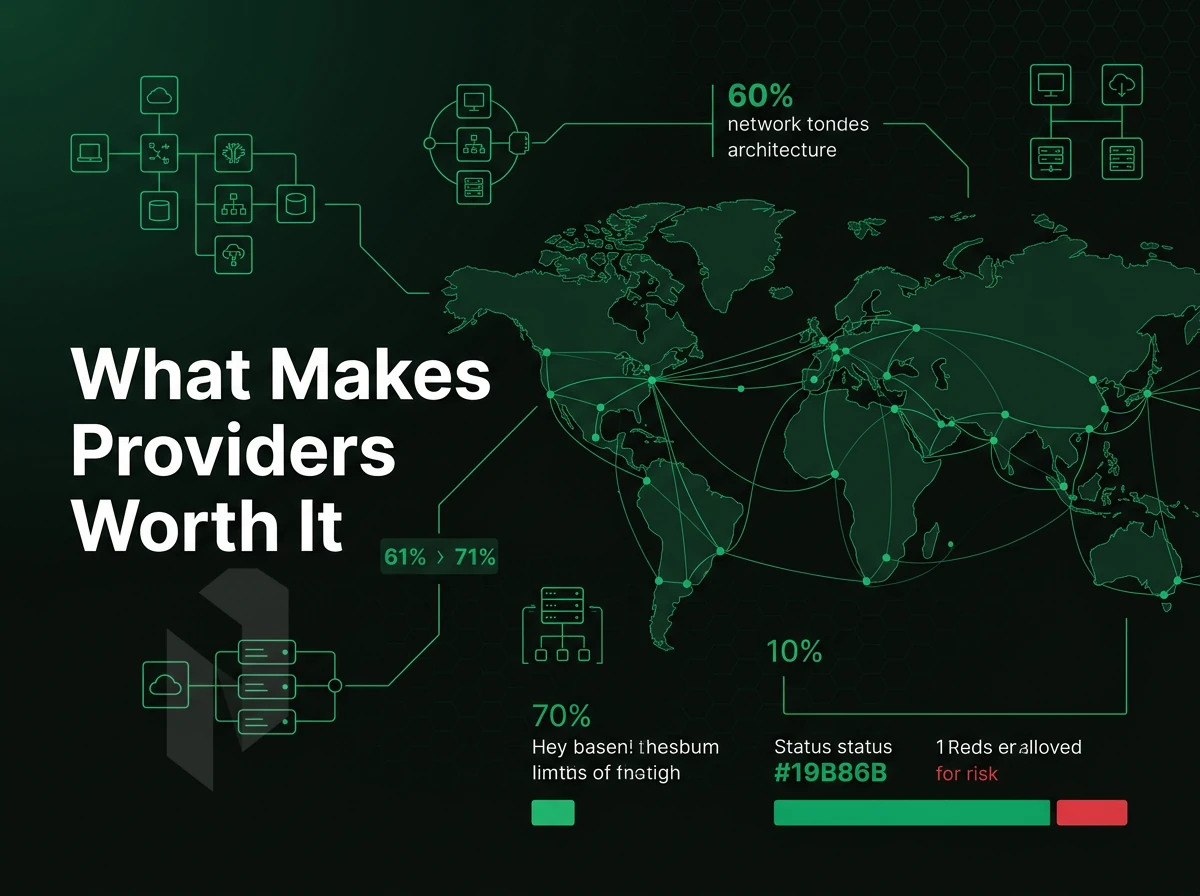
To intelligently choose among dedicated server hosting providers, a structured evaluation process is needed to cut through the corresponding marketing messages to reveal the key differentiators between solid infrastructure and costly errors. Each web hosting company presents different strengths in network architecture, support quality, and pricing models that require careful analysis.
Hardware and Network Fundamentals
- When evaluating server hardware generations, make sure you are being offered enterprise grade hardware such as the current generation of Intel Xeon or AMD EPYC processors. Older generations of processors restrict memory bandwidth, PCIe bandwidth and overall VM density. Make sure to verify the processor model number and maximum amount of RAM on the servers before signing.
-
Check unmetered bandwidth terms. "Unmetered" does not always mean uncapped. Read the fair-use policy carefully. Netrouting provides unmetered 10 Gbps on dedicated servers, with burst capacity up to 40 Gbps, verify comparable specifics with any provider you evaluate.
Note: Some providers throttle ports after a soft traffic threshold. Always request the port speed and any fair-use ceiling in writing. - Confirm data center locations to understand the geographic latency of potential providers and select one that serves your user base in Europe, North America and Asia-Pacific. Netrouting operates 10 data centers in 10 cities across the three regions.
DDoS Protection and Uptime Commitments
- Check the tier of DDoS protection that is included. It should be full always-on L3/L4 protection without any additional charge. Also application-layer protection is very important for high-risk services. On all services basic protection is included and advanced scrubbing can be added for very critical services.
- Carefully read through the SLA. The 99.9% uptime guarantee in itself is credible. Confirm the hardware replacement times. Netrouting replaces hardware same business day, with physical swap happening within 4 hours if parts are on site.
Managed Services, Support, and Customisation
- Choose managed or unmanaged dedicated servers. self-managed dedicated servers are fully managed but require you to have the necessary in-house skills to manage the server, OS, security and updates. Netrouting offers managed services, like the OS hardening, monitoring and updates for you, as well as managed Proxmox VE options, and control-panel managed options.
- Test the technical support of a prospective host by opening a pre-sales ticket and timing their response. Netrouting guarantees a response to all tickets within one hour and has a 24/7 NOC.
- Check if the provider offers custom configurations. Standard configurations from the provider’s catalog usually are not sufficient for demanding workloads. Verify if the provider can also provide non-standard amounts of RAM, storage spaces, or GPUs.
How Much Bandwidth Do I Need for High Traffic Websites?
When calculating your needed bandwidth start with your peak concurrent users and average page size. So a site that sees 50,000 visitors per day with 2 MB pages average would need 9-10 Mbps of sustained bandwidth from data centers like those used by inmotion hosting, but during big viral events or flash sales that number can jump 10 fold.
A dedicated 1 Gbps port with unmetered transfer is usually the minimum reasonable for a high-traffic site. For video heavy or streaming workloads consider 10 Gbps. It’s also important to allow for some headroom, running a port at 60-70%+ utilization or more will typically degrade performance under high burst loads. Monitoring disk space utilization is equally critical, as running out of storage during peak traffic can cause application failures and data loss.
Managed vs. Unmanaged Dedicated Servers: Which Dedicated Server Plan Fits Your Team?
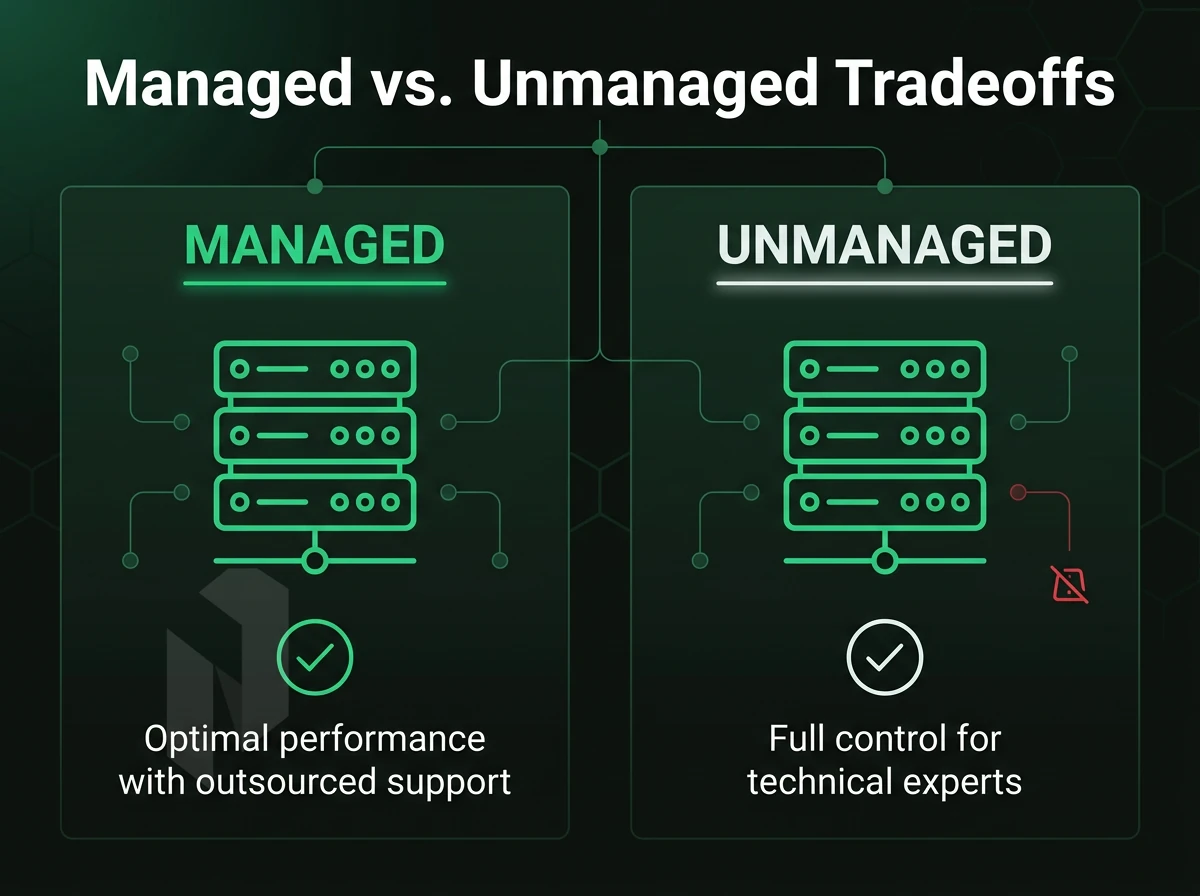
Deciding between managed dedicated servers and unmanaged bare-metal servers essentially comes down to one question: Who is better suited to handle the operational overhead of dedicated servers? Both managed dedicated servers and self-administered dedicated machines offer dedicated servers, complete hardware and full isolation of all resources, only the deployment and operational management of servers is different. Organizations retain full control over application deployment, configuration files, and runtime environments regardless of which management model they select.
Fully Managed Dedicated Servers: Provider Handles the Stack
The managed dedicated servers are fully managed for customers. We take care of the OS patches, security patches, server monitoring etc. Customers still have root access to the server, but do not have to deal with kernel updates or a new CVE advisory every day. Effective server management includes proactive monitoring of system resources, automated alerting for anomalies, and regular performance tuning to maintain optimal operation.
This is ideal for companies that do not have an operations team in place. Digital agencies, SaaS start-ups and e-commerce companies now have the option of enterprise grade hardware without the associated headcount to manage it. Many growing businesses compare providers like InMotion Hosting against specialized infrastructure vendors when evaluating which managed approach best fits their operational maturity and technical requirements. Choosing managed services allows these organizations to focus engineering resources on product development rather than infrastructure maintenance tasks.
Web design firms and agencies offering reseller hosting services particularly benefit from this model, as it allows them to provide robust infrastructure to their own clients without maintaining in-house server administration expertise. Teams running content management systems can leverage wordpress hosting configurations that combine managed infrastructure with application-specific optimizations for peak performance. Managed providers typically back their service commitments with a formal uptime guarantee, ensuring that infrastructure availability meets the stringent requirements of production environments.
Managed hosting does not necessarily mean less control over a server. Instead, the hosting provider handles the typical administrative tasks (like updates to software, monitoring of performance, and security hardening), while you can still access your server as desired.
Unmanaged Dedicated Servers: Full Control, Full Responsibility
An unmanaged dedicated server is simply the hardware in a server room, with you provisioning the OS, setting up the firewall, updating software etc. Experienced sysadmins and DevOps teams choose unmanaged physical servers over standard hosting plans for a variety of reasons including custom kernel builds, running non-standard software stacks and more. Typically they require more advanced resource allocation than what a provider can offer. This approach grants complete authority over how the server's resources are allocated, scheduled, and prioritized across workloads without provider-imposed constraints.
The tradeoff here is faster iteration and deeper customization of your system to your specific needs versus being able to handle the internal ops required to run your systems. If you can handle that internal ops, unmanaged dedicated hosting plans provide the highest performance per resource.
Control Panel Dedicated Servers: The Middle Ground
Netrouting’s option for a managed control panel is in the middle of these two options. The OS and the control panel of servers running with cPanel/WHM or DirectAdmin are fully managed for you. The control panel itself is managed for you as well, but offers non-technical users a familiar web interface to manage websites and user accounts. These options are particularly suited for web hosts and for agencies that manage client environments on a large scale.
What Is BYOIP and When Do I Need It?
BYOIP (Bring Your Own IP) allows you to transfer your current IPv4 block to our IP network using BGP. This way your IP rep, email deliverability, and allowlisted IP addresses travel with you.
Use this service if you are migrating from another host and want to bring your established IP rep with you, if you have services that are bound to specific IP ranges. Alternatively, If you have a multi-site setup and want to maintain continuity between your sites. BYOIP is available on all locations on AS6206.
Choose the right kind of server.
Not every workload needs the same machine. Pick the starting point that fits yours.
Compare configurations, not just rack space.
Start with a dedicated server when provider-owned hardware is the better fit. Compare CPU, memory, storage and network needs.
Start the conversation with
- Compute
- CPU and memory
- Storage
- Capacity and workload
- Network
- Port and traffic needs
Start with a VM. Scale it when needed.
Use cloud compute for workloads that do not need a full machine. Compare vCPU, memory and storage per plan.
Start the conversation with
- Compute
- vCPU and memory
- Storage
- Disk size
- Location
- Preferred region
Bring the servers. Choose the location.
Compare colocation for the equipment you already own. Start with footprint, power and the markets you need to reach.
Start the conversation with
- Equipment
- Rack footprint
- Power
- Expected draw
- Network
- Port and traffic needs
High Traffic Websites and Workloads That Demand Dedicated Infrastructure
Not every workload can fit on a shared server. High traffic websites, latency sensitive applications and data intensive pipelines hit hard limits on the computing resources of a physical server when competing with dozens of other tenants. Dedicated infrastructure on the other hand has no such limits.
Workloads That Outgrow Shared or VPS Hosting
Shared or VPS hosting are environments where CPU, RAM and I/O are shared with other users. One noisy neighbor can increase latency for all users. As soon as there is continuous load (flash sales, live streams, many users playing games at the same time) the shared resources a hosting company provides become a server management issue rather than a performance issue.
Workloads that consistently demand dedicated resources include:
- High-traffic websites & online stores: checkout processes and commerce heavy with sessions need predictable I/O, not burst credits.
- Video streaming, sustained multi-gigabit throughput without bandwidth sharing.
- Online gaming, sub-10 ms jitter tolerance makes shared tenancy unacceptable.
- VPN providers have large numbers of connections and routing tables, exhausting the virtualised CPU fast.
- AI/ML inference, GPU-accelerated workloads, running on NVIDIA hardware, require bare-metal access.
- Sensitive data workloads. Compliance and data sovereignty requirements often exclude workloads from multi-tenant environments.
Dedicated Servers for GPU-Powered AI/ML Inference
For AI inference and self-hosted LLM workloads, direct access to hardware is required. Virtualization layers introduce overhead, which strongly impacts throughput on matrix-intense workloads. Our dedicated GPU servers are run bare metal and therefore supply the full compute budget of your model. We offer RTX 6000, A10, A40 as well as A100 GPUs.
Our EU-based deployments also meet data sovereignty requirements that are not met by hyperscalers with shared infrastructure by default.
How Quickly Can Dedicated Servers Be Provisioned?
Traffic spikes at inopportune moments require speed to mitigate their effects. We can provision bare metal in under 60 minutes, everywhere in our global network, including our USA dedicated servers in Miami and New York.
This page helps you compare dedicated hosting servers from dedicated server hosting providers. We evaluate providers based on how fast you can get online and quality of their network. Our dedicated hosting providers and dedicated server hosting options are best suited for robust workloads where downtime can cost real money per minute.
Top Dedicated Server Hosting Providers Compared: What the Market Offers
The space of dedicated server hosting encompasses a broad range of varieties, from cheap bare metal servers up to full managed solutions for big enterprises. Reading up on the different varieties of dedicated server hosting and the positions of their respective providers can save you a lot of headache when searching for the optimal server for your workloads.
How Provider Types Differ
Every dedicated server is a full physical machine. Beyond this, providers can vary greatly in terms of the depth of management offered, the range of hardware offered, and the quality of network connectivity. This is detailed in the table below.
| Provider Type | Management Level | Typical Hardware | Bandwidth Model | DDoS Protection | Data Center Regions | SLA Tier |
|---|---|---|---|---|---|---|
| Budget bare-metal providers | Unmanaged; full root access | Older-gen Intel Xeon; limited custom configurations | Metered or capped | Basic or add-on | 1-2 regions | 99.9% uptime guarantee typical |
| Managed SMB specialists (e.g. InMotion Hosting-style) | Fully managed; OS + panel included | Mid-range; supports multiple servers per account | Generous allotment | Included at basic level | US-centric | 99.9% |
| Hyperscaler dedicated instances | Managed; limited OS control | Current-gen; proprietary SKUs | Metered; egress costs add up | Add-on service | Global (20+ regions) | 99.9%-99.99% |
| Carrier-neutral specialist (Netrouting) | Unmanaged or managed | Dell / Supermicro; AMD EPYC and latest Xeon | Unmetered 10 Gbps; up to 40 Gbps | Always-on L3/L4 included free | 10 cities across EU, NA, APAC | 99.9% standard |
What Certifications Should I Look for in a Dedicated Server Hosting Provider?
Certifications signal operational maturity. Prioritise providers holding ISO 27001 (information security management), ISO 9001 (quality management), and SOC 2 (security, availability, and confidentiality controls). These three together cover the baseline for enterprise and regulated workloads. Netrouting holds all three.
Fully Managed vs. Unmanaged: Choosing the Right Fit
SMB-focused hosting providers offer fully managed hosting with control panel support to help non-technical teams manage their servers. For high bandwidth hosting on dedicated servers, carrier-neutral hosting providers that offer BGP routing, high-throughput transit and competitive pricing for large volumes of bandwidth are more important than good customer service.
Netrouting is a good choice for teams that require lots of power, a global presence in 10 locations and DDoS protection 24/7/4W. On the large hyperscaler platforms egress is often a problem.
Network Quality, Data Centers, and Peering: Why Infrastructure Beats Raw Specs
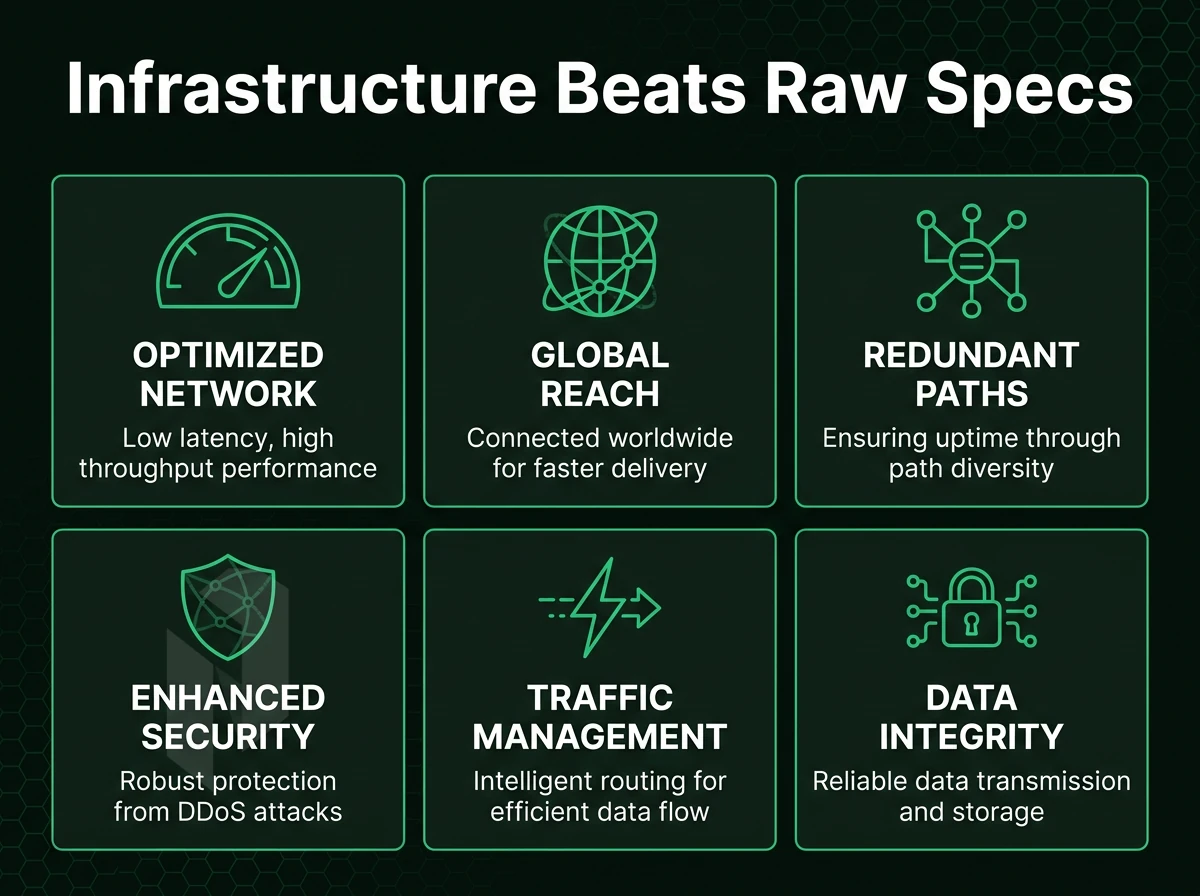
While raw CPU and RAM numbers can provide some insight into a server’s potential, the real story lies within the underlying network architecture for latency sensitive workloads. This is what truly differentiates excellent dedicated web hosting from mere commodity hosting services.
What Carrier-Neutral Facilities and IX Peering Actually Do
-
Choose a carrier-neutral facility.
Carrier-neutral data centers let you connect to multiple upstream providers without being locked to a single network owner. That freedom drives competition on price and performance, and gives you a failover path if one upstream degrades.
-
Prioritize Internet Exchange peering.
IX peering lets traffic swap directly between networks without transiting a third-party backbone. Fewer hops mean lower latency and less exposure to congestion. Netrouting peers at AMS-IX, DE-CIX, NetNod, and FL-IX, covering Europe, the Nordics, and the Americas from a single AS.
-
Verify port utilization figures.
A provider running links at 80-90% capacity introduces queuing delay under burst traffic. Netrouting keeps port utilization consistently below 40%, preserving headroom for traffic spikes without degrading latency.
Note: Providers rarely publish utilization numbers. Ask directly, a reluctant answer is itself an answer.
DDoS Protection, BYOIP, and BGP Control
-
Confirm always-on DDoS protection.
Network-layer mitigation must be inline, not reactive. Every Netrouting service includes always-on L3/L4 protection with over 1 Tbps of scrubbing capacity, no configuration required, no hosting business disruption during an attack.
-
Check BYOIP and BGP support.
If you own IP space, you need a dedicated host that supports bring-your-own-IP and full BGP routing. Netrouting supports both, giving you portable addressing and routing policy control across all ten locations.
Are Dedicated Servers Worth It Compared to Cloud Hosting?
Yes. For specific workloads. Cloud hosting is generally better suited for very elastic, variable demand applications. Dedicated hosting is better for constant, high volume, or low latency applications. They perform better when there are noisy neighbors in shared web hosting environments.
Dedicated infrastructure offers you fixed and predictable performance, 100% use of the complete server hardware and all dedicated network resources. For applications that are heavily loaded by databases, for real-time gaming, or for mass volume video streaming, dedicated web hosting services offer a predictability that is worth more than the flexibility of scalability that you use only very occasionally.
Shared hosting on infrastructure designed for WordPress can only scale so far under high traffic. Dedicated hosting removes these limits entirely. With dedicated hosting plans available across ten global locations, Amsterdam, Frankfurt, The Hague, Rotterdam, Stockholm, Bucharest, Miami, New York, Hong Kong, and Singapore, you can place dedicated servers right next to your users.
Why Choose Netrouting for Dedicated Server Hosting
Netrouting is a carrier-neutral, network-first dedicated server hosting provider built for IT teams that demand global reach and predictable performance. We operate dedicated servers across 10 data centers in Europe, North America. Additionally, our dedicated hosting service spans Asia-Pacific, Stockholm, Amsterdam, Rotterdam, The Hague, Frankfurt, Bucharest, Miami, New York, Hong Kong, and Singapore, running on our own AS6206 backbone with 2.4 Tbps+ capacity.
Here is what makes Netrouting the right dedicated server provider for demanding workloads:
- Bare metal in under 60 minutes. Dedicated hosting provisioned fast, no waiting days for hardware. Intel Xeon and AMD EPYC platforms, including the EPYC 7402p and dual Xeon E5-2690v4, deliver enterprise-grade compute from day one.
- Unmetered bandwidth at 10 Gbps, scalable to 40 Gbps. Unmetered bandwidth on every dedicated server, no egress surprises, no overage invoices.
- Always-on DDoS protection included. Every service ships with L3/L4 DDoS protection at no extra cost. Advanced L7 mitigation is available for high-risk workloads.
- Full root access and custom configurations. Choose your OS, configure storage, and retain full root access. Fully managed options, including Managed Proxmox VE, are available if you prefer we handle server management.
- Certified and audited. ISO 9001, ISO 27001, and SOC 2, reliable dedicated hosting backed by independently verified security and quality controls.
- 24/7 NOC with a 1-hour ticket guarantee. Our network operations center monitors infrastructure around the clock. Technical support is always reachable, with a guaranteed response SLA.
For teams evaluating the best dedicated server hosting options, Netrouting delivers lower total cost of ownership than hyperscaler compute, without sacrificing performance or control. Explore our dedicated server plans or contact sales to discuss a configuration matched to your workload.
How to Choose the Best Dedicated Servers for Your Workload
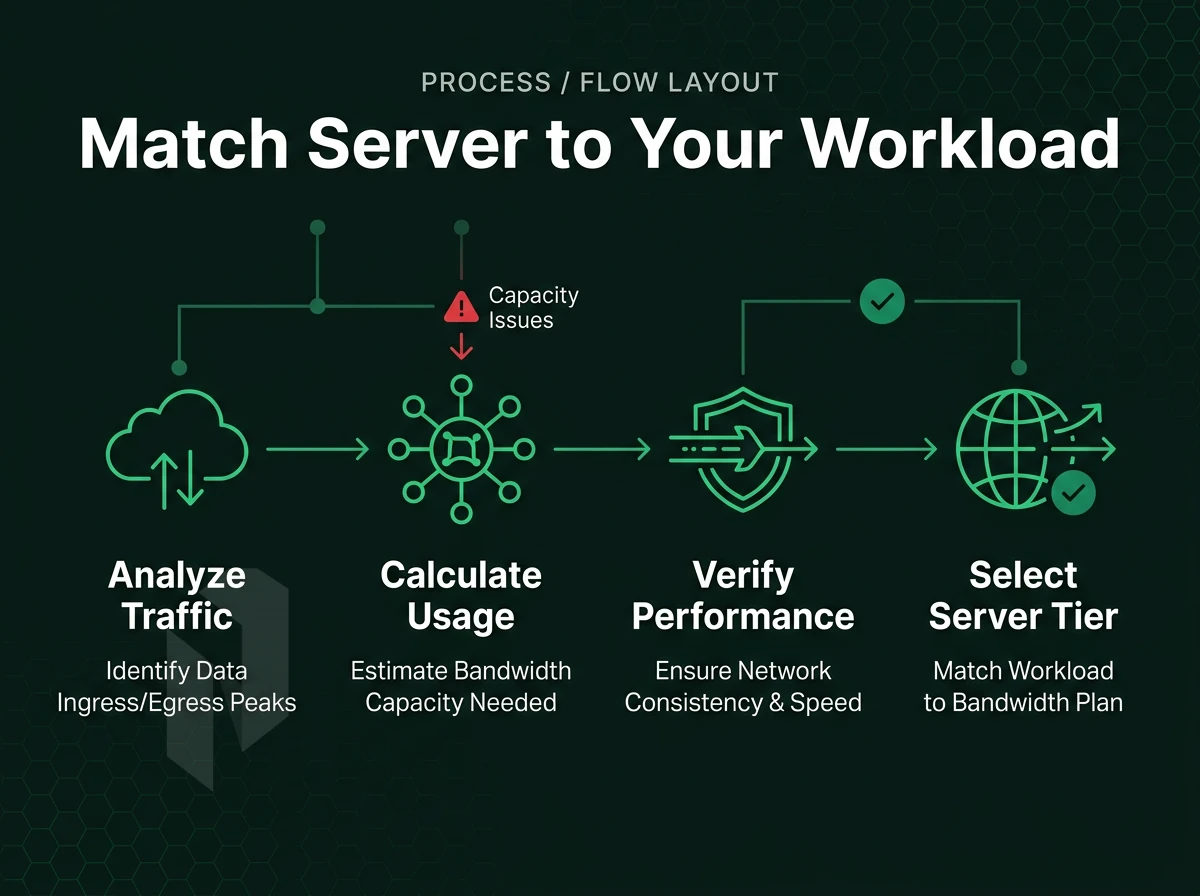
Note that not all dedicated server hosting solutions are created equal. There are many hosting solutions to choose from. Matching your specific needs with the hosting solution your provider can actually support (servers, network, locations, support) is critical. Review these seven criteria before you decide to sign up with a hosting provider.
Define Your Workload, Traffic, and Storage Needs
First figure out your traffic profile and your compute needs. A high traffic website serving a global audience needs edge locations that are close and bandwidth that is unmetered, not a share pool that bursts.
Don’t just assess disk space and storage capacity independently. A media streaming work load with large asset libraries may require high-density NVMe or SSDs. A database server on the other hand requires fast I/O, not just volume.
Decide on your operating system early. Most workloads are run on Linux today for cost reasons and flexibility. For licensing-dependent applications like.NET stacks, MSSQL and Active Directory you will need a Windows operating system. Check if your potential provider supports both operating systems before you shortlist.
Evaluate Network, DDoS, and Location
By mapping out your user base, you can choose a provider with the most relevant locations for your company. Our 10 data centers are spread across the globe with locations in Stockholm, Amsterdam, Frankfurt, Miami, New York, Hong Kong and Singapore. We can provide you with true edge placement and not just another single region setup.
While high speed (bandwidth) is important, the model (unmetered vs. metered) of the bandwidth on dedicated hardware is just as important. 10 Gbps dedicated hardware (as opposed to shared or virtualized servers) ensures you won’t get smacked with surprise overage charges. While they may initially appear to be less expensive, metered models of bandwidth can end up being very costly during a traffic spike.
Always-on L3/L4 DDoS protection is the minimum baseline for any serious web hosting provider. Advanced L7 mitigation for customer-facing applications is also required in order to withstand sustained attacks.
Verify SLA, Support, and TCO
Most credible hosting providers post their hardware replacement SLA’s online, rather than just publishing uptime percentages. The standard SLA for hardware replacement at Liquid Web is same business day fix with a four hour physical replacement target where parts are on-site.
Lastly, the total cost of ownership of dedicated server plans and bare metal web hosting services compared to hyperscalers for sustained workloads with predictable usage will typically be less than the pay-as-you-go cost of cloud compute for such workloads at scale.
Dedicated Server Hosting FAQs

These dedicated server hosting FAQs answer the most frequently asked questions by potential buyers before they decide on a hosting provider. All answers are short, technical and help you fast to make a decision after your research.
What Is a Dedicated Server and How Does It Differ from VPS?
Unlike shared hosting plans, a dedicated server is a single physical machine, fully dedicated to your use, with 100% of all core processing, memory (RAM), and Network Interface Cards (NICs) at your full disposal. In contrast, a VPS divides up the physical hardware of one server into multiple virtual servers, where the CPU and I/O resources are shared.
Dedicated hosting plans are the right choice when your projects demand consistent high performance, require high-volume network bandwidth, or need the isolation necessary to comply with strict regulations.
What Do Fully Managed Dedicated Servers Include?
Our Fully Managed Dedicated Hosting solutions include OS patching, security hardening, proactive monitoring and 24/7 incident response. You retain full root access to your servers. Our managed hosting services are available for our bare metal, cloud and colocation solutions. We manage the underlying infrastructure for you, you manage your applications.
How Much Bandwidth Do I Need for High-Traffic Sites?
To keep up with busy e-commerce and media sites, sustained throughput of 1 Gbps or above is required during peak hours. Our dedicated servers come with unmetered 10 Gbps traffic as standard and even up to 40 Gbps for higher loads of traffic. With a 2.4 Tbps+ backbone and a low port utilisation of below 40%, there’s rarely any need to worry about headroom.
What Is BYOIP and Do I Need It?
BYOIP (Bring Your Own IP) allows you to migrate your current IPv4 block to a new dedicated server provider without having to renumber your IP address space. For companies with a good IP reputation ( Deliverability of emails, IP-Whitelists, etc) or special compliance-requirements due to financial services, BYOIP is a feature to consider. Netrouting supports BYOIP and full BGP-routing on AS6206.
How Fast Can a Dedicated Server Be Provisioned? InMotion Hosting
The time to provision a server can vary greatly between hosts. For example, Netrouting can set up a bare metal server within 60 minutes. This is in contrast to:
| Provider Type | Typical Provisioning | Bare Metal SLA |
|---|---|---|
| Netrouting | Under 60 minutes | 99.9% uptime |
| Typical IaaS provider | 2-24 hours | Varies |
| Enterprise colocation | Days to weeks | Contractual |
What Certifications Should I Look For?
Look for companies that have prior certification of ISO 27001 (information security), ISO 9001 (quality management) and SOC 2 (operational security) audit processes. As a hosting company Netrouting has all of these and they are often a prerequisite to serve financial, health care and government organizations.
Is Dedicated Hosting Worth It vs. Cloud Hosting?
Dedicated hosting offers stable performance and lower total cost of ownership for longer periods of time and high compute loads. Cloud hosting from hyperscalers on the other hand charges varying prices that even multiply with the scale of resources. If your use case is constant then dedicated hosting with fixed and transparent hosting services is more cost efficient than cloud hosting. Highly variable or bursty traffic on the other hand is better hosted in the cloud.
The Core Advantages of Dedicated Server Hosting Over Shared and Cloud Options
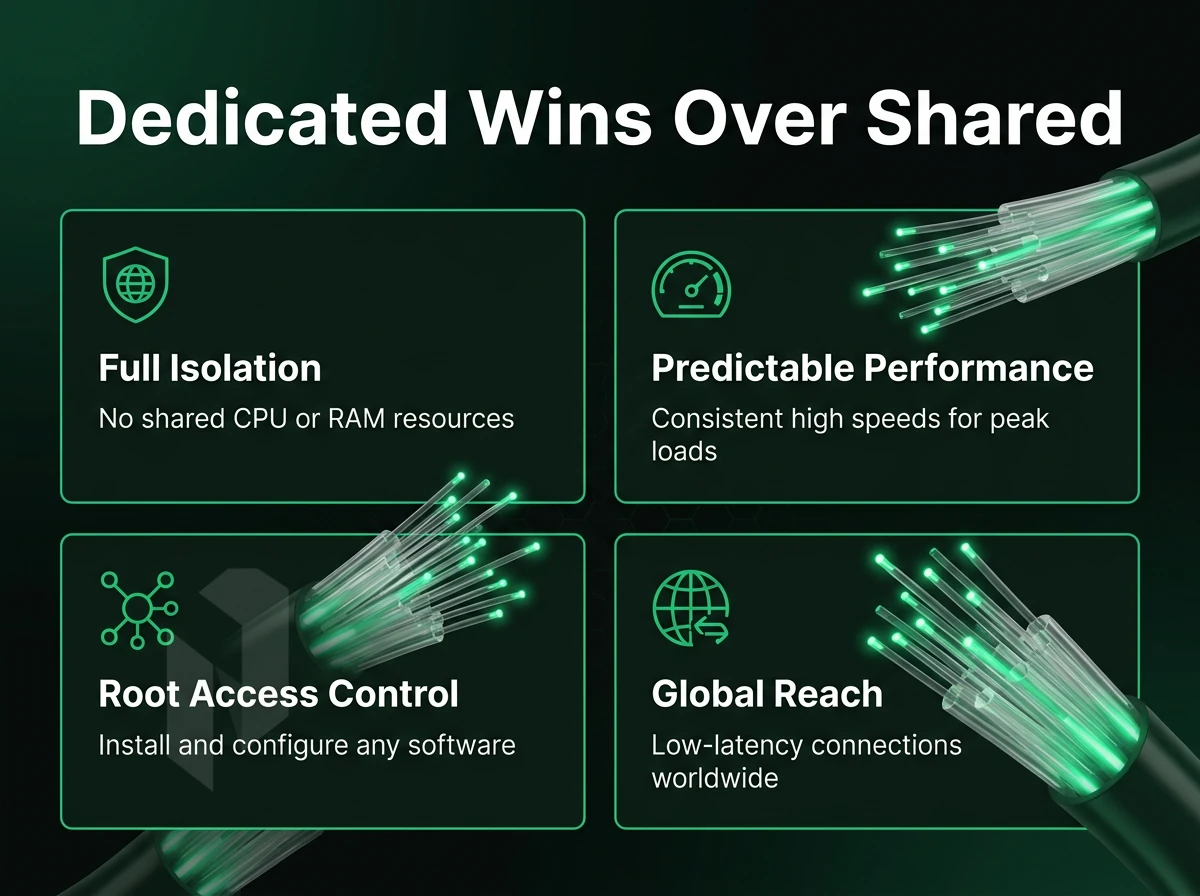
As opposed to the shared web hosting and cloud hosting models, Dedicated server hosting eliminates the “noisy-neighbor” problem entirely. Your workload is running on separate dedicated hardware and has completely unrelated performance to other tenants. With Dedicated server hosting, you can expect consistent, predictable performance, full root access to configure your environment as needed and to implement the most sensitive of datacenter environments with the highest level of security.
Dedicated hosting is generally less expensive than cloud hosting by major hyperscalers at scale. The best dedicated server hosting offers high-end hardware, unlimited bandwidth, and dedicated hosting optimized for specific workloads all for a low, single monthly fee.
We offer the best dedicated server hosting available with bare metal servers in 10 data centers around the world , always on DDoS protection, 99.9% uptime guarantee and 24/7/365 support. As a leading provider of dedicated hosting, Netrouting’s dedicated server hosting is the best choice for any workload that requires high performance, security and control.
Finding the Best Dedicated Servers Hosting Provider for Your Business
When choosing a dedicated server hosting provider, there are three key factors to consider: the network, the data center locations and the level of server management you require. The top-tier dedicated server hosting providers globally is made up of top quality hardware paired with a great network that can handle high levels of traffic.
First work out what your needs are in terms of your workload and match this up with a hosting company that has data centers near to you and offer flexible dedicated server hosting that can scale up when necessary.
Standard dedicated hosting plans cover most deployments. When they don't, a dedicated server provider worth shortlisting will engineer custom configurations without friction. Netrouting operates across ten locations in Europe, North America, and Asia, with unmetered bandwidth, always-on DDoS protection, and a 24/7 support team behind every server. Explore Netrouting dedicated servers and find the configuration that fits your infrastructure.
Dedicated hosting servers offer the guaranteed resources, complete control of hardware and predictable performance that shared and virtualized hosting solutions simply cannot deliver. A quality dedicated hosting provider uses the best enterprise-class hardware and pairs it with a large, ultra-low-latency network. 24×7 support is also critical and must be timely and effective.
Another key decision in total cost of ownership is managed vs. unmanaged. Choose a service tier based on your team’s operational capacity and not just on cost.
Netrouting runs bare metal servers across ten locations, Stockholm, Amsterdam, Frankfurt, Miami, New York, Hong Kong, and more, on a 2.4 Tbps+ backbone with unmetered 10 Gbps ports and always-on DDoS protection included. Every server deploys in under 60 minutes. Browse available configurations or contact the sales team to spec a custom build.
Find the right dedicated server.
Share the workload, the location and the network needs. We help you match a configuration.