

OTT Challenges are often portrayed as insurmountable, however they represent a tremendous opportunity for innovative solutions. We solve through technology, business model and/or monetization to create competitive advantage that lasts.
Piracy is projected to result in estimated losses exceeding $113 billion by 2027 in the U.S. alone.
The streaming economy is rapidly expanding from live events to on-demand content such as media, and now connected TV, and presents creators with both opportunities and pressures to interact with their audiences in new ways.
Right from establishing a strong digital infrastructure to conceptualizing a revenue model, the OTT platform challenges of today shape the next generation of digital media. But by addressing these challenges, operators can move on to more opportunistic growth for their organization.
Blog contents
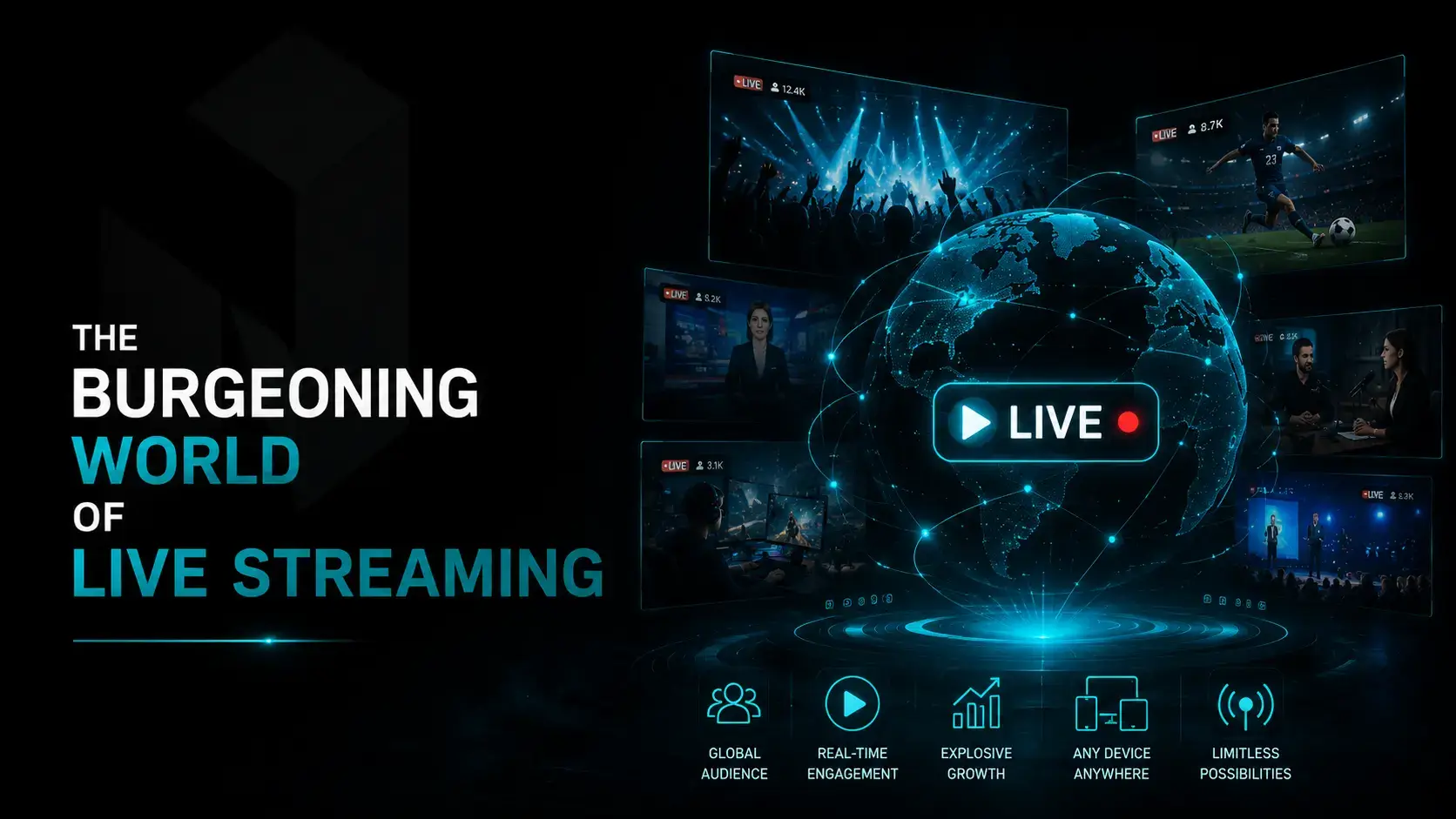
The Burgeoning World of Live Streaming
As OTT Challenges continue to affect regions around the world, they are not insurmountable. In fact, the challenge of delivering OTT present a number of opportunities for new innovative solutions. Live stream has become one of the most common forms of digital entertainment and is here to stay, with no signs of abating.
The Live is one of the fastest growing emerging markets globally with unprecedented profitability and is expected to reach $247.27 billion by 2027. With live stream content on the rise, the current market is plagued by many technological issues, but here we explore the main problems facing the industry, as well as the possible solutions.
Live is becoming a global phenomenon with an increasing number of platforms offering similar features to reach a vast and diverse audience. Creators ranging from the solo content blogger to large corporations are leveraging live streaming to reach the audience worldwide with original premium content such as cooking, gaming, music, and more. Some of the most popular streaming personalities often pull in over a million viewers for peak events.
The explosive growth of live stream is bringing about huge opportunity for companies in the live video streaming services space. As demand for live video increases, so do the expectations around video quality, required bandwidth and latency.
For operators, the entertainment mountain has become a ball, bouncing faster than ever. As entertainment grows, so too do the OTT services providing sports, commerce, education and interactivity content. While viewers have never had more choice and more flexibility to watch entertainment on smart TVs, mobiles, gaming platforms or streaming devices, the sheer scale creates new opportunities for them.
Traditional cable subscription models continue to lose relevance. Users increasingly prefer ott platforms that offer flexibility and exclusive content. This shift pushes providers to rethink ott operations, generate revenue, and keep users engaged. Growth now depends on solving complexity, not avoiding it.
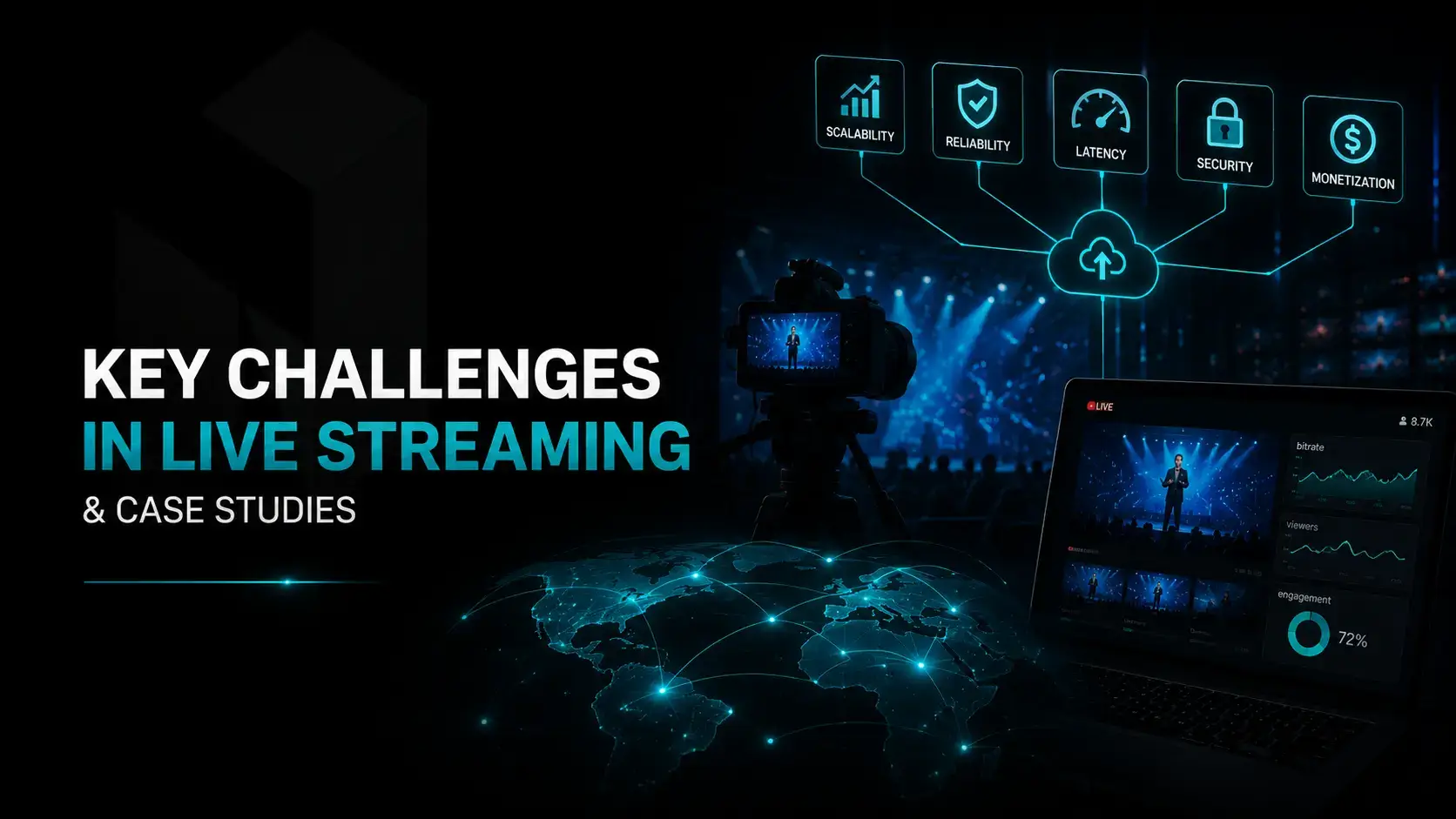
Key Challenges in Live Streaming and Case Studies
Maintaining a live online service can be notoriously difficult, particularly when there are both obvious bugs and slower than ideal performance issues which quickly eat away at customers’ confidence. Such issues are common and hard to prevent, meaning you’re going to need a solid stack and a healthy dose of ingenuity to keep your Over The Top (OTT) service up and running smoothly. In this article, we’ll explore a few of the main OTT Challenges you’ll encounter.
Unstable Streaming Quality
When the pandemic struck, video streaming services, including Amazon Prime Video, went back on lower bitrate content that they had been using a couple of years ago, to manage the unprecedented surge in consumption during the lockdown. Now, as many parts of the world enter a new phase of life post the pandemic, Prime Video is rolling out higher quality video across devices, globally.
Source: Business Insider
This example shows the value of adaptive bitrate streaming. High quality streaming is briefly paused during heavy traffic. But adaptive bitrate streaming enable smooth low bit rate playback in the meantime, thus preventing compromising quality of viewing being significantly impaired.
Operators often improve stability through:
- Cloud based infrastructure for dynamic resource scaling
- Multi-region deployment for resilience
- Better encoding of video files
- Edge caching for faster delivering content
- Continuous monitoring using key metrics
Quality is no longer a luxury, it’s a requirement for users retention engaged and subscribers acquired.
The Metadata Challenge
With metadata spread across multiple devices and systems it can cause problems during busy periods.
We found the peak viewing periods for big releases to be particularly problematic for the company’s metadata synchronization processes. Netflix moved to a multi-database architecture and implemented distributed data storage solutions like Cassandra to store metadata for the millions of individual movie and TV titles that each user could access. The result was a system that performed well and could quickly return users to what they wanted to watch.
Metadata is as critical as ever when it comes to finding content in today’s digital age. Additionally, metadata is key for personalization, video recommendations and ad targeting. Using suboptimal metadata could be potentially detrimental to your ott advertising efforts as well as overall engagement with your audience.
For modern ott apps, metadata powers:
- Search relevance
- Personalized recommendations
- Content tagging
- Data analytics insights
- Dynamic ad insertion
Ott users need ways to easily search through large video content collections. Without a proper metadata backbone, customers can’t easily find the videos that matter most to them, undermining the ott experience and potentially losing customers.
Using data analytics, OTT platforms can optimize content selection and inventory management by analyzing viewer preferences, peak viewing times, and popular genres.
Latency Challenges
Keeping viewers engaged necessitates minimizing delays in streaming.
We've updated the live latency options for YouTube live stream. Videos streamed live can now reach your audience with "Normal Latency", "Low Latency" or "Ultra-low latency".
Note: typical latency for air music is 2 to 5 seconds at ultra-low latency settings, but we typically recommend at least 5 seconds for live events and real-time performances.
Low latency matters especially for:
- Sports streaming
- Auctions
- Gaming broadcasts
- Interactive commerce
- Betting and second-screen experiences
As the connected TV market continues to grow, low latency is becoming less of an issue and more of a requirement, with consumers demanding latency as low as real-time from ott services.

Cross-Device Compatibility
It's hard to make experiences work on more than one device, people want it all a consistent experience across platforms. It’s the significant challenge.
To ensure consistent playback across different devices, it is essential to unify the streaming approach by partnering with a single provider that integrates a CDN, an OVP, and custom development.
To enable Hulu viewers to watch what they want, when they want, Hulu developed a fully adaptive streaming experience that works across any device.
Source: Hulu’s Approach to Adaptive Streaming
Today viewers use:
- Apple TV
- Roku and streaming devices
- Android TV
- Smart TVs
- Tablets and mobile phones
- Gaming consoles
Each has their own operating systems, content formats, ways to playback content. As ott services shift from a TV-centric experience to multiple device experiences, content playback across different platforms becomes increasingly crucial.
Architectural Design of Live Streaming Platforms
Our decisions regarding the site infrastructure will affect many of the decisions that we make in designing and building the site. How will the site architecture support our scaling requirements.
As a lot of our users have seen and are starting to enjoy, we’ve recently uploaded a post detailing the migration to Google Cloud of our video streaming service, YouTube TV. For those looking for a deeper peak into the latest technology upgrades, you can find the post here.
Major platforms increasingly combine:
- Bare metal processing
- Microservices
- Distributed storage
- Event-driven architecture
- Containerized delivery pipelines
Besides our Dedicated Servers and Cloud Compute Netrouting is also being used by multiple operators to boost their performance. These hosting environments are used by the operators to monitor and process streaming heavy loads in a more optimized and reliable way.
Scalability and Peak Traffic Management
So, you think you can handle the peak traffic? Well, sporting events are a great indicator of your ability to scale. How do you do during the sudden deluge?
Scalability depends on:
- Auto scaling compute
- Distributed transcoding
- Elastic storage
- Load balancing
- Traffic forecasting
What OTT challenges does actually face? Only when pushed hard enough do today’s architectures start to show their limitations.
Infrastructure Comparison for OTT Operators
| Challenge Area | Common Risk | Strategic Solution | Business Impact |
| Streaming Quality | Buffering | Adaptive bitrate streaming | Higher retention |
| Latency | Viewer drop-off | Edge delivery | Better engagement |
| Metadata | Poor discovery | Distributed databases | More viewing time |
| Monetization | Revenue pressure | Hybrid models | Improved growth |
| CTV Advertising | Fragmentation | Unified ad stack | Higher yield |
| Security | Piracy | DRM systems | Content protection |
| Scalability | Traffic overload | Cloud infrastructure | Reliability |
This is where infrastructure becomes strategy. It is not only technical defense. It supports growth.
Multi-CDN and Edge Delivery Optimization
Single-CDN dependence creates risk. Multi-CDN improves redundancy and reach.
Benefits include:
- Better routing decisions
- Reduced congestion
- Lower latency
- Stronger regional coverage
- Improved internet connection handling
For operators serving global audiences, this supports premium online video delivery. It also helps protect high quality streaming during demand spikes.
8 Major OTT Challenges Operators Need to Solve
OTT Challenges should not be viewed only as barriers. Many become growth drivers when approached strategically.
1. Navigating the Competitive Landscape
Competition defines this market. Differentiation determines survival.
"Competing in the OTT market requires not just participation, but innovation," says Savvas, CEO of Netrouting.
Strategic Differentiation:
- Focus on unique positioning
- Invest in personalized experiences
- Target underserved segments
- Build loyalty through exclusive content
Case Study: Disney+ Dominance
Scenario: Disney+ entered an already crowded market with a clear strategy.
Impact: Surpassed 50 million subscribers in two months.
Lessons are clear. Content and infrastructure both matter.
Competition also extends into digital advertising, tv advertising, and new advertising channels. Operators now compete not only for viewers, but also for ad budgets.
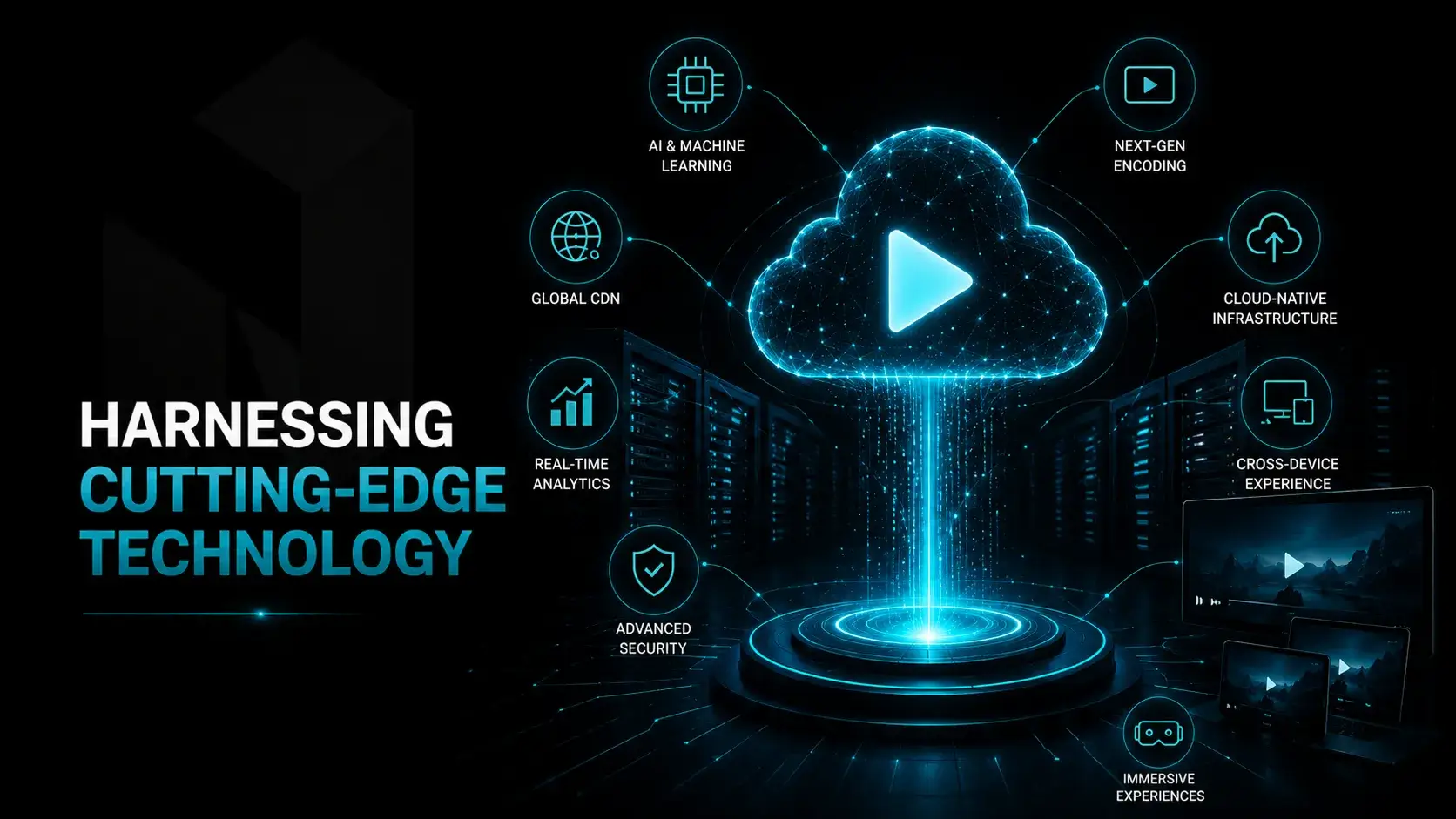
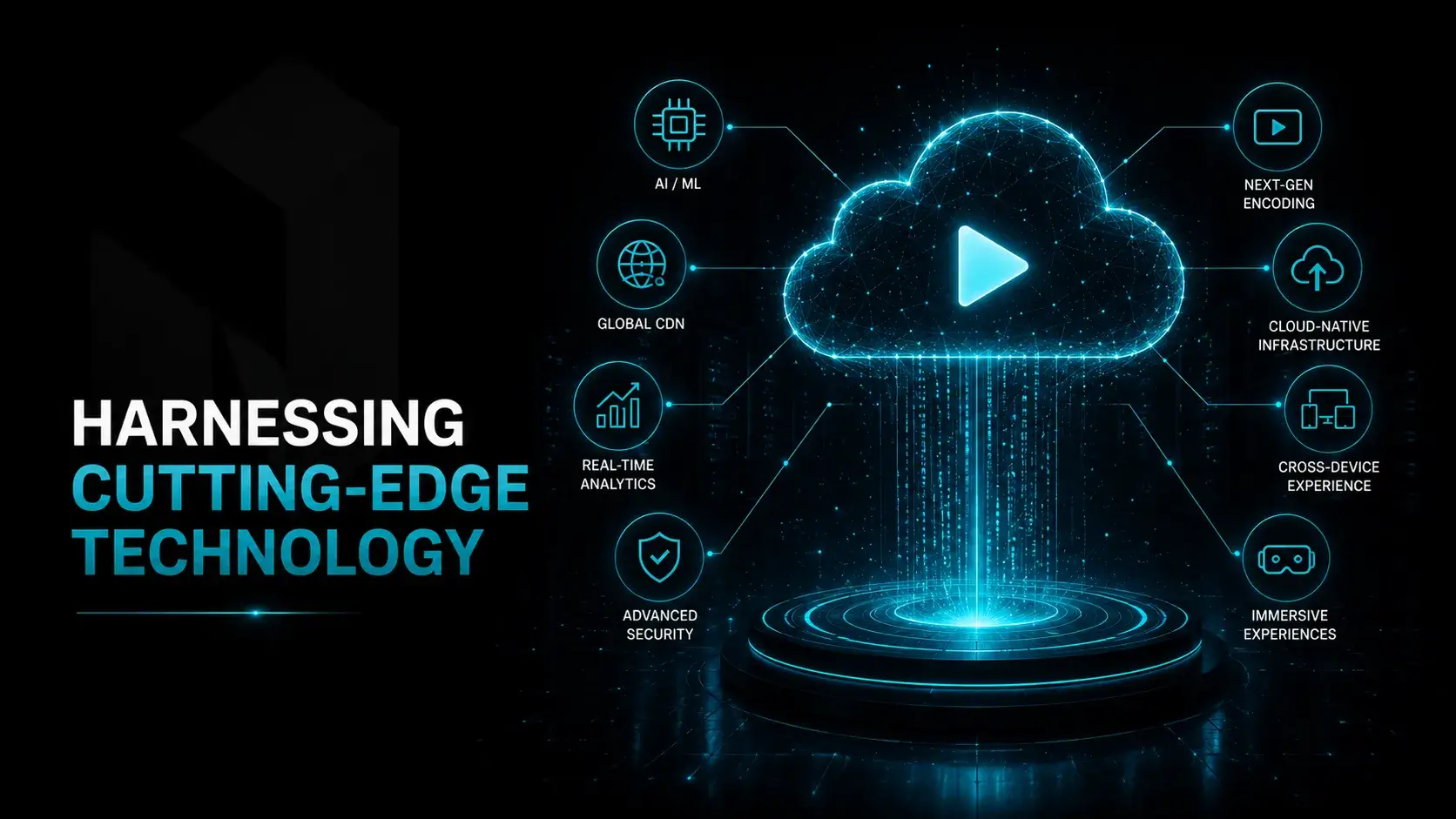
2. Harnessing Cutting-Edge Technology
Technology shapes resilience. It also shapes differentiation.
Bare Metal Dedicated Servers: Think of these as your streaming powerhouse.
These servers offer unparalleled performance, essential for managing the intense workloads of high-definition video streaming. Optimized Cloud Compute enables scale and agility.
Future-ready operators invest in:
- AI recommendation engines
- Predictive data analytics
- Advanced encoding
- Edge compute
- 5G-ready delivery
Data analytics provides invaluable insights into content performance, helping OTT platforms understand which parts of their library are successful and which are not, allowing for informed decisions on content management.
Many providers use Netrouting solutions to support low latency, cloud scale, and intensive video content delivery. These capabilities help achieve success under demanding conditions.
Emerging technologies also support:
- Personalized ott campaigns
- Improved ctv campaigns
- Smarter first party data activation
Technology now supports both streaming and monetization.
Data analytics provides invaluable insights into content performance, helping OTT platforms understand which parts of their library are successful and which are not, allowing for informed decisions on content management.

3. Content Licensing and Rights Management Challenges
Content licensing challenges sit at the center of many OTT Challenges. They influence expansion speed, programming costs, and platform differentiation. For many operators, rights management is not simply a legal matter. It is a growth strategy.
Managing Regional Licensing Restrictions
Licensing restrictions often shape where and how content can be distributed. Rights may vary by country, device, language, or distribution window. That complexity becomes even greater as operators scale globally. A platform may secure rights in one region while remaining blocked in another.
This creates both operational and commercial pressure. Geo-fencing systems help manage territorial limits, but they are only one layer. Many operators now invest in rights automation platforms that help manage windows, renewals, and distribution permissions with greater accuracy. Regional packaging strategies have also become more common, allowing services to tailor content libraries to specific markets.
These efforts do more than reduce friction. They support expansion while protecting compliance. For premium operators, licensing precision can directly influence subscriber growth and market competitiveness.
Rising Content Acquisition Costs
Content acquisition costs continue rising across entertainment, sports, and premium television. This has become one of the most persistent opportunities in OTT industry economics. Popular rights can attract intense bidding, and premium content often comes at premium valuations.
Operators now evaluate content through a more disciplined investment lens. Original productions may build long-term brand equity, while licensed libraries can deliver immediate scale. Sports rights can drive engagement, but also create major financial commitments. Each category brings different return profiles.
This is where content strategy becomes closely linked with business sustainability. Strong operators increasingly assess content ROI, not just audience appeal. They consider acquisition costs, retention impact, and monetization potential before committing capital.
Balancing Original and Licensed Content
The strongest OTT services rarely rely on one content model. Original programming creates brand identity and exclusivity. Licensed libraries bring catalog depth and familiarity. Both serve different strategic purposes.
Balancing the two often improves OTT audience retention. Originals can attract subscribers, while licensed catalogs can sustain usage between tentpole releases. This combination also creates resilience when licensing markets become more expensive.
Operators that manage this balance well often create stronger long-term economics. They reduce dependency on external rights while maintaining programming breadth.
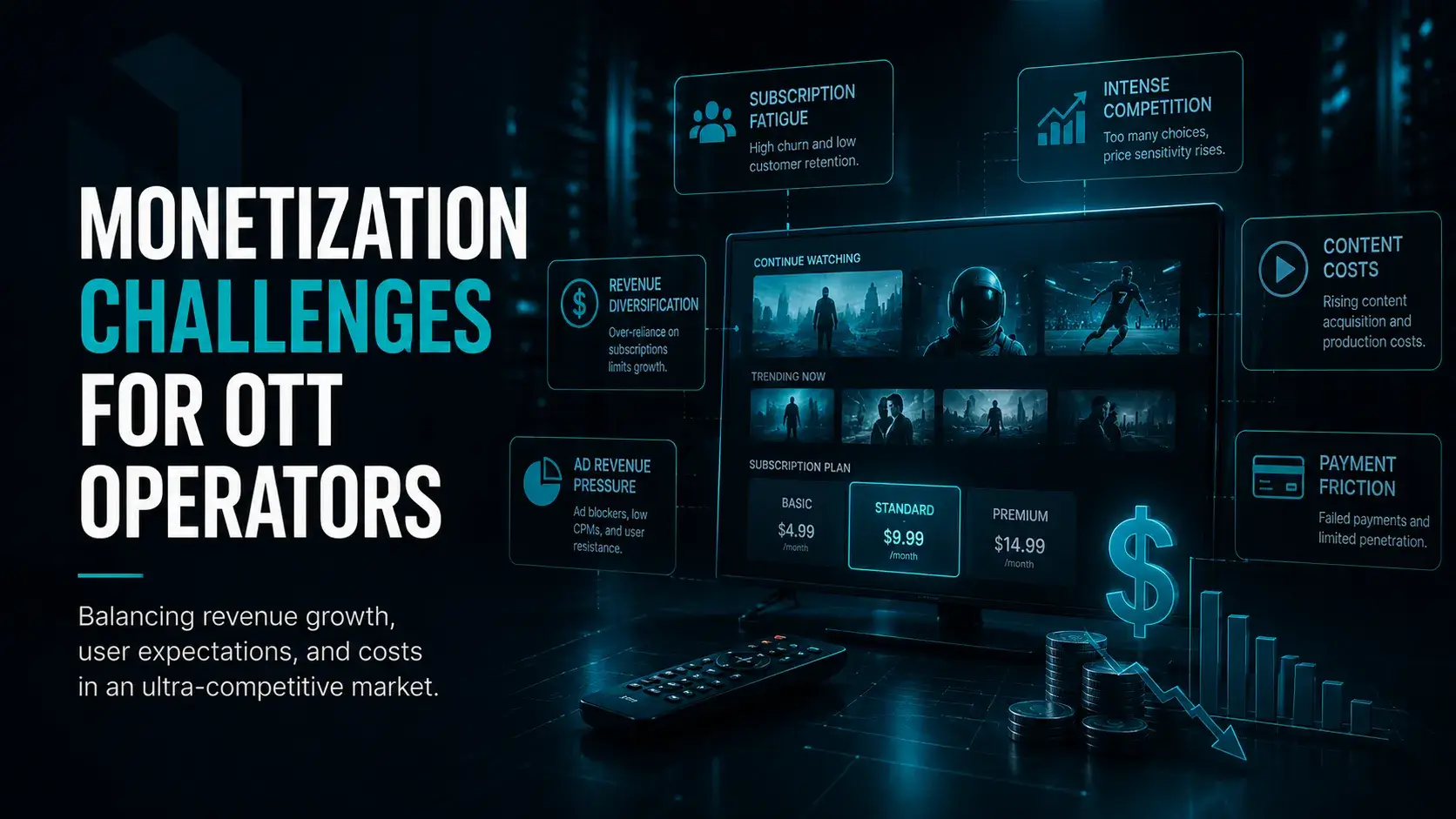
4. Monetization Challenges for OTT Operators
Revenue strategy has become one of the defining OTT monetization challenges. Consumer behavior is shifting. Traditional subscription models alone no longer solve every growth objective.
Subscription Fatigue and Revenue Pressure
Consumers now manage multiple subscriptions across entertainment categories. As costs rise, subscription fatigue becomes a real pressure on retention. This directly influences subscriber churn in OTT, especially in competitive markets.
Operators have responded with more flexible pricing strategies. Bundles have become popular because they increase perceived value. Ad-supported tiers have opened new audience segments. Premium upsells create incremental revenue while serving higher-value users.
The shift is not simply about protecting profits. It is about diversifying it. Platforms increasingly recognize that relying on a single monetization stream can create long-term vulnerability.
Choosing Between SVOD, AVOD, and Hybrid Models
One of the major OTT platform challenges today is choosing the right income structure. Subscription-led services still perform well, but hybrid models continue gaining momentum.
SVOD remains strong for premium experiences. AVOD creates broader reach and lowers acquisition barriers. Transactional models still hold value in event-driven content. Yet many leading services now combine these approaches.
Hybrid monetization has gained traction because it adds flexibility. It allows operators to serve multiple audience segments while reducing income concentration risk. That adaptability has become increasingly valuable in evolving markets.
Balancing Advertising Revenue and User Experience
Advertising plays a growing role in OTT economics. At the same time, ad-heavy experiences can weaken engagement. This creates one of the most important OTT advertising challenges.
Success often depends on relevance rather than volume. Better ad frequency controls help prevent fatigue. Smarter targeting improves campaign performance while reducing disruption. Premium CTV advertising challenges increasingly revolve around finding this balance.
When ad experiences feel integrated rather than intrusive, monetization and engagement can support one another. That alignment is becoming a competitive advantage.
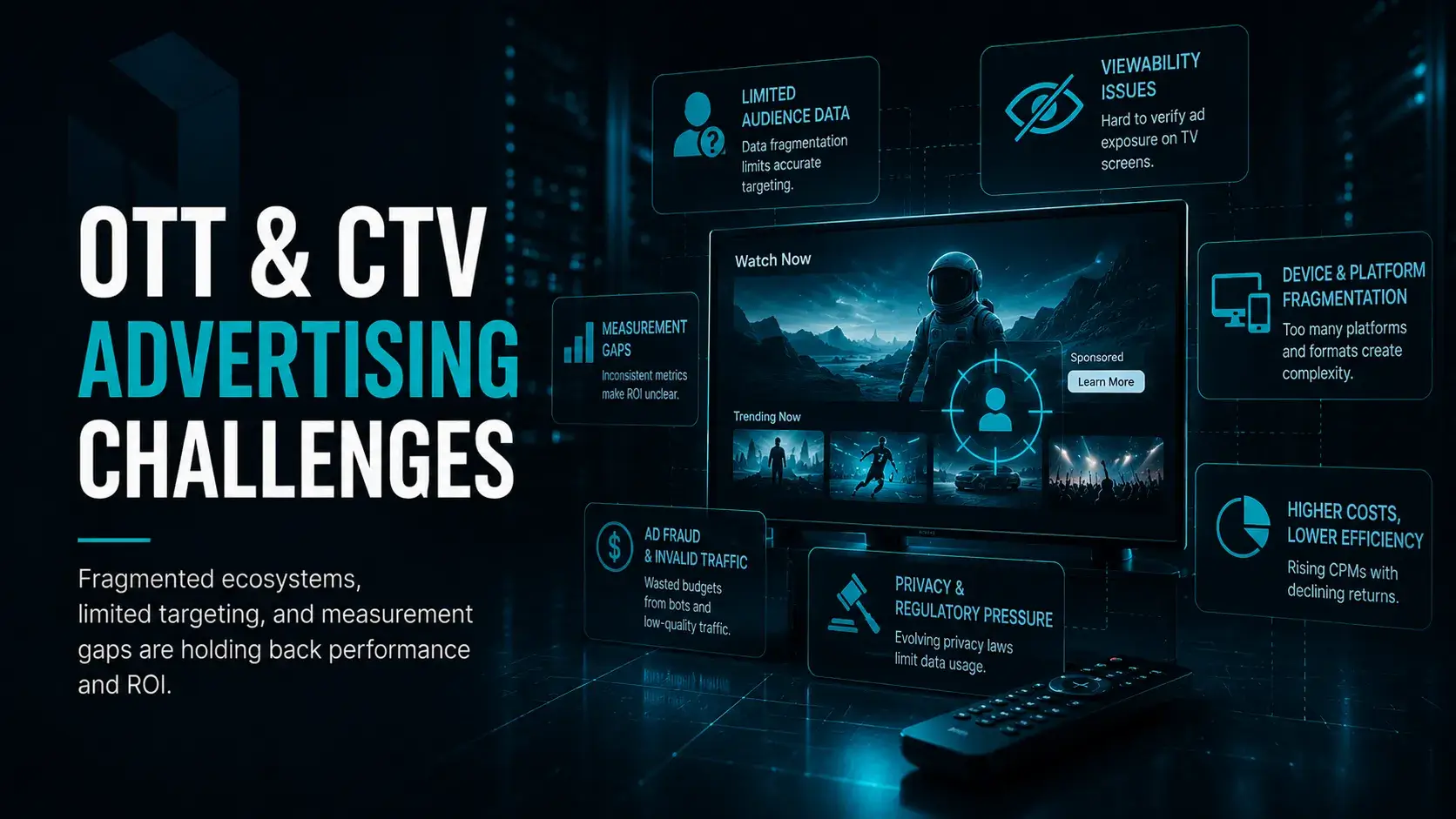
5. OTT and CTV Advertising Challenges
Advertising growth is expanding opportunity for operators. It is also introducing technical and operational complexity. Many modern CTV advertising challenges now sit at the intersection of data, inventory, and monetization.
Fragmented Ad Ecosystems
One major opportunities is fragmentation. Inventory often sits across multiple demand partners, platforms, and systems. That fragmentation can reduce efficiency and complicate execution.
Operators frequently deal with disconnected reporting, inconsistent workflows, and interoperability gaps. These issues can affect campaign delivery and income optimization. They also increase operational overhead.
This is why many platforms now prioritize consolidation strategies. Unifying supply paths and improving interface interoperability often support both performance and monetization.
Inventory Management and Fill Rate Issues
Inventory management has become more strategic. It is no longer only about maximizing fill rates. It is also about maximizing yield quality.
Strong operators focus on balancing pricing controls, premium packaging, and programmatic efficiency. Each influences how inventory performs commercially. Better yield management can strengthen monetization without increasing ad load.
This has become especially relevant as OTT monetization challenges increasingly depend on advertising-supported growth.
Targeting and First-Party Data Challenges
Privacy changes continue reshape audience targeting. As traditional identifiers become less dependable, first-party data has become far more important.
Operators are investing in audience modeling, contextual intelligence, and identity alternatives to maintain performance. These strategies support campaign relevance while adapting to privacy expectations.
This affects far more than ad delivery. It shapes how OTT advertising challenges evolve across campaign performance, personalization, and long-term profits models.

6. Measurement and Attribution Challenges
Measurement remains one of the hardest opportunities of OTT to solve. Without clear performance proof, advertiser confidence can weaken. That makes OTT measurement and attribution a strategic priority.
Cross-Platform Audience Measurement
Viewers move fluidly between connected TVs, mobile devices, and web environments. Measuring that behavior consistently remains difficult.
Cross-platform audience measurement now requires more unified systems. Operators increasingly seek shared audience identifiers, stronger cross-screen analytics, and consolidated reporting frameworks.
This matters because fragmented measurement often limits campaign optimization. Unified visibility supports stronger monetization decisions.
Proving Campaign ROI
Advertisers increasingly want outcomes, not impressions alone. Reach matters, but measurable business impact matters more.
Completion rates, conversion lift, incremental reach, and sales attribution have all become critical signals. These metrics help validate campaign value and support budget growth.
As OTT measurement and attribution matures, ROI proof is becoming central to premium ad demand.
Standardization and Reporting Limitations
One persistent opportunity is inconsistency. Reporting standards can vary by platform, partner, and campaign structure. That makes comparisons difficult.
Better frameworks help solve this. Standardization improves trust. It also allows buyers to compare CTV ads performance, OTT placements, and broader digital advertising channels with greater confidence.
Measurement maturity often becomes a growth enabler. Stronger reporting often attracts stronger ad investment.

7. Security, DRM, and Compliance Risks
Security underpins every successful streaming service. Growth has little value without trust. This is why DRM and security challenges in OTT remain foundational.
Piracy and Content Protection
Piracy continues threaten content value. It can weaken monetization, rights value, and partner confidence.
Operators increasingly use layered defenses. Tokenization secures session access. Watermarking supports forensic tracking. Multi-DRM environments strengthen protection across devices.
These measures are no longer optional for premium services. They are part of protecting long-term business viability.
Data Privacy and Regulatory Compliance
Privacy obligations continue expand globally. Compliance is becoming more complex as interface scale into multiple jurisdictions.
Operators now invest more heavily in consent frameworks, secure storage models, and stronger data governance. These controls help reduce regulatory risk while protecting users.
Privacy strategy increasingly intersects with product architecture. It is no longer only a legal function.
Payment Security and User Trust
Subscription businesses depend on trust at every transaction. Payment friction or fraud can quickly damage retention.
Secure payment systems help reduce fraud exposure while supporting customer confidence. They can also improve lifetime value through stronger subscriber continuity. For many operators, payment security is now part of retention strategy, not just compliance.
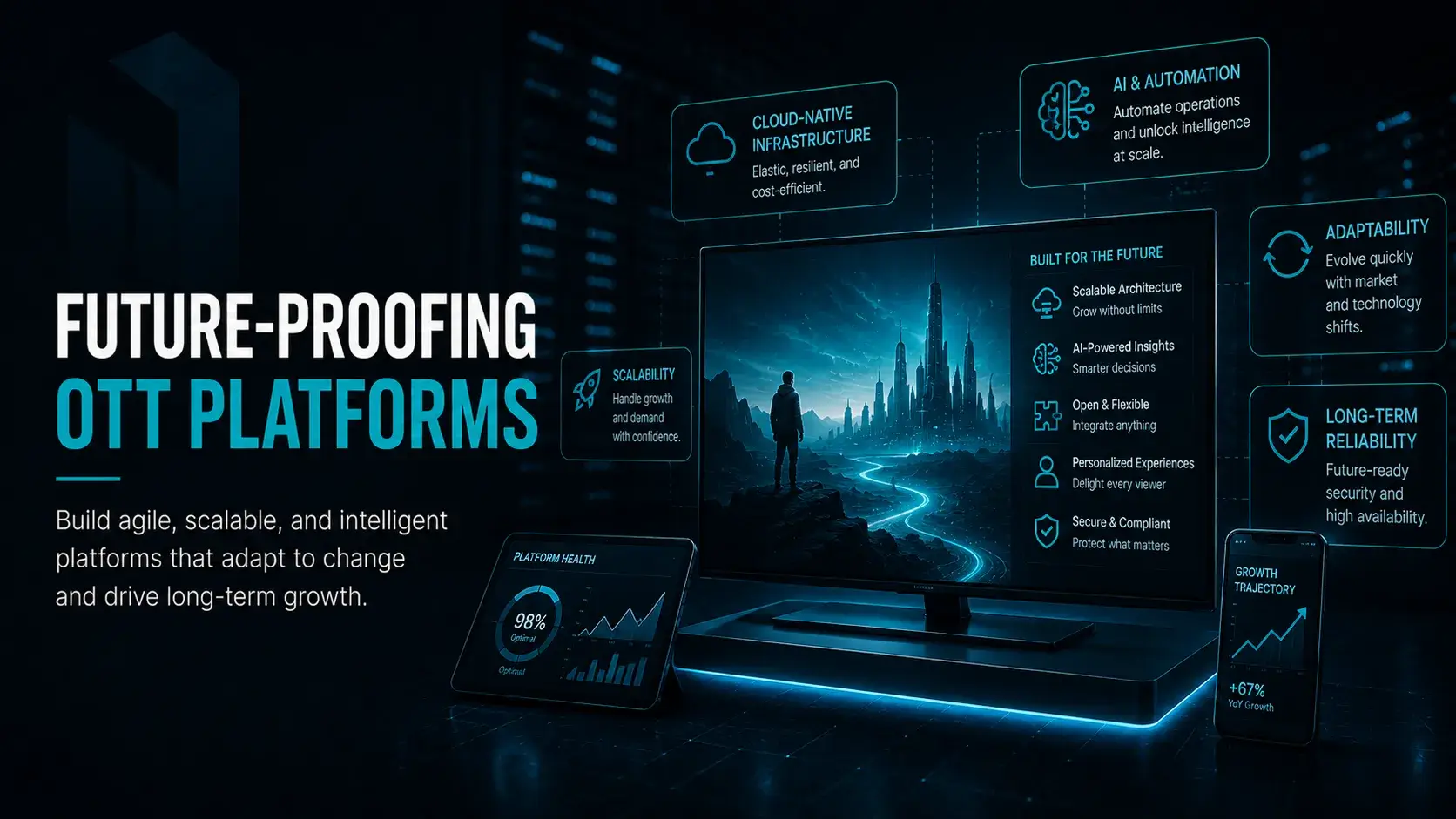
8. Future-Proofing OTT Platforms
Future readiness has become essential. Scale alone is not enough. Adaptability often determines long-term success.
Emerging Technologies Shaping OTT
Innovation continues reshape the market. Several technologies may redefine how operators address OTT streaming challenges and OTT scalability challenges.
AI-driven operations are improving automation and predictive optimization. Edge computing is reducing delivery friction. Advanced compression is improving efficiency while preserving quality.
Immersive formats may also influence the next phase of viewer engagement. For operators, future technologies are becoming strategic planning considerations now.
Preparing for Next-Generation Viewer Expectations
Audience expectations continue rise. Viewers increasingly expect experiences built around personalization, flexibility, and interaction.
Interactive live stream, commerce integration, and premium multiscreen experiences are moving from emerging concepts into practical expectations. This affects both product strategy and infrastructure planning.
Operators that anticipate these shifts often strengthen OTT audience retention before competitors react.
Strategies for Sustainable OTT Growth
Sustainable growth rarely comes from a single initiative. It usually comes from disciplined execution across technology, monetization, and customer experience.
Infrastructure resilience remains a common priority. Profits diversification continues matter. Continuous optimization often separates reactive operators from strategic ones.
Some providers begin with architecture reviews or request a free demo through Netrouting to assess long-term scalability options. For many operators, that evaluation helps align infrastructure with growth ambitions.
Key Takeaways
Successful operators often share recognizable patterns. They treat OTT Challenges as opportunities to improve, not just risks to manage.
They usually invest in infrastructure before scale becomes a problem. They approach monetization with flexibility rather than dependency. They prioritize trust, data intelligence, and long-term platform resilience.
Common traits often include solving technical risks early, strengthening monetization models, protecting user confidence, and using data strategically. These patterns continue shape which operators achieve durable success.
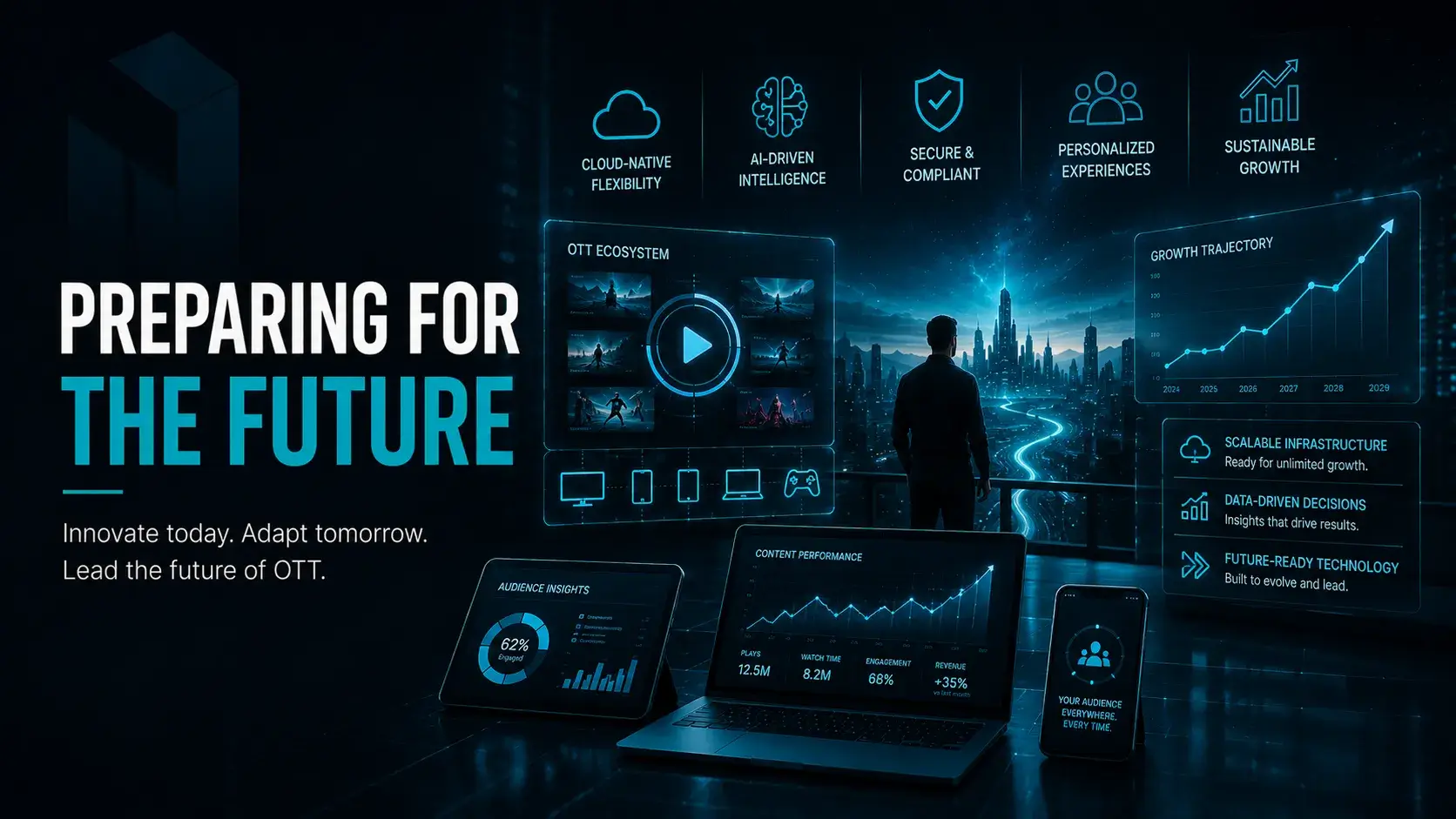
Preparing for the Future
The future of OTT is vibrant but opportunities. Operators must be agile, forward-thinking, and customer-focused to thrive. Many of the biggest challenges in streaming are also where innovation creates advantage.
Continuous Innovation: Regularly update your platform’s technology stack to stay ahead of competitors and meet evolving consumer expectations. This is increasingly important as operators manage ctv and ott campaigns, optimize ctv inventory, and coordinate performance across other advertising channels.
Understanding Market Trends: Invest in market research to stay ahead of trends and anticipate shifts in consumer behavior. Market visibility also helps operators align monetization strategies with ctv spend, emerging demand across other channels, and opportunities that can drive sales more effectively.
Service Improvement: Focus on continuous improvement of user experience, including content quality, platform usability, and customer support. Strong experiences improve retention while supporting advertising performance across ctv and ott campaigns.
The biggest lesson about OTT Challenges is simple. Challenges often signal where opportunity exists. Operators that solve complexity can lead the next era of digital entertainment while improving performance across other advertising channels and connected ecosystems.
As streaming services replace linear tv and traditional cable subscription, the market will keep evolving. Winning will depend on performance, monetization, security, and adaptability. It will also depend on how efficiently operators manage ctv inventory, optimize ctv spend, and connect streaming growth to strategies that drive sales.
For operators willing to innovate, the future remains remarkably open. Those that turn today’s biggest challenges into scalable advantages will be better positioned across streaming, advertising, and other channels alike.