
Why Server Costs Still Feel High as Memory Generations Coexist
If you’ve spent the last 12-18 months reviewing the cost to server up your organisation, or planning for your next hardware refresh, you may be finding the future is priced differently to the past.
For the Enterprise, Hosting and Virtualization platform, the DDR4 has now reached its full maturity. The manufacturing, the environment and the high capacities of the DDR4 are now able to face the most demanding productions.
For the technologies with relief from cost pressures in the later stages of the lifecycle has not been the case. As mature technology platforms have graduated to server-based infrastructure, higher costs have generally accompanied them.
But this cycle looks different.
Blog contents
Most of the other property market segments have suffered in terms of price during the last property downturn. Not so the Infrastructure property market. In fact in terms of investment performance it has maintained value while delivering gains on investment for the more hard nosed investor.
DDR4 memory hasn’t been exactly forgotten in recent months, this being a part of the DRAM market that still has quite a bit of oomph left in it in terms of sales and revenue - although interestingly prices have risen, and not decreased as many may have been hoping.
What’s changed is the surrounding landscape.
Server memory is evolving to face changing workloads. Many new workloads such as AI and real-time workloads require significantly more memory than typical workloads running on servers of higher specifications. Industry is adopting DDR5 memory in IT infrastructure today and the initial target is high-performance servers. This new memory is not replacing DDR4 but provides an additional performance dimension beyond established DDR4 memory.
We’re no longer operating in a single-generation market.
We are currently in the coexistence phase for DDR4 and DDR5. As previously, the capacity-driven economics of infrastructure will be supported by DDR4 whereas DDR5 will drive the next generation of bandwidth and increased throughput above and beyond that of DDR4.
With projected high levels of Urban Air Mobility use, the way that we will price, implement and manage the necessary supporting infrastructure, operations and planning in 2026 will change.
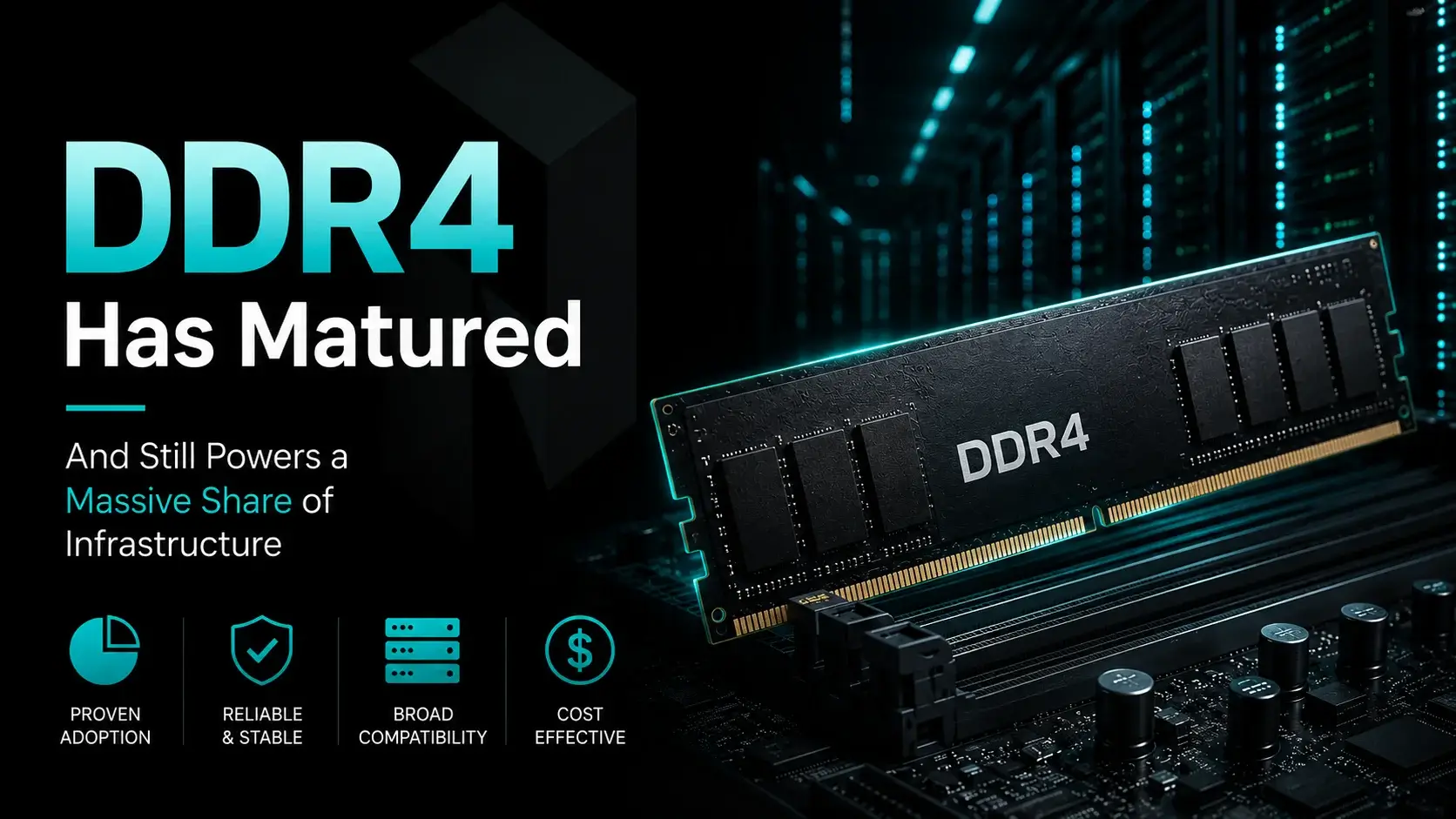
1. DDR4 Has Matured - And Still Powers a Massive Share of Infrastructure
DDR4 is commonly perceived as being a legacy technology that has long since been left in DDR5’s wake. While this may be true for the enthusiast crowd or those constructing high-end specialist hardware for things like overclocking, the reality is that DDR4 is still an integral part of the bulk of enterprise infrastructure and many web hosting environments around the world.
Years of production refinement have made it:
- Exceptionally stable
- Operationally predictable
- Broadly compatible
More price-to-performance efficient relative to next-generation platforms
Many of our production servers are running with DDR4 memory. This includes the Virtualization Cluster / Enterprise Database Servers, the Web Hosting Environments servers as well as the Edge Compute servers in regions around the globe.
But even as DDR4 platforms have grown well beyond where we first thought they’d end up.
We commonly build out high-memory DDR4 servers that have up to 1.5TB of DRAM per single concentration of infrastructure, but we’ve worked with certain platforms that have scaled well over this 1.5TB per “node” benchmark. As new generations of DIMMs and CPU support have emerged, the memory boundaries are continually pushed.
The market for RAM has focused to date on the earlier generation of technology, DDR4 memory, but with the onset of newer DDR5 technology, it would be a mistake to consider DDR4 to be a transitional technology. It is a foundation technology.
2. Supply Dynamics Have Shifted - Impacting Both Memory Generations
Historically memory technology has decreased in price as it has matured through successive technology generations.
But the 2025-2026 cycle has broken that pattern.
A rapid ramp up in AI computing intensity has put explosive demand on the DRAM industry, and now everyone is scrambling to allocate DRAM wafer supply for the higher bandwidth High-Bandwidth Memory (HBM) and the higher density DDR5.
DDR4 memory prices are sticking around at their high levels, and even seemingly climbing as the rest of the DRAM market grapples with pressure from a data center revolution sparked by AI.
As a result:
- Over the last few months we have seen the prices of DDR4 Ram continue to rise sharply. Some of the higher capacities have seen some massive price hikes and it is difficult to fathom why some of these higher capacity modules have seen such dramatic increases. Please find all of the new DDR4 prices in the table below.
- DDR5 pricing remains elevated under AI demand pressure
- Market volatility affects both generations simultaneously
Refurbished or secondary market DDR4 memory is still being pushed to fill prices in the near future, meanwhile newly manufactured DDR4 memory is slowly arriving in warehouses.
Memory Pricing Not What You Expected - The memory price drop that we had all hoped for just did not happen for this hardware cycle. Most of us were expecting a large decrease in price for hardware to keep driving the sales that have been so good in the past cycles.
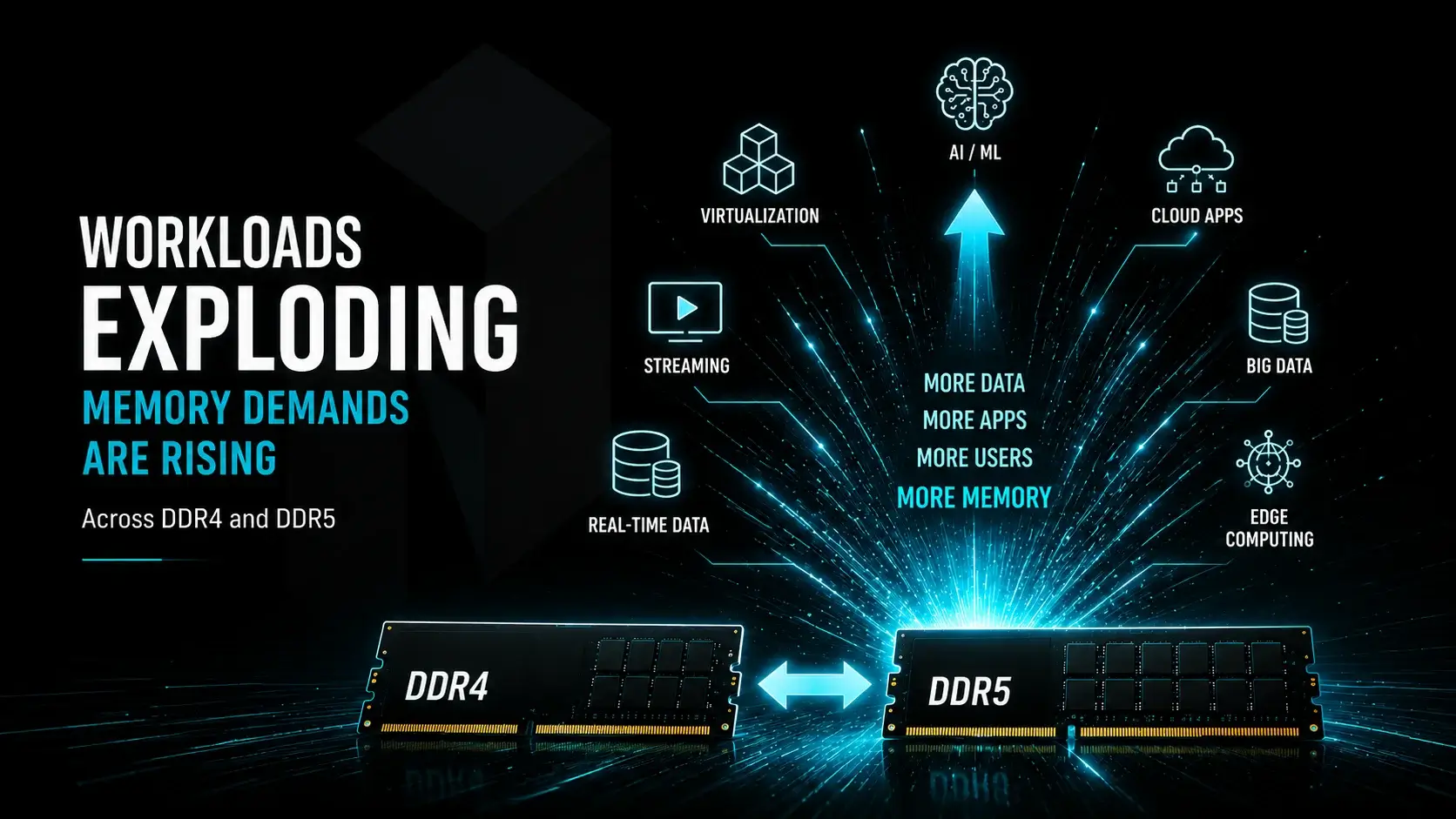
3. The Workload Explosion Driving Higher Memory Demands Across Both DDR4 and DDR5
Today’s infrastructure isn’t being built for yesterday’s workloads.
The data center of the future is changing fast. With ever more compute-intensive and memory-intensive applications in development, one of the key issues will be to ensure there is sufficient bandwidth as well as a solid network capacity plan. How do you see this critical transition and how will you deal with it?
The workload is growing. This is why the baseline for infrastructure performance is increasing.
Let’s break down the biggest drivers:
AI Model Training Environments
Training an AI is probably the most memory-intensive operation we do as computer users today.
Training large language models, recommendation engines, vision models and generally anything that requires large datasets to train on can consume a huge amount of compute power as you train the same model over many compute cycles to refine it and improve accuracy.
During training:
- Datasets are streamed into memory continuously
- Model weights are loaded and recalculated
- Gradients are updated across thousands of iterations
- GPUs depend on constant data feeding
Not having enough memory bandwidth causes idle time for the accelerators, longer training and higher cost of ownership.
DDR5 will deliver tremendous improvements in compute-bound workloads, while DDR4-based compute clusters of very high storage density will remain relevant for data-staging, data-preprocessing and hybrid training where storage capacity trumps raw speed.
Real-Time AI Inference at Scale
After we put a model into production, our work shifts to supporting inference workloads for that model.
These power:
- Chat platforms
- Fraud detection systems
- Recommendation engines
- Monitoring automation
- Personalization platforms
All interactions load model data into memory and immediately return a prediction.
Given the increased memory bandwidth and concurrency support, one might expect more of the inference clusters to be upgraded to faster, higher power High-Bandwidth Memory (HBM) nodes of DDR4 memory. But cost and horizontal scaling continue to be key considerations.
In-Memory & High-Frequency Databases
Today real-time data processing often employs In-Memory architecture.
These types of applications, such as trading systems, fraud analytics, telecom software and IoT telemetry processing include large amounts of data in memory.
Under heavy query concurrency:
- Bandwidth saturation can occur
- Latency spikes impact performance
- Memory refresh cycles intensify
DDR5 technology was published late 2019 and has some remarkable speed improvements over the venerable DDR4 RAM modules but with most production clusters already running on DDR4 it is fair to say that the added cost of DDR5 RAM modules is unnecessary. For really big datasets where speed per dollar is at a premium DDR4 will continue to suffice for the foreseeable future.
Dense Virtualization & Private Cloud Infrastructure
The virtualization environment is consuming more memory than ever before. Even as more virtualization environments are consolidated into a single private cloud, memory demands are continuing to drive sharply higher demands.
We continue to support higher density designs on the DDR5 platform. While the Datacenter will continue to grow using DDR5 in the future, for now existing virtualized servers will continue to be serviced by the well established DDR4 eco-system at competitive price/performance.
Kubernetes & Container Orchestration
Distributed systems, such as microservices running in containerized environments, face challenges not found in traditional IT operating environments. One challenge faced by these distributed environments is burst demand.
Pods join and leave your clusters at will, containers burst to arbitrary amounts of RAM at random times, and your orchestration tier scales up and down at random intervals in an attempt to hit the necessary scaling for your application.
The technology to handle the high bandwidth for burst is in place but the technology today is focused on using DDR4 memory to enable lots of layers of abstractions while maintaining cost and horizontal scaling of other components in the system.
Streaming, Analytics & Real-Time Processing Pipelines
Modern platforms ingest continuous data streams:
- Observability telemetry
- Clickstream analytics
- Video processing
- Log aggregation
- Sensor ingestion
Those pipelines can then be 'pipeline-ized' and searched across all clusters that are doing distributed compute in real-time.
In moving to bigger hardware for big data workloads, one typically thinks first about needed bandwidth. But capacity, the scaling cost of the nodes, and the underlying cost model also matter.
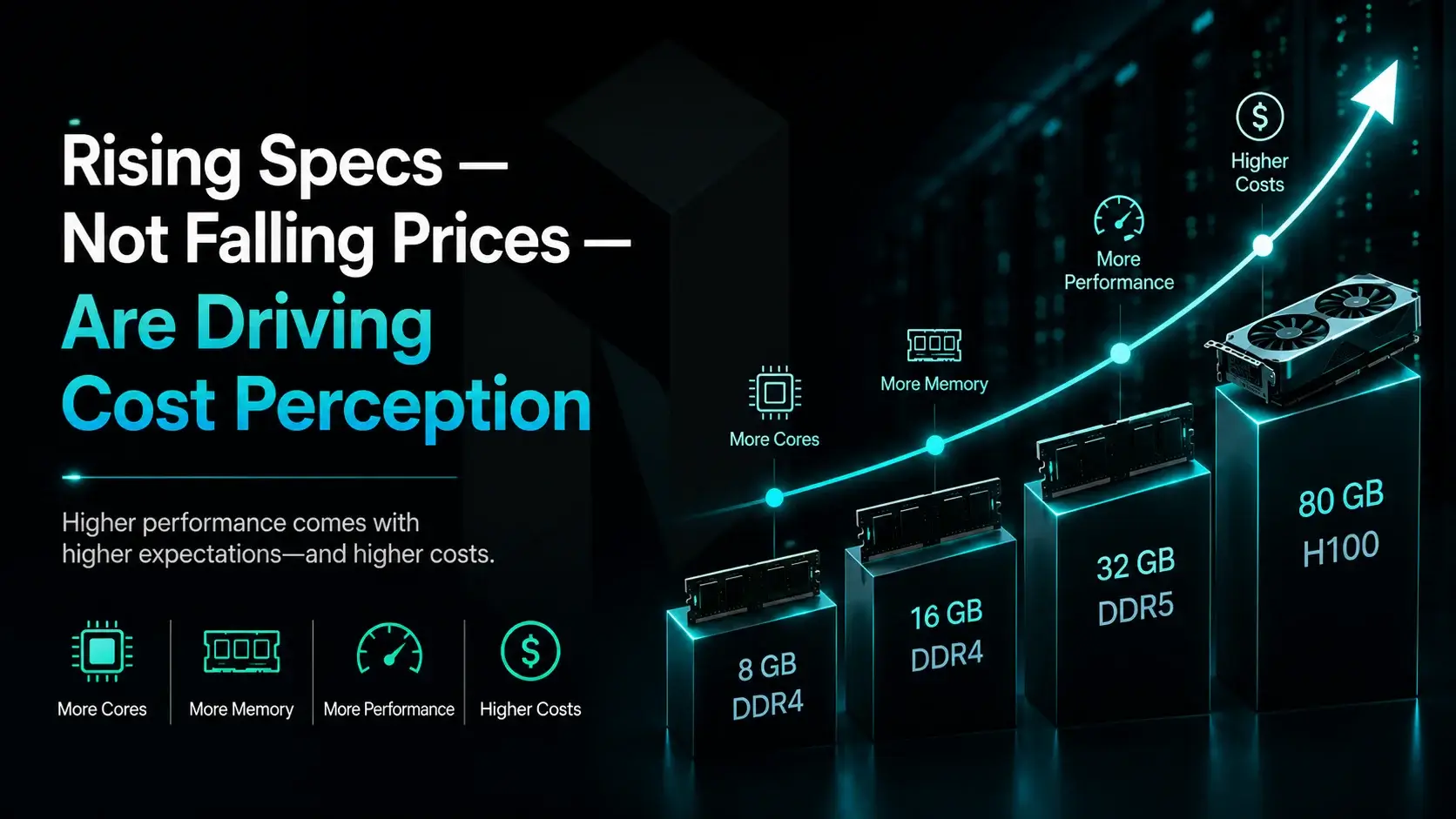
4. Rising Specs, Not Falling Prices, Are Driving Cost Perception
Infrastructure pricing pressure isn’t being driven by memory costs alone, as explored in our analysis of why server RAM prices are skyrocketing
It’s the rising baseline of server specifications.
Modern deployments increasingly include:
- Larger default memory footprints
- Higher core-count CPUs
- NVMe-first storage architectures
- 100G+ networking
- AI-ready acceleration layers
Note that although the price of individual components will cease to rise after a while, the total capability of the system (and hence price) will continue to rise afterwards.
Prices don’t fall because the baseline keeps moving forward.
5. The Business Reality: Protecting ASP While Advancing Performance
From a vendor perspective, pricing stability also supports long-term innovation cycles.
Average Selling Price (ASP) protection helps fund:
- Next-generation R&D
- Fabrication expansion
- Platform innovation
- Ecosystem development
Shift Performance-Intensive workloads to latest generation of technology (DDR5) and keep Capacity-Intensive / Commercially-Scalable workloads on matured technology (DDR4) to achieve the objectives of generating consistent revenue while advancing technology.
The dual-generation strategy allows the infrastructure to evolve while the current generation of infrastructure does not have to be replaced immediately.
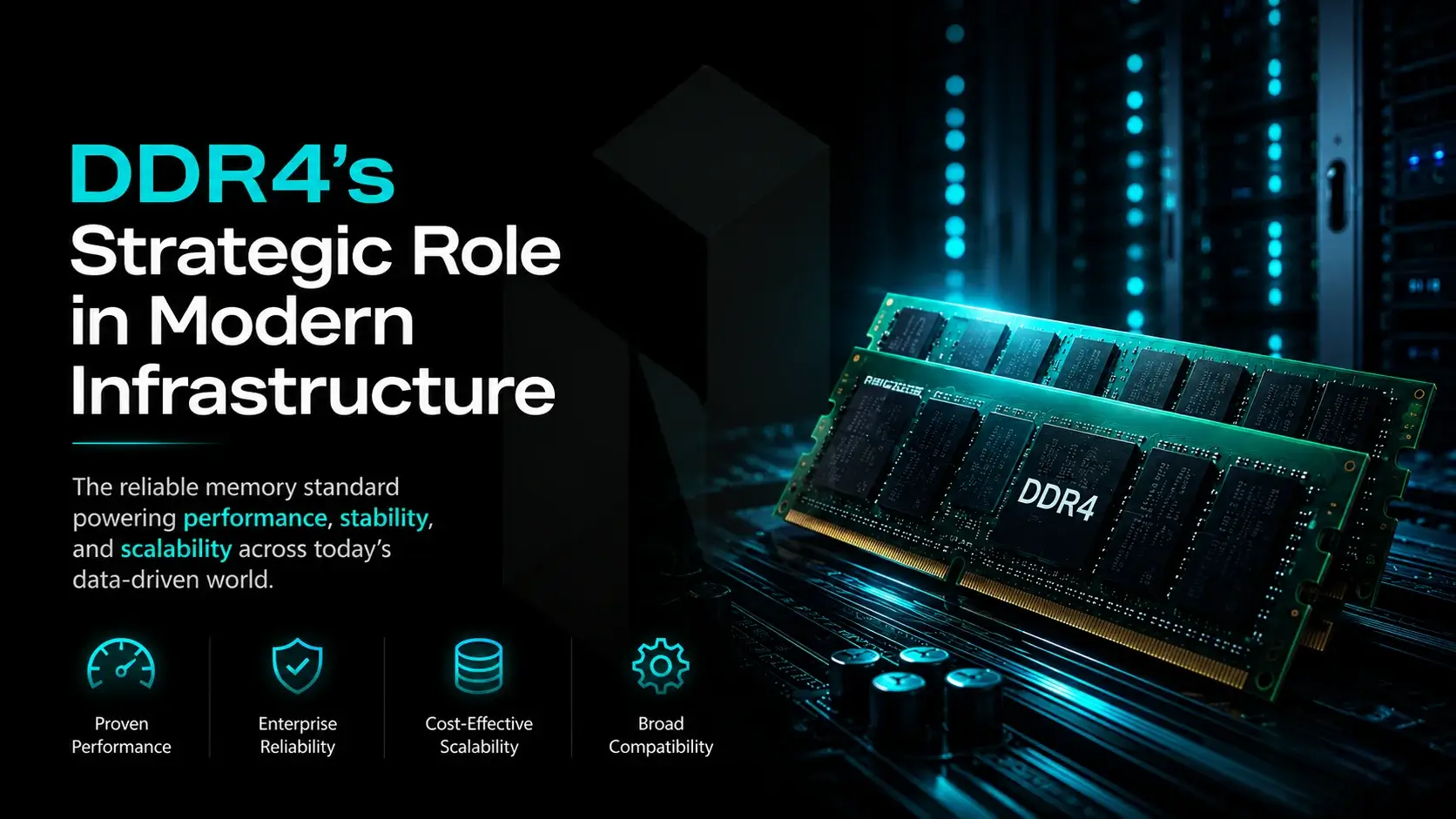
6. DDR4’s Strategic Role in Modern Infrastructure
DDR4 memory is used in various designs for both existing and new infrastructures, where it acts as a key component in many of these designs.
In the meantime, high-performance memory for AI workloads like DDR5 is finding its way into systems, while DDR4 continues to be used for stable, scalable and cost-efficient production.
For many organizations, DDR4 is not a fall back to DDR5 but rather a design choice to best match the economics of their workloads.
DDR4 still has significant operational value.
Virtualization & Multi-Tenant Hosting
Virtualization clusters remain one of the largest consumers of server memory globally.
For each virtual server you need to assign a certain amount of RAM. When you are increasing the consolidation ratios the total amount of memory required by all servers will be more important than the maximum bandwidth a server requires.
DDR4 platforms excel here because they offer:
- High total memory ceilings per node
- Predictable performance under steady workloads
- More cost-efficient per GB relative to DDR5 in current market conditions
- Mature hypervisor compatibility
Service providers, MSPs and private cloud providers use DDR4 to achieve the highest VM density while still keeping the cost of the infrastructure under control.
Backup, Disaster Recovery & Replication Environments
Not every infrastructure layer demands bleeding-edge performance.
Backup clusters, disaster recovery environments, and replication nodes prioritize:
- Storage capacity
- Reliability
- Long-term stability
- Cost-efficient scaling
For storage servers, using DDR4 servers is sufficient to provide a lot of memory for caching, for deduplication indexing and for replication management. There is no need to pay for the higher bandwidth of newer generations.
They are cost effective for secondary functions and are therefore used for all sorts of infrastructure functions where robustness is required.
Dev / Test & Staging Environments
A development ecosystem, also known as dev environment, is essentially the same production infrastructure offered at a price point that is within your budget.
DDR4 platforms allow organizations to:
- Spin up staging clusters
- Run CI/CD pipelines
- Test application releases
- Simulate production environments
All while maintaining predictable performance and budget control.
A more scalable cost effective solution for the dev/test workload (bursty but non-latency sensitive) is provided by DDR4.
Storage-Heavy Compute & Data Platforms
A variety of storage-centric applications are now running on servers. Object storage nodes, archiving, and very large backup servers are a few examples of these servers which are very memory-intensive to support caching, indexing, etc. of metadata.
DDR4’s high-capacity configurations enable:
- Large cache layers
- Efficient storage indexing
- Data deduplication operations
- Replication buffering
In terms of pure memory volume when bandwidth is less important, then again, DDR4 architecture wins.
Edge Infrastructure & Regional Compute Nodes
Edge deployments often prioritize:
- Power efficiency
- Hardware cost control
- Deployment density
- Operational predictability
DDR4 is currently the predominant memory deployed in regional and edge compute nodes that are servicing localized, latency sensitive workloads that do not require a lot of bandwidth.
Its mature ecosystem and hardware availability make it well suited for distributed infrastructure rollouts.
Why DDR4 Remains Architecturally Important
High-end DDR4 CPU platforms continue to deliver strong real-world performance across modern infrastructure builds. Enterprise-grade processors within the DDR4 ecosystem, including AMD EPYC 7002 and 7003 series models such as the EPYC 7702, provide substantial core density, memory scalability, and multi-tenant workload efficiency. In many virtualization, database, and enterprise application environments, performance variance versus newer Genoa-based architectures remains relatively narrow, particularly where workloads are capacity-driven rather than bandwidth-saturated.
To support high-capacity production systems based on the DDR4 platform with performance economics comparable to that of competing alternatives, DDR4 will be supported in current as well as in newly introduced server platforms.
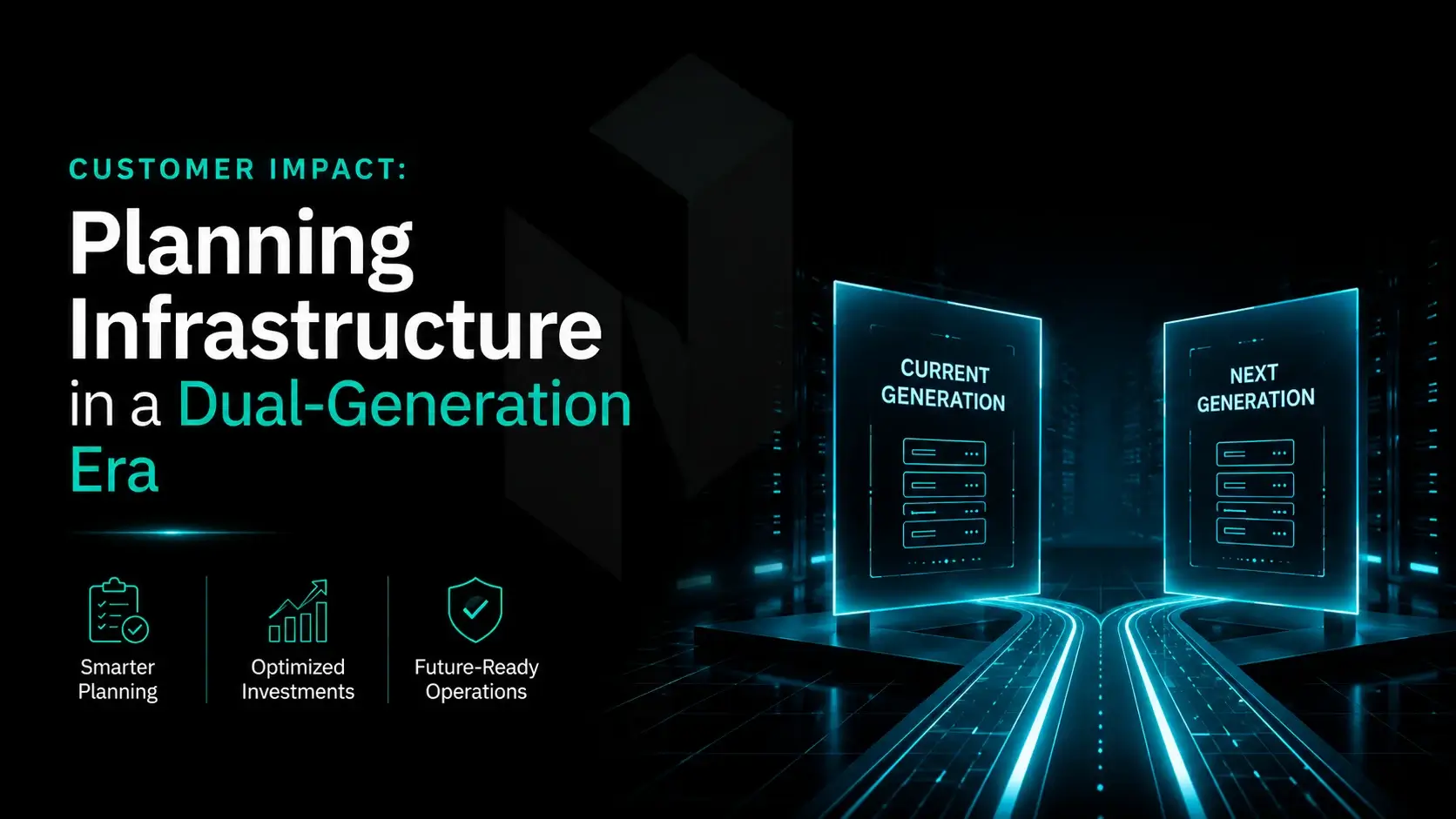
7. Customer Impact: Planning Infrastructure in a Dual-Generation Era
Having both DDR4 and DDR5 RAM on new servers means more than just having the latest hardware for the customers of IT infrastructure providers. You need to manage your planning differently for your customers.
In previous refresh cycles, generational upgrades were relatively linear:
New standard launches → Old standard depreciates → Buyers migrate
But the DDR4 → DDR5 transition is unfolding differently.
The architecture of the underlying infrastructure will be designed with workload alignment in mind, rather than relying on the historical default architecture.
Here’s how that shift is reshaping planning:
Budget Modeling Becomes More Complex
Infrastructure budgeting once followed predictable depreciation curves.
But today:
- DDR5 carries performance premiums
- DDR4 pricing remains stable rather than collapsing
- Supply volatility affects procurement timing
The challenge to finance and procurement will be addressed by developing a process for evaluating mixed-generation investment strategies. The costs for investment strategies will not decrease automatically over time.
Workload Segmentation Is Now Critical
Modern infrastructure planning begins with workload classification.
Organizations must evaluate:
- Bandwidth sensitivity
- Latency sensitivity
- Dataset size
- Concurrency demand
- AI readiness
This leads to tiered deployment models:
DDR5 for:
- AI training
- High-frequency analytics
- Dense container orchestration
DDR4 for:
- Virtualization baselines
- Backup environments
- Dev/test clusters
- Predictable enterprise workloads
Right-sizing infrastructure becomes more valuable than blanket generational upgrades.
Lifecycle Planning Gets Extended
For now DDR4 is commercially still valid, so extending refresh cycles on existing platforms as opposed to migrating to a completely new platform is business as usual.
This allows teams to:
- Sweat existing assets longer
- Phase DDR5 adoption gradually
- Align upgrades with workload demand
The consequence of planned generational change is significantly more flexible CapEx planning than for a change forced by other circumstances.
Procurement Strategy Requires More Foresight
Supply-chain reprioritization means buyers must approach sourcing more strategically.
This includes:
- Securing high-capacity DDR4 nodes early
- Forecasting DDR5 adoption windows
- Balancing refurb vs. new procurement
Infrastructure acquisition is no longer purely transactional, it’s forward-planned.
Hybrid Architecture Becomes the New Normal
Rather than choosing one generation over the other, organizations today are designing blended environments where:
- DDR4 handles baseline compute
- DDR5 powers performance bursts
- Cloud layers absorb demand spikes
Our hybrid architecture is suited for cost efficient operations and future performance.
Operational Teams Need Dual Optimization Skills
Infrastructure teams must now optimize across two performance profiles:
- Capacity-driven optimization (DDR4)
- Bandwidth-driven optimization (DDR5)
This impacts everything from workload placement to orchestration policy design.
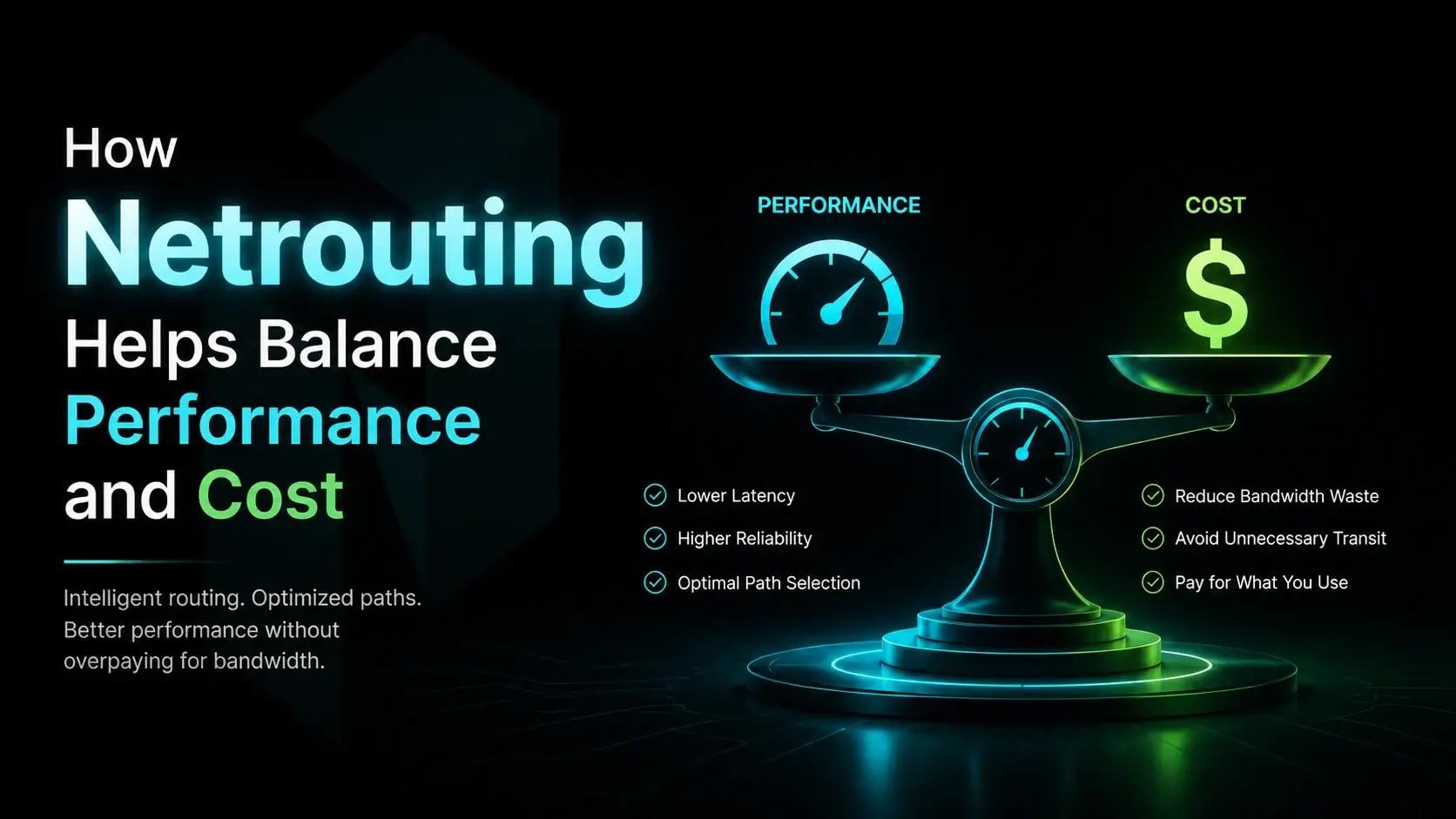
8. How Netrouting Helps Balance Performance and Cost
Flexible providers like Netrouting enable hybrid infrastructure strategies that maximize both performance and cost efficiency.
DDR4-based bare metal platforms deliver high-capacity, cost-optimized infrastructure for predictable workloads.
We have added support for the latest Cloud Compute platform for the newest type of high-bandwidth memory: DDR5 memory. This new memory type allows for high performance on demand. Whether you need it for your AI training, for short analytics spikes or for very dense and highly orchestrated layers, this new memory type will deliver.
The performance is structured in layers and thus enables us to derive the necessary IT infrastructure investments for the single workloads. In addition the performance can be stepwise increased and for other areas cost-effective solutions can be derived.
Final Perspective
The transition from DDR4 to DDR5 won't happen overnight and for some time both technologies will be on the market.
DDR5 memory continues to push performance to new heights as more AI workloads and others with extremely high bandwidth needs hit the market. Meanwhile, back in production, the proven and stable DDR4 memory continues to support a significant portion of production environments.
The sun is not setting on DDR4 memory just yet. Instead, DDR4 enters a coexistence period where different memory generations will have their own area of application.
Prices stay elevated not because older technology failed to depreciate, but because baseline infrastructure capability keeps advancing.
To cost-effectively scale out, organizations will use DDR4 for capacity efficiency and DDR5 for performance acceleration.
The new competitive advantage is created by the architecture that enables and integrates both functionalities.