Enterprises today rely on fast and efficient infrastructure in order to stay competitive, and understanding the benefits of colocation can significantly improve a company’s performance by reducing latency and running their infrastructure in a professionally managed data center without the need for costly capital expenditure on a company owned facility.
What Is Colocation and How Does It Work?
At its core, colocation is about placing your servers and IT infrastructure inside a third-party data center instead of keeping everything in an in house data center. Rather than building and maintaining your own facility, you rent data center space within a specialized colo data center facility designed for reliability, security, and performance.
This setup is often referred to as data center colocation, and it has become a practical alternative to operating a self-owned data center, especially for businesses that want enterprise-level infrastructure without the burden of building it themselves.
Here’s how it typically works:
Blog contents
- You own the hardware (servers, storage, networking equipment)
- The colocation provider supplies the environment
- Your systems are hosted in colo facilities with robust power and cooling
- You connect through high-speed network connectivity options
A colocation environment is very different from regular data centers or office server rooms. These facilities are engineered with:
- Redundant power systems
- Advanced cooling systems
- Strong physical security measures
- Multiple layers of network security
Unlike cloud computing, where you rent virtual resources, colocation services allow you to keep full control of your own hardware while benefiting from professional infrastructure.
This is why many organizations transition from an off site data center or outdated in house data center to a modern colocation data center.
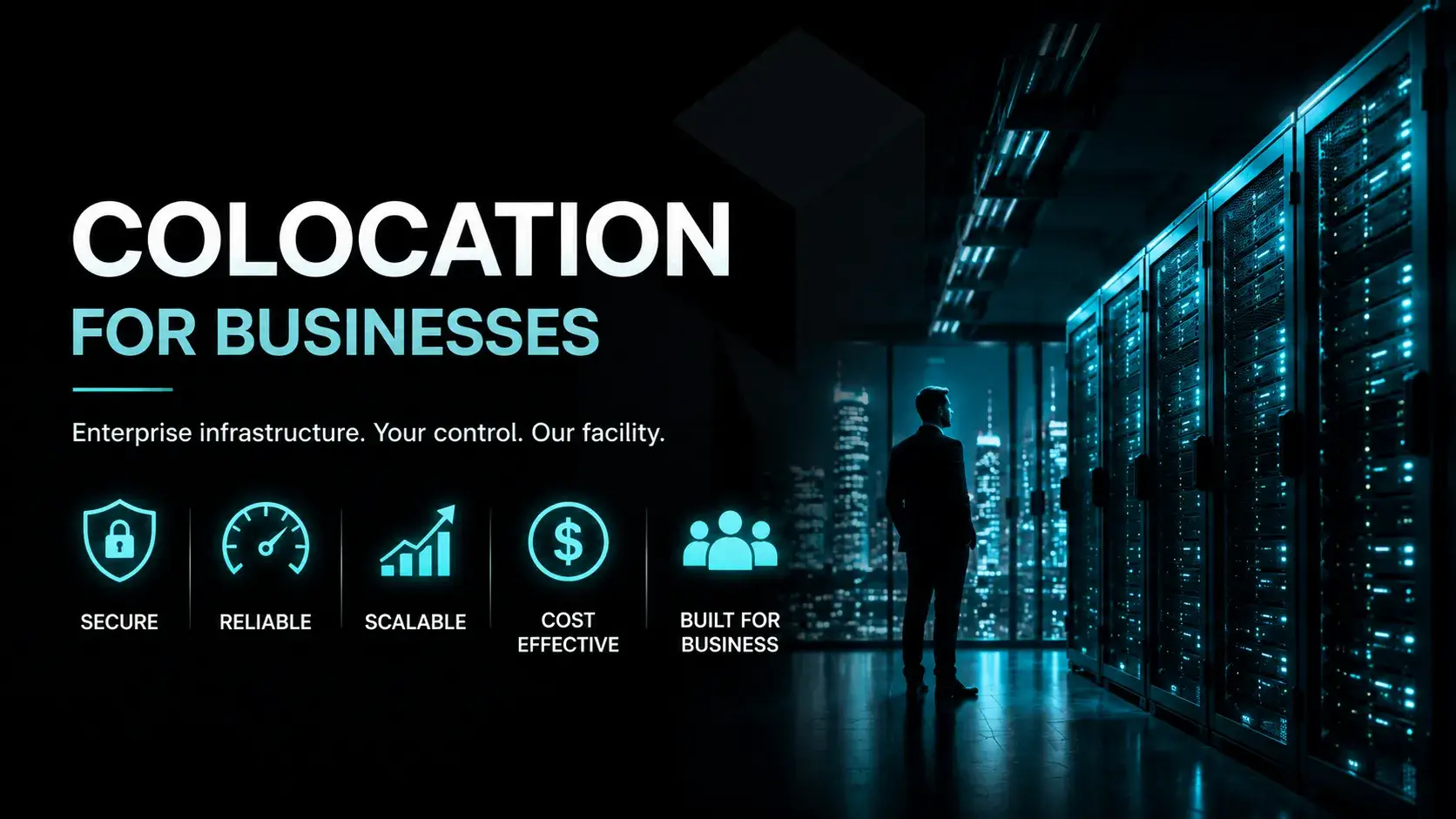
Key Benefits of Colocation for Businesses
Adopting colocation services brings a wide range of advantages, from stronger network connectivity to better cost optimization. These benefits make data center colocation an attractive option for businesses looking to scale while maintaining control over their infrastructure.
Reduced Latency and Better User Experience
One of the most immediate advantages of colocation is improved performance through lower latency. When your systems are hosted closer to your users in regional colocation centers, data travels shorter distances.
That means:
- Faster page load times
- Smoother application performance
- Better real-time interactions
For businesses relying on digital platforms, latency isn’t just technical. It directly impacts customer experience and conversion rates.
With strategically located colocation facilities, companies can serve users faster compared to hosting everything in a distant corporate data center.
High Availability and Uptime Reliability
Downtime is expensive. It disrupts operations, damages reputation, and can lead to revenue loss.
This is where data center colocation services stand out.
Professional colocation data center services are built with:
- Redundant power supplies
- Battery backup systems
- Backup generators
- Often even multiple backup generators
These layers maintain continuous performance despite power failures or local grid disruptions.
Most colocation providers also design their facilities for power redundancy, meaning no single point of failure can take your systems offline.
Combined with experienced data center staff, this results in high uptime levels that are difficult to achieve in a typical private data center.
Enhanced Security and Data Protection
Physical security in colocation facilities includes measures such as 24/7 surveillance, access controls, and private suites to restrict access to authorized personnel only.
Modern colocation companies invest heavily in both physical and digital protection to protect data.
Physical Security
- Biometric access controls
- On-site security personnel
- Continuous surveillance systems
- Advanced intrusion detection systems
Colocation data centers often employ the latest firewall technology, 24x7x365 monitoring, DDoS protection, and other logical security protocols to detect and mitigate cyber threats.
Environmental Protection
- Fire suppression systems
- Controlled cooling systems
- Isolated private suites for sensitive deployments
Together, these features create a robust security framework designed for critical workloads.
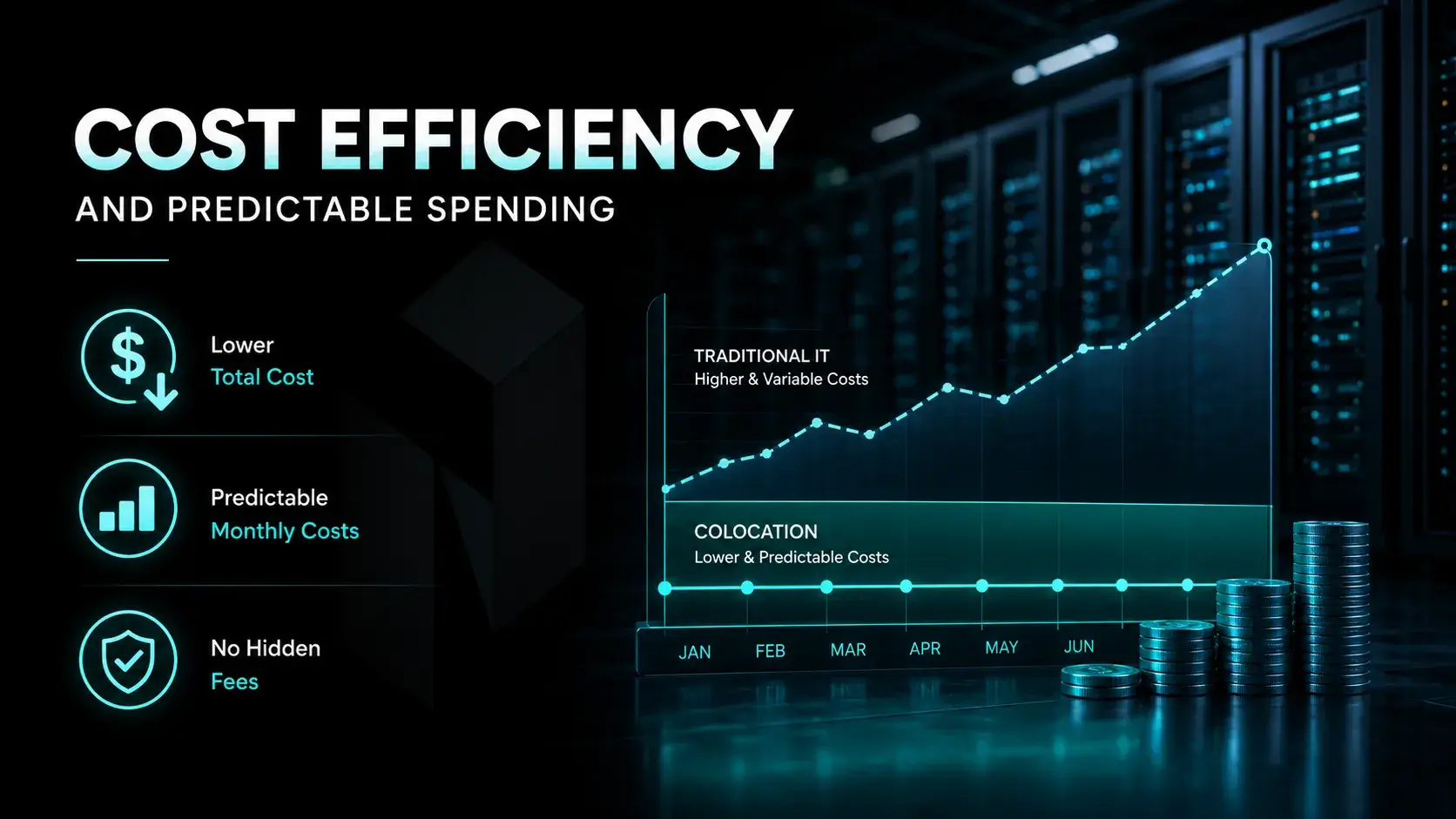
Cost Efficiency and Predictable Spending
Building and maintaining a self-owned data center is expensive.
Costs include:
- Facility construction
- Power infrastructure
- Cooling equipment
- Physical security measures
- Ongoing maintenance costs
With colocation solutions, businesses avoid large upfront investments and shift to a more predictable pricing model.
This leads to:
- Better cost optimization
- Reduced operational costs
- Clear budgeting without unexpected infrastructure expenses
Instead of paying for unused capacity, companies rent only the colo space they need.
Over time, this can generate significant cost savings, especially compared to managing in house servers.
Scalability and Flexibility
Growth rarely happens in a straight line. Businesses expand, scale down, and adjust.
A major advantage of colocation is flexibility.
You can:
- Add more racks or cabinets
- Expand into additional physical space
- Upgrade hardware without changing location
Unlike a fixed in house data center, colocation facilities allow incremental scaling.
Many colocation providers also offer scalable solutions tailored to evolving needs, whether you are a startup or managing a large enterprise data center footprint.
Improved Network Connectivity
Connectivity is one of the strongest advantages of data center colocation services.
Top-tier colocation centers provide:
- Access to multiple internet service providers
- Direct connections to cloud providers
- High-speed interconnection services
This ecosystem creates powerful network solutions that are hard to replicate internally.
Instead of relying on a single ISP, businesses benefit from:
- Better redundancy
- Lower latency routes
- Increased reliability
Strong connectivity data centers are especially important for:
- SaaS platforms
- E-commerce systems
- Real-time applications
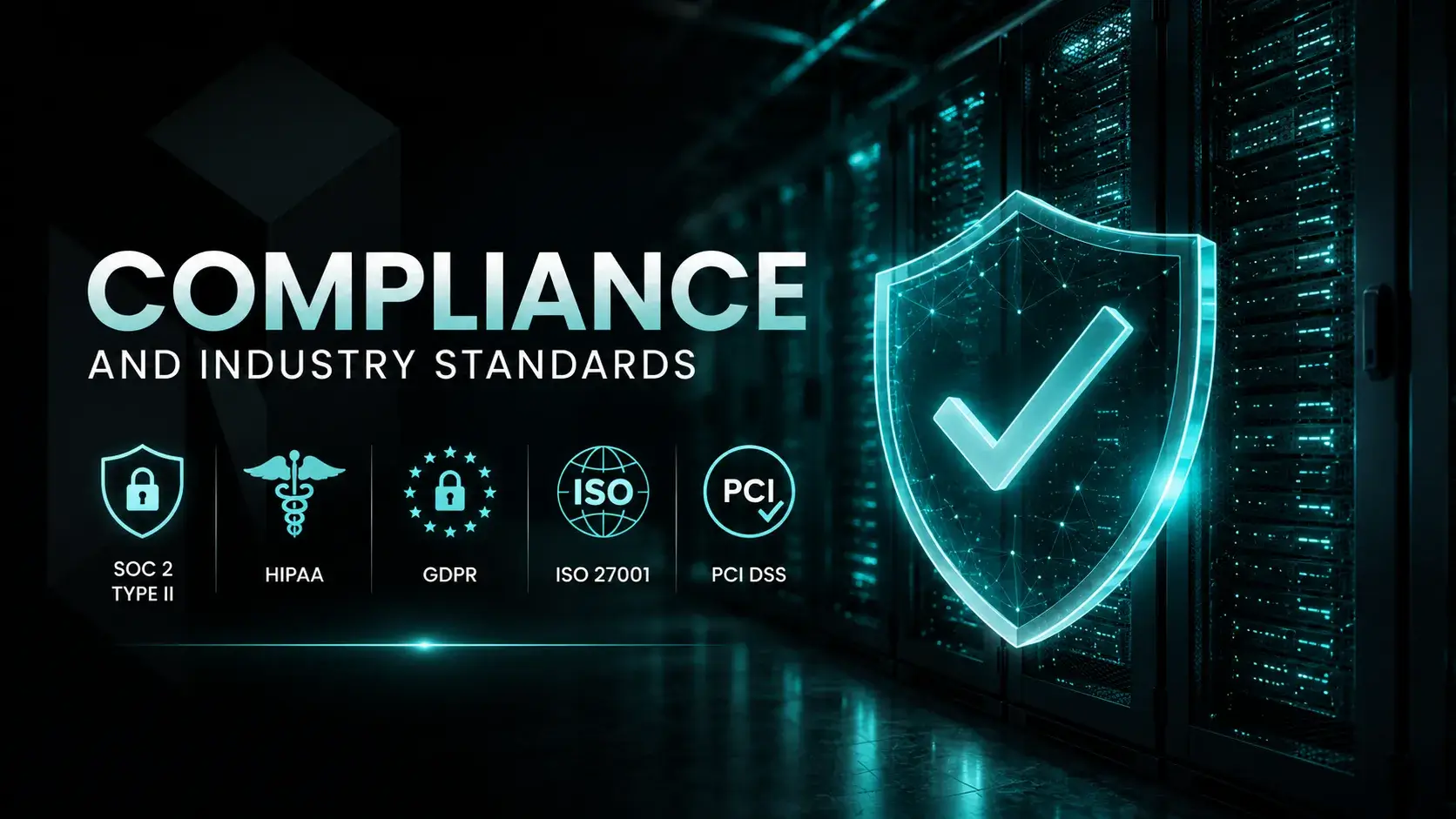
Compliance and Industry Standards
Regulatory requirements continue to grow across industries.
Many enterprise-grade data centers are built to meet strict compliance standards, which helps businesses avoid complex certification processes on their own.
This includes:
- Secure handling of stored data
- Controlled access environments
- Auditable infrastructure
By using the right colocation data center, organizations can align with industry requirements more easily.
Disaster Recovery and Business Continuity
Unexpected events happen. Power outages, natural disasters, hardware failures.
Without a plan, they can lead to data loss and downtime.
Server colocation services support strong disaster recovery strategies by offering:
- Geographic redundancy
- Secure off site data center locations
- Reliable backup generators
- Clearly defined recovery point objectives
By setting appropriate recovery point targets, businesses can minimize data loss and ensure quick restoration.
This contributes directly to business operations continuity, which is critical for modern operations.
Full Control Over Infrastructure and Customization
Unlike cloud services, where configurations are limited, colocation services give full control over your infrastructure.
You decide:
- Hardware specifications
- Software configurations
- Security layers
- Networking setup
This level of control is ideal for organizations with specific compliance, performance, or customization needs.
It also allows integration with existing systems, making it easier to maintain a hybrid approach between cloud computing and physical infrastructure.
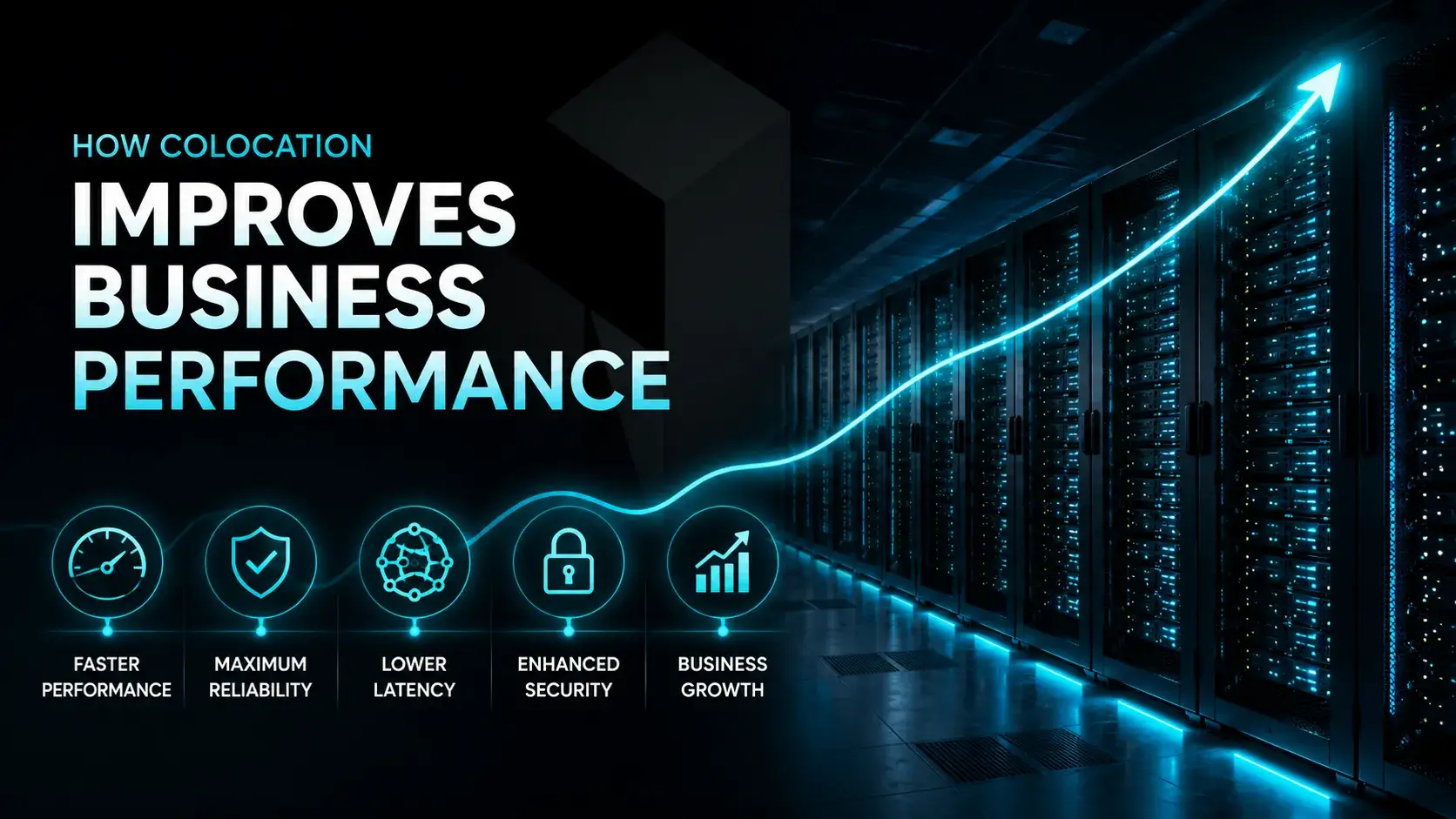
How Colocation Improves Business Performance
Performance improvements from colocation data center services are not just technical. They translate into measurable business outcomes.
Here’s how.
Faster Operations
With optimized network connectivity and proximity to users, applications run faster. This improves productivity and user satisfaction.
Reduced Downtime
High uptime environments with power supply redundancy and battery backup systems ensure systems stay online, reducing costly interruptions.
Better Resource Allocation
Instead of spending time on infrastructure maintenance, teams can focus on innovation and growth.
Operational Excellence
By leveraging enterprise-grade data centers, businesses achieve a level of operational excellence that is difficult to maintain internally.
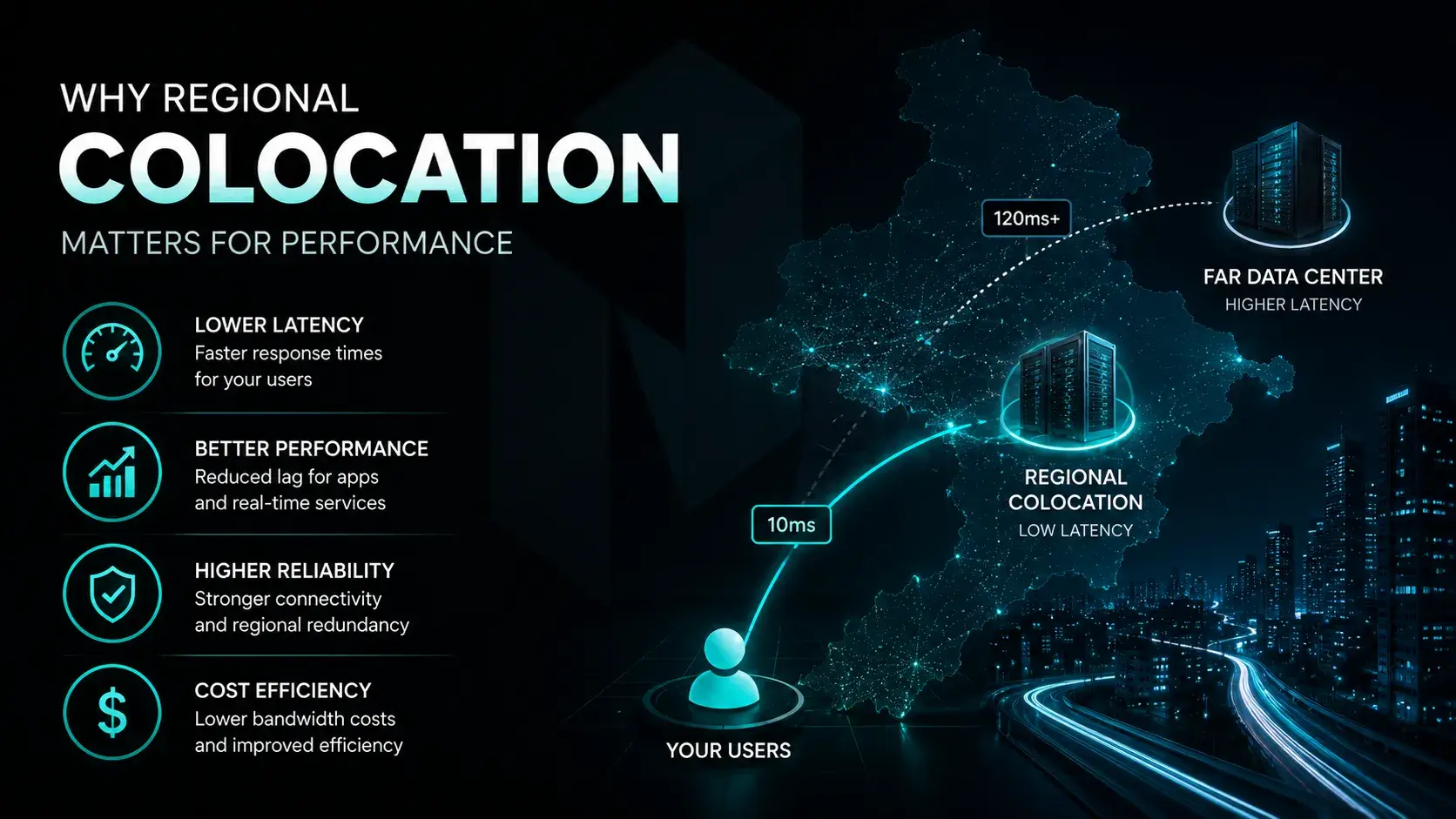
Why Regional Colocation Matters for Performance
Location plays a critical role in infrastructure performance. Using a regional colo data center allows businesses to deliver faster services, reduce latency, and improve user experience by positioning systems closer to end users.
Proximity to End Users
Distance matters in digital infrastructure.
Hosting in a nearby colo data center reduces latency and speeds up data transmission. This is especially important for applications that require real-time responsiveness.
Regional colocation facilities allow businesses to position their systems closer to target markets.
Faster Data Delivery Across Regions
Using multiple colocation centers across different locations improves global performance.
Combined with strong interconnection services, businesses can deliver data efficiently across regions.
This setup also supports redundancy, ensuring services remain available even if one location experiences issues.
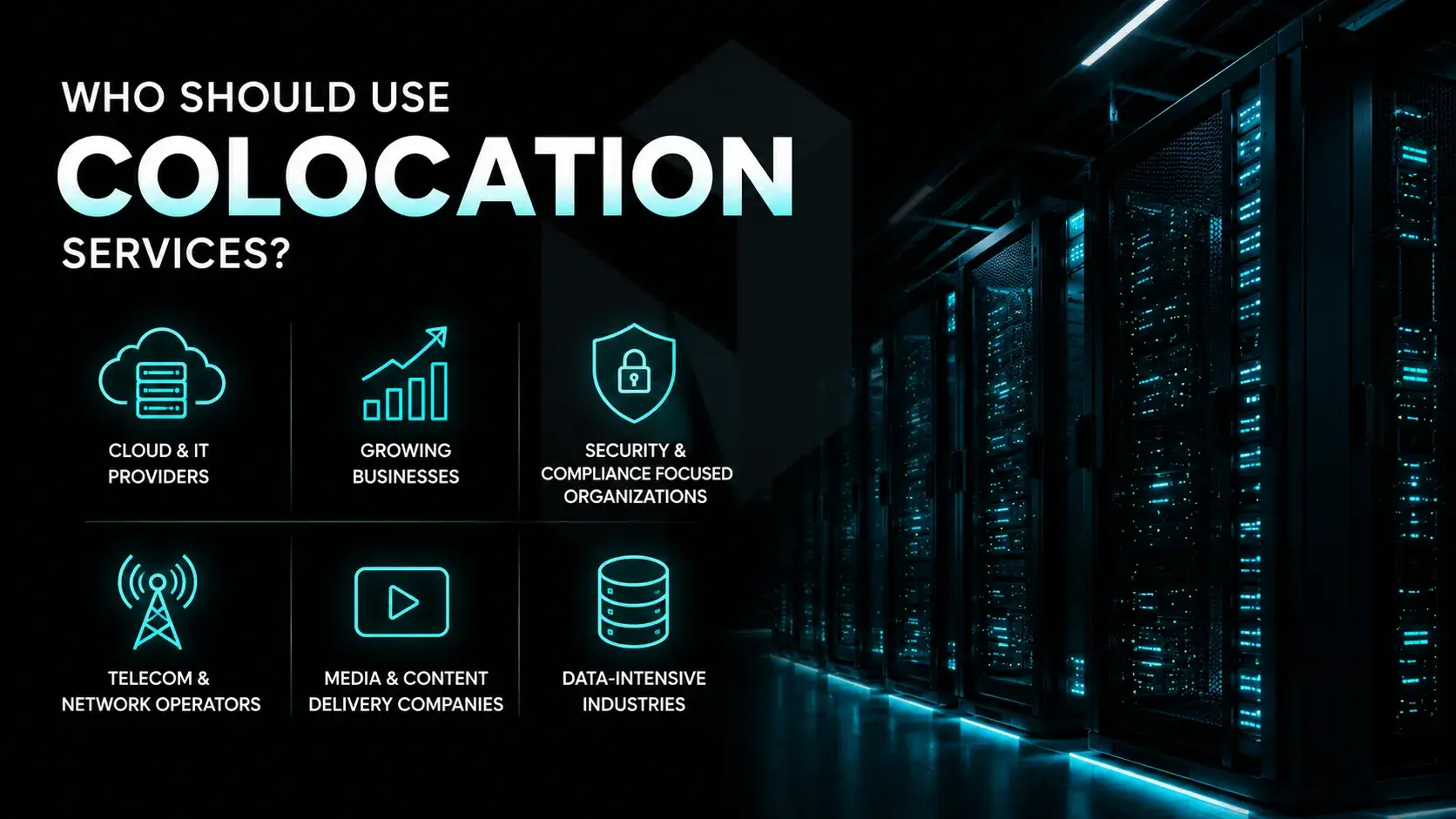
Who Should Use Colocation Services?
Not every organization needs the same type of infrastructure. Some prioritize flexibility, others focus on control, performance, or long-term cost stability. This is where colo solutions fit in. They offer a middle ground between building your own data center and relying entirely on cloud services.
Instead of forcing a one-size-fits-all approach, a colocation data center adapts to different business models. Whether the goal is scaling faster, improving uptime, or strengthening network protection, the right setup can support it without the overhead of running an in house data center.
Startups and Growing Businesses
Early-stage companies often move fast, but infrastructure decisions can slow them down.
Building a self-owned data center is usually not realistic. It requires capital, planning, and ongoing management that most startups simply cannot prioritize. At the same time, relying only on cloud computing can become expensive as usage grows.
This is where colocation services become practical.
Startups can deploy their own hardware inside a professional colo data center facility, gaining access to:
- Reliable power and cooling
- Strong network connectivity
- Built-in physical security measures
It creates a stable foundation without locking them into high upfront facility costs. As the business grows, expanding within the same colo space is often much easier than rebuilding infrastructure from scratch.
Small and Medium-Sized Businesses (SMBs)
SMBs usually operate with tighter budgets and smaller IT teams. Managing an in house data center can quickly become overwhelming, especially when dealing with uptime requirements, security concerns, and rising operational costs.
By moving to a colocation data center, these businesses offload the most complex parts of infrastructure management. They no longer need to worry about:
- Maintaining cooling infrastructure
- Handling power redundancy
- Securing physical facilities
At the same time, they retain control over their systems and data storage.
This balance between control and convenience is a key reason why many SMBs adopt data center colocation services. It allows them to operate with the reliability of professional data centers without building one internally.
Large Enterprises with High Traffic Needs
For enterprises, scale changes everything.
Handling massive workloads requires more than just space. It requires consistent performance, redundancy, and the ability to expand without disrupting operations.
A well-designed colo environment provides:
- Large-scale colocation space
- Advanced network services
- Access to multiple internet service providers
Enterprises often distribute workloads across multiple colocation centers to improve resilience and performance. This setup helps reduce latency while ensuring services remain available even if one location experiences issues.
For organizations operating a complex corporate data center strategy, colocation becomes a core component rather than just an alternative.
SaaS and Cloud-Based Companies
It might seem counterintuitive, but many companies built on cloud services still rely on server colocation services.
The reason is control and performance.
Certain workloads perform better on dedicated hardware. Others require predictable costs that cloud environments don’t always provide at scale. By placing key systems in a colocation data center, SaaS providers can:
- Reduce latency for critical services
- Maintain consistent performance
- Optimize infrastructure costs
At the same time, they can still integrate with cloud providers for flexibility. This creates a hybrid setup where both environments work together instead of competing.
E-commerce and Digital Platforms
Speed and uptime directly affect revenue in e-commerce.
Even small delays can impact conversions. Downtime can result in immediate losses and damage customer trust.
A reliable colo environment addresses these risks by offering:
- High uptime supported by power supply redundancy
- Fast network connectivity for real-time transactions
- Strong network security to protect customer data
E-commerce platforms also benefit from proximity. Hosting in regional colocation facilities helps deliver faster experiences to users, especially during peak traffic periods.
Organizations with Hybrid Cloud Strategies
Many businesses are no longer choosing between cloud and on-premises infrastructure. They are combining both.
A hybrid approach allows organizations to run sensitive or performance-critical workloads in a colocation data center, while using cloud computing for scalable or temporary resources.
This setup gives more control over:
- Security
- Performance
- Cost management
With proper interconnection services, systems in colocation can connect directly to cloud environments, creating a seamless infrastructure.
As hybrid models continue to grow, colo solutions play an increasingly important role in balancing flexibility with stability.
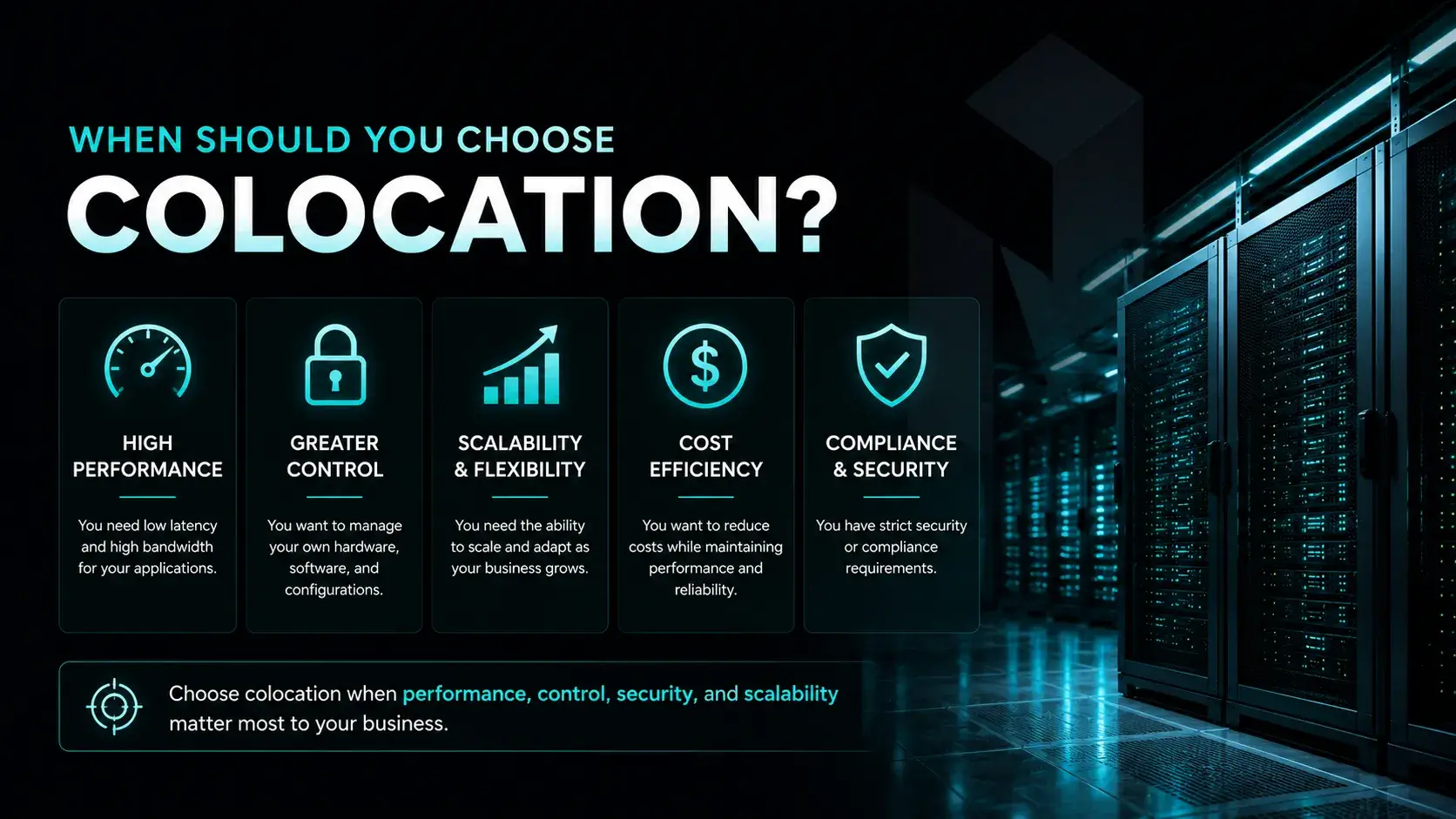
When Should You Choose Colocation?
Deciding when to move to a colo environment depends on performance needs, cost considerations, and scalability goals. For many businesses, switching to a colocation data center facility becomes the right choice when existing infrastructure can no longer keep up.
When You Need Better Performance and Lower Latency
If your applications feel slow or inconsistent, infrastructure is often the root cause.
Moving to a colocation data center places your systems inside optimized data centers with strong connectivity and direct access to high-speed networks. This reduces delays and improves response times.
For businesses serving regional audiences, choosing the right colocation data center can significantly improve performance without redesigning the entire system.
When Costs Become Unpredictable
Infrastructure costs can spiral when running an in house data center.
You deal with:
- Rising energy costs from power and cooling
- Hardware upgrades
- Unexpected failures
- Increasing ongoing maintenance costs
With colocation services, pricing becomes more stable. You pay for colo space, power usage, and bandwidth, making budgeting easier.
Over time, this improves cost efficiency and reduces financial surprises.
When High Availability Is Critical
If downtime directly affects revenue or operations, you need infrastructure designed for reliability.
A colocation data center facility provides:
- Redundant power setups
- Multiple emergency generators
- Reliable battery backup systems
These systems ensure uptime even during failures in external power grids.
For mission-critical systems, this level of reliability is essential.
When Expanding to New Regions
Entering new markets often requires local infrastructure.
Instead of building a new corporate data center, businesses can deploy in regional colocation centers.
This approach allows:
- Faster deployment
- Lower upfront investment
- Immediate access to local network connectivity
It’s one of the most practical ways to scale geographically.
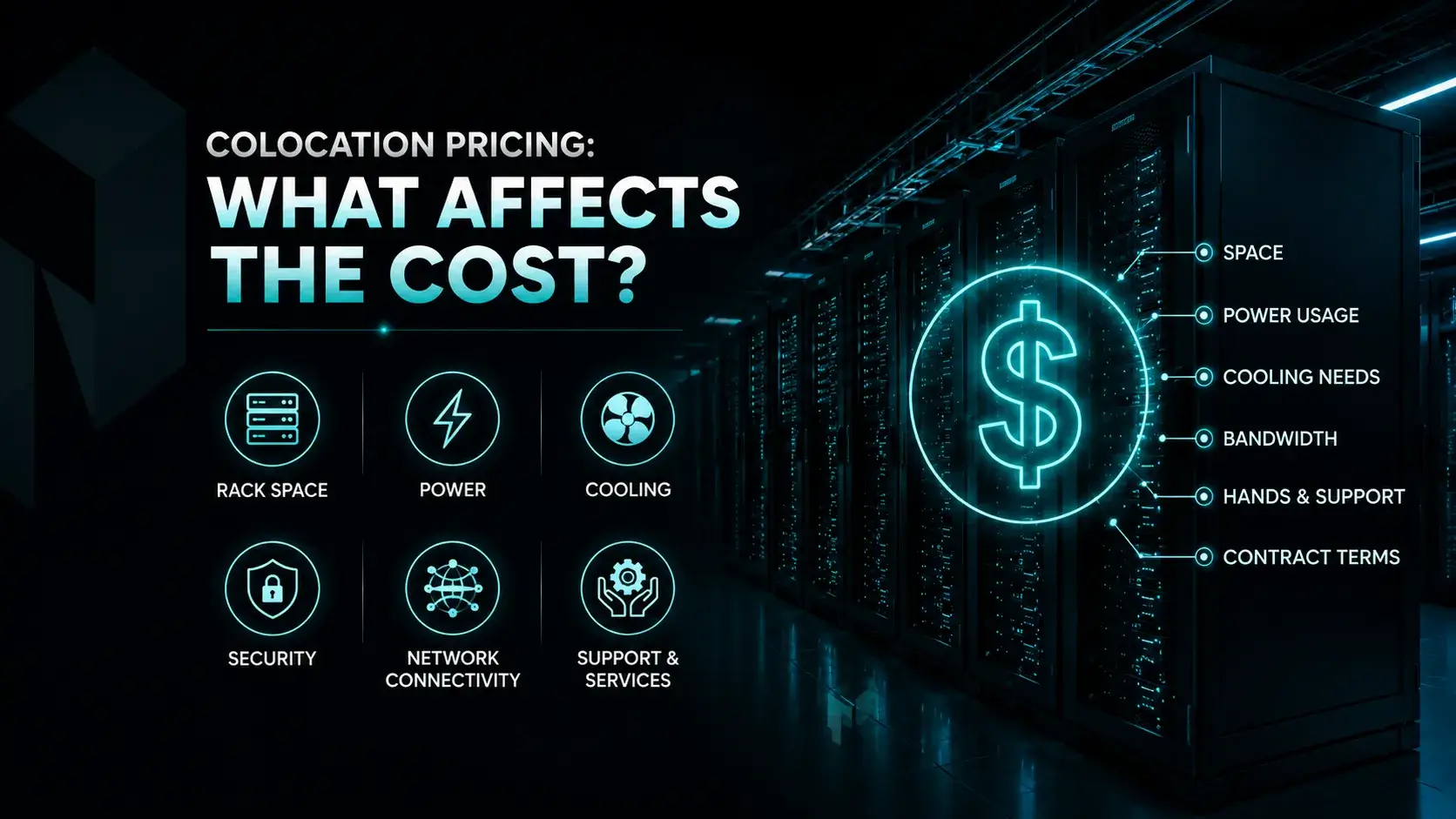
Colocation Pricing: What Affects the Cost?
The cost of data center colocation services varies depending on several factors. Understanding them helps you plan better.
Space and Power Usage
Pricing is often based on:
- Rack space or physical space used
- Power consumption
- Type of power and cooling setup
High-density deployments may require more advanced cooling systems, increasing costs.
Connectivity and Bandwidth
Access to premium network connectivity and multiple internet service providers affects pricing.
Facilities offering strong interconnection services may charge more, but they also deliver better performance.
Location of the Facility
A colocation data center in a major digital hub usually costs more than one in a smaller region.
However, proximity to users can reduce latency and improve service quality, which often offsets the cost.
Security and Compliance Features
Colocation data centers implement a multi-layered approach to security, which includes both physical security measures and advanced cybersecurity protocols to protect against a wide range of threats.
Facilities with advanced physical security measures, such as:
- Biometric access controls
- Surveillance systems
- On-site trained security personnel
may have higher pricing, but they offer stronger network security and data protection.
Additional Services
Some colocation providers offer:
- Managed services
- Remote hands support
- Monitoring and maintenance
These services increase convenience but also add to the total cost.
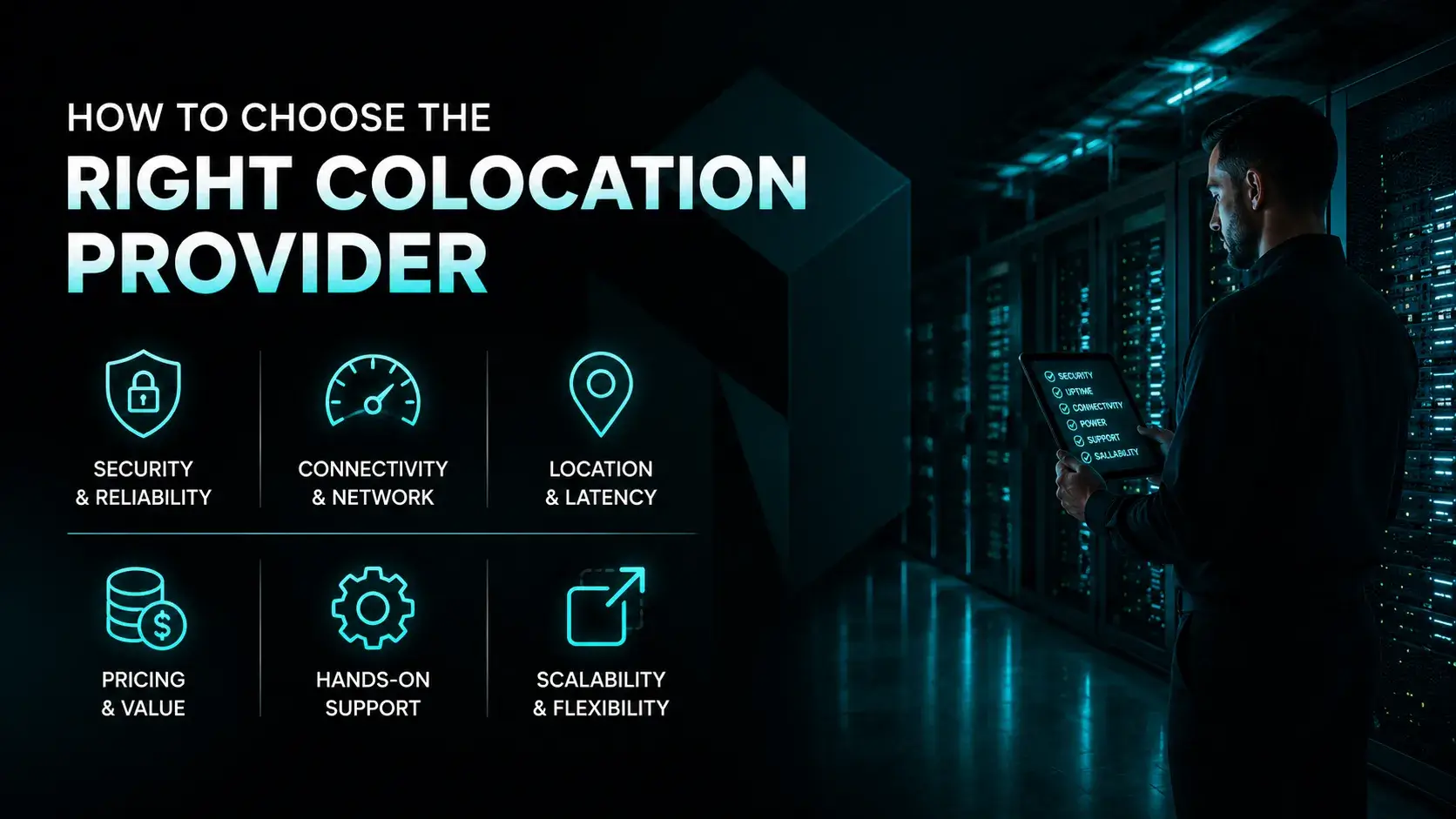
How to Choose the Right Colocation Provider
Choosing the right partner is not just about finding available rack space. A colocation data center becomes part of your core IT infrastructure, so the decision affects performance, security, and long-term costs.
There are many colo providers in the market, but the gap between average and high-quality facilities can be significant. Some focus only on space and power. Others build a full ecosystem with strong network connectivity, advanced physical security, and reliable operations.
Looking at a few technical specs is not enough. You need to evaluate how the colo environment will support your business over time, not just today.
Location and Network Connectivity
Location is often underestimated, but it directly impacts latency and user experience. A well-positioned colo data center facility allows your applications to respond faster simply because the data has a shorter distance to travel.
For regional businesses, placing infrastructure closer to users can noticeably improve performance. For global operations, selecting facilities in strategic regions helps maintain consistency across markets.
Connectivity is just as important as location. Strong data center connectivity provides access to multiple carriers, not just one or two options. This gives you flexibility in routing traffic and improves redundancy.
You should look for:
- Access to multiple internet service providers
- Direct interconnection services with partners and platforms
- Reliable and scalable network solutions
A weak network setup can cancel out the benefits of even the most advanced hardware. On the other hand, a well-connected facility can significantly boost application speed and stability.
Security and Compliance Standards
Security is one of the biggest reasons companies move away from an in house data center.
A professional colocation data center is built with layered protection. It starts with strict access control. Only authorized personnel can enter, often enforced through biometric access controls and monitored checkpoints.
Inside the facility, multiple systems work together:
- Continuous surveillance systems
- Active intrusion detection systems
This creates a level of physical security that is difficult to replicate internally.
Beyond physical protection, compliance also matters. Many industries require strict handling of data storage and infrastructure. Choosing data centers with strong physical security and recognized certifications helps simplify audits and reduces compliance risks.
Security is not something to compromise on. A single weak point can expose critical systems.
Uptime Guarantees (SLA)
Reliability is defined in the Service Level Agreement, but not all SLAs are equal.
A strong data center provider backs its uptime promise with real infrastructure. This includes redundant power supplies, multiple layers of power redundancy, and failover systems designed to handle unexpected events.
Facilities often use:
- Independent connections to power grids
- Multiple backup generators
- Reliable battery backup systems
These systems work together to keep operations running even during outages.
It’s worth looking beyond the percentage number. A 99.9% uptime sounds good, but understanding how it’s achieved is more important. Ask how failures are handled, how quickly systems recover, and what compensation applies if targets are not met.
Pricing and Scalability
Cost is always a factor, but focusing only on the lowest price can lead to limitations later.
A good colocation solution balances cost efficiency with flexibility. You want pricing that reflects your current needs while allowing room to grow.
Some facilities make scaling simple. You can add more colo space, increase power capacity, or expand into additional cabinets without major disruption. Others may have constraints that slow down growth.
By sharing operational costs with other tenants in a colocation facility, organizations gain access to enterprise-grade features that would be too expensive to implement independently.
Think long term.
Consider:
- Future expansion needs
- Expected increases in data storage
- Changes in traffic or workload
Transparent pricing also matters. Hidden fees related to power usage, bandwidth, or remote support can increase operational costs over time.
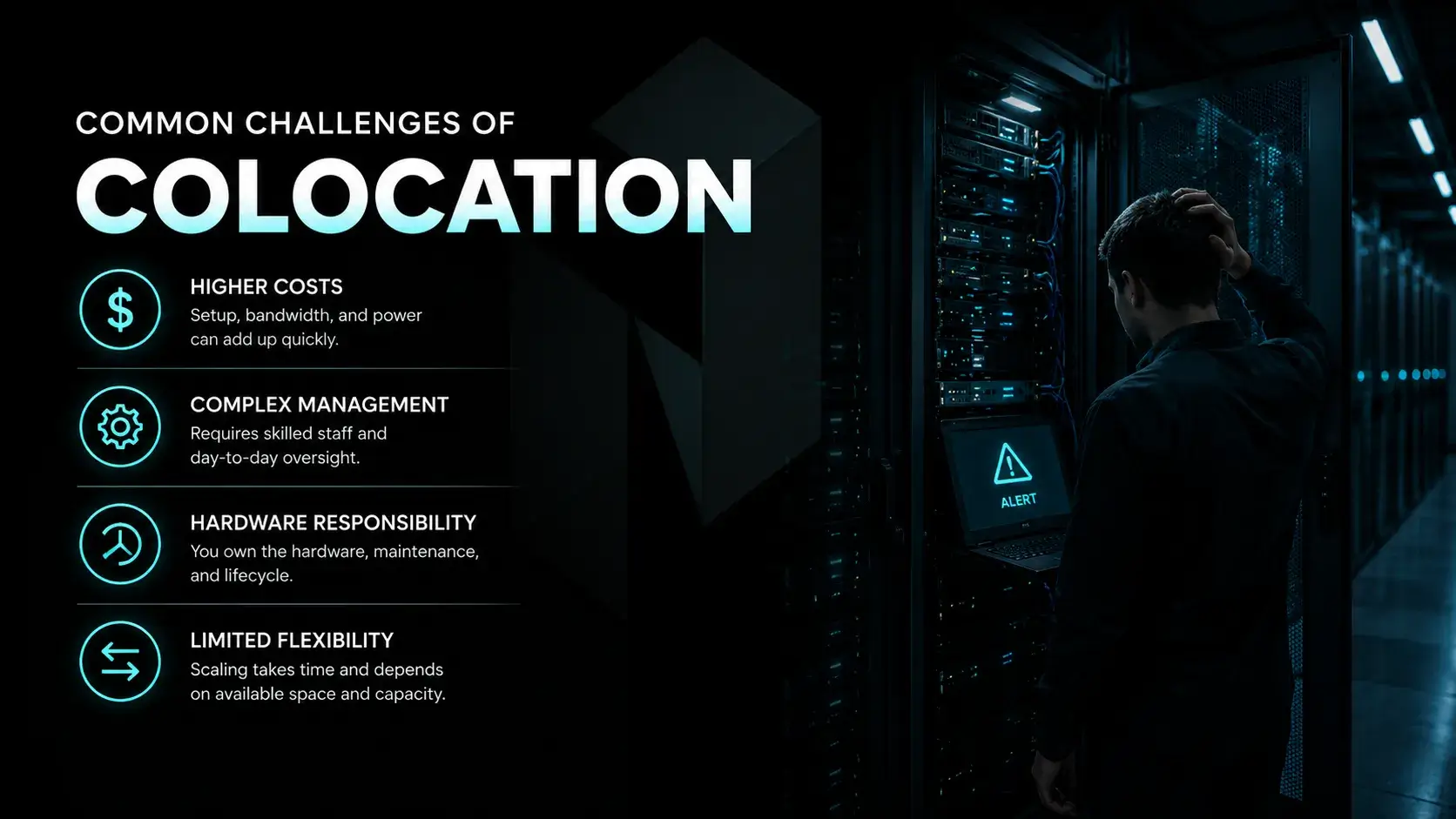
Common Challenges of Colocation
While the benefits of colocation are significant, there are also challenges to consider.
High Initial Setup and Hardware Costs
Unlike cloud computing, where you rent infrastructure, colocation requires owning your hardware.
This includes:
- Servers
- Networking equipment
- Storage systems
The upfront investment can be high, especially for growing businesses.
Managing and Maintaining Physical Infrastructure
Even though the facility is managed, your equipment is not.
You are still responsible for:
- Hardware maintenance
- Upgrades
- Troubleshooting
This can be a challenge compared to fully managed cloud services.
Network Configuration Complexity
Setting up connectivity inside a colo environment requires technical expertise.
You need to manage:
- Routing
- Security policies
- Redundancy configurations
Without proper planning, this can impact performance.
Limited On-Site Access to Equipment
Your servers are located in an off site data center, not in your office.
While data center staff can assist, direct access may be limited depending on location and policies.
Scaling Limitations Compared to Cloud
Although colo space is scalable, it’s not as instant as cloud-based scaling.
Expanding requires:
- Installing new hardware
- Allocating additional physical space
This takes more time compared to virtual scaling in cloud computing.
Vendor Lock-In and Long-Term Contracts
Some colocation companies require long-term agreements.
Switching providers can be complex due to:
- Hardware relocation
- Network reconfiguration
- Downtime risks
It’s important to review contract terms carefully.
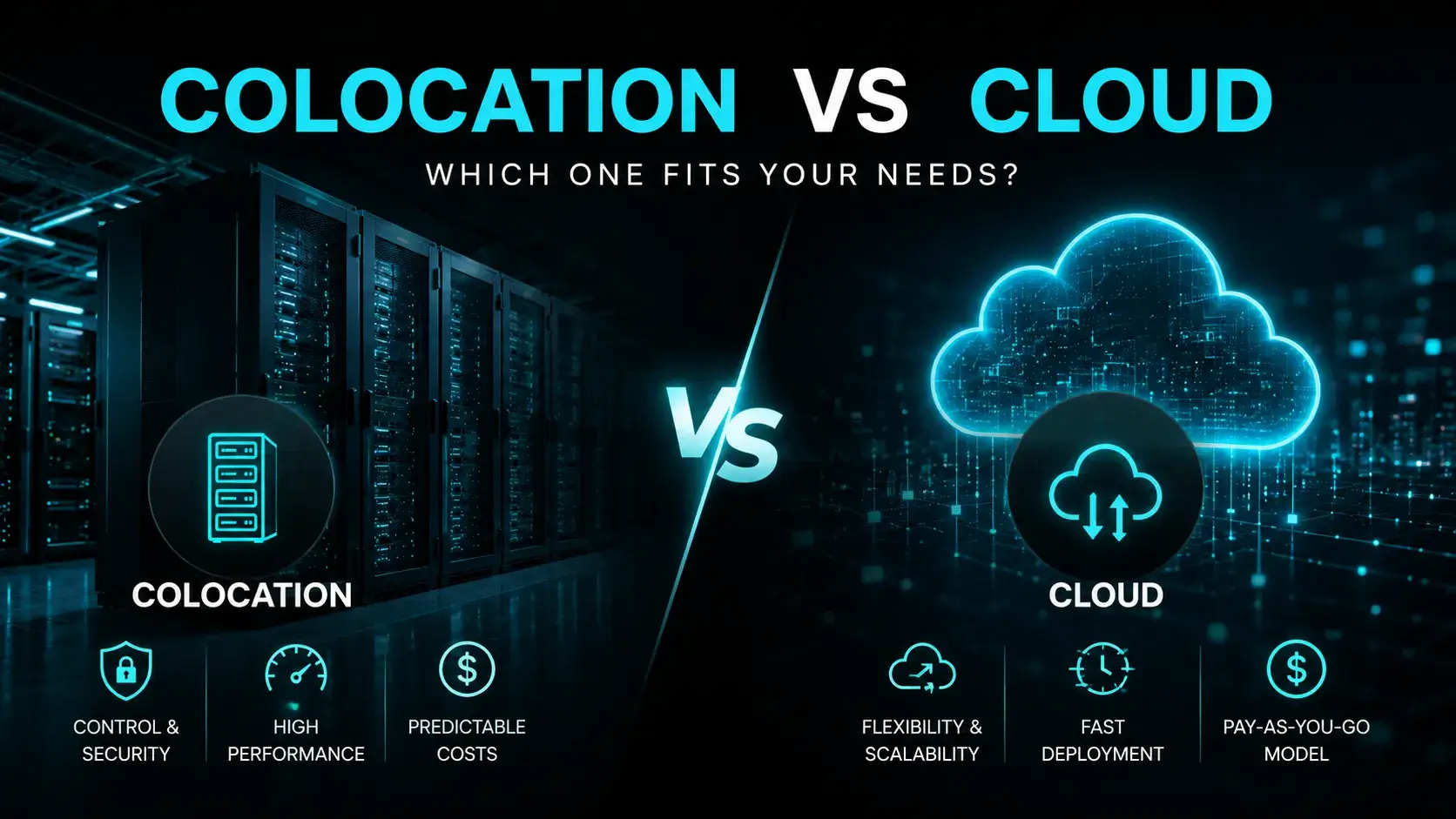
Colocation vs Cloud: Which One Fits Your Needs?
Choosing between colocation services and cloud services depends on your priorities.
When Colocation Makes More Sense
- You require full control of your hardware.
- You require predictable operational costs
- You handle sensitive workloads that demand strong physical security
- You want consistent performance without shared environments
When Cloud Is More Suitable
- You need rapid scaling
- You want minimal hardware responsibility
- Your workloads are variable
- You prefer a fully managed environment
Hybrid Approach
Many businesses combine both.
They use:
- Server colocation services for critical workloads
- Cloud service providers for flexible resources
This creates a balanced architecture that leverages the strengths of each model.
Frequently Asked Questions About Colocation
Before deciding on a colocation data center, many businesses have practical questions about how it works, what it costs, and whether it fits their infrastructure needs. From understanding the real advantages of colocation to comparing it with cloud computing, these common questions help clarify what to expect when moving your systems into a professional data center environment.
What are the key benefits of colocation for businesses?
The main advantages of colocation go beyond just saving space. Businesses get access to a professionally managed data center environment with reliable uptime, strong physical security, and stable performance. It also helps improve cost optimization, since there’s no need to build and maintain a proprietary data center from scratch.
How does a colocation data center improve performance?
A colocation data center improves performance by placing your infrastructure inside facilities built for speed and stability. These environments offer strong network connectivity, access to multiple internet service providers, and optimized power and cooling systems. The result is more consistent performance, especially for applications that depend on low latency.
Is colocation more secure than an in house data center?
In most cases, yes. Colocation facilities are designed with multiple layers of physical security measures that are difficult to replicate in an office setup. This includes biometric access controls, 24/7 surveillance systems, and on-site trained security personnel. For many businesses, this level of protection is a major upgrade from a typical in house data center.
What is the difference between colocation and cloud computing?
The difference comes down to control versus convenience. With colocation services, you place your own hardware inside a colo data center facility and manage it yourself. With cloud computing, infrastructure is virtual and handled by cloud service providers. Colocation gives more control and customization, while cloud focuses on flexibility and quick scaling.
How does colocation support disaster recovery?
A strong colocation data center setup helps reduce risk during unexpected events. Facilities are built with redundant power, backup generators, and reliable battery backup systems. Many businesses also use geographically separate off site data center locations to support disaster recovery, helping minimize downtime and avoid data loss.
What factors affect colocation pricing?
Pricing is not fixed and usually depends on how much colocation space and power you use. Other factors include network connectivity, facility location, and any additional support like managed services. Advanced features such as enhanced security personnel or monitoring systems can also influence overall operational costs.
Who should use colocation services?
Colocation solutions work well for a wide range of businesses. Startups, SMBs, and large enterprises all use them for different reasons. Some want better performance, others need stronger network protection. It’s especially useful for organizations that want control over infrastructure without running an in house data center.
Can colocation be combined with cloud services?
Yes, and it’s quite common. Many companies combine server colocation services with cloud services to create a hybrid setup. Critical workloads can run on dedicated hardware, while less predictable tasks stay in the cloud. This approach gives a balance between performance, control, and flexibility.
Conclusion
The benefits of colocation go far beyond simple hosting.
It provides access to professional data centers, advanced cooling systems, strong network connectivity, and enterprise-level physical security without the need to build an proprietary data center.
For businesses looking to improve performance, reduce costs, and ensure business continuity, data center colocation services offer a powerful and flexible solution.
Whether you’re a startup, a growing company, or a large enterprise, choosing the right colocation data center can play a critical role in long-term success.