As digital transformation is putting more pressure on organizations to scale, to be more flexible and to innovate faster, the management of the IT infrastructure is undergoing changes as well. The traditional on-prem data center on its own is not sufficient anymore to support the organization in its digital transformation. A complete migration to public cloud is not always possible due to regulatory, security and business reasons. A middle ground is evolving and organizations are building Hybrid IT environments.what is hybrid cloud becomes an important question, as hybrid cloud computing provides a practical and strategic solution.
Hybrid cloud is a common component in today's modern cloud architecture. Hybrid cloud computing allows you to maintain control of your infrastructure whilst remaining flexible. Hybrid cloud computing can integrate public and private cloud services with your current infrastructure. A hybrid cloud environment allows companies to run their most productive workloads in the best environment for them. Hybrid cloud computing also allows companies to remain within the bounds of their regulatory compliance when operating in complex IT environments.
This article takes a deep dive into the Hybrid Cloud including the basics on Hybrid Cloud, Hybrid Cloud Architecture, use cases of Hybrid Cloud and details on how to implement an effective Hybrid Cloud Strategy for your business.
What Is a Hybrid Cloud?
A hybrid cloud refers to an IT architecture that integrates private cloud infrastructure, we bring public cloud services and on premises systems together on one platform. We connect your environmentsconnect cloud services seamlessly, allowing data and applications to move between systems.
Blog contents
Unlike single environment deployments, hybrid cloud setups offer flexibility in workload placement. Organizations can run sensitive workloads in secure environments while leveraging scalable cloud resources for less critical tasks.
At its core, hybrid cloud computing enables businesses to dynamically allocate compute and storage resources across multiple platforms for optimal efficiency.
How Does a Hybrid Cloud Work?
The hybrid cloud, by connecting together several different cloud environments using for example networking, APIs and automation software, has the goal to create and run computing environments in an efficient and flexible manner.unified platform that ensures interoperability across systems.
For example, businesses may keep mission critical applications within private cloud servicesWorkloads can be optimized for performance while scaling out using public cloud resources for increased scalability. When there is a peak in demand, workloads can scale out using public cloud resources, for example through horizontal scaling or auto-scaling, and then scale back in after the peak to cut costs.cloud bursting, leveraging additional computing power without overinvesting in infrastructure.
Modern hybrid environments are managed by means of automation and orchestration to efficiently manage workloads and consistently deliver high levels of performance and efficiency.
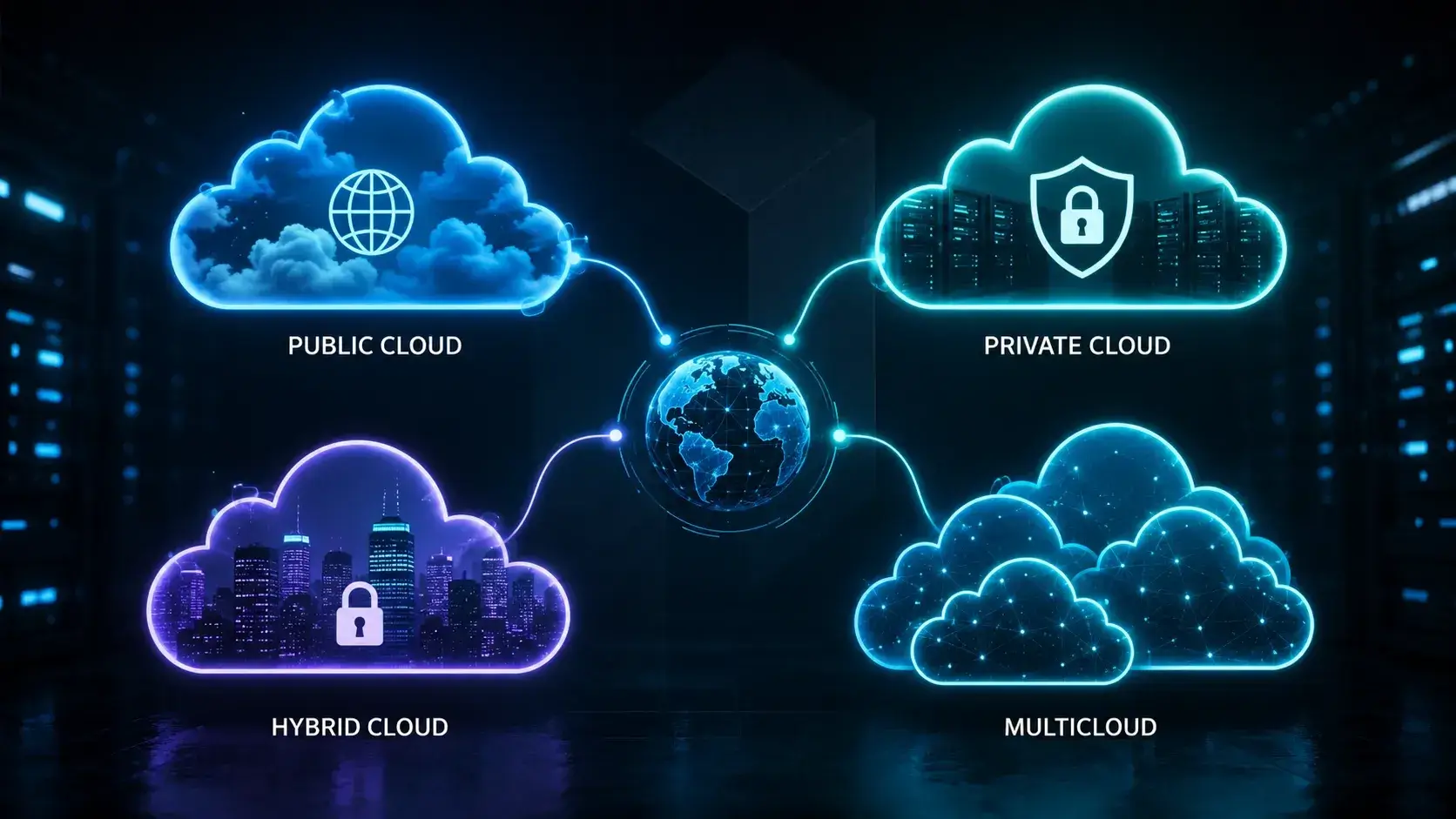
Public, Private, Hybrid, and Multicloud Explained
Understanding hybrid cloud requires distinguishing it from other models:
- Public Cloud: Scalable services delivered via third party providers using shared cloud infrastructure
- Private Cloud: Dedicated private cloud infrastructure designed for a single organization
- Hybrid Cloud: Integration of public and private clouds with on premises systems
- Multi Cloud: Use of multiple providers across diverse cloud environments without deep integration
While multi cloud focuses on vendor diversity, hybrid cloud emphasizes integration and operational consistency.
Key Components of a Hybrid Cloud Architecture
A successful hybrid cloud strategy is based on a well-thought-out hybrid cloud architecture, that connects different computing environments. Hybrid cloud is not a single technology, but a complete system of infrastructure, platforms and tools. The hybrid cloud strategy provides companies with needed flexibility, scalability and control.
To maximize performance and to secure your environment against new threats in various environments, you need to get familiar with the core components of hybrid cloud architectures.
On Premises Infrastructure
On premises infrastructure includes physical servers, storage systems, and networking equipment located within an organization’s own data centers. It is commonly used for legacy applications, sensitive workloads, and data that must remain under strict regulatory control. Industries like finance, healthcare, and government often depend on these environments for compliance and security reasons.
In a hybrid cloud environment on-premises systems are integrated with cloud-based services. Thus, customers can migrate step by step to the new IT services while fully using their on-premises investments. Linking the on-premises infrastructure with cloud services provides customers with the desired flexibility while retaining control over core applications and data.
Private and Public Cloud Integration
A hybrid cloud architecture is comprised of both a private cloud and a public cloud. Using a hybrid cloud architecture enables you to move your workloads and data between the private cloud and public cloud as needed to best satisfy your needs for performance, cost and security.
Integration is enabled between different applications through APIs and middleware, and through containerization technologies such as Kubernetes that allow applications to run consistently across different environments. This breaks down silos and supports modern application development approaches such as DevOps and continuous delivery.
Networking and Connectivity
In on-premises data centers, networking connects out to cloud services. On hybrid clouds, networking is fundamental to connecting systems together securely.
High performance, low latency connections are established by organizations using VPNs, dedicated connections or Software Defined Networking (SDN). These connections are encrypted and protected by firewalls. Network connections are also segregated using network segmentation to keep data secure while in transit and to reduce attack surface.
Management Platforms and Tools
When in a hybrid cloud environment with multiple systems, it is smart to have a central management system to manage everything. This way you have full control of your total infrastructure. You can see the usage and the performance of your resources as well as the health of your systems.
These tools can also be automated to manage scaling, to distribute work and for updates. Additionally they can be used to enforce security and compliance. The more advanced tools then also automatically optimize performance and can even predict the required resources.
Together, these tools simplify operations and make your hybrid cloud a more efficient and manageable system that aligns with your business goals.
Benefits of Hybrid Cloud
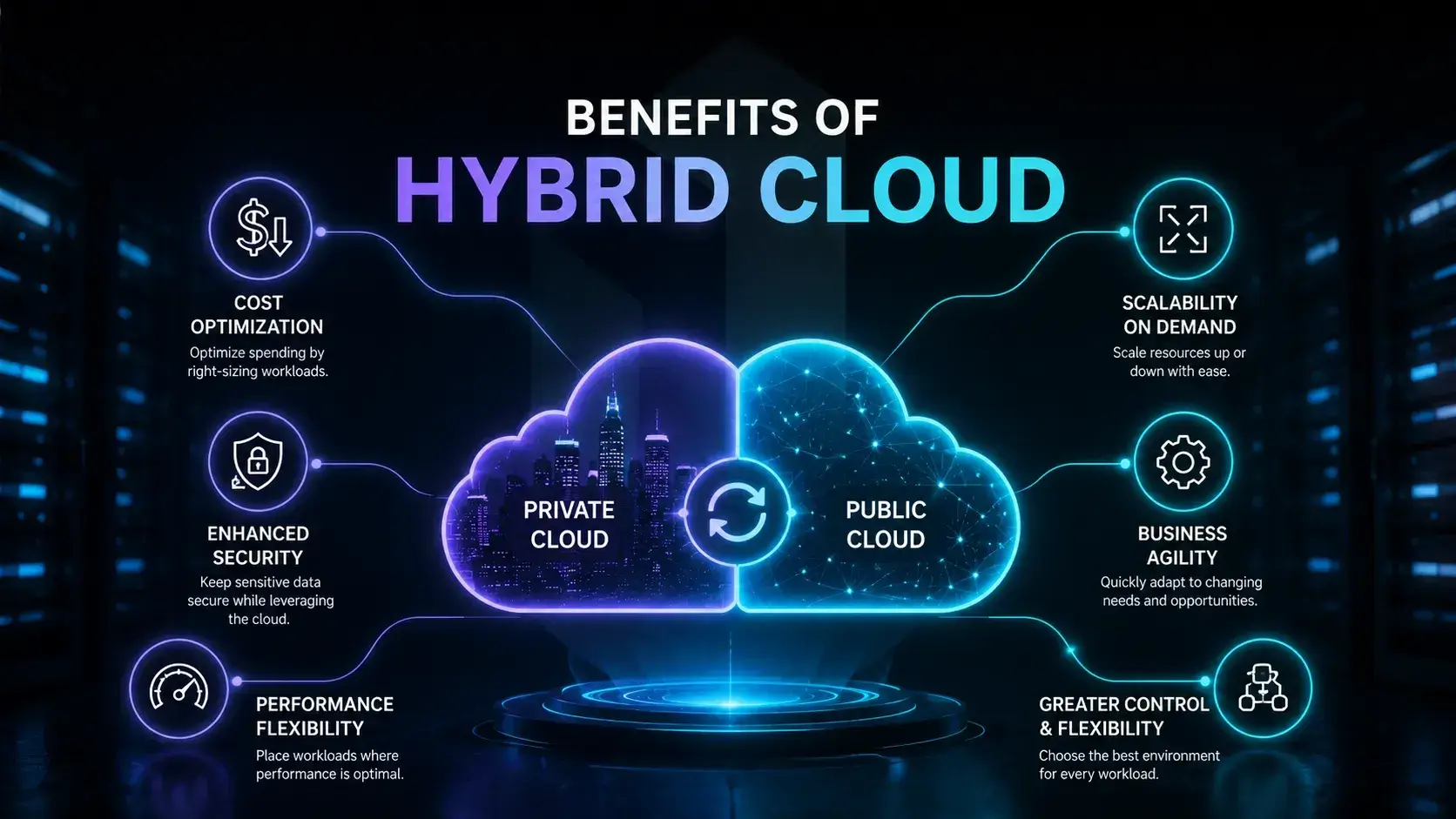
The hybrid cloud is a strategic and operational solution for today's companies. It lets companies run their IT in their own data centers, keeping their data secure, while at the same time using public cloud services in a flexible way.hybrid cloud environment. The hybrid cloud is helping organizations to reduce their costs and risks while at the same time extending the functionality of their current IT systems as part of their digital transformation.
Cost Efficiency and Resource Optimization
One of the most significant advantages of hybrid cloud is its ability to optimize costs while making better use of resources. Traditional IT infrastructure is typically based on hardware in your own local data center and is scaled with peak loads in mind. As a result, the available IT resources are frequently underutilized.
With hybrid cloud solutions, organizations can keep predictable, steady workloads on premises while leveraging public cloud resources for variable demand. This “pay as you go” model helps reduce capital expenditure and shifts costs toward a more flexible operational model. In fact, shifting to an operational expense model allows businesses to pay only for the resources they actually use, improving financial efficiency.
Many scenarios generate significant cost savings. Hybrid cloud computing can deliver up to 57% cost savings over public cloud for certain workloads. By adding a public cloud provider to an organization's on-premises data center infrastructure, it's possible to deliver cloud computing and better ROI without increasing data center costs.
However, cost optimization is not a 'set it and forget it' function. It requires active management to ensure that cost is not hidden within the platform, particularly within a hybrid environment where additional costs such as data egress and overprovisioning of unused resources may apply. These additional costs must be regularly monitored and controlled in order to realize potential savings.
Additionally, hybrid cloud enables smarter workload distribution. Businesses can run cost sensitive applications in lower cost environments and reserve premium resources for mission critical operations. This level of control allows IT teams to continuously optimize spending without sacrificing performance.
Improved Performance and Reduced Latency
Performance is a critical factor in delivering seamless digital experiences, and hybrid cloud provides the flexibility to optimize it effectively. By placing workloads closer to users or data sources, organizations can significantly reduce latency and improve response times.
For example, latency sensitive applications such as real time analytics or transaction processing can run on local infrastructure or edge environments. Meanwhile, less time critical workloads can be handled in the public cloud.
This strategic placement of workloads ensures that applications perform efficiently regardless of demand or geographic distribution. As a result, businesses can deliver faster, more reliable services to customers and internal users alike.
Security and Regulatory Compliance
Security remains a top priority for organizations, especially those operating in highly regulated industries. Hybrid cloud solutions offers a balanced approach by allowing sensitive data and critical workloads to remain in private or on premises environments while still leveraging the benefits of the public cloud.
This model enables organizations to meet strict regulatory requirements related to data residency, privacy, and governance. For instance, financial institutions and healthcare providers can store confidential data locally while using cloud services for analytics or application development.
At the same time, organizations must be aware of the potential risks associated with hybrid environments. Moving data between different platforms can expand the attack surface and make policy enforcement more complex if not properly managed.
Moreover, hybrid cloud environments can be designed with layered security controls, including encryption, identity and access management, and network segmentation. This enhances overall security posture while maintaining flexibility.
Business Continuity and Disaster Recovery
Hybrid cloud significantly strengthens an organization’s ability to maintain operations during disruptions. By distributing workloads across multiple environments, businesses can reduce the risk of downtime caused by hardware failures, cyberattacks, or natural disasters.
Cloud based backup and replication solutions allow data to be securely stored and quickly restored when needed. In the event of an outage, workloads can be shifted to the public cloud, ensuring minimal disruption to business operations.
This resilience is particularly valuable in today’s always on digital economy, where even brief downtime can result in significant financial and reputational damage. Hybrid cloud provides the redundancy and flexibility needed to maintain continuity and recover quickly from unexpected events, while also supporting access to advanced technologies such as AI and machine learning without requiring a full infrastructure overhaul.
Common Hybrid Cloud Use Cases
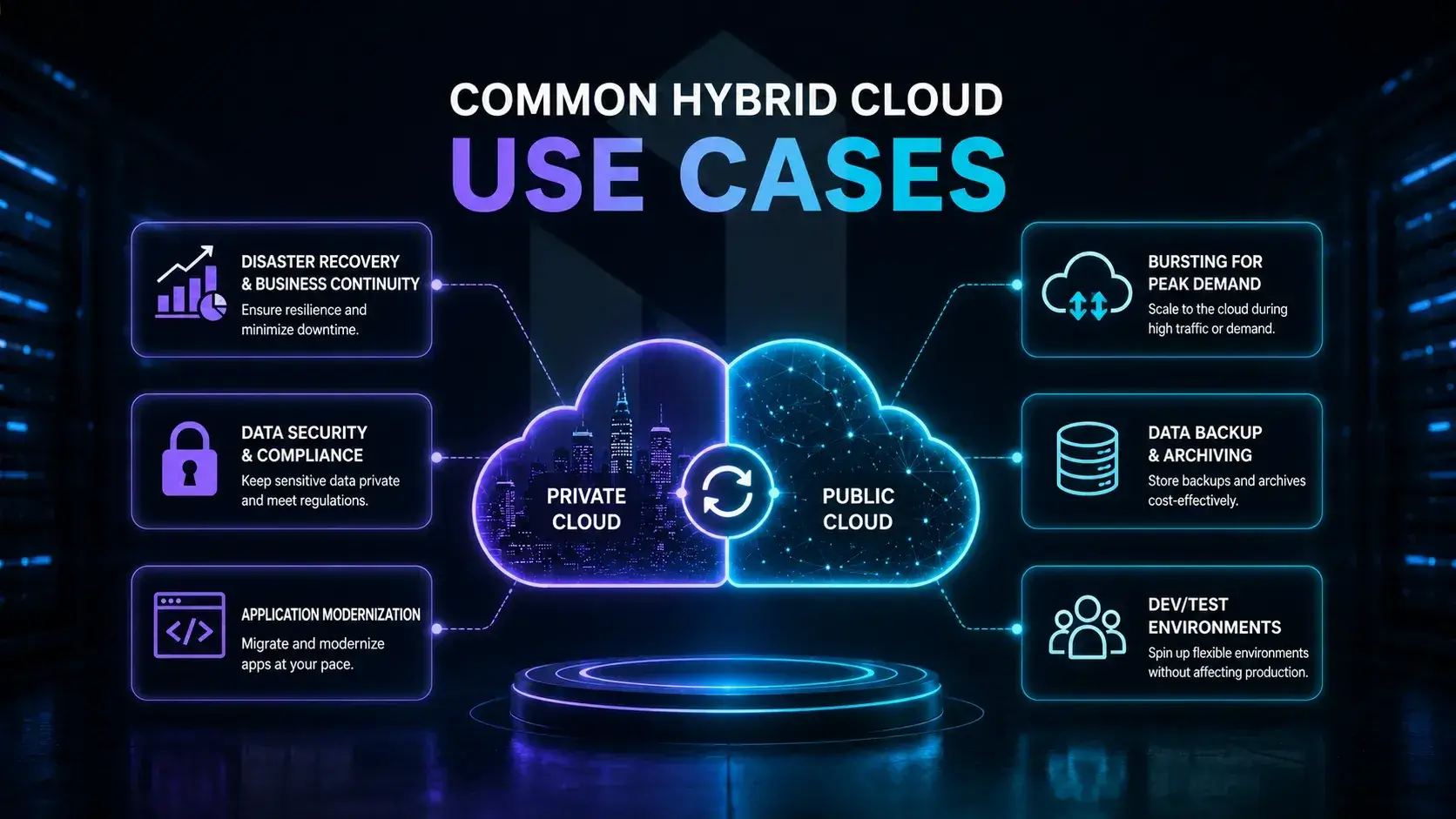
Hybrid cloud has gained widespread adoption because it addresses real world operational challenges across industries. Rather than forcing organizations into a single infrastructure model, it enables a flexible approach where workloads are placed based on business needs, performance requirements, and regulatory constraints. Below are some of the most impactful and widely adopted hybrid cloud use cases.
Cloud Migration and Modernization
One of the most common entry points into hybrid cloud is through cloud migration and application modernization. Many organizations operate legacy systems that are deeply embedded in their business processes. Fully replacing these systems can be costly, risky, and disruptive.
Hybrid cloud allows businesses to take a phased approach. Critical legacy applications can remain on premises while newer, cloud native services are deployed in the public cloud. Over time, organizations can refactor, replatform, or replace legacy systems without interrupting operations.
This incremental strategy reduces migration risk and provides immediate value. For example, a financial institution might retain its core transaction systems on premises for security and compliance while moving customer facing applications such as mobile banking platforms to the cloud for improved scalability and user experience.
Modernization also benefits from hybrid cloud through the adoption of containers and microservices. These technologies allow applications to run consistently across environments, making it easier to transition workloads without extensive reengineering.
Scalable Applications and Cloud Bursting
Hybrid cloud is particularly valuable for applications with variable or unpredictable demand. In traditional on premises environments, organizations must provision infrastructure for peak usage, which often leads to underutilized resources during normal operations.
With hybrid cloud, businesses can use a technique known as cloud bursting. This allows applications to run on local infrastructure under normal conditions and automatically scale into the public cloud during demand spikes.
Retail is a classic example. During major sales events or holiday seasons, e commerce platforms experience significant traffic surges. Instead of investing in expensive infrastructure that sits idle most of the year, companies can rely on public cloud resources to handle peak loads.
This approach not only improves cost efficiency but also ensures consistent application performance and user experience. It also reduces the risk of downtime, which can have significant financial and reputational consequences.
Data Compliance and Local Processing
Data sovereignty and regulatory compliance are critical concerns for many industries, including healthcare, finance, and government. Regulations often require that sensitive data be stored and processed within specific geographic boundaries or under strict security controls.
Hybrid cloud provides a practical solution by enabling organizations to retain sensitive data on premises while leveraging public cloud services for less sensitive workloads.
For example, a healthcare provider may store patient records locally to comply with data protection regulations while using the public cloud for analytics, reporting, or non sensitive application workloads.
This approach ensures compliance without sacrificing the scalability and innovation capabilities of cloud computing. It also allows organizations to maintain tighter control over critical data while still benefiting from cloud based tools and services.
AI and Data Processing
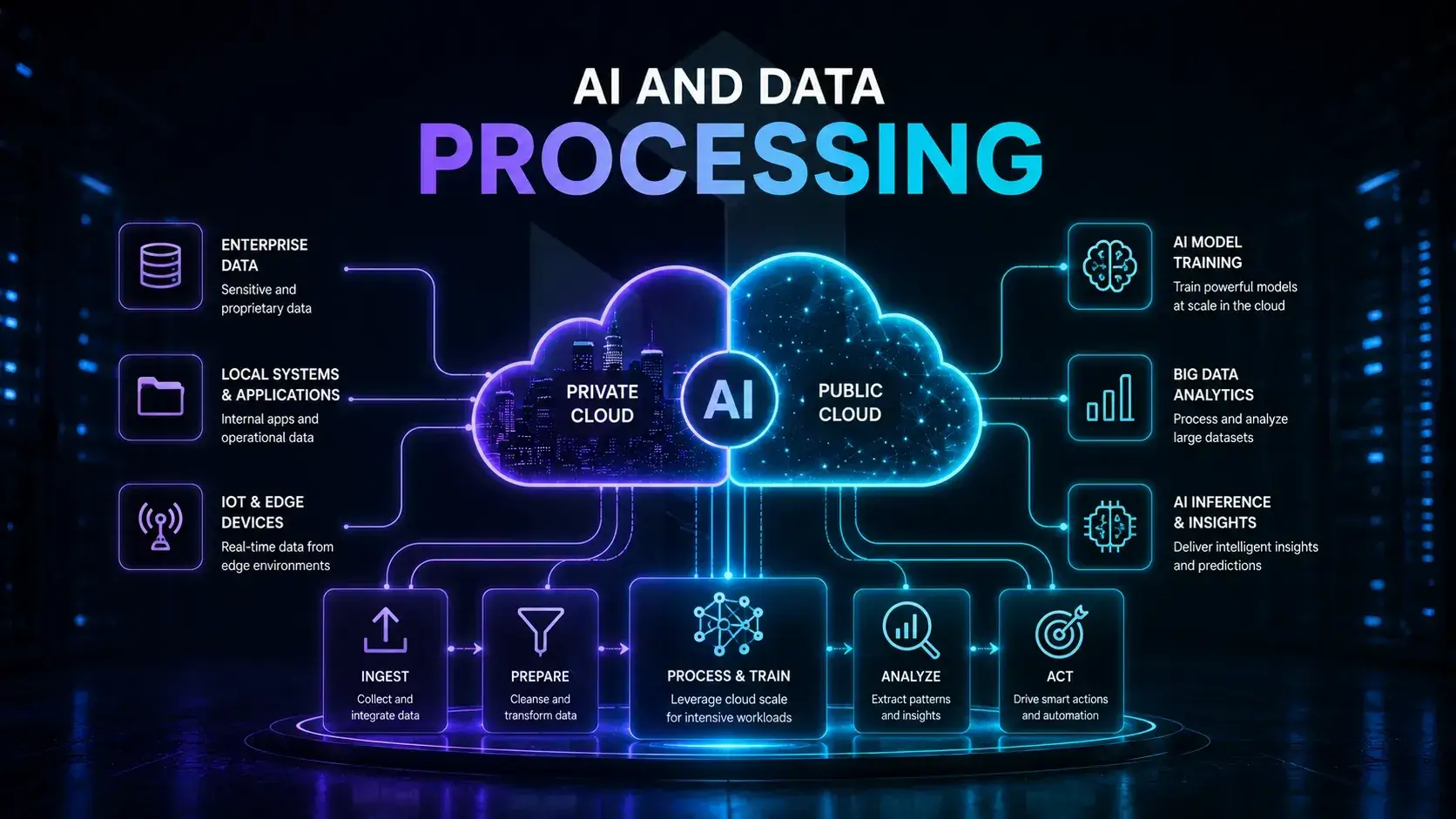
The rise of artificial intelligence and advanced analytics has created new demands for computing power and data management. Hybrid cloud is well suited to support these workloads by combining local data control with cloud based processing capabilities.
Organizations can store large datasets on premises especially when data privacy is a concern while using the public cloud’s high performance computing resources for AI model training, machine learning, and big data analytics.
For instance, a manufacturing company might collect data from factory sensors locally to ensure low latency and security. This data can then be sent to the cloud for predictive maintenance analysis using machine learning algorithms.
Hybrid cloud also enables more efficient data pipelines. Businesses can preprocess data locally to reduce volume and cost before transferring it to the cloud for deeper analysis. This optimizes both performance and expenses.
Edge Computing
Edge computing is becoming increasingly more popular with the increasing deployment of IoT as more real time processing of data is required. Unlike traditional IT methods that typically process data at a central location such as a data center, edge computing involves processing data closer to its source from devices and sensors to edge servers.
Hybrid Cloud based Edge Computing architectures place the hybrid cloud functions as a distributed system of computers. Computations requiring low latency are run on local edge nodes, while computations that demand large scale distributed processing and analytics capabilities are run in the cloud. Long term data storage is also conducted in the cloud.
The low latency, low jitter and efficient bandwidth usage provide new opportunities for smart cities, autonomous cars, industrial automation, etc. and a better user experience with reduced latency.
The preceding use cases often overlap with each other and are relevant to one organisation at the same time. For example, an organization might use hybrid cloud for migration projects, for increased capability and flexibility to scale, to meet compliance requirements, for big analytics efforts and other initiatives. Hybrid cloud is an enduring IT model that continues to offer unique benefits to organisations.
Hybrid Cloud Security and Compliance
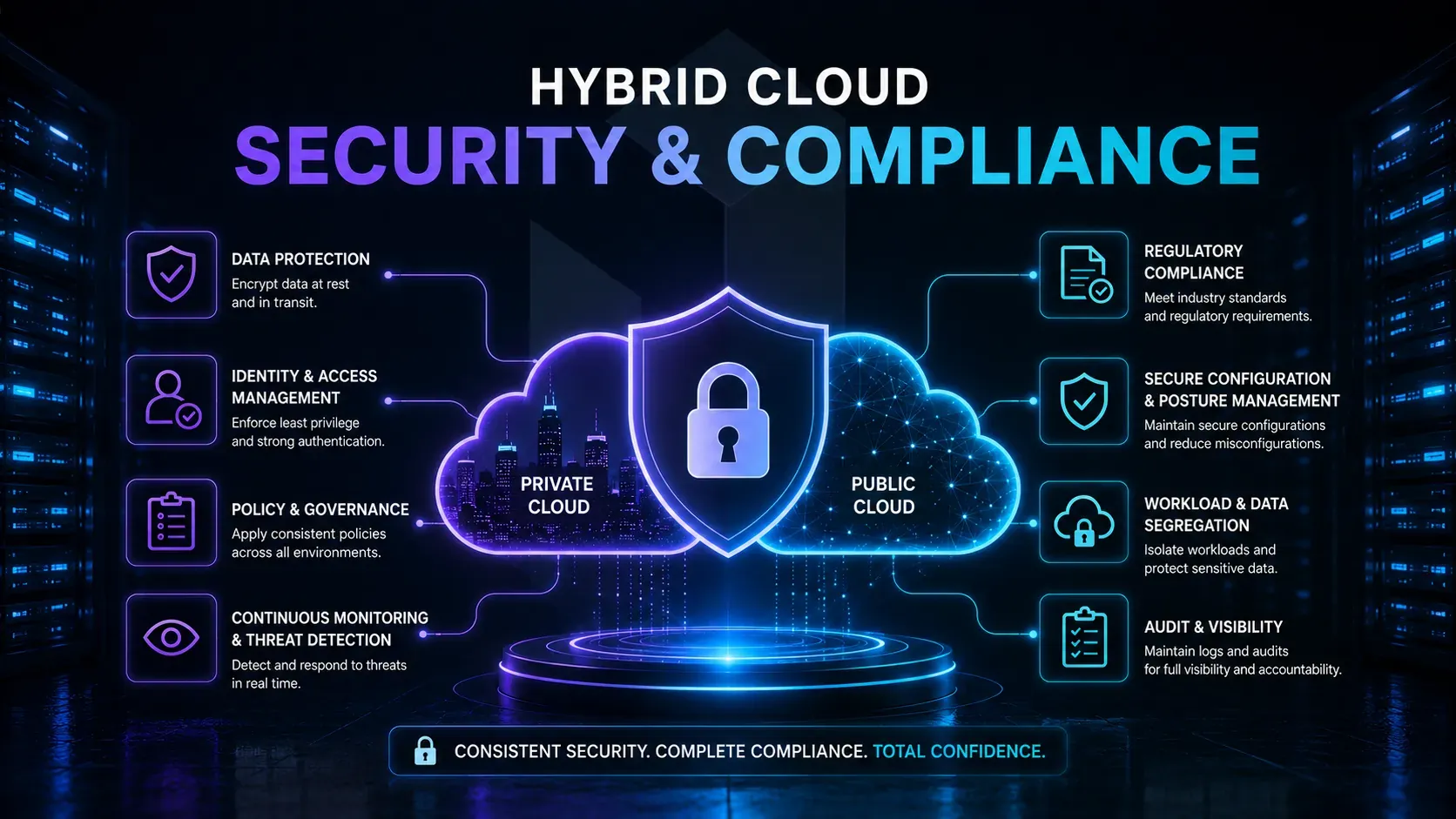
Security is a top priority in hybrid cloud environments. Businesses must address security risks associated with distributed systems by implementing strong governance, encryption, and access controls.
A well designed hybrid cloud security framework ensures that data remains protected across all environments while maintaining compliance with industry regulations.
Is Hybrid Cloud Right for Your Business?
Hybrid cloud is ideal for organizations that require flexibility, compliance, and scalability. Businesses operating in the growing hybrid cloud market often adopt this model to balance innovation with control.
Companies with existing infrastructure investments, strict compliance needs, or complex workloads will benefit most from a hybrid approach.
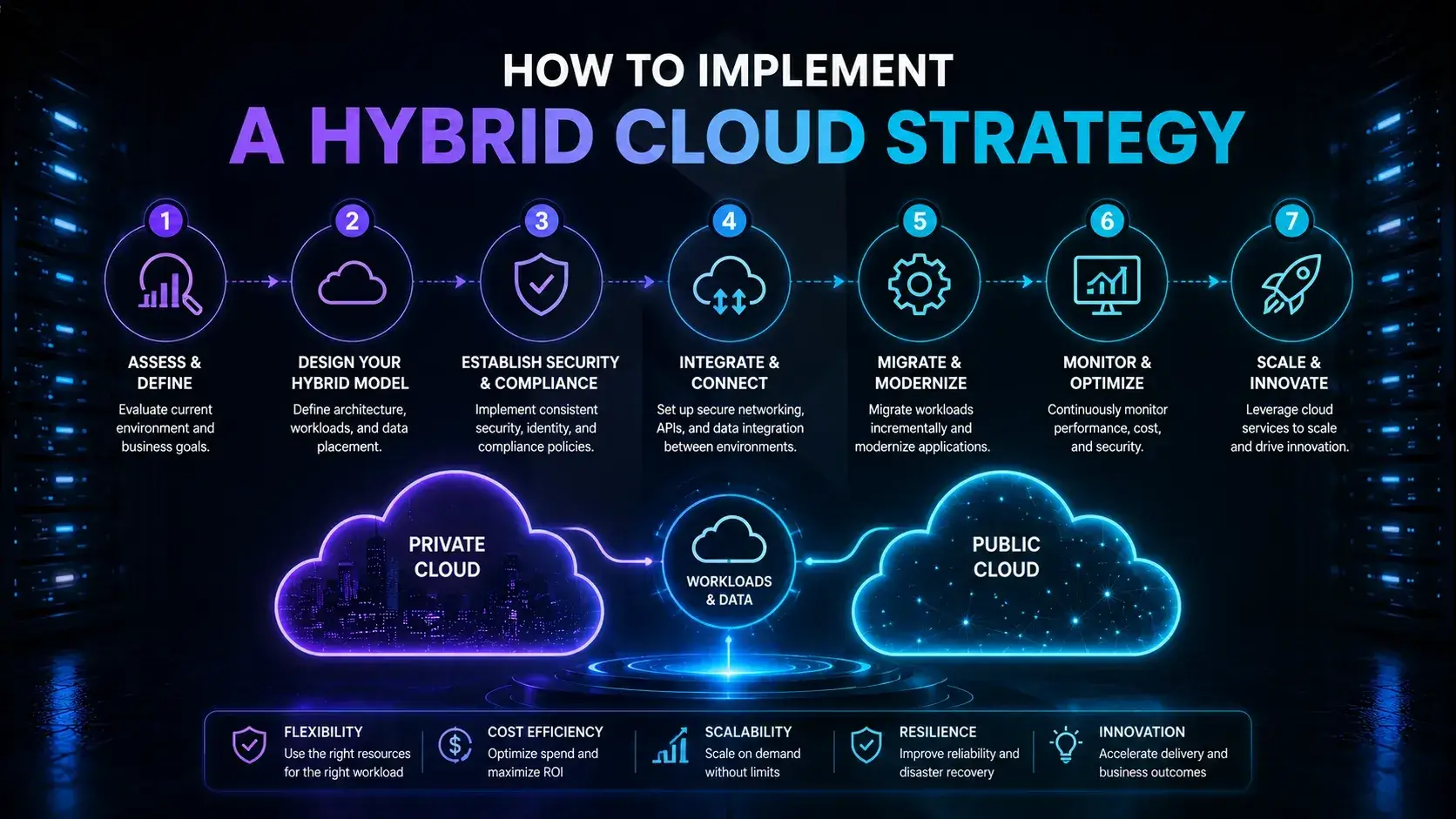
How to Implement a Hybrid Cloud Strategy
Implementing a hybrid cloud strategy is not simply a technical deployment it is a business transformation initiative that requires alignment between IT, operations, security, and executive leadership. Organizations that succeed with hybrid cloud take a structured, deliberate approach, ensuring that infrastructure decisions are tightly linked to business objectives such as scalability, cost efficiency, and innovation.
A well executed hybrid cloud strategy enables organizations to optimize workloads, maintain compliance, and improve operational resilience. However, without proper planning and governance, it can quickly become complex and difficult to manage. The following core areas are critical to a successful implementation.
Workload Placement and Planning
Workload placement is one of the most important decisions in a hybrid cloud strategy. Not all applications and data are suited for the same environment, and improper placement can lead to performance bottlenecks, increased costs, or compliance risks.
Organizations should begin by conducting a comprehensive assessment of their existing workloads. This includes analyzing application dependencies, performance requirements, data sensitivity, and usage patterns. Mission critical or latency sensitive applications may be better suited for on premises or private cloud environments, while scalable or customer facing applications can benefit from the elasticity of public cloud platforms.
A strategic approach often involves categorizing workloads into tiers:
- Core systems that require high control and security
- Flexible workloads that can scale dynamically
- Experimental or innovation driven applications that benefit from rapid provisioning
In addition, organizations should consider future growth and evolving business needs. Workload placement is not static; it should be continuously evaluated and optimized as conditions change. Leveraging automation and orchestration tools can help dynamically allocate resources based on real time demand, ensuring efficiency and performance.
Security and Governance Policies
Security and governance are foundational elements of any hybrid cloud environment. Because data and applications are distributed across multiple platforms, organizations must adopt a unified and consistent approach to managing risk.
A strong security framework begins with identity and access management (IAM). Ensuring that only authorized users have access to specific resources is critical, particularly in environments where data moves between on premises and cloud systems. Role based access controls and multi factor authentication should be standard practices.
Data protection is equally important. Organizations should implement encryption for data both in transit and at rest, along with robust key management practices. Additionally, continuous monitoring and threat detection systems are essential for identifying and responding to potential security incidents in real time.
Governance extends beyond security to include compliance, operational standards, and policy enforcement. Businesses must ensure that their hybrid cloud infrastructure adheres to industry regulations and internal policies. This includes maintaining audit trails, enforcing data residency requirements, and establishing clear accountability for resource usage.
To reduce complexity, many organizations adopt centralized governance models supported by cloud management platforms. These tools provide visibility across environments, enabling consistent policy enforcement and simplifying compliance reporting.
Choosing the Right Cloud Solutions
Selecting the right mix of technologies and providers is a critical step in building a successful hybrid cloud strategy. The choice of cloud solutions will directly impact performance, scalability, cost, and long term flexibility.
Organizations should evaluate cloud providers based on several key factors:
- Compatibility with existing infrastructure and applications
- Service offerings, including compute, storage, analytics, and AI capabilities
- Pricing models and cost transparency
- Security features and compliance certifications
- Global availability and performance
Equally important is the ability to integrate seamlessly across environments. Hybrid cloud solutions should support interoperability through standardized APIs, containerization technologies, and orchestration platforms. This ensures that applications can run consistently regardless of where they are deployed.
Vendor lock in is another critical consideration. Businesses should prioritize solutions that support open standards and portability, allowing them to move workloads as needed without significant reconfiguration.
Finally, organizations should consider partnering with experienced cloud service providers or system integrators. These partners can offer valuable expertise, accelerate implementation, and help avoid common pitfalls.
A successful hybrid cloud strategy is built on thoughtful planning, strong governance, and the right technology choices. By carefully addressing workload placement, security, and solution selection, organizations can unlock the full potential of hybrid cloud achieving a balance between control, flexibility, and innovation.
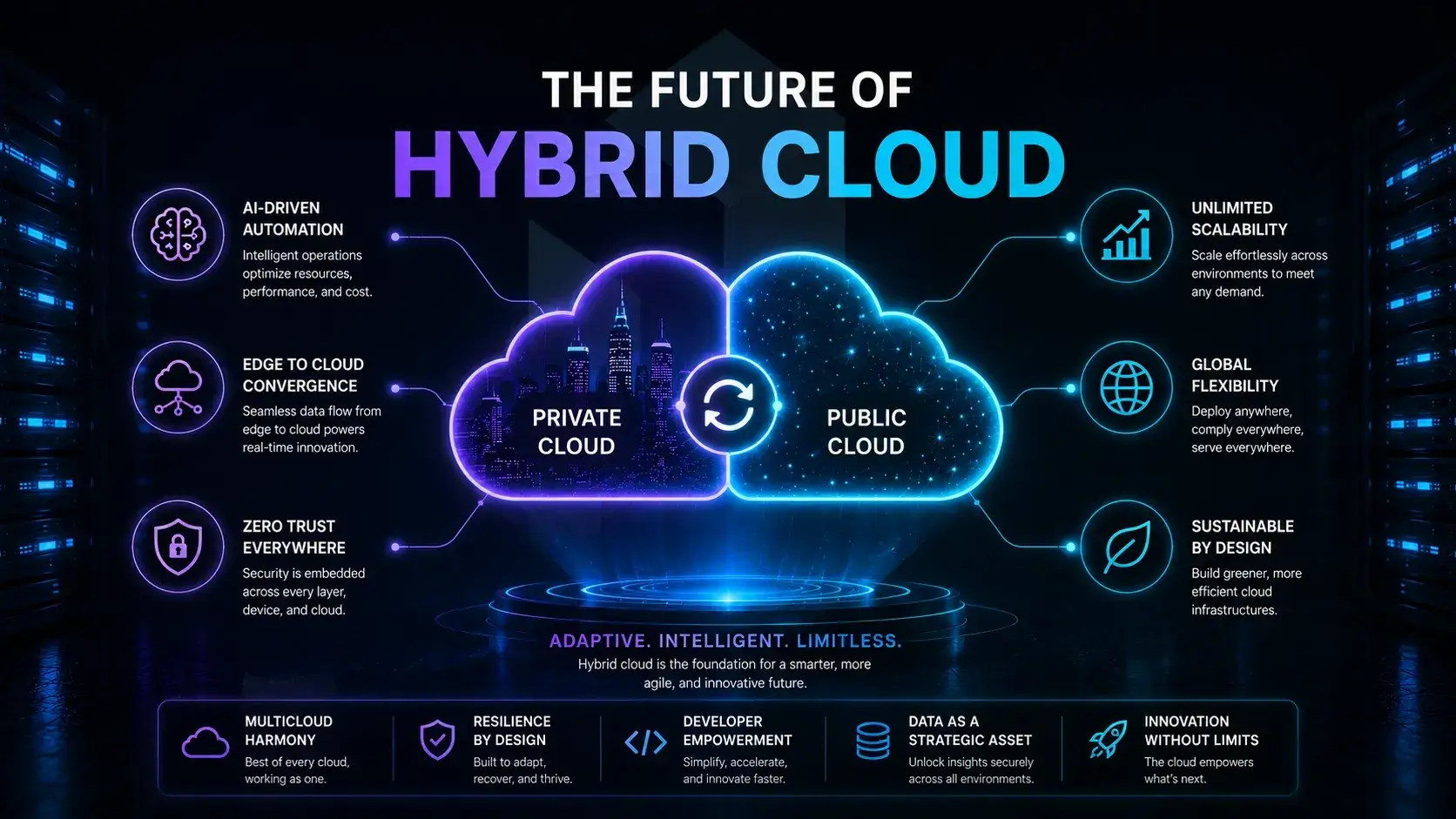
The Future of Hybrid Cloud
The hybrid cloud market continues to grow as organizations demand more flexible and scalable infrastructure. Innovations in automation, AI, and networking are making hybrid environments easier to manage and more efficient.
As technologies evolve, hybrid cloud will play a central role in enabling businesses to operate across multiple cloud environments while maintaining performance, security, and control.
Conclusion
Hybrid cloud computing represents a strategic evolution of the modern cloud computing model, combining the strengths of on premises systems with scalable cloud services. By integrating public and private clouds, organizations can optimize operations, improve agility, and maintain strong data security.
With the right hybrid cloud approach, businesses can unlock new levels of efficiency, resilience, and innovation. As digital transformation continues, hybrid cloud will remain a foundational element of enterprise IT strategy.

How can Netrouting help?
Determining which applications are best suited for your business, whether it may be colocation, dedicated servers, or cloud; requires careful evaluation of performance, compliance, and data security requirements.
Hybrid cloud solutions offer a flexible approach to meet complex business needs, but they require expertise to design and manage effectively. Netrouting helps organizations build optimized hybrid cloud setups, ensuring seamless integration, strong security, and scalable performance.
Our experts can guide you in developing the right infrastructure and hybrid cloud management strategy tailored to your business goals. Contact us at sales@netrouting.com or +31 (0)88 270 02 00 to learn more.
FAQ
What are the key hybrid cloud benefits?
Hybrid cloud benefits include greater flexibility, cost efficiency, and control. Businesses can run stable workloads on premises while using the cloud for scalability. It also improves performance, enhances security for sensitive data, and supports strong disaster recovery.
What is a hybrid cloud management platform?
A hybrid cloud management platform is a tool that helps organizations monitor and manage all environments in one place. It provides visibility, automation, and performance tracking, making hybrid systems easier to control and optimize.
How does cloud native application development fit into hybrid cloud?
Cloud native application development uses technologies like containers and microservices to build flexible apps. These applications can run seamlessly across on premises and cloud environments, enabling scalability and faster updates.
What industries benefit most from hybrid cloud?
Industries like healthcare, finance, government, and manufacturing benefit the most. They use hybrid cloud to balance strict compliance needs with scalability and innovation.
What challenges come with hybrid cloud?
Key challenges include increased complexity, security management, and cost control. Businesses need proper tools, clear policies, and skilled teams to manage hybrid environments effectively.