Your infrastructure team will typically be responsible for the servers and the rest of the equipment in the colocation facility. The colocation facility itself will be managed by the colocation provider. However, there is a significant gap in between, i.e. the usual maintenance tasks such as server patching, security hardening, and the usual 3 a.m. calls to fix a problem with a server.
Managed colocation services fill this gap by providing you a physical data center space. Additionally, The hands-on work for the day to day data center operations, allowing your team to focus on building applications and services, instead of trying to keep servers up and running.
A managed environment is also very attractive to us as it will mean that we can continue to own and manage our own hardware and environment but with the benefit of increased expertise and 24/7 monitoring, repair and response. Many IT managers and directors are today making purchasing decisions for the IT environments of their organizations.
Blog contents
The decision between running servers in the cloud as part of a fully-managed servers. Additionally, Running them in a raw colocation environment, a ‘middle-ground’ solution of this type offers a cost-effective solution, of utilizing your own. dedicated servers , as opposed to rental servers in a cloud environment, with very high quality 24/7 support from the experts. No internal NOC (Network Operations Center) required.
After that intro, the article explains managed colocation in more detail. Includes a list of typical items included in a managed colocation contract (as well as typical exclusions) and a long guide on how to compare your hosts on the things that actually matter.
The article then goes on to describe a space in which managed colocation is a good host for your applications, as well as where it’s not. Additionally, How you might include managed colocation in your overall modern infrastructure strategy.

What Are Managed Colocation Services?
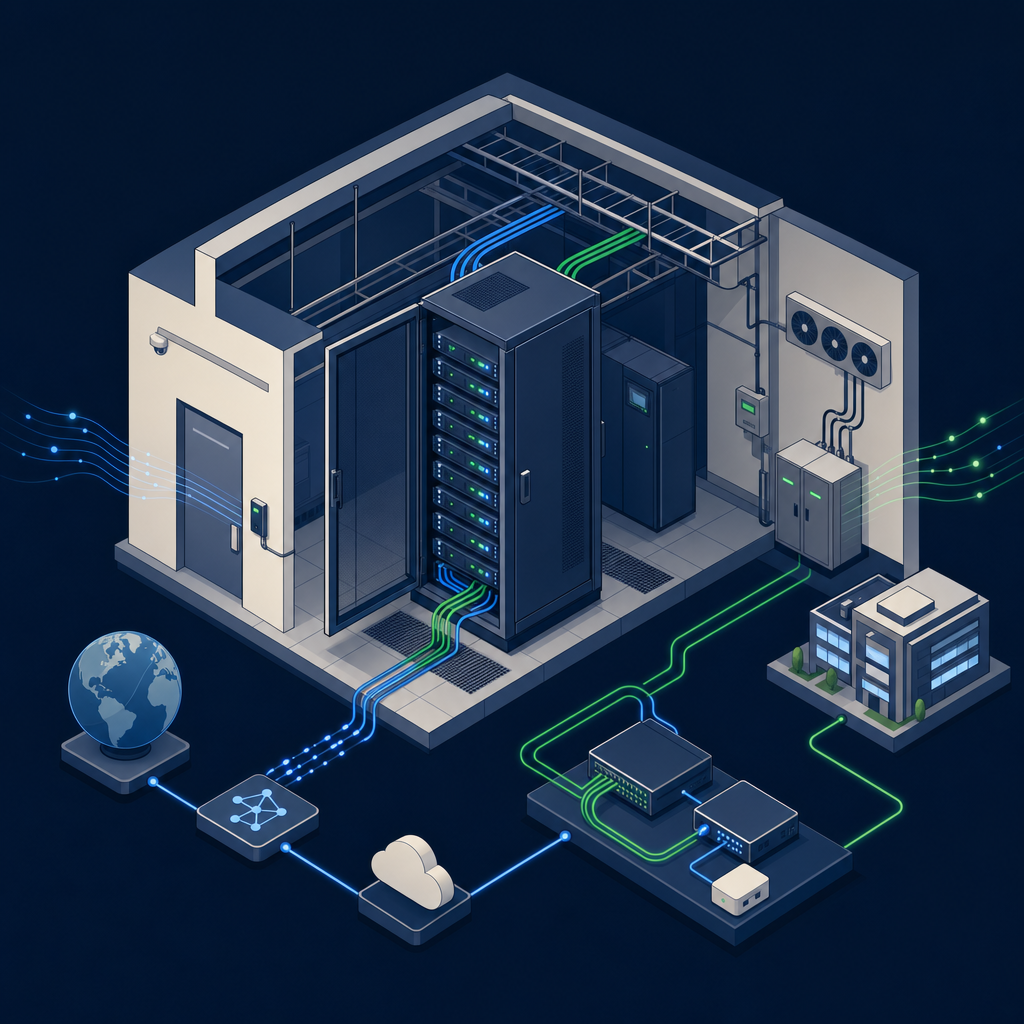
Managed Colocation Services at a Data Center. In Managed Colocation Services at a Data Center you own the servers, storage, etc. which you colocate in a data center. The data center is then responsible for the actual data center space, power, cooling and network connections. On top of this colocation service you can book managed services to operate the servers on your behalf on a day to day basis so that your IT staff does not have to.
In simple terms Colocation at Netrouting is the cabinet where your servers are placed. Managed Colocation on the other hand goes way beyond that. Managed Colocation enables you to request remote hands for maintenance, 24/7 monitoring of your servers, OS-level patching and many more services.
For example, customers shipping bare-metal servers to our datacenter can have Netrouting perform all required firmware updates for them. Even replacing faulty hardware for customers is possible without their engineers ever having to step foot in our datacenter.
- Physical layer: secured cabinet space, redundant power, and N+1 cooling
- Remote hands: on-site technicians for reboots, cabling, and hardware replacement
- Monitoring: proactive alerts and 24/7 NOC oversight
- OS management: patching, security hardening, and configuration support
So you get the performance of a dedicated hardware platform, and the manageability of a service. Next, we’ll explore how service providers structure and deliver their services.
How Colocation Data Centers Deliver Managed Services
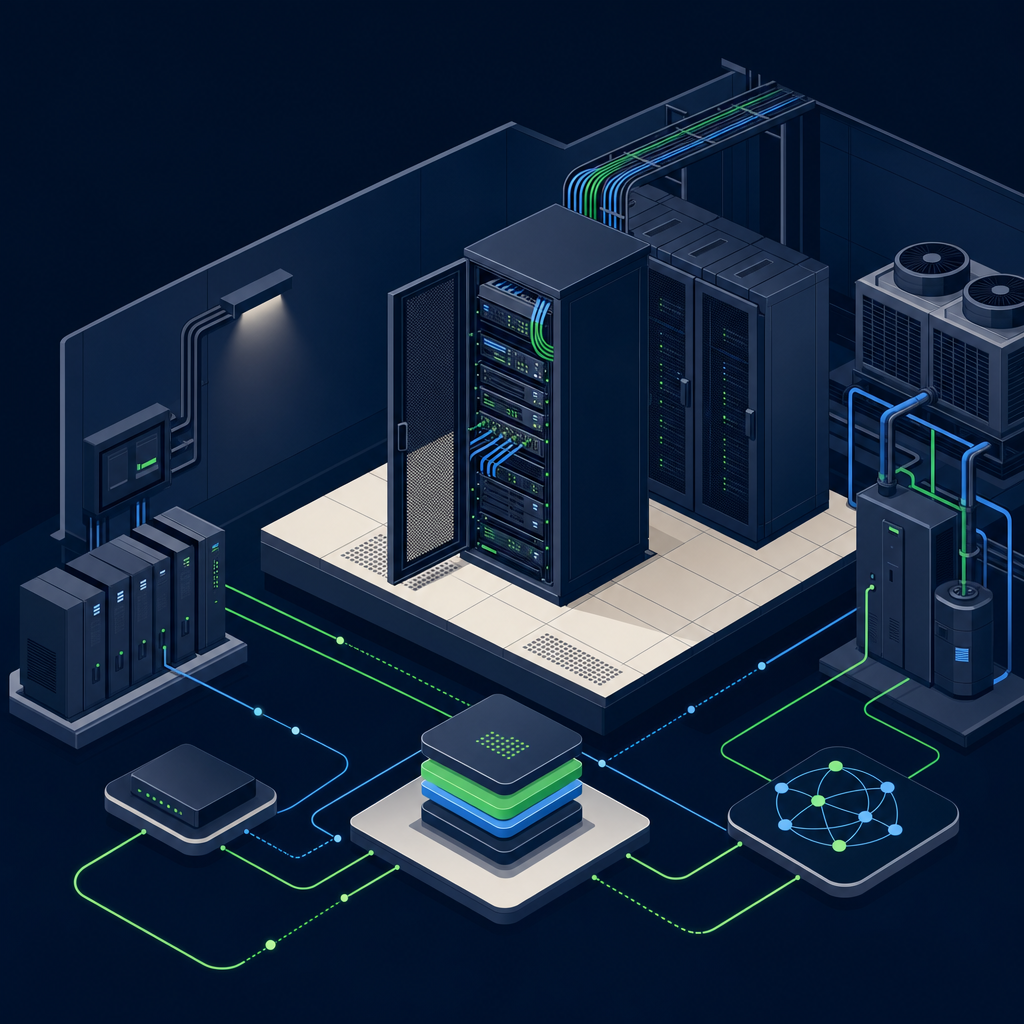
Our Colocation Data Centers offer the physical layer of power, cooling. Connectivity and security and managed services (the work of operating the physical layer) from simple rack and stack services to full management of OS patches, network security monitoring and more.
Service Tiers at a Glance
| Tier | What's included | Starts at (per month) |
|---|---|---|
| Basic colocation | Power, cooling, physical security, uplink | 79 |
| Remote hands | Cable runs, reboots, hardware swaps | Included (courtesy); project work quoted |
| Fully managed | OS patching, monitoring, security hardening | Contact sales |
Netrouting’s colocation entry point is a 1U rack space of 230W (or larger) with 2x 1 Gbps uplink ports and 17 TB of bandwidth. The connectivity at our datacenter is completely carrier-neutral .
So you can connect your own server room or datacenter, or you can connect to different Internet Service Providers. Even peer with other networks as you like, without any forced lock-in by Netrouting. The power and cooling infrastructure is fully N+1 redundant to prevent any single point of failure.
I recommend starting with a basic colocation environment as your software will typically be managed by your team. After that you can add remote hands for after hours hardware based tasks and lastly move to a fully managed environment where patch management, monitoring and incident response are best removed from your plate altogether. The business case for each of these levels is very real and tangible and we detail these out below.
Key Benefits of Managed Colocation for Business Needs
By using managed colocation services you can avoid the 5 disadvantages of building and managing your own datacenter infrastructure. Below we describe the 5 advantages of managed colocation services corresponding with the 5 disadvantages of building and managing your own datacenter infrastructure.
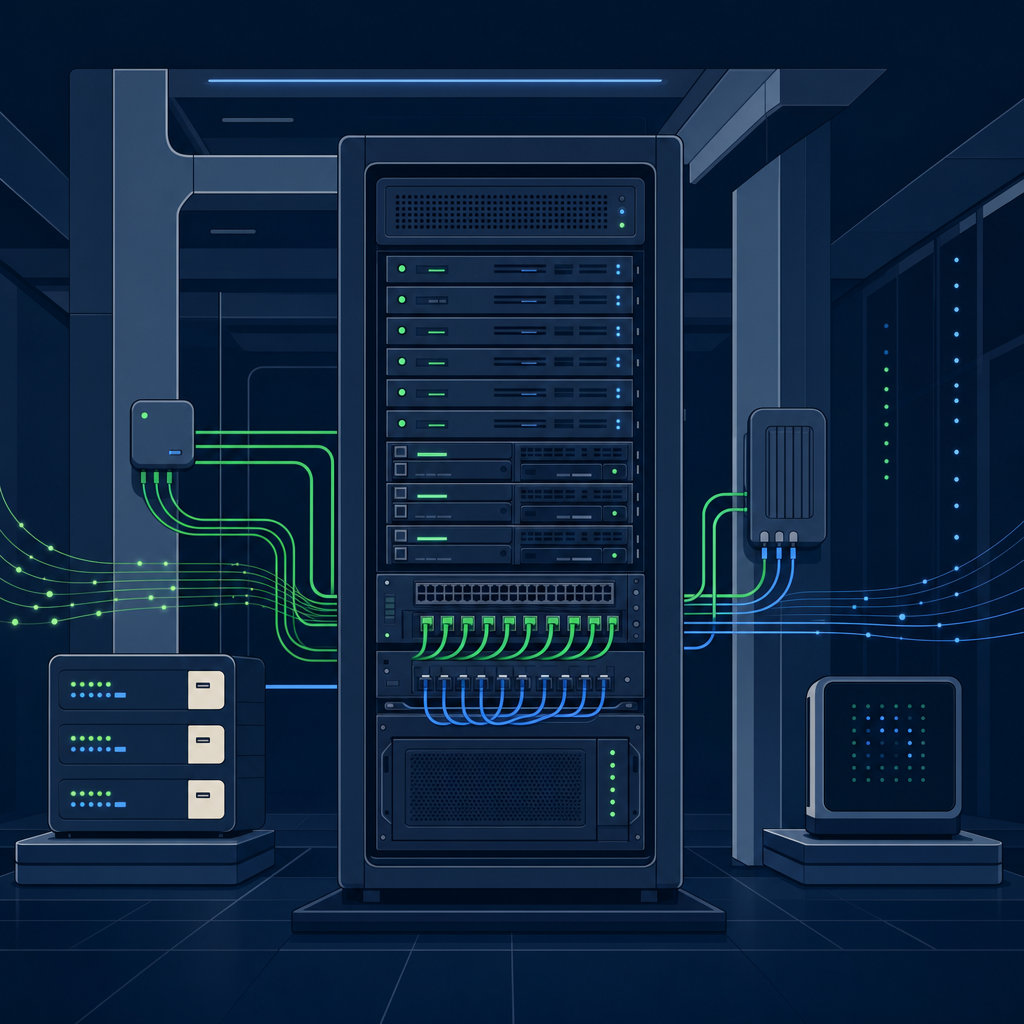
- Cut capital expenditure by not building your own datacenter and run it from leased rack space instead. This cuts large capital expenditure and runs instead to predictable opex to spend as you require.
- High performance / high density locations. High end power and cooling for very dense servers. Our colocation services start at $79/month for 1U of rack space with up to 7kW of power per 60U floor of equipment in a 19″/24″/42U footprint.
- With controls around physical access and enterprise network security such as ISO 27001 and DDoS protection, enterprises can rely on the security of our datacenter. All of your hardware will reside in a hardened perimeter, no team of security experts required to keep your gear secure.
- Disaster recovery at our carrier neutral datacenter is duplicated for power supplies as well as N+1 for cooling. In case the local power supply fails your systems will keep on running. In addition your servers are hosted in a totally different location then your office so also in a different disaster area.
- Take advantage of the managed services expertise of Netrouting. With on-site remote hands and a 24/7 NOC (network operations center) for hardware incidents we can resolve these issues for you. We respond within the hour to incidents reported in our ticket system.
Note: Colocation is not a backup strategy on its own. Pair it with a tested recovery plan and off-site data replication to meet real disaster recovery objectives.
Each service model offers different benefits. Below we outline the levels of responsibility of a provider and compare them with your current capacity to handle.
Colocation Data Center Service Models Explained
Colocation data center services come in three flavors, the so-called Tier levels. This Determine how much of the IT infrastructure of the customer is already set up in the customer’s in-house data center and how much risk the customer is willing to take and hand over to the data center provider in a colocation service.
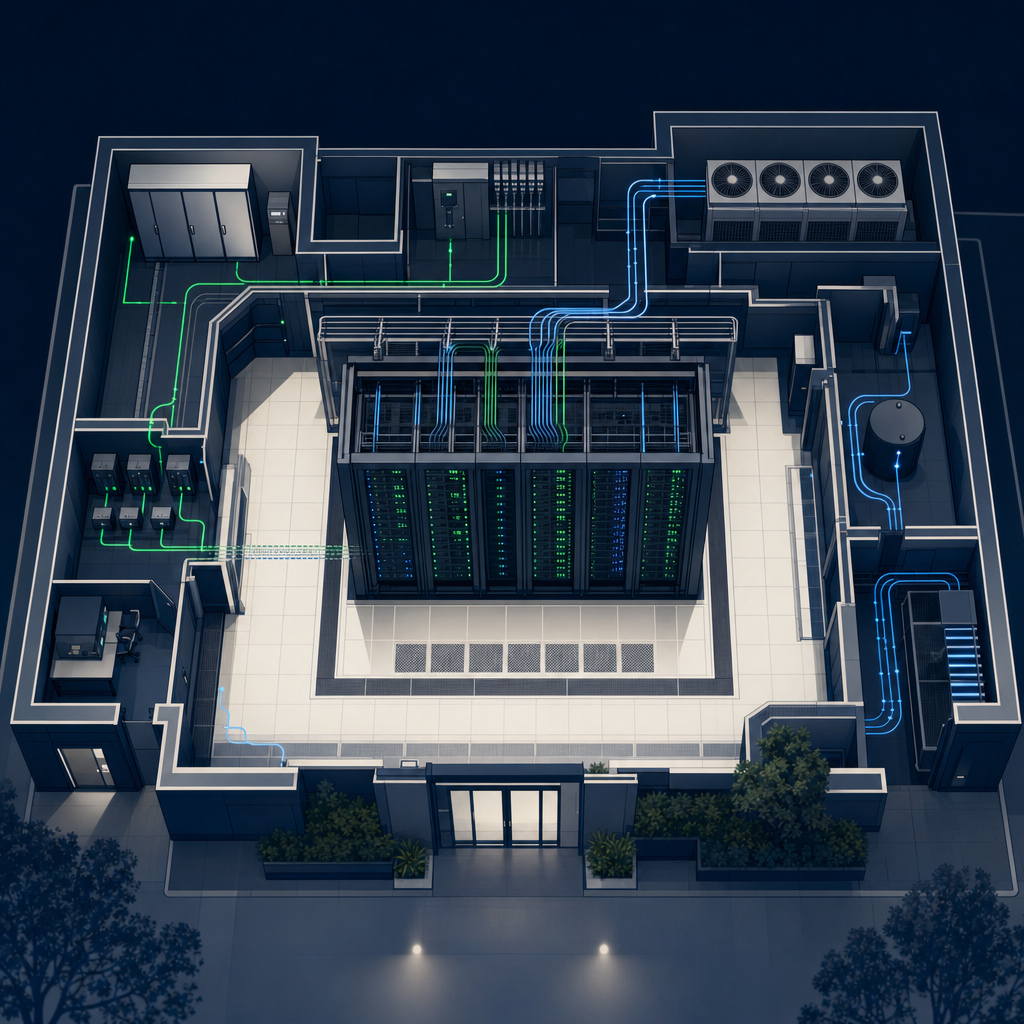
Tier 1: Basic Colocation
We are responsible for providing the facilities, power and cooling to house your servers. After that it is over to you to purchase the servers, set up the operating systems, apply patches as required and monitor your servers for health and performance. This model is well suited for organizations that have a strong in-house NOC team and a team of engineers that want full control of their server stack.
Tier 2: Partially Managed Colocation
Our Complete Management add-on package includes Remote Hands, Network Management and Uptime Monitoring on top of our Basic services. This package includes our response to Hardware Alerts as well as physical work on your behalf. Our monitoring package leaves the OS and Applications to your team to manage as you see fit. This is typical of the majority of mid-market IT teams.
Tier 3: Fully Managed Colocation
This would typically be for Managed Colocation where the customer would administer the server as they wish but the Colocation Services Provider would perform updates to the OS. Security hardening etc and proactively replace hardware as required. However root access would remain with the customer and they could administer the server as they wish, day to day administration would be left to the Colocation Services Provider.
Our Managed Hosting services are run along this lines with 24/7 NOC monitoring of the servers, same day hardware replacement and a guaranteed response to any ticket raised within 1 hour. For community perspectives, see Secure and Scalable IT with ESDS Managed Colocation ... .
Choosing Your Tier
It’s also important to map your internal headcount and work to the tasks that each tier level can take off your hands. A small IT organization with most of its time spent on compliance work would likely get the most value out of Tier 3 work.
On the other hand, a large organization of engineers would likely get the most value out of Tier 1 or 2 work. You are only paying for the real physical infrastructure in the colocation data center and not for the physical servers of Tier 1, 2 or 3 workloads.
After selecting the correct tier of service for your business, you have the choice of whether to host your IT infrastructure in a colocation center or your own data center. Here is a breakdown of the costs and benefits of each option.
Comparing Managed Colocation to On-Premises Infrastructure
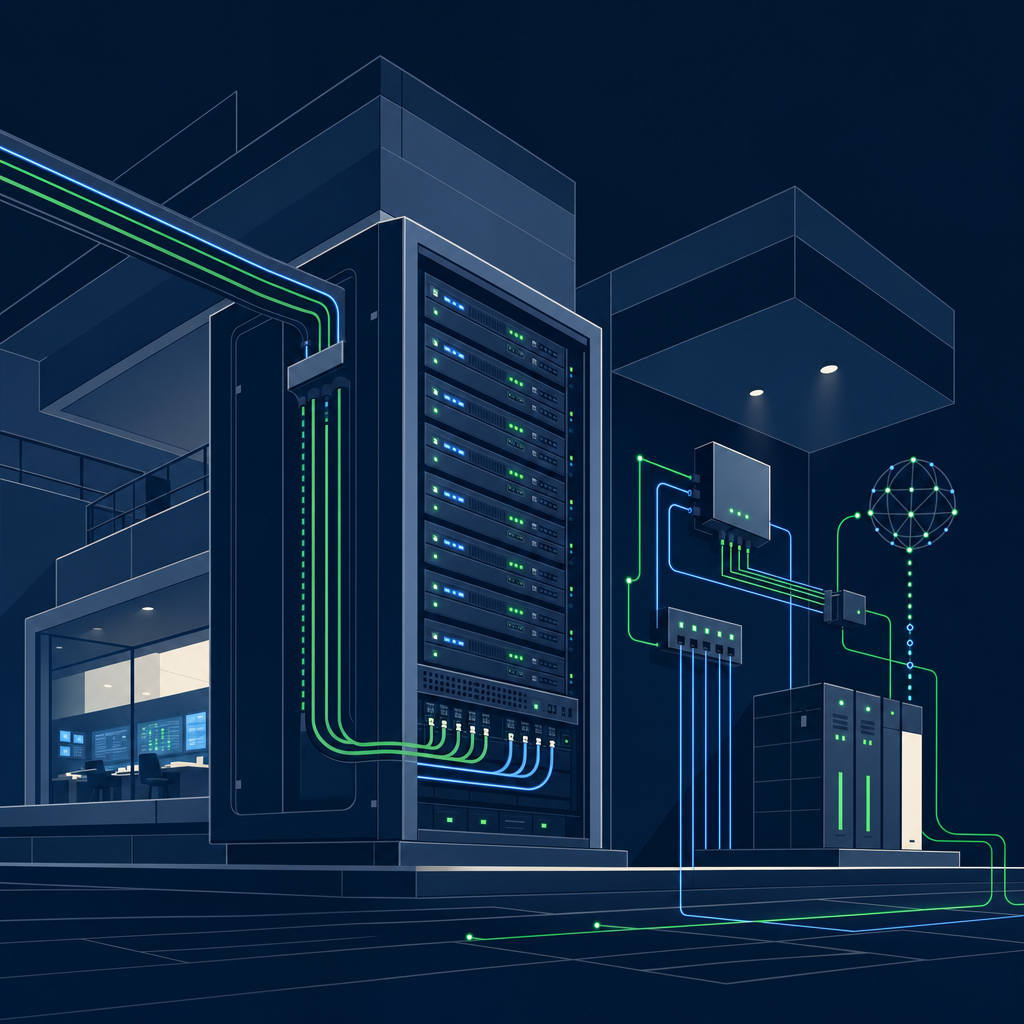
On-premises infrastructure costs a lot of upfront capital. Managed colocation moves that large upfront capital expense to predictable monthly operating expenses. In managed colocation you share the physical security, power and cooling with other customers.
| Factor | Full On-Premises | Managed Colocation |
|---|---|---|
| CapEx | High, facility build, power, cooling | Low, own hardware only |
| OpEx | Ongoing staffing, maintenance, utilities | Predictable monthly rack fee |
| Physical security | Your responsibility entirely | Handled by colocation providers |
| Power and cooling | Designed, funded, and operated in-house | N+1 redundancy included |
| Scalability | Slow, construction or leasing required | Add physical space within days |
| Staffing burden | Full NOC and facilities team required | Reduced, remote hands available |
The following is an example of how Netrouting can help save you a lot of money. Instead of maintaining your very own Datacenter with diesel generators to run your servers, security guards to protect your Datacenter and engineers for cooling your servers.
You simply relocate your 10 servers into our Colocation suites (from 79 Euro per month for 1U of rack space). And, you maintain full control of your data storage and your own hardware. Root access is provided to you as well. Any problems that might occur will be dealt with by the 24/7 NOC staff of Netrouting and your courtesy remote hands.
Of course, when deciding on hosting there are more things to consider than on-premises / colocation alone. Many users weigh up the benefits of hosting their servers in colocation against the alternative, hosting in public cloud. There are many different trade-offs in this decision.
Managed Colocation vs. Cloud Solutions and Public Cloud
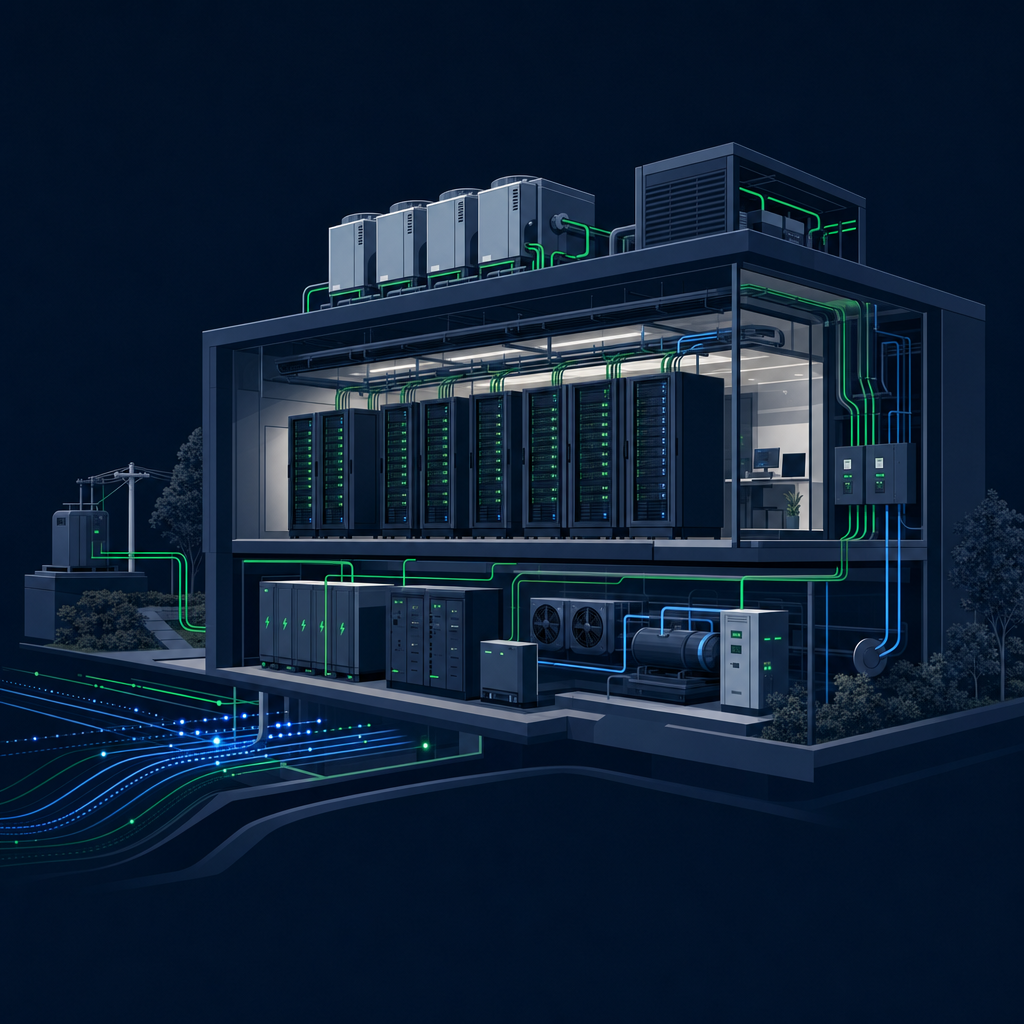
When deciding between managed colocation services and public cloud, it really comes down to different needs. To decide which is best for your workloads, it’s helpful to know the main trade-offs between these options.
| Dimension | Managed Colocation | Public Cloud |
|---|---|---|
| Hardware control | Full ownership; your hardware, your specs | Shared, provider-managed pools |
| Pricing | Predictable; from 79 per month for 1U | Variable; egress costs scale unpredictably |
| Compliance | Known jurisdiction; data never leaves your cage | Multi-region replication may complicate sovereignty |
| Latency | Consistent; no noisy-neighbour variance | Variable under shared load |
| Workload portability | Hardware-agnostic; migrate on your schedule | API lock-in risk on proprietary cloud services |
The typical setup for organizations using hybrid infrastructure is to keep latency sensitive work / regulated data hosted in colocation and then use cloud providers for burst capacity. Our carrier neutral colocation facilities (data centers) have direct on-ramps to the major cloud providers so you are fully in control of where your owned servers reside and where your cloud resources reside. You do not have to sacrifice hardware ownership in order to offload to cloud services as needed.
Managed Colocation is generally better for Compliance, Cost Predictability and Performance. Cloud Providers are generally better for Elastic, Short-Lived workloads where flexibility is more important than cost. Once you have decided on a model, it is then important to understand the key provider criteria that differentiate good operators from poor.
What to Look for in a Managed Colocation Provider
Choosing the right Colocation provider requires more then just calculating the price per rack in a datacenter. Take this checklist with you when you’re selecting a provider for your colocation needs.
- Review the stated uptime SLAs and negotiate a written guarantee, specifying a minimum of 99.9% up-time (e.g. 3.6 hours downtime per year). 99% up-time is too risky.
- Check service level agreements of service providers for time of response. Check time of response to opened tickets and time of replacement of hardware. Same business day replacement and 1 hour response time for incidents would be ideal.
- Check for physical security certifications (e.g. ISO 27001, SOC 2, etc). This allows someone else than the service provider to verify the access controls, the physical monitoring and the incident response capabilities etc. rather than the service provider just claiming these.
- Redundancy in networks, such as N+1 redundancy for power and cooling, redundant and fully diverse fiber routes and carrier-neutral peering. Redundancy port utilization and corresponding headroom. Less than 50% acceptable.
- Confirm DDoS protection is included. Standard blackhole routing is the minimum. Scrubbing-as-a-Service with 1 Tbps+ capacity is better. Note: some providers charge extra for protection that should be baseline.
- What is the scope of the remote hands (for free for most of the standard tasks. The basics are included for free) and are there any project-based (for a fee) rack-and-stack services for larger scale deployments?
- We can help you to assess your current global footprint. In order to assist you in making a qualified assessment of the number of locations world-wide which are required to ensure optimal latency as well as an effective and adequate disaster recovery site. A network presence on 7 Continents from a single provider. I.e. from Stockholm over Amsterdam and The Hague to Frankfurt and Bucharest and down to Miami in the East and Hong Kong in the Far East. The ultimate Global Infrastructure is available to you from a single source.
Netrouting’s offer satisfies all our requirements. Below a brief overview of the offered services.
Why Choose Netrouting for Managed Colocation Services
Netrouting operates carrier-neutral colocation facilities in Amsterdam, Frankfurt, The Hague, Stockholm, Bucharest, Miami and Hong Kong. From these locations we connect to a 1 Tbps+ network and have peering with AMS-IX and NL-ix. For our Managed Colocation services (from $79/month) 1U, 230W of power, 17 TB of bandwidth and 2x 1Gbps uplink ports are included. For more context, see Colocation centre.
- Certified infrastructure: ISO 9001, ISO 27001, and SOC 2 (Miami) across our data centers
- Network security: DDoS protection included as standard on every deployment
- Remote hands: courtesy basic remote hands at no extra cost
- Free private network: up to 1 Gbps between your colocated resources
- 24/7 NOC with a one-hour ticket response guarantee
Need OS-level management on top of physical space and power cooling? Our Managed Hosting option covers patching, security hardening, and monitoring while you retain root access. Compare configurations or contact our team to find the right fit for your business needs.
The Core Advantages of Colocation Data Center Hosting
A colocation data center provides a number of items that your in-house infrastructure cannot. Such as physical security, redundant power and cooling and carrier-neutral network connectivity. On top of that we offer Managed Colocation Services. These services are provided from within the colocation data center. Services that we provide are remote hands, proactive monitoring and disaster recovery services. The customer still retains full control of his or her hardware.
Looking for the right colocation provider for your business needs? When selecting a datacenter, look for physical space that can scale to meet your needs, high-density power and connectivity solutions and strong cloud integration.
Frequently Asked Questions
What is managed colocation?
Managed colocation means you house your own hardware in a provider's data center and pay them to handle day-to-day operational tasks on top of the physical space, power, and connectivity. Those tasks typically include OS patching, security hardening, proactive monitoring, and remote hands support. You retain ownership of the equipment and, in most cases, root access to your servers. It combines the control of owning your infrastructure with the operational support of a managed service.
What is the difference between managed colocation and standard colocation?
Standard colocation gives you physical space, power, cooling, and a network uplink, nothing more. Your team is responsible for every layer above the hardware: OS, software, security, and monitoring. Managed colocation adds a contracted layer of operational support, so the provider handles defined tasks on your behalf. The hardware still belongs to you; the difference is who manages it once it is racked.
What managed services are typically included in a colocation package?
Common inclusions are 24/7 proactive monitoring, OS and security patch management, firewall rule management, backup administration, and remote hands for physical tasks like cable swaps or reboots. DDoS mitigation is frequently bundled or available as an add-on. Some providers also include performance reporting and a dedicated point of contact for escalations. The exact scope varies by tier, so review the service description carefully before signing.
How does managed colocation compare to public cloud services?
Public cloud gives you on-demand virtual resources with no hardware ownership, but you pay a premium for that flexibility and share underlying infrastructure with other tenants. Managed colocation puts dedicated, physical hardware under your control inside a professionally operated facility.
Workloads with predictable resource demands, strict latency requirements, or regulatory constraints around data residency typically cost less and perform more consistently on managed colocation. Netrouting's colocation starts at 79 per month for a 1U slot with a 2 x 1 Gbps uplink and 17 TB of bandwidth included.
What are examples of managed services in a data center context?
Practical examples include remote hands (physical intervention on your equipment without you travelling to the facility), OS-level patch cycles run on a defined schedule, real-time network monitoring with automated alerting, daily incremental backups with offsite replication, and DDoS scrubbing when attack traffic is detected. Hardware replacement under SLA, same business day for most providers, is another common managed service. Security hardening, firewall audits, and compliance reporting round out the typical catalogue.
What certifications should I look for in a colocation provider?
ISO 27001 is the baseline for information security management and should be non-negotiable for any workload handling sensitive data. ISO 9001 demonstrates consistent quality management processes across the operation. SOC 2 is particularly relevant for US-based or US-regulated workloads, as it audits security, availability, and confidentiality controls. Netrouting holds ISO 9001 and ISO 27001 certification since 2016, and its Miami facility carries SOC 2 compliance.
How quickly can managed colocation be provisioned?
Physical space, power, and connectivity can typically be activated within one business day once a contract is signed and hardware is on-site. Bare metal servers ordered directly from the provider can be ready faster, Netrouting provisions dedicated servers in under 60 minutes. The managed service layer (monitoring agents, backup jobs, firewall rules) is configured in parallel and is usually live within the same provisioning window. Complex custom configurations or cross-connect requests may add a day or two.
Managed Colocation services our customers to avoid initial investment of building out their own data center, while maintaining control of their servers, storage and applications. Our Managed Colocation services are delivered as a complete, fully managed data center service, utilizing a fixed operational cost model.
This service provides a professionally managed facility with redundant power delivery and multi-carrier connectivity options. We also offer 24/7 remote hands services to support our customer’s needs. We manage it for you so you don’t have to.
Colocation as opposed to server rooms in-house is available at similar cost but with far greater enterprise class uptime, physical security and diversity of network connections.
If those priorities align with your infrastructure roadmap, Netrouting's colocation services start at 79 per month and span seven locations across Europe, North America. Additionally, Asia-Pacific, all on a 1 Tbps+ backbone with a 24/7 NOC and a one-hour ticket guarantee. Explore colocation plans or contact the sales team to spec out a configuration for your workload.