Cloud computingThe original goal of cloud storage (to store files remotely to access from other locations instead of from the local computer by using an alternative to the local file system) is no longer the goal. housing physical serversCloud computing has become the cornerstone of enterprise innovation in the modern era of IT, data processing and global application deployment for IT directors. The architectural shift of the next decade forces IT directors to think about data processing and global application deployment in a new way. The convergence of the most sophisticated algorithms, of decentralized networks and of the strictest data sovereignty laws is currently transforming the digital world into a highly complex network of interconnections. For this reason, IT directors must understand most of these emerging topics. cloud computing trends will impact your daily business operationsRecognising and managing problems and bottlenecks is critical to any organisation seeking to maintain its position in a crowded marketplace.
In this in-depth guide, we will elaborate on the precise technological innovations which will form the basis for future digital infrastructure. This guide outlines the key components of future digital infrastructure and the required technological changes.future of cloud computing to help you understand how rapid adoption of these frameworks is enabling businessesthe pace to scale at unprecedented speed. From implementing complex analytics to strict data governance, the challenges are piling up fast.future of cloud demands a proactive, highly strategic approach. By examining these key trends, enterprise leaders can make informed cloud investmentsThe type of solutions that corporate leaders are searching for are solutions that will protect their bottom line, safeguard their Intellectual Property and return the greatest value over the next 10 years from the technology that they invest in. To these corporate leaders, their computer systems will not be just a static utility but a dynamic engine to fuel the corporate growth and global leadership of their company over the next decade.
What Is the Future of Cloud Computing
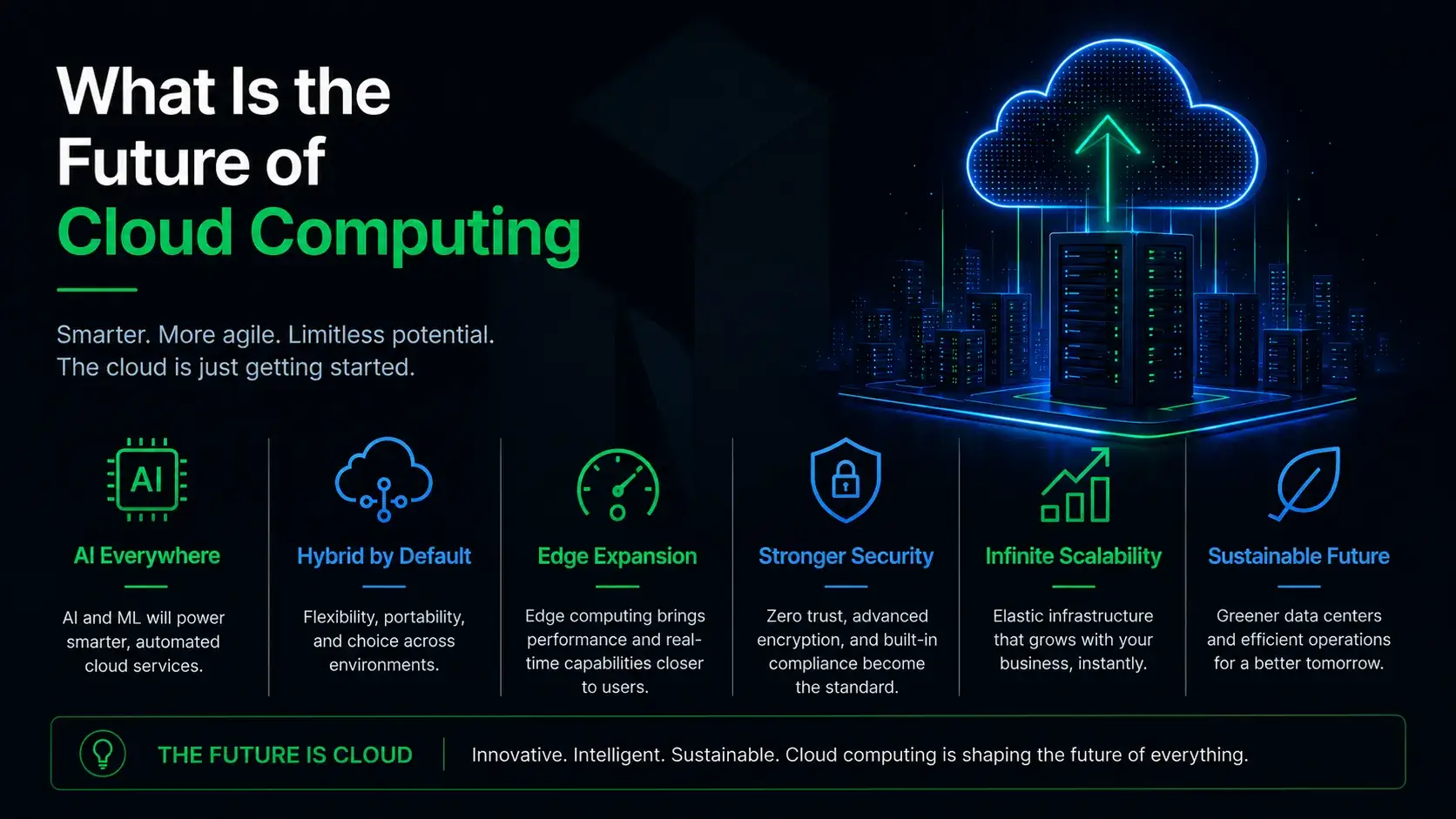
The future of cloud computing is highly decentralized, incredibly intelligent, and heavily optimized for specific computational workloads. We are moving rapidly away from the concept of relying entirely on a few massive, centralized data centersThe way requests are processed is no longer a case of each request being handled by a single server. Processing of a request to produce a response will now be a very distributed process.computing powerProcessing is pushed as close to the end user as physically possible to eliminate latency. We are now running an entirely software defined environment, and as engineers we can deploy large global applications without having to deal with the hardware (servers, datacenter, etc.) layer.underlying infrastructure.
Blog contents
As cloud technology evolves and new trends in cloud computing emerge, the concept of a singular, monolithic external cloud serverThe static pool of servers that were once the backbone of the datacenter is rapidly evolving into a dynamic, interconnected web of computing nodes all working together to share access to a huge data set.businesses operate on a daily basis. Instead of viewing cloud services as a fixed expense, forward thinking organizations treat their cloud capabilities as a flexible instrument for continuous innovation. Whether it involves seamlessly automating processes to reduce human error or deploying advanced security protocols, the trajectory of cloud based technologiesAll this means absolute agility, enormous scalability and, above all, deep integration with artificial cognitive systems.
Top Trends Shaping the Future of Cloud Computing
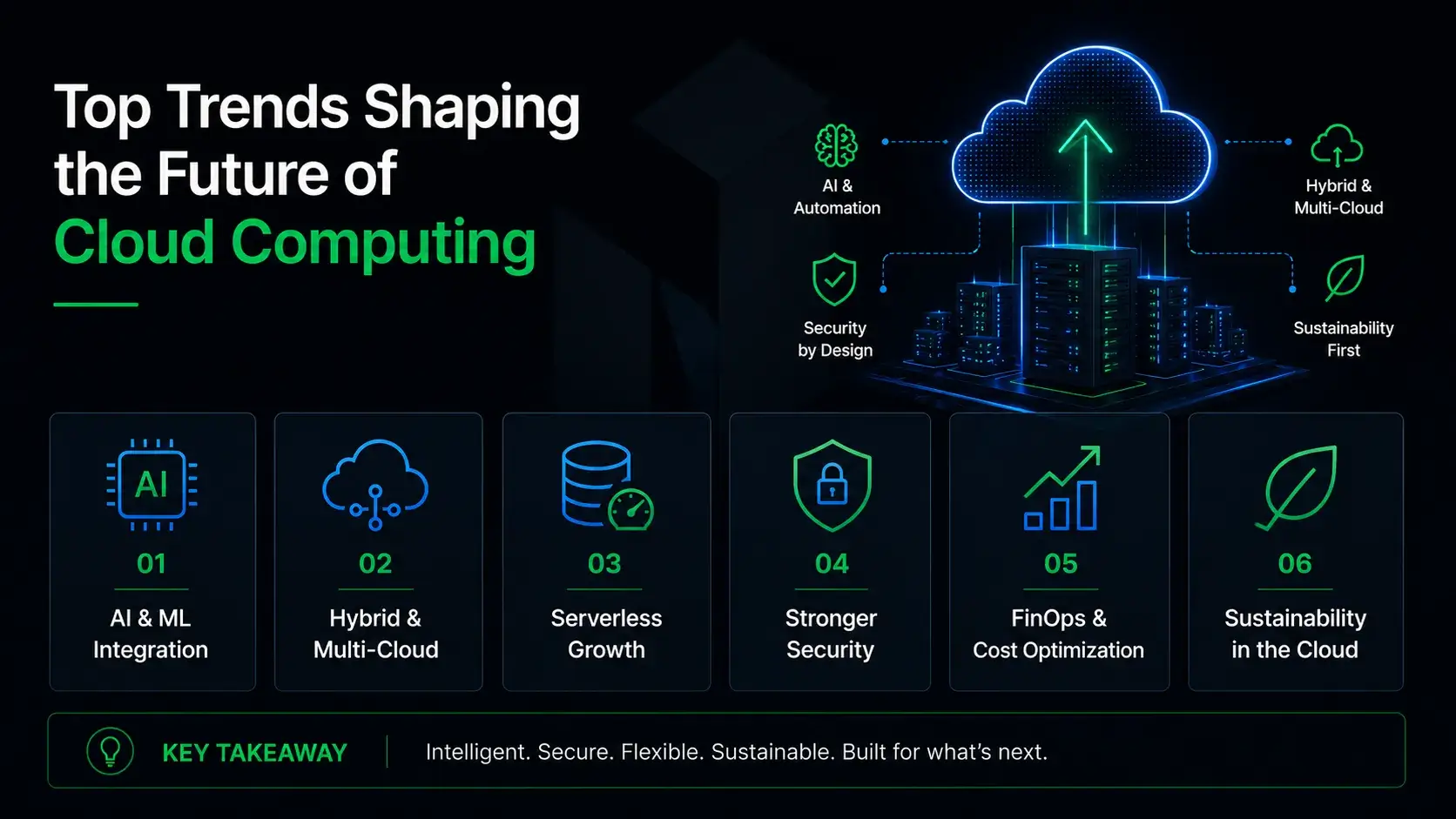
Right now there are quite a few massive changes in how digital assets are deployed and managed in large enterprises. We follow these big changes so that you can establish a solid IT infrastructure in your company that will not be outdated in 3 years. This concerns issues like the ecological responsibility of data centers and the dispersion of workloads.multiple cloud providers, the operational playbook is changing rapidly. Examining these core cloud computing trendsThis reveals exactly where venture capital and huge corporate IT budgets will flow for the rest of the decade and beyond.cloud operations remain on the cutting edge of technological advancement.
Artificial Intelligence and Machine Learning in the Cloud
Even the most complex algorithmic models need an enormous amount of raw computing power to be trained, thus turning your virtualized environment into a monster intelligence system.Major providers are aggressively building specialized silicon and massive GPU clusters designed specifically to digest and process petabytes of data for machine learning tasks. Artificial intelligence and machine learning are revolutionizing cloud platforms by automating processes, enabling predictive analytics, and enhancing decision making capabilities. This ai integrationThe term refers to high powered cognitive capabilities that can be 'hired' by any enterprise to do exactly what they are required to do for the exact amount of time (i.e. seconds) required to process that function in order to train their own AI. This function is no longer the domain of large technology companies.
The global market value of AI is expected to exceed 89 billion dollars per year by 2025. To keep up with these developments, businesses have to adapt quickly to the opportunities presented by AI.artificial intelligenceThese are the approaches companies already use to stay competitive in their markets. By leveraging these models directly within theircloud environments, organizations can gain even deeper insights to predict market developments, optimize their logistics, and provide their customers with even more individual service. By 2026, more than 60% ofcloud operationsFuture infrastructure will be powered by AI automation. All tasks will be managed automatically by AI, like predictive autoscaling, security monitoring and cost optimization. As these technologies mature, cognitive algorithms will be fully embedded into every layer of the stack.cloud infrastructure, self-managing resource loads, anticipating hardware failures before they happen, and most importantly creating new ways for software to interact with the user.
Edge Computing and IoT Expansion
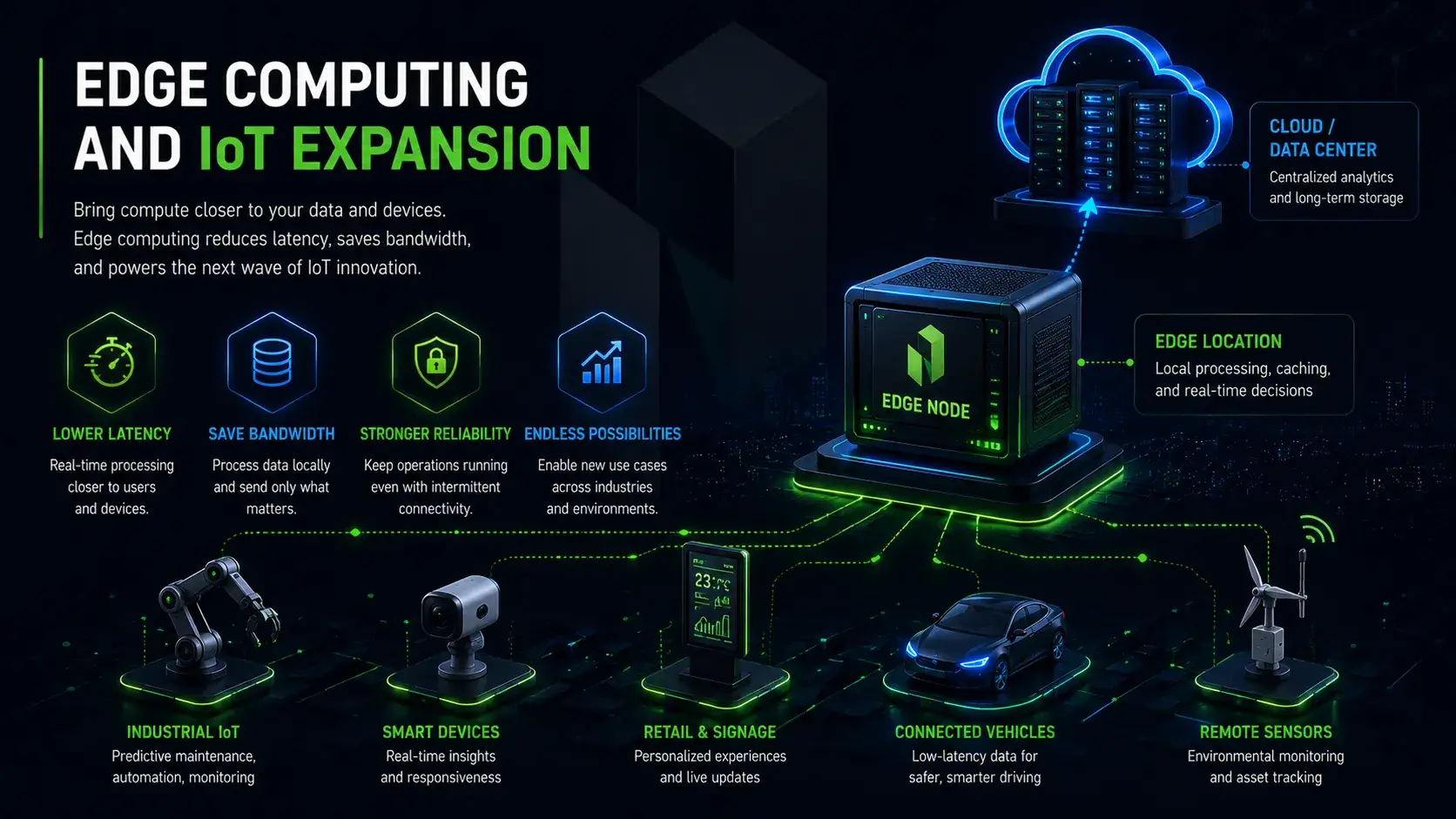
By processing information closer to where the information is gathered, we can significantly reduce latency as well as the very high cost of bandwidth to move very large quantities of data over long distances to a central facility. As the industrial internet of things is expected to include billions of smart sensors and devices, the information will not be able to be processed in a central location due to volume.Edge computingLocal micro servers are deployed at the location where data is created to ensure that the data can be processed as close as possible to where it is created.real time data processing for critical systems like autonomous vehicles, medical monitoring, and automated manufacturing floors. By late 2026, nearly 75% of enterprise data is projected to be processed at the edge, enabling millisecond response times for critical applications.
This rapid expansion requires highly sophisticated smart device management platforms to orchestrate thousands of decentralized nodes spread across massive geographical regions. By filtering and analyzing the massive amounts of data generated at the edge, organizations can ensure that only the most valuable, curated insights are transmitted back to the primary cloud platforms. This localized approach to handling computing resources not only drastically improves application responsiveness but also significantly reduces the immense strain placed on global internet backbones, making edge computing a foundational pillar for the next generation of highly responsive digital infrastructure.
Multi Cloud and Hybrid Cloud Strategies
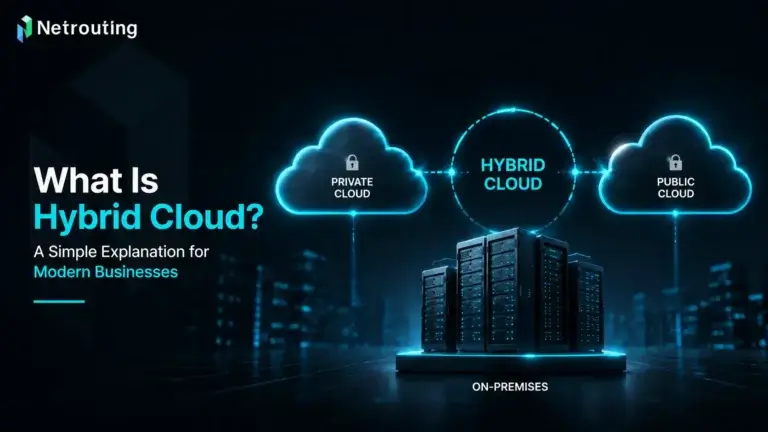
Relying on a single cloud provider for all your operational needs is now widely viewed by executive boards as a critical operational vulnerability. Enterprises are actively adopting multi cloud strategies, distributing their databases and applications across different cloud providers while simultaneously keeping their most highly sensitive data on a fully isolated private cloud. Astonishingly, 93% of enterprises have adopted a multi cloud strategy, which involves using multiple cloud service providers to enhance flexibility and reduce vendor lock in. This hybrid cloud approach prevents catastrophic outages and allows engineering teams to leverage the specific technical strengths of different cloud vendors simultaneously.
Implementing multi cloud strategies can enhance data security and compliance by allowing businesses to manage sensitive data in private clouds while utilizing public clouds for less sensitive workloads. Over 85% of businesses are expected to adopt multi cloud architectures to avoid vendor lock in, increase flexibility, and optimize costs by using specialized tools from different providers. Multi cloud strategies allow organizations to distribute workloads across different cloud environments, enabling them to select the best services for specific needs and improving overall performance. By intentionally leveraging multiple cloud providers, organizations gain incredible negotiating power and drastically improve their global disaster recovery protocols, ensuring they are never permanently tethered to the pricing models or technical limitations of a single entity.
Serverless Computing and Microservices
Abstracting the infrastructure entirely allows developers to focus exclusively on shipping new features instead of managing server patches and capacity limits. Serverless computing architectures execute code in exact response to specific triggers, charging the company only for the absolute milliseconds of computing time actually consumed. The demand for serverless computing is expected to grow by 25% from 2021 to 2026, indicating a strong trend towards this model in modern application development. When combined with a microservices approach that breaks massive applications into tiny, independent functions, this execution model provides infinite scalability and drastically reduces the wasted capital associated with idle server capacity.
Because the cloud providers automatically allocate the exact amount of processing power needed for each function, your engineering team is completely freed from the burden of manual resource allocation. This hands off approach significantly reduces operational costs and accelerates the deployment of new digital services to your customer base. Serverless computing is rapidly gaining traction because it perfectly aligns financial expenditures with actual software usage, making it one of the most highly efficient ways to build and scale modern enterprise applications without worrying about provisioning the underlying physical servers.
Quantum Cloud Computing
While still in its highly experimental stages, quantum computing threatens to completely upend traditional cryptography, financial modeling, and complex chemical simulations. Because building a physical quantum machine is financially impossible for most corporations, cloud service providers are already offering early access to quantum simulators through standard internet portals. This allows forward thinking data scientists to begin writing and testing quantum algorithms today, ensuring their organizations are perfectly positioned when the hardware finally matures into a commercially viable product over the next decade.
Unlike traditional computers that process information in binary ones and zeros, quantum systems can process massive datasets simultaneously by leveraging quantum superposition. This exponential leap in processing power will revolutionize industries that rely on deep mathematical modeling, such as pharmaceutical companies executing highly complex drug discovery simulations or financial institutions running massive risk analysis models. Accessing these capabilities via the cloud ensures that the immense benefits of quantum mechanics will be democratized and available to enterprises of all sizes, completely redefining the boundaries of computational science forever.
Green Cloud Computing and Sustainability
The massive environmental impact of running thousands of power hungry data facilities is becoming a primary metric for boardrooms evaluating their IT vendors. Environmental sustainability is becoming a core focus for cloud providers, with efforts directed towards energy efficient data centers and renewable energy adoption to reduce the carbon footprint of cloud operations. Leading major providers are heavily investing in renewable energy sources, advanced liquid cooling technologies, and highly efficient processors. In fact, cloud providers are increasingly investing in sustainable hardware sourcing and carbon neutral cloud services as part of their commitment to environmental responsibility.
The demand for greener cloud solutions is expected to rise as businesses prioritize eco friendly practices to align with corporate social responsibility goals and strict regulatory requirements. Sustainability initiatives in cloud services are allowing consumers to support more sustainable digital services by actively choosing vendors with low environmental impacts. Achieving absolute energy efficiency is no longer just an environmental goal; it is a financial imperative. When massive server farms consume less electricity and require less aggressive cooling, those operational savings are directly reflected in lower hosting prices. By migrating legacy hardware to highly optimized, modern cloud environments, corporations can significantly shrink their environmental impact, proving that ecological responsibility and incredible cost efficiency can successfully coexist.
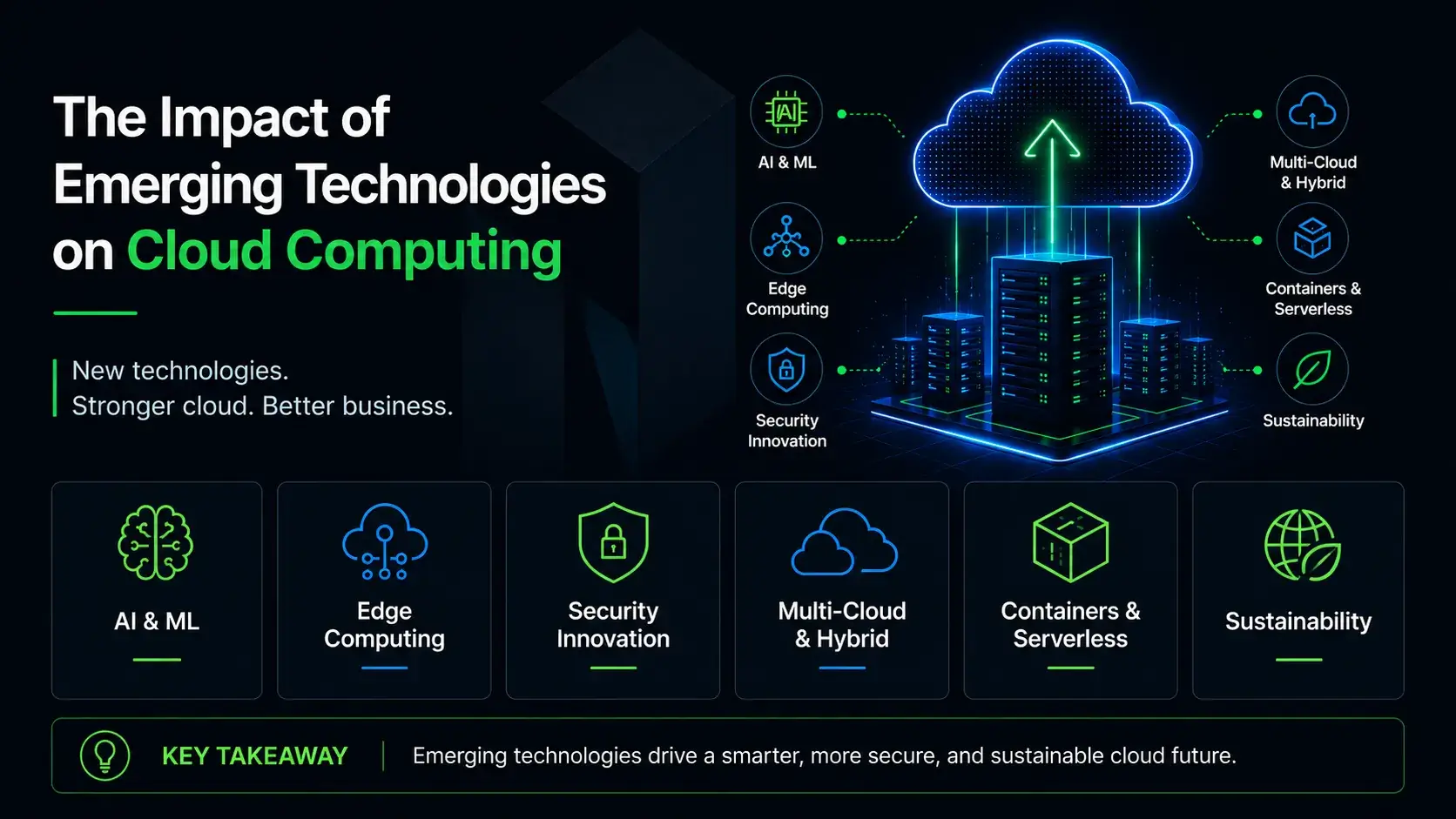
The Impact of Emerging Technologies on Cloud Computing
The convergence of advanced connectivity standards and highly complex algorithmic models is pushing digital infrastructure to its absolute physical limits. Standard virtual machines are no longer sufficient to handle the specific, heavy lifting required by modern enterprise applications. To survive this massive transition, the underlying physical networks and the software hypervisors managing them must completely evolve to provide uninterrupted, massive data pipelines capable of digesting global traffic without hesitation.
The Role of 5G in Cloud Performance
The global rollout of 5G networks provides the massive bandwidth and ultra low latency required to untether complex applications from hardwired connections. This wireless revolution allows mobile devices to instantly offload heavy processing tasks to edge servers without the user ever noticing a drop in performance. By effectively erasing the network bottleneck between the user and the centralized servers, 5G enables an entirely new class of real time, highly responsive digital products that rely completely on cloud based technologies. The synergy between high speed cellular networks and distributed cloud computing creates a seamless, instantaneous digital experience for global consumers interacting with high definition media and real time navigation systems.
Cloud and Generative AI Models
Deploying large language models and highly customized retrieval augmented generation pipelines requires specialized environments that traditional web servers simply cannot support. Enterprises need highly isolated, intensely secure environments where they can feed proprietary corporate data into these models without fearing that their information will leak into the public domain. To meet this specific demand, providers are rapidly adjusting their offerings to include turnkey, highly secure environments built specifically for hosting and fine tuning these massive generative algorithms, ensuring that corporate intelligence remains entirely protected while still leveraging the absolute bleeding edge of machine learning capabilities.
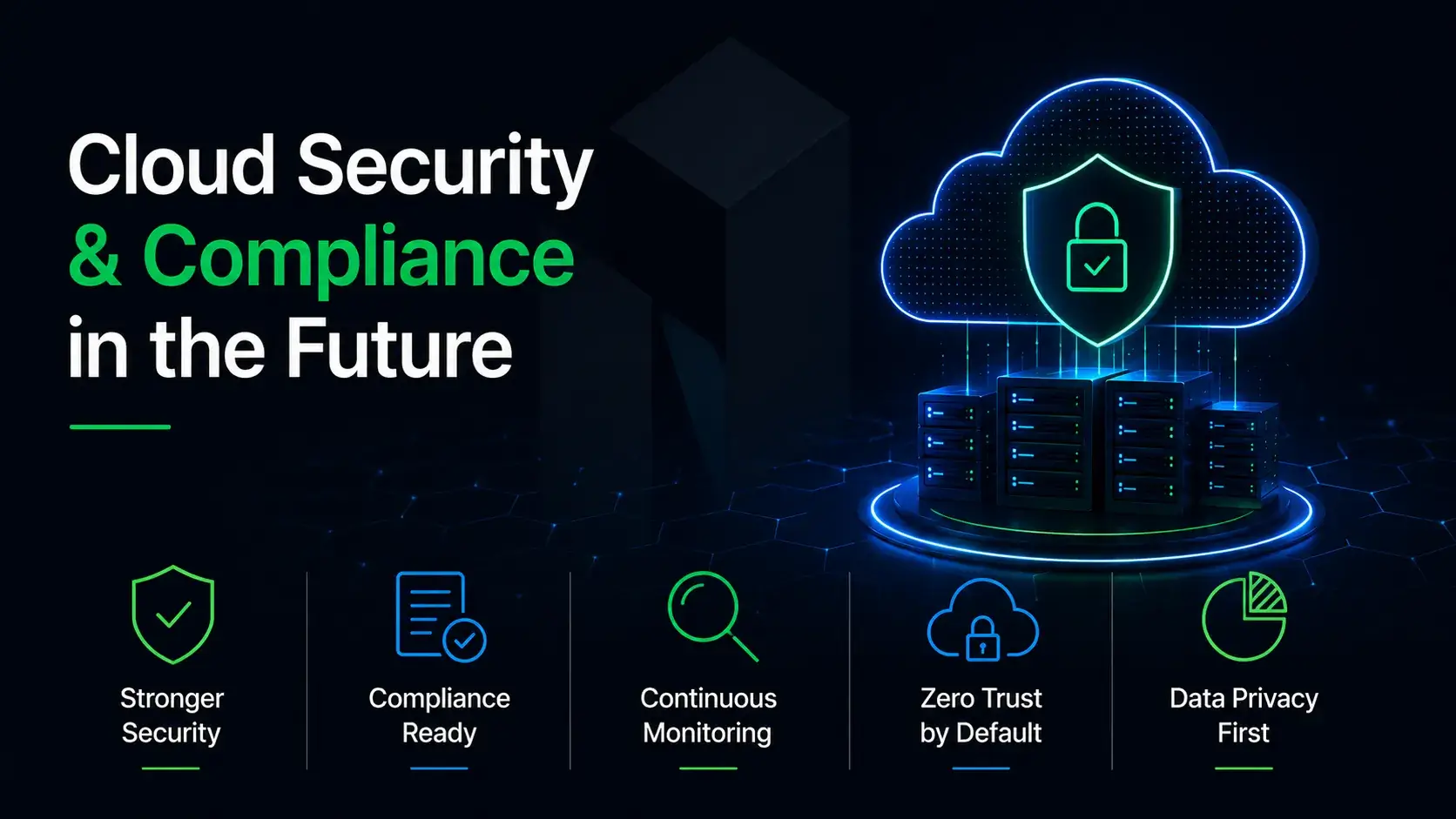
Cloud Security and Compliance in the Future
As the traditional corporate network perimeter completely dissolves due to remote work and distributed architectures, defending digital assets requires entirely new architectural philosophies. Cloud security can no longer be an afterthought applied at the edge of the network; it must be baked directly into the hypervisor and the individual data packets. As cyber threats become more sophisticated, cloud security remains a top priority for organizations worldwide, leading to the adoption of advanced tools like AI driven threat detection systems and centralized policy management frameworks. Engineering teams are being forced to adopt highly paranoid security models to protect their environments from incredibly complex vulnerabilities.
Advanced Threat Protection and Zero Trust
The traditional castle and moat security model is entirely obsolete in a highly distributed, internet facing environment. Innovations in cloud security technologies, such as zero trust architectures and advanced encryption methods, are expected to become standard practices to address the increasing reliance on cloud services. Modern enterprises must implement strict zero trust frameworks, which operate on the fundamental assumption that every single network request, even those originating from inside the corporate firewall, is inherently hostile and must be strictly verified. Implementing this requires advanced identity management, continuous endpoint monitoring, and automated threat protection systems that instantly isolate compromised virtual instances before an infection can spread, aggressively neutralizing catastrophic security risks.
Furthermore, organizations must understand the shared responsibility model. By 2022, it was predicted that at least 95% of cloud security failures would be the customer's fault, highlighting the importance of user responsibility in maintaining cloud security. The provider secures the physical hardware, but your internal engineering team must meticulously secure the virtual configurations and access policies.
Governance Compliance and Regulations
Navigating data sovereignty laws and international privacy frameworks is becoming incredibly complex for companies operating on a global scale. Governments are increasingly demanding that citizen data remain physically stored within specific geographical borders, forcing providers to rapidly build localized facilities. Cloud providers are offering more robust, compliant, and localized data storage options to comply with data privacy laws such as GDPR. Enterprises must utilize advanced compliance dashboards and automated auditing tools to achieve absolute data security and prove exactly where their data resides at all times. Maintaining compliance across a complex, multi region architecture is a foundational requirement to avoid devastating legal fines and protect brand reputation in an era of strict consumer privacy mandates.
Cloud Cost Optimization and Pricing Models
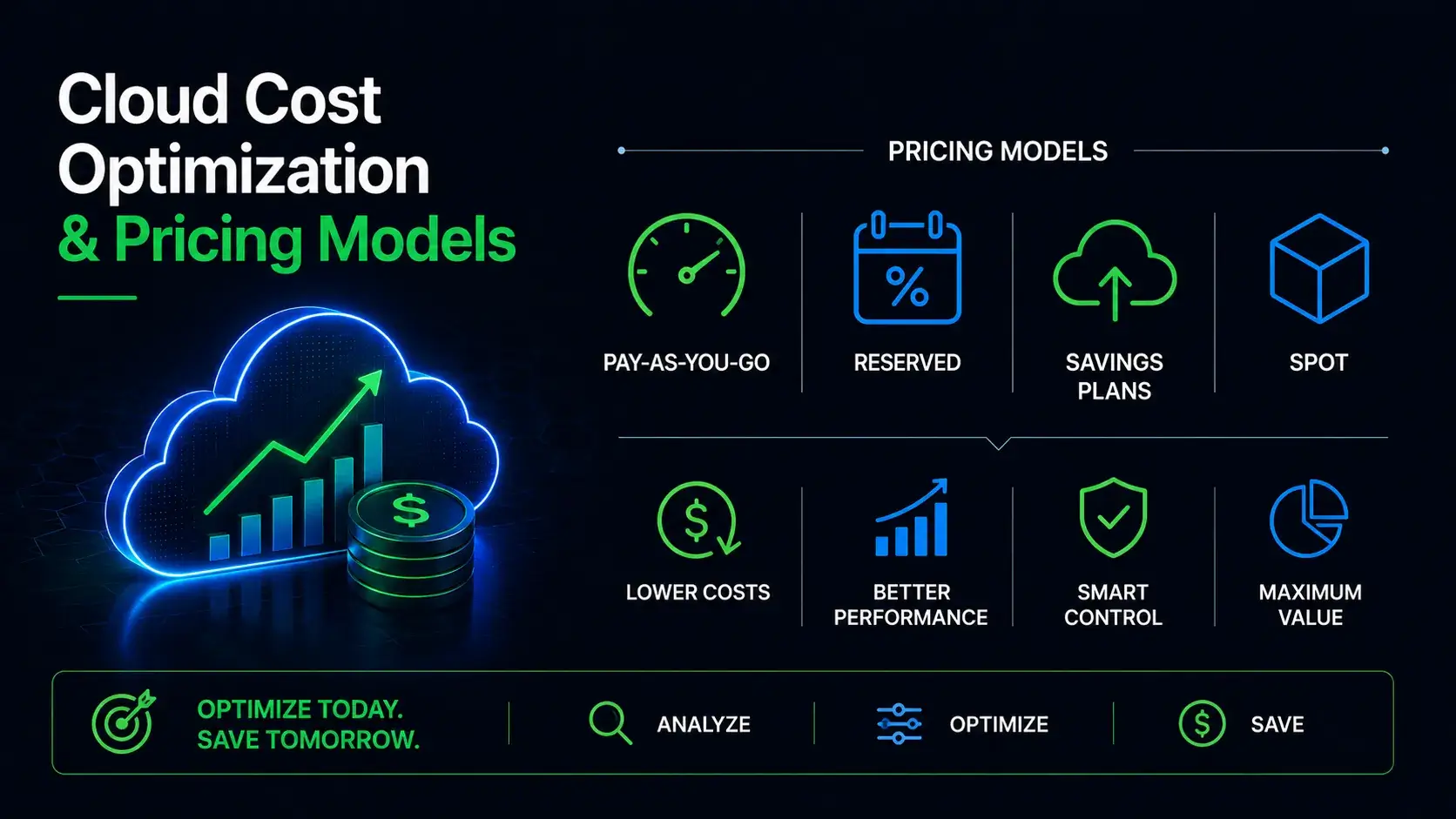
Unpredictable monthly invoices are the absolute greatest source of friction for enterprises adopting virtualized infrastructure at scale. The pay as you go model is fantastic for highly agile startups, but established businesses running heavy, continuous workloads are finding that public cloud convenience comes with an exorbitant, often unjustifiable premium. The future of corporate IT demands aggressive financial operations strategies designed specifically to rein in out of control cloud spending. The focus for industries will shift from simple migration to intelligent consumption, utilizing FinOps and GreenOps to maximize both financial and environmental efficiency.
To effectively optimize costs, engineering and finance teams must actively utilize automated tools to hunt down idle resources, terminate unused storage buckets, and negotiate long term reserved instance pricing. Organizations must ruthlessly audit their cloud storage and compute usage to ensure they are only paying for the exact capacity they need. By implementing strict governance policies and automated scaling rules, companies can achieve incredible cost control, unlocking massive cost savings that can be directly reinvested into core product development. The ultimate goal is to optimize cloud spend so thoroughly that the infrastructure becomes a lean, highly efficient driver of revenue rather than a bloated financial burden on the organization.
How to Prepare Your Business for the Future of Cloud Computing
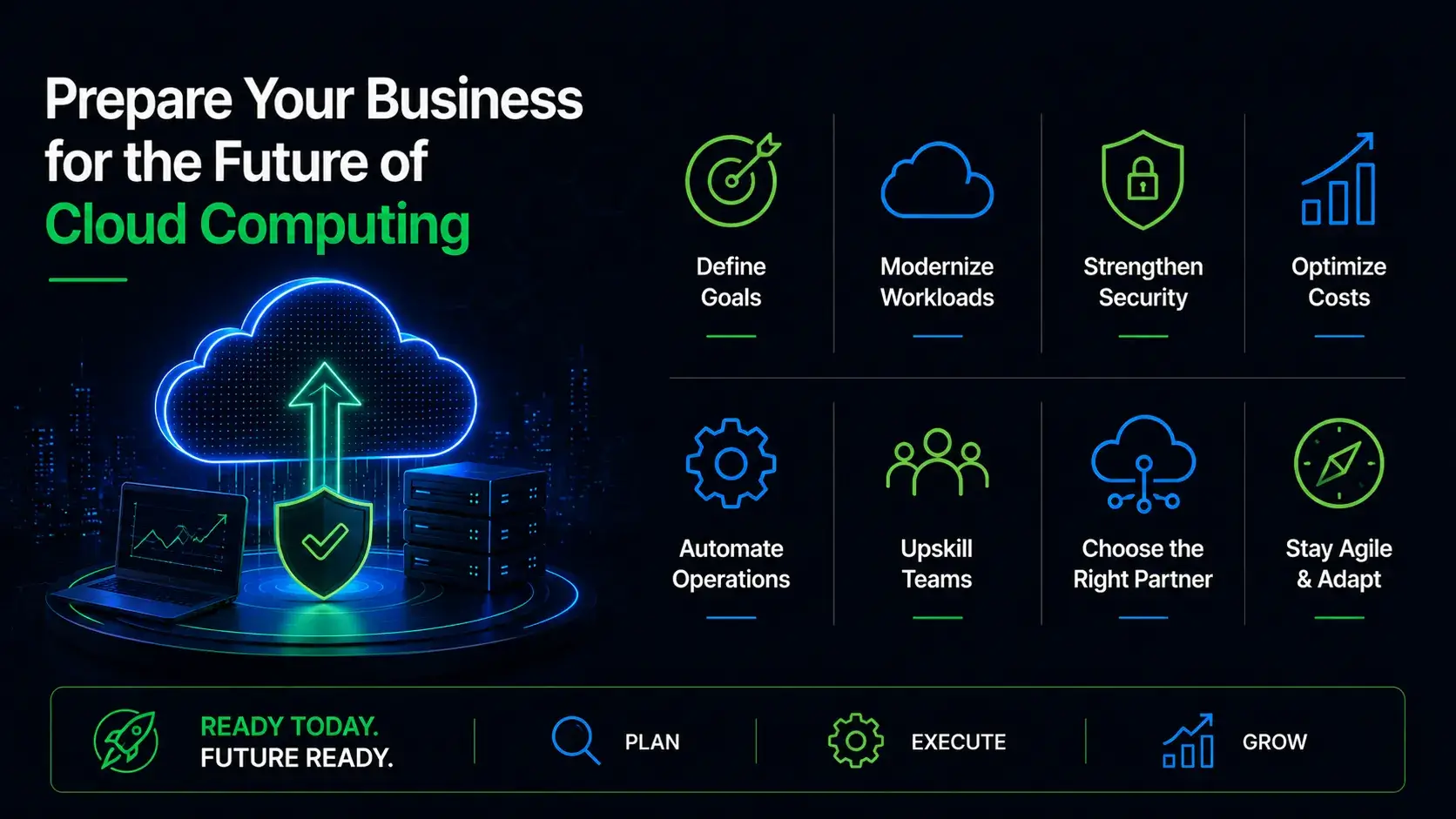
Transitioning your legacy systems to accommodate these massive technological leaps requires a deliberate, highly phased approach that minimizes daily operational disruption. You cannot simply lift and shift outdated monolithic applications into a modern environment and expect them to perform efficiently. IT directors must execute a comprehensive strategy that completely realigns their technical capabilities with their long term corporate objectives.
Preparing for this inevitable future means you must heavily audit your current cloud resources and deeply evaluate the technical roadmap of your chosen cloud vendors. IT leadership must invest heavily in retraining their internal engineering teams, adopting modern orchestration tools like Kubernetes, and conducting brutal audits of their current infrastructure spend before signing new long term contracts. By proactively planning your cloud adoption journey and diversifying your workloads across public cloud services and dedicated environments, you create an incredibly resilient technological foundation capable of surviving the next decade of digital disruption.
Frequently Asked Questions About the Future of Cloud Computing
Navigating this rapidly evolving landscape naturally generates highly specific technical and financial inquiries from executive leadership teams. To help you finalize your architectural strategy, we have compiled the most common questions regarding deployment realities, security concerns, and the long term economic impacts of adopting these emerging technologies.
How will quantum computing actually impact my current security protocols?
While highly advanced, the emergence of quantum processors means that traditional encryption methods could eventually be broken. Forward thinking cloud vendors are already developing quantum resistant cryptographic algorithms to ensure that highly sensitive data stored in the cloud remains completely impenetrable, even against next generation computational attacks.
Is serverless computing appropriate for every type of application?
No. While it drastically reduces operational costs for highly variable or event driven workloads, applications that require massive, continuous, and steady computing cycles are almost always more cost effective when hosted on dedicated servers or reserved virtual instances. You must match the architecture to the specific workload profile.
What is the best way to prevent being locked into a single provider?
The absolute best defense is adopting robust multi cloud strategies. By containerizing your applications using Docker and Kubernetes, you ensure that your software can be instantly migrated between multiple cloud providers with zero friction. This structural independence guarantees you maintain complete leverage over pricing and performance, entirely neutralizing the threat of vendor lock in.
How does edge computing differ from standard cloud deployments?
Traditional cloud computing sends all data back to a central, remote data center for processing. Edge computing places small, highly capable processing nodes exactly where the data is collected locally, allowing for instantaneous analysis and vastly reducing the amount of data transmitted across the open internet.
Build Future Ready Cloud Infrastructure with Netrouting
Positioning your enterprise for the next decade of digital innovation requires an infrastructure partner capable of delivering uncompromised performance, ultimate security, and absolute financial predictability. While hyper scale public clouds offer incredible elasticity, they often lack the personalized engineering support, hardware isolation, and transparent pricing required by truly demanding, enterprise grade applications. Netrouting bridges this gap by providing robust, high performance cloud solutions and elite bare metal hardware designed specifically to support bandwidth heavy workloads like artificial intelligence, high frequency trading, and complex video streaming.
By leveraging Netrouting hyper scale server solutions, which are built strictly upon enterprise grade hardware from leading vendors like Dell and Supermicro, your engineering team gains the exact computational power needed to scale flawlessly. With access to the latest generation of Intel Xeon and AMD EPYC processors, configurations boasting up to 1TB of RAM, and specialized GPU servers for deep machine learning tasks, we ensure your infrastructure is never the bottleneck. Furthermore, our unmetered 10G ports and massive 1 Tbps+ global network capacity provide the relentless computing power and ultra low latency necessary to support dynamic edge computing requirements.
Netrouting empowers you to build highly sophisticated, future proof architectures tailored entirely to your business operations. With strategically located data centers across the United States, Europe, and Asia, including Miami, Amsterdam, Frankfurt, and Hong Kong, you can easily navigate complex data sovereignty laws while keeping your applications localized to your users. Whether you require BGP for maximum network flexibility or want to utilize Bring Your Own IP protocols, partner with Netrouting today to secure a Tier 1 infrastructure foundation that guarantees absolute control, unmatched global speed, and a resilient ecosystem designed to dominate the digital landscape.