dependable IoT connectivity services are a matter of great importance. Unreliable uptime, congested transit, or a lacking DDoS protection can have far-reaching effects on thousands of connected devices. Unlike classical web workloads, IoT applications require permanent availability and fast, scalable data transfer across multiple networks, including scaling of the underlying infrastructure without changes to the architecture.
While finding a hosting provider that works for you already is challenging, most more specific providers for IoT projects fall short in some aspects, such as not supporting persistent connections, not being able to handle high packet rates. Alternatively, Not being able to distribute endpoints around the globe. General-purpose hosting is not sufficient on the network edge.
This guide focuses on core infrastructure requirements for robust IoT network connectivity, cutting through the noise of managed iot connectivity services providers to highlight what truly matters: network architecture, peering strategy, DDoS protection, latency, and geographic coverage. These requirements help you compare and select providers for industrial sensors, smart building systems, and connected consumer products at scale.
Blog contents
What Are IoT Connectivity Services and Why Reliability Matters
These connectivity services for IoT devices represent the network layer, i.e. the layer between the physical devices and the systems processing the generated data. Authentication, routing and the transport of the data are examples of services handled by the IoT connectivity services. They can establish connections via cellular networks or on private networks. Worldwide platforms can be used as well. Achieving seamless connectivity requires that these services handle protocol translation, maintain persistent sessions, and adapt to varying network conditions without manual intervention.

What an IoT Connectivity Platform Actually Does
Connectivity services create and manage these channels. Proper devices connectivity depends on the platform's ability to authenticate endpoints, route traffic efficiently, and maintain session state across network transitions. Enterprises selecting iot services must verify that the provider's infrastructure can scale authentication, session persistence, and traffic routing as device populations grow from hundreds to millions.
For mobile and remote applications, Cellular IoT connectivity is the most common model of connectivity. Cellular IoT abstracts the physical radio access network, and enables a device to be constantly connected, even as it changes carrier and geographical location.
Why Reliability Is the Only Metric That Matters
Brief wireless outages are tolerated by consumer wireless services, but such outages are not tolerated by Enterprise IoT applications.
Guaranteeing uptime is not enough to establish reliable connectivity with devices. In addition to this, there needs to be low-latency rerouting and, in the case of network connectivity, redundant carrier paths and the capability to handle large volumes of data during peak periods of congestion. Global cellular connectivity thus closes the gap between regional carrier coverage and global reach.
Deploying a global iot sim strategy ensures that devices maintain consistent connectivity across borders without requiring multiple carrier agreements or manual SIM swaps. Enterprises benefit when their connectivity provider supports multiple carriers, enabling automatic failover and reducing dependency on any single network operator. Enterprises deploying IoT solutions across continents require connectivity architectures that span global networks, ensuring devices remain reachable regardless of regional infrastructure limitations or carrier-specific outages.
Enterprise-Grade vs. Consumer-Grade IoT Devices Connectivity
The main difference here is architectural. Whilst consumer Internet connectivity solutions may share bandwidth, do not offer private connectivity and have no Service Level Agreement (SLA), reliable IoT solutions for Enterprise Grade applications deliver:
- Dedicated or prioritised data paths.
- Multi-carrier SIM with automatic failover.
- Private APN routing to keep traffic off the public internet.
- Centralised visibility across every connected device.
At this level of connectivity, the difference between pilot and production is managed infrastructure.
How an IoT Connectivity Provider Manages Platform Operations
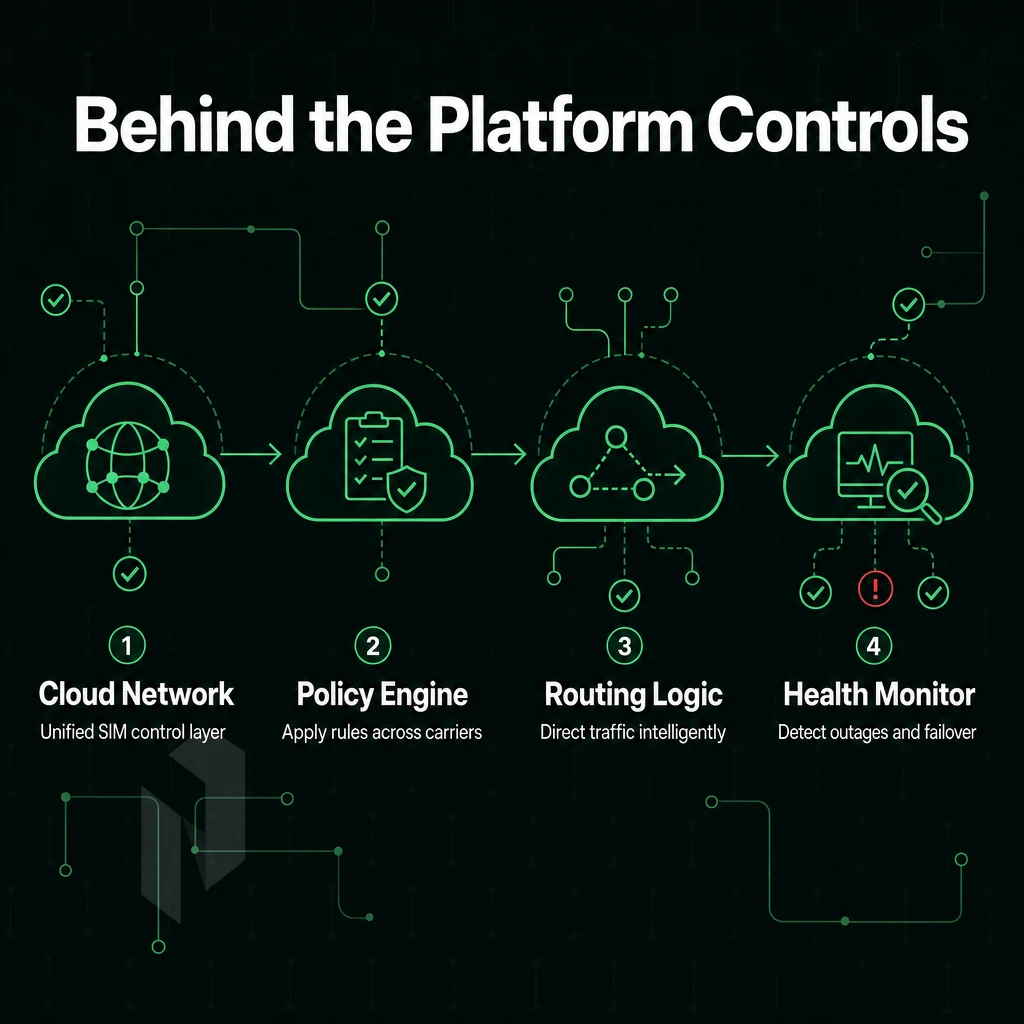
A managed IoT connectivity platform replaces the often fragmented carrier contracts and the administration of single SIMs with a single control plane. Knowing the architecture of such a platform helps to decide between building a DIY stack and using a fully managed service.
Selecting an iot platform that integrates carrier-agnostic SIM management with real-time analytics reduces vendor lock-in and accelerates deployment timelines. The best platforms enable seamless integration with existing enterprise systems through RESTful APIs and webhook support, allowing connectivity data to flow directly into business intelligence and operational dashboards.
Architecture of a Managed IoT Connectivity Platform for IoT Devices
Our core functions are SIM lifecycle management, remote provisioning, device management and centralized visibility. These functions enable automation of functions that would otherwise require manual intervention at multiple carrier portals.
SIM lifecycle management for hundreds of thousands of SIM cards covers activation, suspension, and deactivation, while remote SIM provisioning delivers carrier profiles over the air.
DIY Stack vs. Managed IoT Connectivity Services for IoT Devices
The contrast between DIY managed and a Managed Connectivity service is clear to see. A DIY approach means separate carrier contracts and manually having to troubleshoot issues on siloed dashboards. Hundreds or thousands of endpoints are being run by teams and a Managed Connectivity service will reduce the operational complexities to manage them. Centralized device management becomes essential when coordinating firmware updates, security patches, and configuration changes across geographically distributed fleets that span multiple carrier networks.
When devices connected across multiple carriers experience configuration drift or connectivity failures, a unified platform enables operators to diagnose and resolve issues from a single interface rather than navigating separate vendor portals. Ensuring devices connectivity remains stable during peak traffic periods requires platforms that can dynamically allocate bandwidth and reroute sessions without dropping active connections.
| Dimension | DIY Stack | Managed Service |
|---|---|---|
| SIM administration | Manual, per-carrier | Unified portal, automated |
| Remote diagnostics | Fragmented or absent | Real-time, centralised |
| Automation capabilities | Limited, custom-built | Built-in policy engine |
| Uptime visibility | Per-carrier SLA only | Fleet-wide, 99.9% target |
Choosing the Right Approach for IoT Devices
A DIY approach to IoT connectivity might be viable for very small fleets (e.g., a single carrier) that only operate in a few regions and have a handful of nodes.
However, as soon as a deployment grows beyond a single region or gets past a few hundred nodes, the engineer hours saved by using a managed IoT connectivity platform will pay for itself. Netrouting’s ten or so locations in Europe, North America and Asia provide the low-latency infrastructure required by managed connectivity services to remotely provision and diagnose devices.
Once a managed IoT connectivity services approach is chosen, the next step is evaluating suppliers on specific demands, including support for cellular technologies. Selecting IoT services aligned with deployment scale and technical requirements ensures long-term efficiency and cost predictability.
Key Features to Demand from Any IoT Connectivity Provider
While there are many providers for IoT connectivity, not all of them offer the same depth of features. Evaluating the best iot connectivity platforms requires examining their support for multiple cellular standards, global carrier partnerships, and unified management capabilities that scale with deployment growth.
Evaluating connectivity providers also means assessing their network redundancy, peering arrangements with tier-one carriers, and ability to maintain consistent performance across diverse geographic markets. Providers with robust global networks ensure that devices deployed across continents can maintain consistent uplink quality and failover capabilities without relying on a single carrier's infrastructure.
Network Redundancy and Global Reach
- Verify multi network access. Switching between different carriers automatically is also a requirement. Single-carrier dependencies cause problems as soon as there are regional issues with this carrier.
- You also want to confirm global IoT connectivity coverage. Here, you specifically ask for the countries that are served by local core network presence. Roaming over global networks without a local breakout causes latency and also regulatory exposure.
- Check the cellular technology support offered by any M2M platform. This should include support for 4G LTE, LTE-M, NB-IoT and where necessary, 5G. To future proof your deployment for as long as possible and avoid being locked into the support of a single generation of technology.
Data Security, Usage, and Routing Controls
- Audit data security controls. Confirm end-to-end encryption, access controls, and compliance posture. Note: Some providers treat security hardening as a paid add-on rather than a baseline.
- Option to send traffic over a private routing option such as APN or tunnel. For traffic that should not be on public Internet, such as for health care, financial services and industrial applications.
- Test low-latency routing paths. Get real latency numbers for regions. Highly-latent paths can ruin time-sensitive control paths and remote monitoring paths.
Device Management Platform Scale and Integration
- Evaluating the SIM management capabilities is important. The ability for remote provisioning, remote diagnostics as well as over-the-air profile switching is essential for fleet-sized deployments. Manual changes for SIM cards do not scale beyond a few hundred devices.
- Scalable connectivity architecture: Confirm that the platform architecture will scale from hundreds of thousands of devices to millions of devices, potentially all connecting within a short time frame, without requiring fundamental re-architecture. Inquire about rate limits and burst handling.
- Verify integration with cloud platforms. Native connectors as well as open APIs into your existing infrastructure reduce integration overhead significantly. Proprietary lock-in here is a long-term cost risk.
These feature requirements correspond to the cellular standards your handset runs on.
Cellular IoT Connectivity: 4G LTE, 5G, NB-IoT, and CAT-M Compared
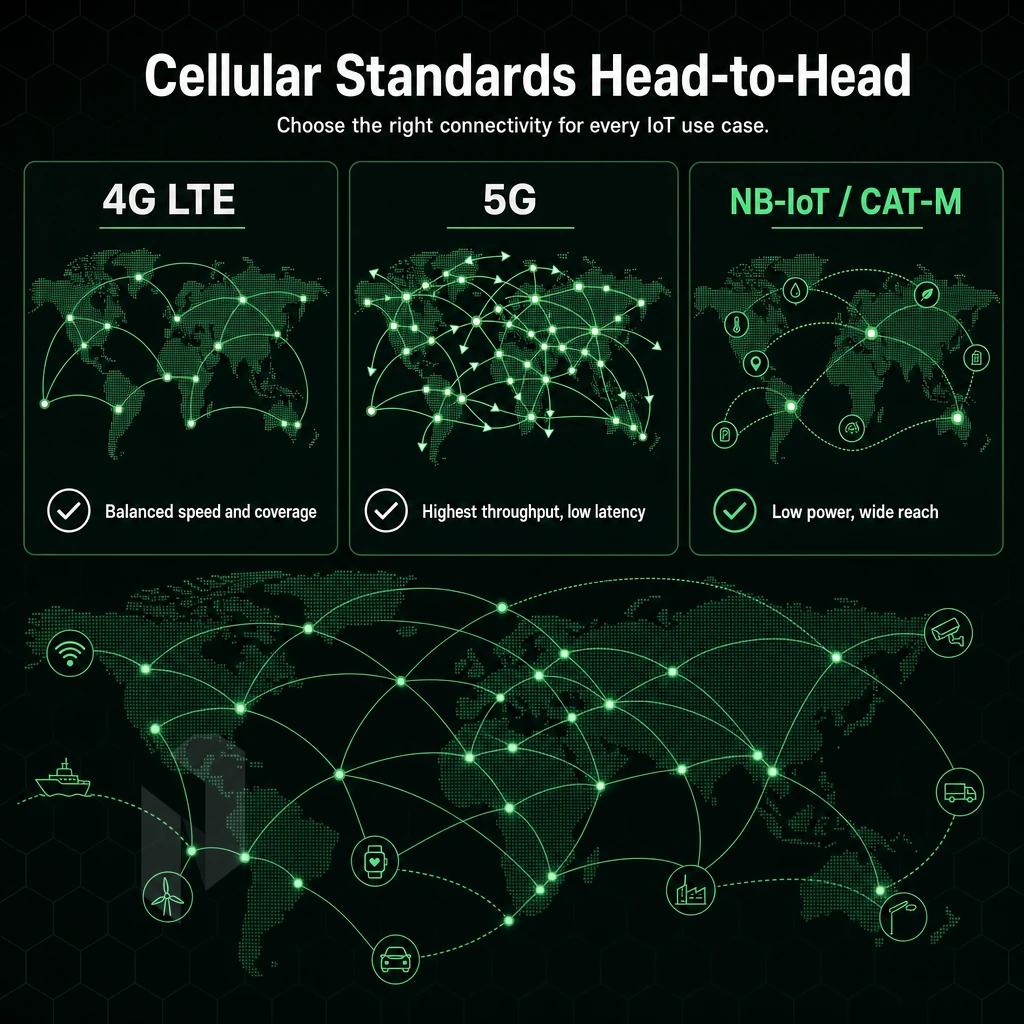
There are four cellular IoT connectivity standards, each designed for different trade-offs between bandwidth, power consumption, and coverage.
4G LTE and 5G: High-Throughput Applications
4G LTE suits IoT applications requiring real-time video, fleet telematics, or high-volume data uploads.
5G for densely populated areas has a new baseline thanks to its Ultra-Reliable Low-Latency Communications (URLLC) mode, which targets below 1 ms latency and will support managed iot connectivity services at scale, up to 1 million devices per square km.
NB-IoT and CAT-M: Low-Power Wide-Area
NB-IoT and CAT-M1 (LTE-M) are technologies for sensors, meters, tracking devices etc. that send sparse, small messages.
Mobile assets can be supported by voice using CAT-M.
Evaluating Cellular IoT Connectivity Platform Providers
Selecting a mobile IoT networking provider to test devices with beyond the basic radio specifications. The performance of devices in production is influenced by the quality of the backhaul, specifically by the IP transit routing, the BGP path selection and the peering density on the network layer. A clean 5G signal does not necessarily translate into good uplink performance. The upstream infrastructure might route packets in an inefficient manner across congested transit links.
Netrouting’s AS6206 backbone carries 2.4 Tbps+ of traffic, with connections to major exchange points across Europe, North America and Asia.
The Role of Network Infrastructure in IoT Reliability
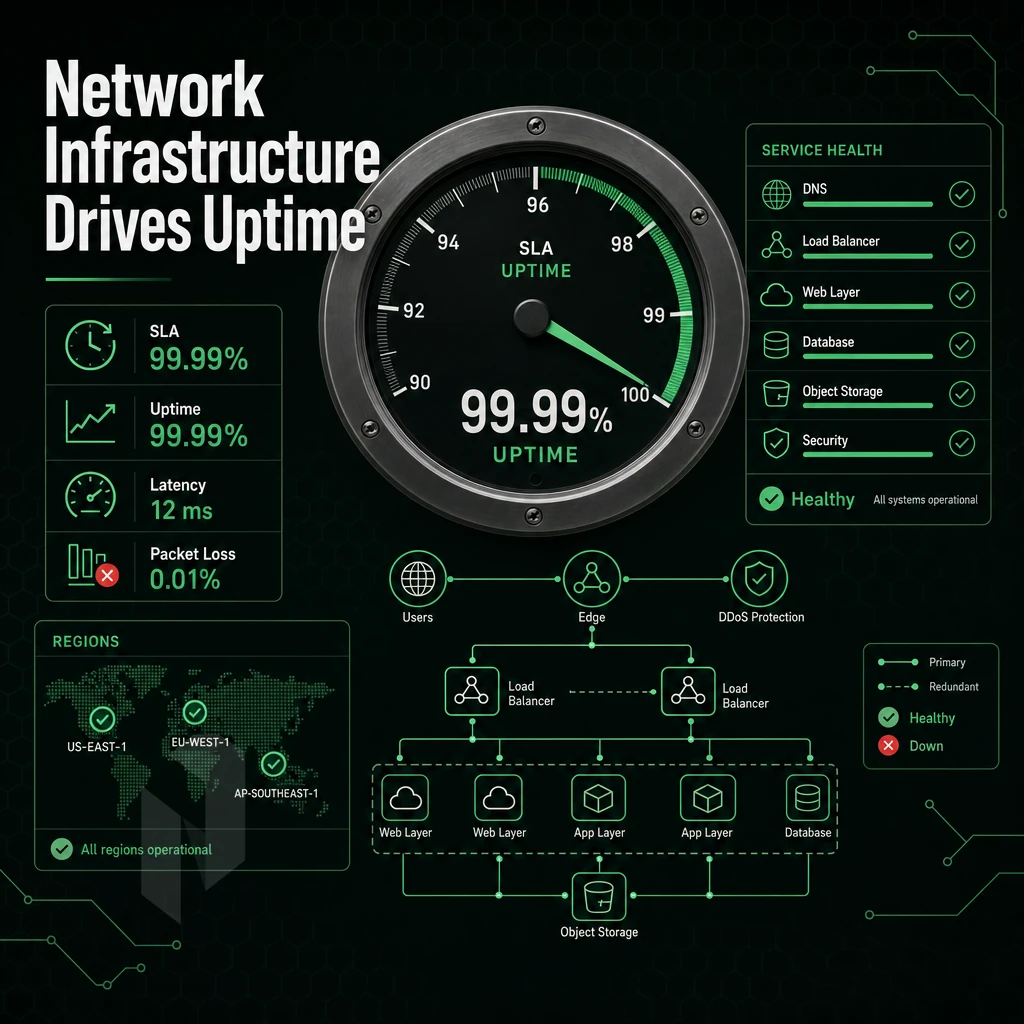
However, the real determinant for IoT reliability is the underlying network infrastructure.
Why Backbone Capacity and Routing Matter
High capacity IP transit removes packet loss caused by congestion. For IoT network connectivity services, even sub 1% packet loss can add up as thousands of devices are connected at the same time, removing accuracy from telemetry and affecting reliability of remote monitoring. Deterministic BGP routing removes asymmetric routing that can cause unpredictable latency spikes.
BYOIP support for enterprise allows them to keep their own address space across multiple networks to allow for tracking of status of devices and have visibility into large distributed fleets of devices without having to renumber in case of change in providers.
Carrier-Neutral Peering and Global Reach
By being carrier-neutral, our facilities offer real path diversity. Instead of locking yourself into a single carrier who will take your cash but also leave you high and dry in times of congestion or outage. With managed connectivity services you can spread your risk and let your carrier(s) handle things.
Dense IX peering spans our facilities in Amsterdam, Frankfurt, New York, Miami, and Singapore.
Traffic routes over the best available carrier with local coverage.

Netrouting's Infrastructure Layer
Netrouting's AS6206 (2.4 Tbps+ network) spans ten locations across three continents and includes free, zero-configuration L3/L4 DDoS Protection on every hosted service. Here's how the Netrouting Backbone adds value to your IoT cellular connectivity solutions as an infrastructure layer for your device offerings.
Why Choose Netrouting for IoT Connectivity Infrastructure
IoT deployments don't fail because of weak SIM management. They fail because the underlying network infrastructure can't handle the load, the latency, or the scale. Netrouting provides the IP backbone that IoT platforms and enterprise connected devices run on, carrier-neutral, globally distributed, and built for reliability.
- 2.4 Tbps+ backbone on AS6206, port utilization consistently below 40%, so your IoT connectivity stays headroom-rich even during traffic spikes across thousands of connected devices.
- Carrier-neutral colocation and IP transit across Amsterdam, Frankfurt, The Hague, Rotterdam, Stockholm, Bucharest, Miami, New York, Hong Kong, and Singapore, deterministic routing for global IoT deployments without single-carrier lock-in.
- BYOIP and full BGP support, precise routing control, private routing paths, and low latency for latency-sensitive IoT applications and industrial IoT workloads.
- Always-on L3/L4 DDoS protection included on every service, secure data transmission and network reliability without extra configuration.
- ISO 27001 and SOC 2 certified, data security compliance built into the infrastructure layer, not bolted on.
- 24/7 NOC with a 1-hour ticket guarantee and bare metal provisioned in under 60 minutes, operational complexity stays low when your IoT infrastructure scales fast.
If you're evaluating the right IoT connectivity solution for your infrastructure backbone, explore our network and connectivity services or contact our team to discuss your deployment requirements. Those infrastructure fundamentals apply differently depending on the workload, the next section maps each use case to the specific requirements it places on your network.
Common IoT Connectivity Use Cases and the Infrastructure They Require
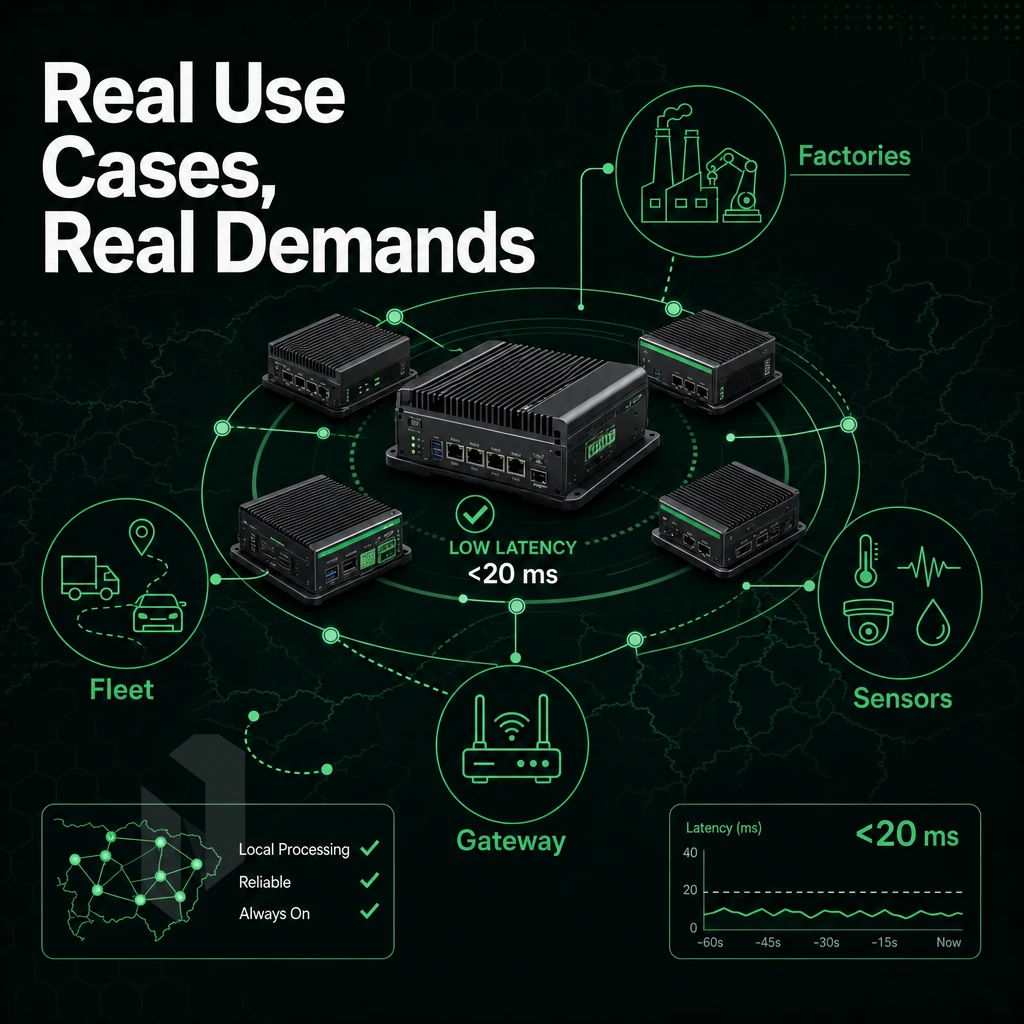
Every IoT project requires a unique set of connectivity options.
High-Density and Industrial Deployments
Huge numbers of sensors are deployed in industrial IoT environments in often very restricted spaces.
Fleet management is geographic in nature and therefore depends on the connectivity of devices of field employees in different countries. Multi-carrier cellular with automatic roaming failover is required to guarantee connectivity for mobile devices. Additionally, a backend is required to give centralized visibility on the aggregated real-time telemetry. A low-latency backbone with consistent routing across regions is required to guarantee routing in a timely manner.
Remote Monitoring and Diagnostics
High uptime and secure data transfer are far more important than high volumes of data for remote monitoring workloads. A single failed sensor reading can result in expensive pipeline or substation shutdowns. Therefore, by default, remote monitoring workloads are configured with redundant paths, encrypted tunnels and are provided with 99.9% SLA’d infrastructure. Remote diagnostics extend this remote access to also allow for bidirectional communication with devices and therefore no physical site visits are required by engineers.
Remote SIM provisioning (eUICC/eSIM) for connectivity at site level before a carrier contract is in place. Deploying devices connectivity before a carrier contract is finalized, remote SIM provisioning allows operations teams to switch profiles over-the-air eliminating the need for truck rolls.
High-Bandwidth and Global IoT Deployments
Video surveillance and industrial vision systems generate sustained multi-megabit streams per camera. Our unmetered bandwidth and low latency backbone eliminate buffering and frame drops across large camera deployments. Netrouting's 2.4 Tbps+ network is unmetered for 10 Gbps on dedicated servers, meaning no egress surprises.
Multi-region IP transit, BGP routing control and carrier-neutral peering are required to deploy solutions in multiple regions. A single autonomous system with presence in Europe, North America and Asia (e.g. AS6206 Netrouting) allows for consistent, policy-driven routes for IoT solutions, as opposed to the unpredictable nature of public Internet routing. With the above use cases mapped out, we can now move on to creating a decision tree for choosing the right provider based on the above requirements.
How to Choose the Right IoT Connectivity Solution for Your Deployment
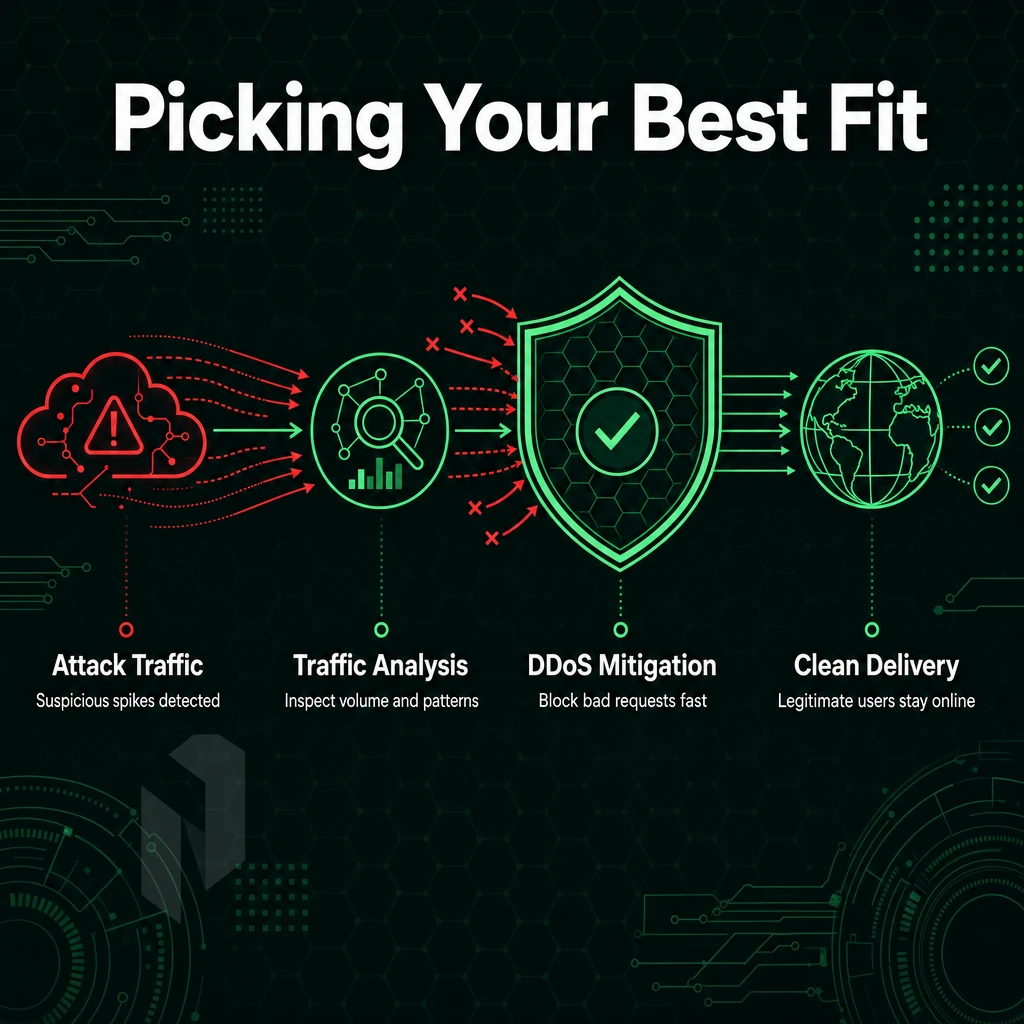
The choice of IoT connectivity solution can have far-reaching effects, so getting it right early matters. Key factors to consider are scale, geography, latency, and compliance.
Fleet Size, Geography, and Latency
Including the need for multiple regions with local break-out to avoid tromboning traffic across continents and eating up latency in the process.
Our 2.4 Tbps+ network with dense peering at major Internet Exchanges across Europe, North America, and Asia delivers connectivity solutions that transmit data with seamless performance for latency-critical IoT workloads.
Cisco IoT Control Center for Managing IoT Devices
Assess your current Connectivity Management Platform against your current technology stack. Connectivity Management for IoT should be fully integrated with your current Device Management Platform and Clouds. Poor API design creates operational complexity that increases exponentially with scale. Wireless logic and SIMs must be exposed via standardized interfaces. Integration into current processes and workflows must be seamless.
IoT Devices and Platform Checklist
Use this framework before committing to any IoT platform or provider:
- Does the network management layer support BGP, BYOIP, and IPv6?
- Are ISO 27001 and SOC 2 certifications within scope of your compliance needs?
- What is the SLA uptime commitment and ticket response time?
- Can the provider support multi-site failover across the required regions?
Netrouting holds the following certifications: ISO 9001, ISO 27001 and SOC 2.
IoT Connectivity FAQ
Five common questions to help you figure out the most reliable IoT connectivity services. We’ll answer each of them straight off, using hard spec facts to cut through the typical development noise.
Best IoT Connectivity Management and Device Management Platforms
A managed IoT connectivity platform combining connectivity management, real-time device visibility, multi-network SIMs, and automated failover delivers the strongest foundation. Look for sub-second latency alerting, 99.9%+ uptime SLAs, and private APN support. A single dashboard covering billing, diagnostics, and policy controls significantly reduces operational overhead.
Which IoT Platform Is Best for Enterprise and Large-Scale IoT Deployments?
Therefore, dedicated platforms that provide private routing, BGP-based failover and granular traffic policies need to be prioritized.
What Is the Best Operating System for IoT Devices?
Linux distributions are by far the most used to manage large hardware deployments, thanks to their broad security tooling. The right choice depends on hardware constraints, a lightweight real-time OS for microcontrollers or a full Linux distribution for gateway hardware supporting global iot connectivity.
Finally, the requirements for managing global cellular connectivity, including VPN clients, firewall rules, and remote update agents, will determine the final choice of operating system.
What Is Managed IoT Connectivity and How Does It Differ from Standard Cellular?
The Managed IoT connectivity services layer manages the device, SIMs and traffic for you on top of the basic cellular connectivity. Instead of just giving you a data pipe with standard cellular, the Managed Services add policy, usage reporting. Additionally, Private APNs on top to keep your traffic off the public Internet, and enable much faster MTTR when your devices go down.
How Does Private Routing Improve IoT Security?
Combined with always-on DDoS protection included with every connectivity solutions service Netrouting offers, private routing is the single most effective security control for large IoT fleets.
Core Requirements for the Most Reliable IoT Connectivity Services
Above and beyond signal strength, there are several layers to stable IoT connections. Managed IoT connectivity services can be compared on several different criteria, including their multi-network access, SIM management and low-latency backbone. Also important is whether a provider runs its own core network or simply resells capacity from another provider.
These data security certifications, always-on DDoS protection and 24/7 support with a defined response commitment are also required for IoT connectivity management. A capable connectivity management platform ties all these layers together and enables teams to have full visibility on all connected devices without adding any complexity to their operations. Therefore, the infrastructure layer needs to be set up correctly in order to build the rest of the IoT connectivity strategy on solid ground.
Frequently Asked Questions
Which Best IoT Connectivity Platforms Manage Data Usage Across Devices
Leading options support eSIM and multi-IMSI profiles, letting devices roam across carriers automatically.
For deployments that demand low-latency private routing, pairing a network management platform with a dedicated bare-metal host, rather than shared cloud infrastructure, keeps data off the public internet. Netrouting's global network across ten cities in Europe, North America, and Asia makes it a natural backend for platforms that need reliable, high-throughput anchor points.
Which IoT platform from connectivity providers best handles enterprise large-scale deployments?
Platforms offering connectivity solutions such as dedicated IP pools, BGP-based failover, and integration with on-premises or colocation infrastructure consistently outperform consumer-grade alternatives at scale.
As a provider of managed iot connectivity services with ISO 27001-certified infrastructure, a 99.9% SLA, and carrier-neutral colocation across Europe and North America, Netrouting gives enterprise teams a compliant, high-availability anchor for IoT traffic termination. Always verify that the platform's SIM estate can steer traffic to a private endpoint, not just a shared gateway.
Which OS do connectivity providers recommend for IoT data usage and performance?
Linux-based operating systems dominate IoT deployments because of their small footprint, active security patching, and broad hardware support.
Whichever OS you choose, pair it with managed IoT connectivity services that cover hosting, OS patching, hardening, and monitoring handled by your infrastructure provider to ensure reliable device connectivity and close the gap between deployment and ongoing security hygiene.
What is managed IoT connectivity and how does it differ from standard cellular?
Standard cellular networks give an IoT solutions device a public IP and route its traffic through the carrier's shared internet gateway, fast to provision, but with no isolation, no SLA on routing quality, and no visibility into individual device sessions. Managed IoT connectivity adds a private APN, dedicated IP ranges, real-time usage monitoring, and policy enforcement per device or device group.
Traffic travels from the SIM directly to your infrastructure over a private tunnel, never touching the public internet until you choose to expose it. That architecture is what makes managed connectivity the correct choice for medical, industrial, and financial IoT deployments where data integrity and auditability are non-negotiable.
How Does Private Routing Improve IoT Data Usage and Security?
Private routing connectivity solutions keep IoT telemetry on a closed network path, from the device SIM through a private APN to a dedicated endpoint, so the data never traverses the public internet in cleartext.
It also simplifies compliance: data-residency requirements are easier to meet when you control exactly which physical infrastructure handles the traffic. Terminating that private tunnel on dedicated bare metal hosted by managed IoT connectivity services providers operating ISO 27001-certified, SOC 2-compliant facilities, such as Netrouting's The Hague or Miami infrastructure, adds a further auditable layer to the security chain.
IoT connectivity that is reliable and works for you is about 3 decisions: the radio technology for your deployment environment. Carrier-grade SLAs with real redundancy and a platform that gives you full overview on all your connected devices.
Failure of most deployments is not caused by the IoT devices themselves, but by an underlying network not engineered for continuous, low-latency, very large amounts of traffic.
If your IoT workload requires dedicated compute close to the network edge, whether for data aggregation, local processing. Unlike many managed iot connectivity services providers, Netrouting's bare metal and cloud compute infrastructure spans ten locations across Europe, North America, and Asia, all backed by a 2.4 Tbps+ network with always-on DDoS protection, making it ideal for latency-sensitive control loops. Talk to the Netrouting team about building the right foundation for your deployment.