Building a successful, highly profitable online presence starts with a foundational decision that will permanently dictate your website's speed, security posture, and ultimate potential for long term growth. Learning how to choose a hosting provider is not just some mundane technical formality or an afterthought to be delegated to an intern. It is a critical, high stakes business strategy. The right infrastructure acts as the digital real estate where your brand lives, seamlessly delivering your content to global visitors while protecting your highly sensitive data from relentless, automated cyber threats.
Making an incredibly informed, deliberate choice right now saves you from painful, costly migrations, catastrophic downtime, and devastating lost revenue down the road. Whether you are launching a simple blog or a massive enterprise platform, finding the best web hosting is the absolute cornerstone of your digital survival. In the modern digital economy, your website is your primary storefront, your tireless sales representative, and your global brand ambassador. If your server fails, your entire operation grinds to an immediate halt. Therefore, dedicating the time to truly understand the infrastructure powering your vision is the most important investment you can make.
Furthermore, the cybersecurity climate has never been more hostile. Automated botnets constantly scour the internet looking for weak, poorly configured servers to exploit. If you choose a negligent provider, you are willingly exposing your business to devastating ransomware attacks and compliance violations. Taking the time to evaluate the technical specifications, the customer support responsiveness, and the hardware quality of a provider is the only way to safeguard your future. This comprehensive guide will walk you through every single technical and business consideration required to make the perfect choice for your unique project.
Blog contents
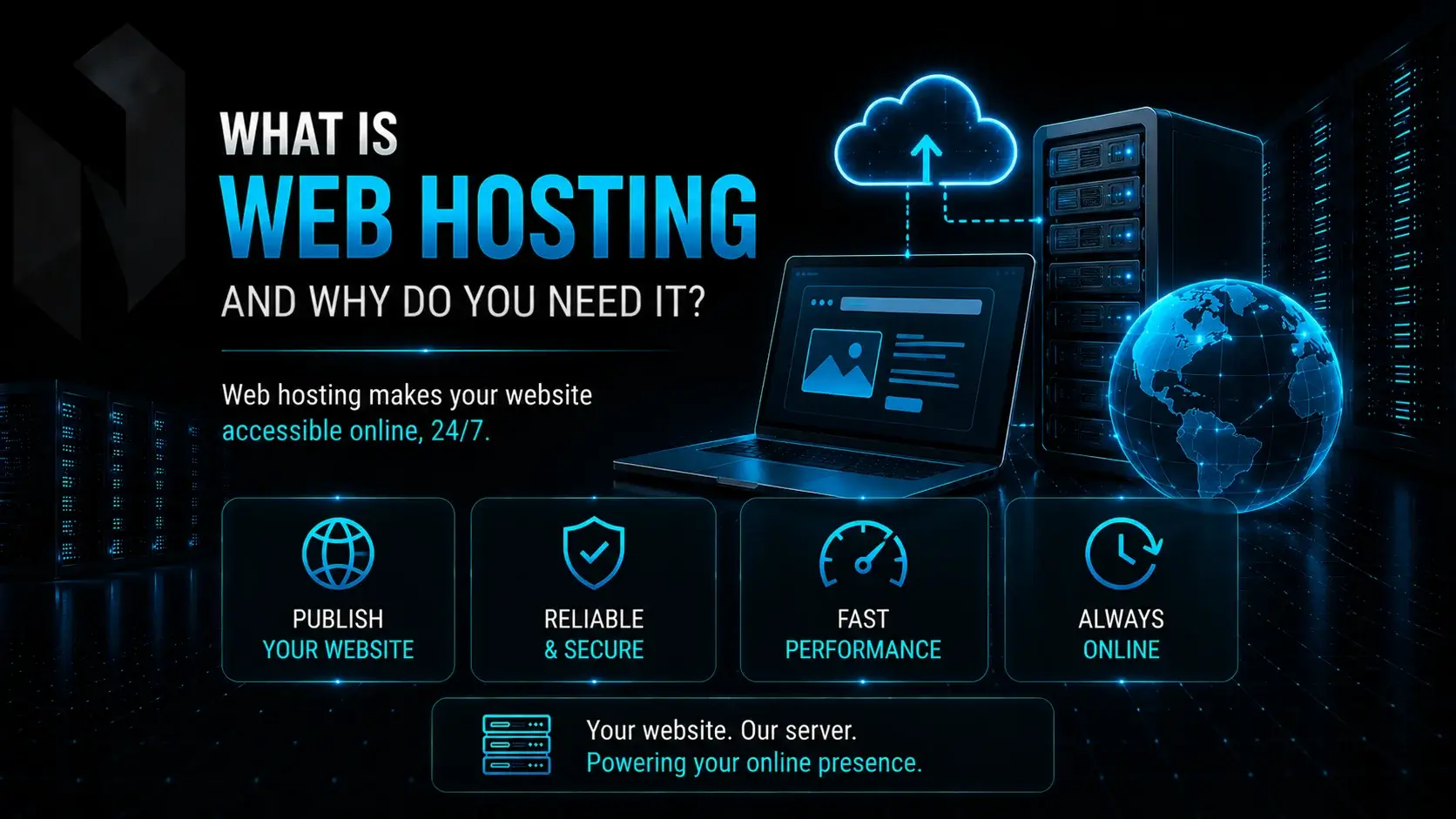
What is Web Hosting and Why Do You Need It?
Every single website currently existing on the internet requires a physical, highly secure location to store its core website files, high resolution images, complex code repositories, and massive relational databases. Web hosting is essentially the ongoing process of renting secure space on a highly powerful, always on, enterprise grade computer known as a web server. This machine is specifically designed to deliver those files to absolutely anyone who types your URL into their browser, operating twenty four hours a day, seven days a week, without interruption.
Without a highly reliable web hosting provider, your brilliant website design, your carefully crafted sales copy, and your entire digital ecosystem simply have nowhere to live and no possible way to be accessed by the public. In short, website hosting is the invisible engine powering your entire online business. When you pay for these services, you are not just paying for digital storage space. You are paying for the massive infrastructure surrounding that server, including industrial cooling systems, redundant power grids, physical security guards, and massive fiber optic pipelines that connect the data center to the global internet backbone.
The Difference Between Web Hosting and a Domain Name
It is incredibly common for absolute beginners and even seasoned entrepreneurs to confuse these two essential, interrelated elements, but they serve entirely different, distinct purposes in the digital ecosystem. Think of your domain name, like www.yourbusiness.com, as your permanent digital street address. It is the web address that tells people exactly where to find you on the map. It is the memorable text that a user types into Google Chrome or Safari to request access to your platform.
Your web hosting service, on the other hand, is the actual physical house built at that specific address where all of your digital furniture, inventory, and belongings are securely stored. You cannot have a functioning, visible site without both elements working together perfectly. The domain actively points the visitor's browser to the exact physical server where your website data physically resides using complex Domain Name System routing. Many companies will even offer a free domain name or a free domain for the first year when you sign up for a new hosting account, streamlining the process of getting your own website off the ground and removing the friction of dealing with a separate domain registrar.
If you ever decide that you are unhappy with your current hosting provider, you do not have to throw away your domain name. You completely own your domain name as long as you continue to pay the annual registration fee to the Internet Corporation for Assigned Names and Numbers through your registrar. You can easily pick up all of your website files, move them to a brand new server with a completely different company, and simply update your domain settings to point to the new IP address. This flexibility is exactly why it is so crucial to understand the separation between your digital address and your physical storage space.
Choosing the Right Hosting Type for Your Needs
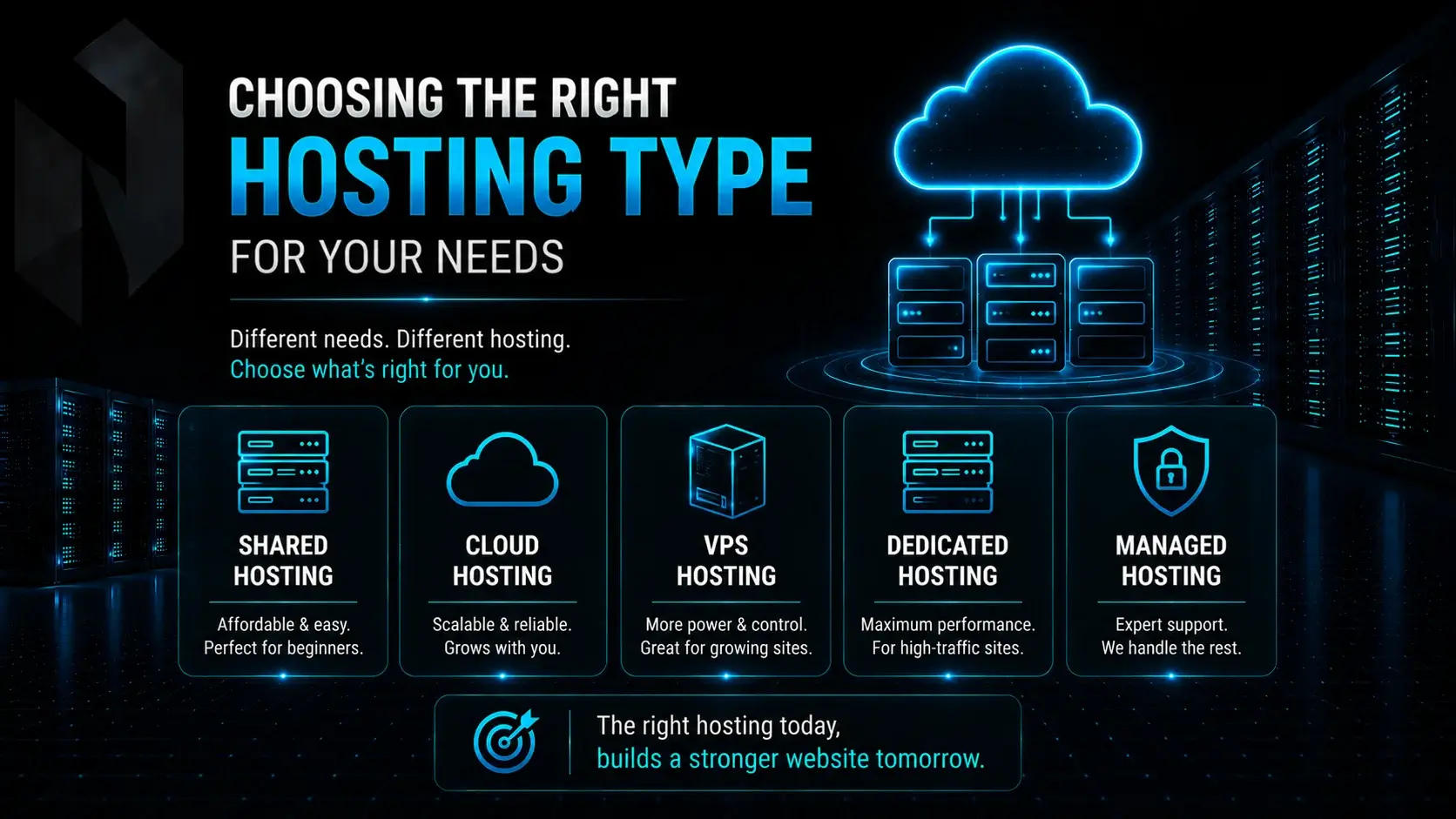
Not all hosting options are created equal, and selecting the correct architecture depends entirely on your current daily traffic volume, your internal technical expertise, and your available monthly budget. The best web hosting companies offer a tiered, logical progression of server environments, ranging from communal living spaces designed for brand new blogs to highly isolated, uncompromised digital fortresses built specifically for massive enterprise networks. Understanding the different types of web hosting is crucial to finding a hosting solution that fits your exact operational requirements. Web hosting pricing can range from $1 to $23 per month for shared hosting, $2 to $110 per month for VPS hosting, and $47 to $540 per month for dedicated hosting, depending on the provider and plan specifics.
Shared Hosting
Shared hosting is the absolute entry level tier of the digital real estate market, functioning much like renting a single, cramped room in a massive, bustling apartment building. Your website resides on the exact same server as hundreds, sometimes thousands, of other websites. You all actively fight for and share the exact same pool of processing power, memory, and network bandwidth.
Shared web hosting is incredibly affordable and highly beginner friendly, making it the perfect starting point for a low traffic personal website or brand new localized business pages that simply do not require immense computing power. However, because everyone relies on the same hardware, standard shared hosting plans frequently result in notoriously slow websites if another user on your machine suddenly experiences a massive traffic spike and hogs the resources. It is great for a small business, but not for an enterprise application handling sensitive financial data. Shared hosting plans typically start at around $3 per month, but renewal prices can increase to $10 or more, depending on the provider and plan specifics. You must always read the fine print regarding promotional pricing versus regular billing rates to avoid budget shocks.
For absolute beginners, however, this tier is incredibly convenient. The hosting company handles all of the complex server administration, applies critical operating system patches, and configures the firewalls for you. You are given a simple control panel to upload your files and manage your email accounts without ever needing to touch a complex command line interface. It is the ultimate plug and play solution for tight budgets, provided you understand the inherent performance limitations and realize that you will eventually need to upgrade as your audience grows.
Virtual Private Server (VPS) Hosting
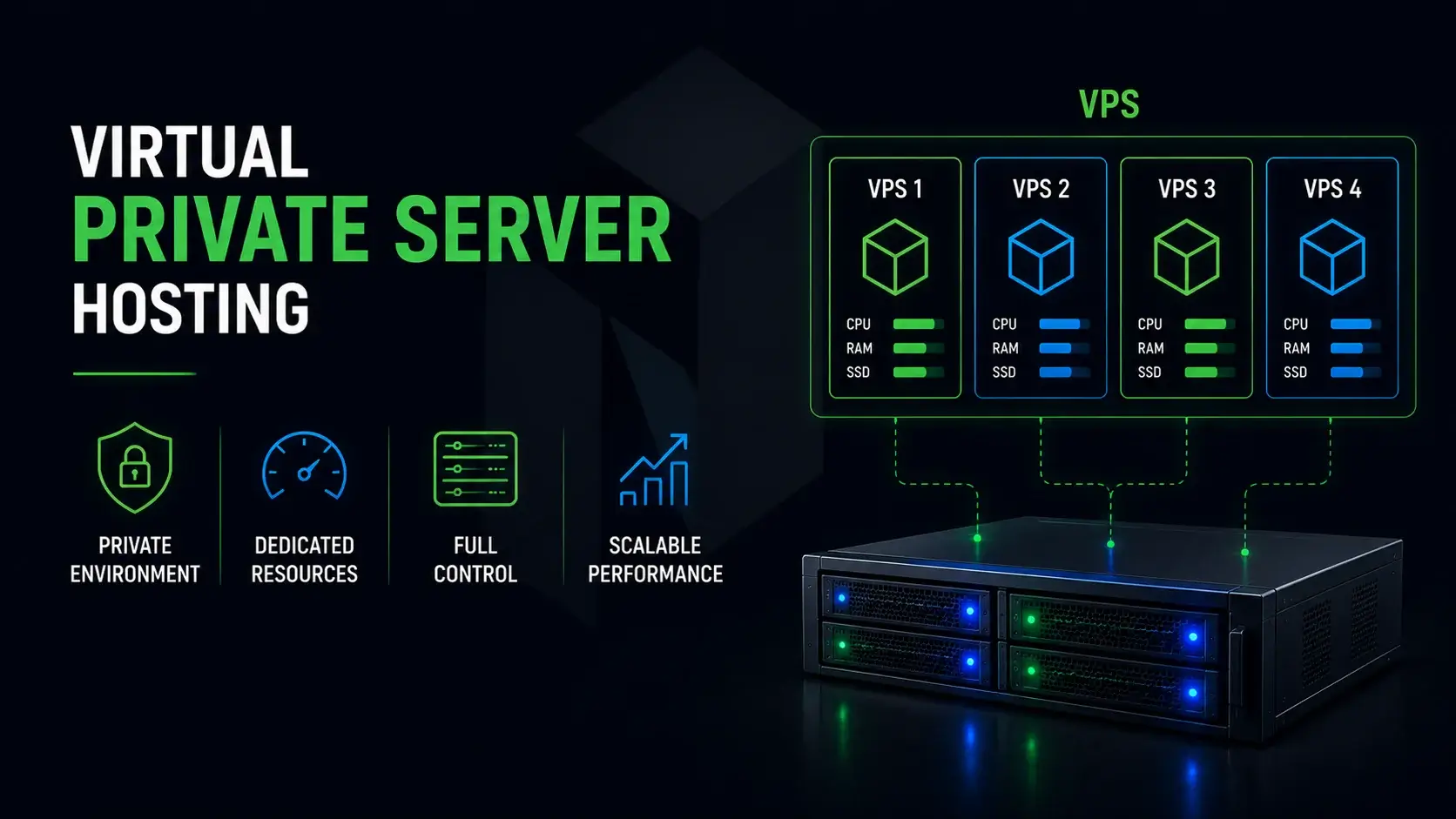
If a shared environment is a noisy apartment, a virtual private server or vps hosting is a luxury condominium. While you still technically share the underlying physical hardware with a few other users, the server is heavily digitally partitioned into deeply isolated, private virtual environments using advanced hypervisor technology. VPS (Virtual Private Server) hosting provides many resources and control than shared hosting by dividing a server into virtual servers, making it ideal for medium sized business websites or complex hobby sites.
This advanced technology means you are mathematically guaranteed a dedicated allocation of RAM and CPU power that no other website can possibly steal, even during a massive traffic spike. VPS architecture provides significantly better performance, superior security isolation, and greater administrative control for growing companies that desperately need more resources but are not quite ready to invest the capital required for bare metal hardware. It is the logical middle ground for companies scaling their operations rapidly.
Furthermore, the security benefits of a virtual private environment cannot be overstated. Because your file system is completely partitioned away from the other users on the hardware, a malware infection on a neighboring site cannot traverse the network and infect your directories. You are existing in a completely sealed off, highly secure bubble. This makes it an incredibly safe, reliable option for eCommerce stores that are beginning to process a significant volume of daily transactions but do not yet have the budget for a completely private physical machine.
Dedicated Server Hosting
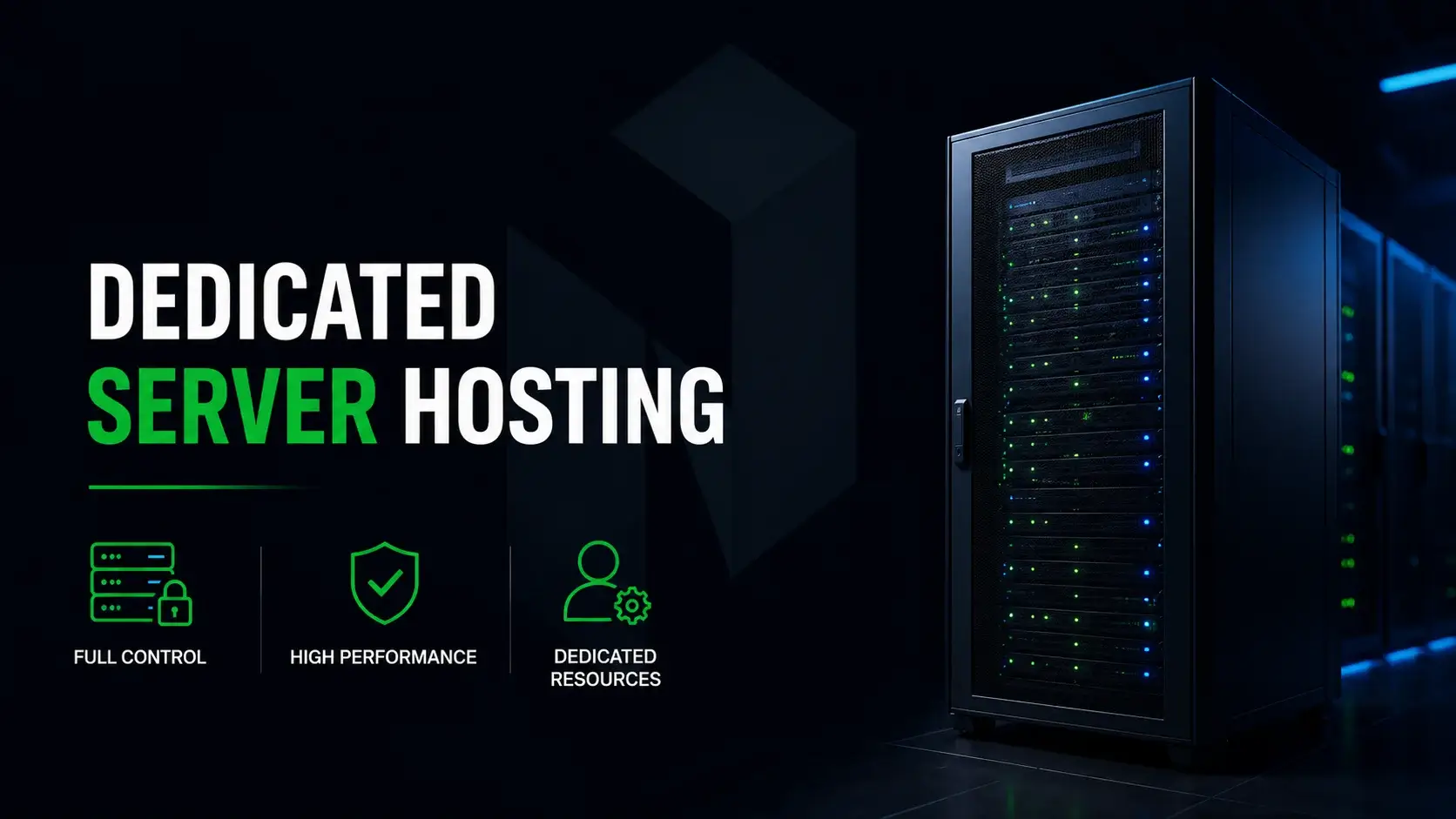
Dedicated hosting is the absolute, undisputed pinnacle of web infrastructure. When you purchase dedicated hosting, you are leasing an entire, highly advanced dedicated server exclusively for your own operations. There are no roommates, no shared resources, and absolutely zero performance bottlenecks caused by noisy neighbors. Dedicated hosting gives a single client full access to a physical server, offering maximum performance, reliability, and security, making it suitable for high traffic sites or businesses handling sensitive information.
This premium, uncompromised environment delivers raw, unadulterated computing power and allows you to completely customize the operating system, write custom firewall rules, and tweak hardware configurations to perfectly match your enterprise's highly specific technical demands. It is the only acceptable option for massive business websites, critical databases, and platforms demanding elite e commerce hosting where a single second of latency translates to millions of dollars in lost revenue.
This level of absolute isolation is also legally required for certain types of businesses. If you are handling sensitive medical records or processing millions of dollars in credit card data, regulatory frameworks mandate that your infrastructure cannot be shared with unauthorized third parties. A dedicated machine provides the ultimate blank canvas to build a compliant, completely impenetrable digital fortress that guarantees your customer data remains entirely isolated from the outside world.
Cloud Hosting
Cloud hosting completely revolutionizes the traditional, single machine server model. Cloud hosting stores data across multiple servers, improving uptime and scalability, making it a suitable option for businesses that experience fluctuating traffic. Instead of relying on one isolated machine to keep your site online and functioning, this advanced architecture allows your site to instantly pull processing power from another available server in the cluster if one experiences a sudden hardware failure. It provides virtually unmatched reliability, making it the absolute premier choice for a rapidly growing online store that experiences heavy seasonal traffic spikes. The decentralized nature of the cloud ensures that a localized hardware failure will never take your storefront offline.
WordPress Hosting
Because WordPress powers a massive percentage of the entire internet, specialized environments have been built solely to support it. WordPress hosting is specifically optimized for WordPress websites, offering features like automatic updates and performance enhancements, making it a popular choice for users of the platform. If you run a wordpress website, many providers offer a specialized managed wordpress hosting plan. This managed hosting precisely tunes the server environment specifically for the PHP and database requirements of WordPress, automatically updating the core files and plugins to patch vulnerabilities. This is ideal for wordpress sites where you want the host to handle the complex technical backend. Additionally, if you are a marketing agency, you might look into reseller hosting to host your clients' sites efficiently under one master account.
Furthermore, these specialized plans utilize advanced server level caching mechanisms specifically tuned for WordPress queries. WordPress is a database heavy application, constantly querying MySQL to load posts, products, and user data. A specialized host will intercept these heavy database queries and serve them directly from the server's lightning fast active memory using sophisticated caching tools. This drastically reduces the load on the backend database and results in a front end website that loads almost instantaneously for the end user.
What Should I Know About Choosing a Hosting Provider?
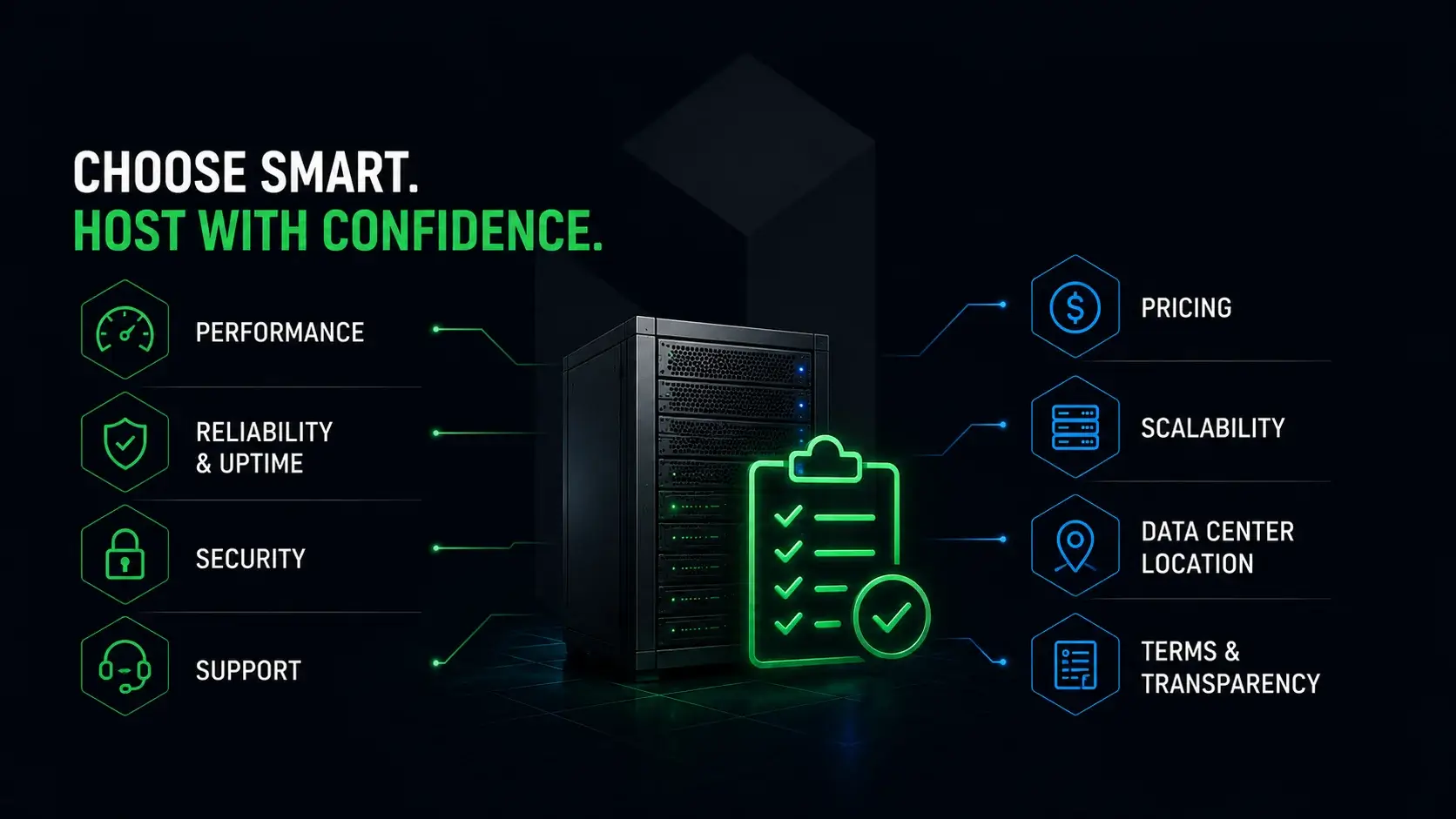
Once you deeply understand the type of architecture your specific project requires, the next critical, unavoidable step is thoroughly evaluating the hosting companies actually selling the server space. The web infrastructure market is incredibly crowded with providers making massive, often deceptive promotional promises. You must look past the flashy marketing copy and aggressively evaluate the hard, undeniable technical metrics that will actually determine your daily operational success. Finding the right web hosting provider takes diligence, technical scrutiny, and a clear understanding of your own business objectives.
Reliability and Uptime Guarantees
Your beautiful, highly optimized website is completely useless to you and your customers if it frequently goes offline. When evaluating providers, you must look strictly for an ironclad, financially backed uptime guarantee. Uptime is the amount of time your site spends online, with the industry standard being 99.9%, meaning your site may be down for no more than approximately 8 hours and 45 minutes per year. The web host's reliability is paramount.
Some hosting providers offer uptime guarantees as high as 99.99%, which translates to less than an hour of downtime per year, but this only refers to server performance and does not account for other potential issues like hacking or software failures. Frequent outages can interrupt sales, reduce trust, and frustrate visitors, making it essential to choose a reliable host that can guarantee high uptime. The best web hosting provider will transparently display their historical server performance logs and offer clear service level agreements that actively compensate you with account credits if they fail to meet their strict uptime promises.
You also need to read the fine print regarding what actually constitutes official downtime. Many budget providers will cleverly exclude scheduled maintenance windows, network attacks, or user inflicted software errors from their uptime calculations. A truly reliable provider will be incredibly transparent about their network status, offering a public dashboard that displays current incidents, historical outages, and detailed post mortem reports explaining exactly why an outage occurred and what steps they have taken to prevent it in the future.
Security Policy and Essential Features
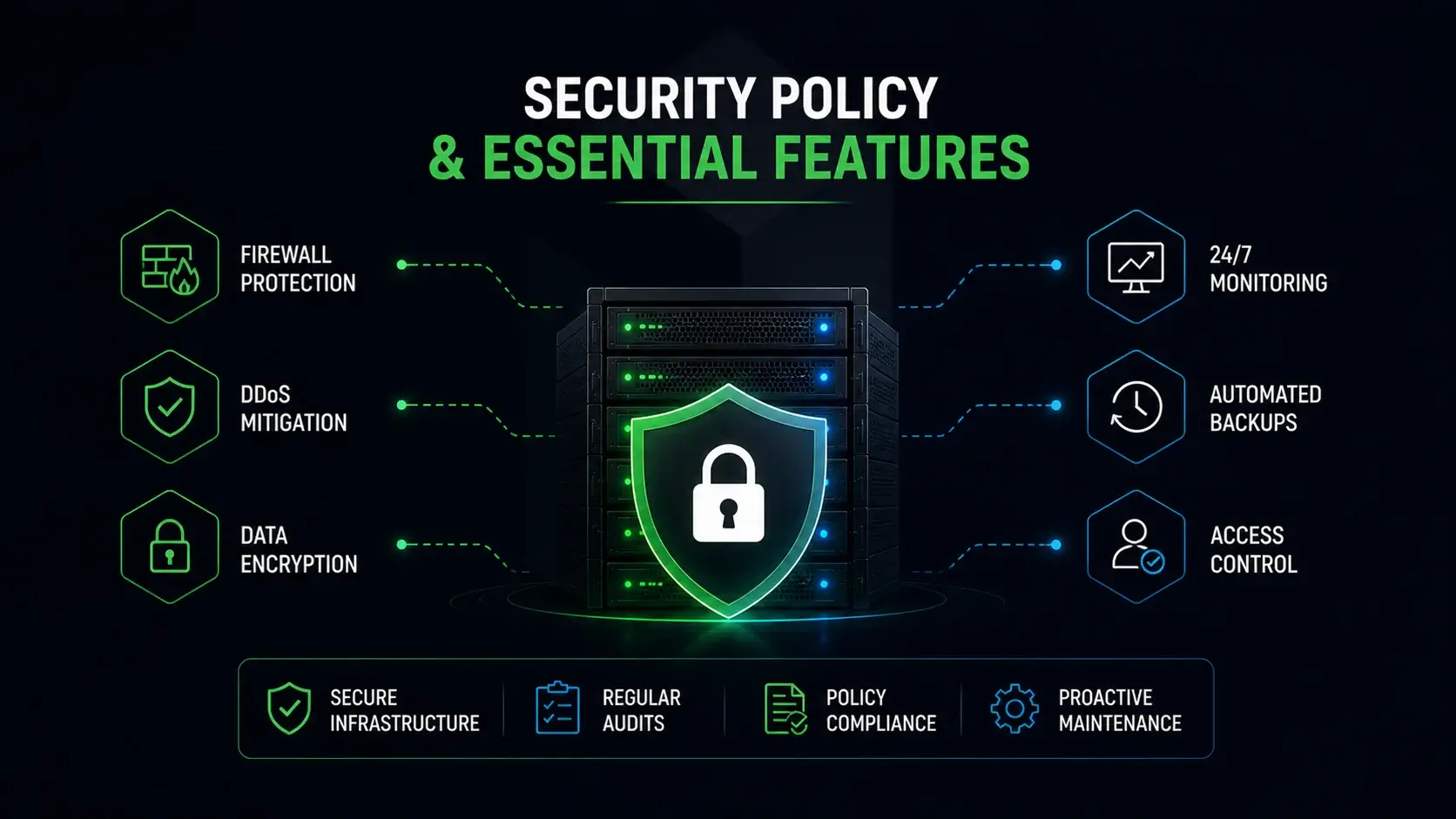
Cyber threats evolve rapidly on a daily basis, and your chosen web hosting company should act as your incredibly strong first line of robust defense against these relentless attacks. A highly reputable, secure company will seamlessly include essential security features right out of the box. Security measures should include free SSL certificates, daily backups, firewalls, and malware scanning to proactively detect malicious injections and keep your digital storefront completely safe.
Furthermore, the right web hosting service should deploy robust network firewalls and automated threat mitigation tools. DDoS protection is a critical security feature that helps prevent malicious traffic from overwhelming a website, ensuring it remains accessible during attacks. By absorbing and rerouting fake traffic generated by botnets, a strong DDoS mitigation system guarantees that your legitimate buyers can always reach your checkout pages, even when your IP address is actively under siege by hackers.
Another absolutely vital security feature is strict network isolation. In a shared or virtualized environment, your provider must utilize advanced containerization technologies to ensure that your file system is completely, mathematically separated from every other user on the machine. If a neighboring website is compromised by a malicious script, tight network isolation ensures that the hacker cannot pivot laterally across the server to access your critical databases. Your host should be totally transparent about the specific containerization software they use to protect your assets.
Automated Backups and Data Restoration
A robust defense mechanism is never complete without an infallible recovery plan. Regular automated backups, ideally daily, with an easy one click restore process are essential for data protection. If a sophisticated ransomware attack successfully encrypts your databases or if a rogue employee accidentally deletes critical system files, your backups are your only lifeline.
Regular backups are vital for website security, allowing for quick restoration of data in case of loss due to cyberattacks or server failures. Without them, you risk losing years of customer orders, blog posts, and intricate design work in an instant. The best providers do not charge extra for basic backup functionality. They integrate it directly into the server management dashboard so you can roll back your website to a pristine, uninfected state with a single mouse click.
A truly professional backup strategy adheres strictly to the fundamental rule of redundancy. You must keep three total copies of your data, stored on two entirely different types of media, with at least one complete copy kept securely off site in a completely different geographical location. The best hosting providers handle this automatically, mirroring your daily backups to remote storage facilities located in completely different data centers. This ensures that even if a natural disaster completely destroys the primary data center, your data remains safe and recoverable.
Server Hardware, Speed, and Performance
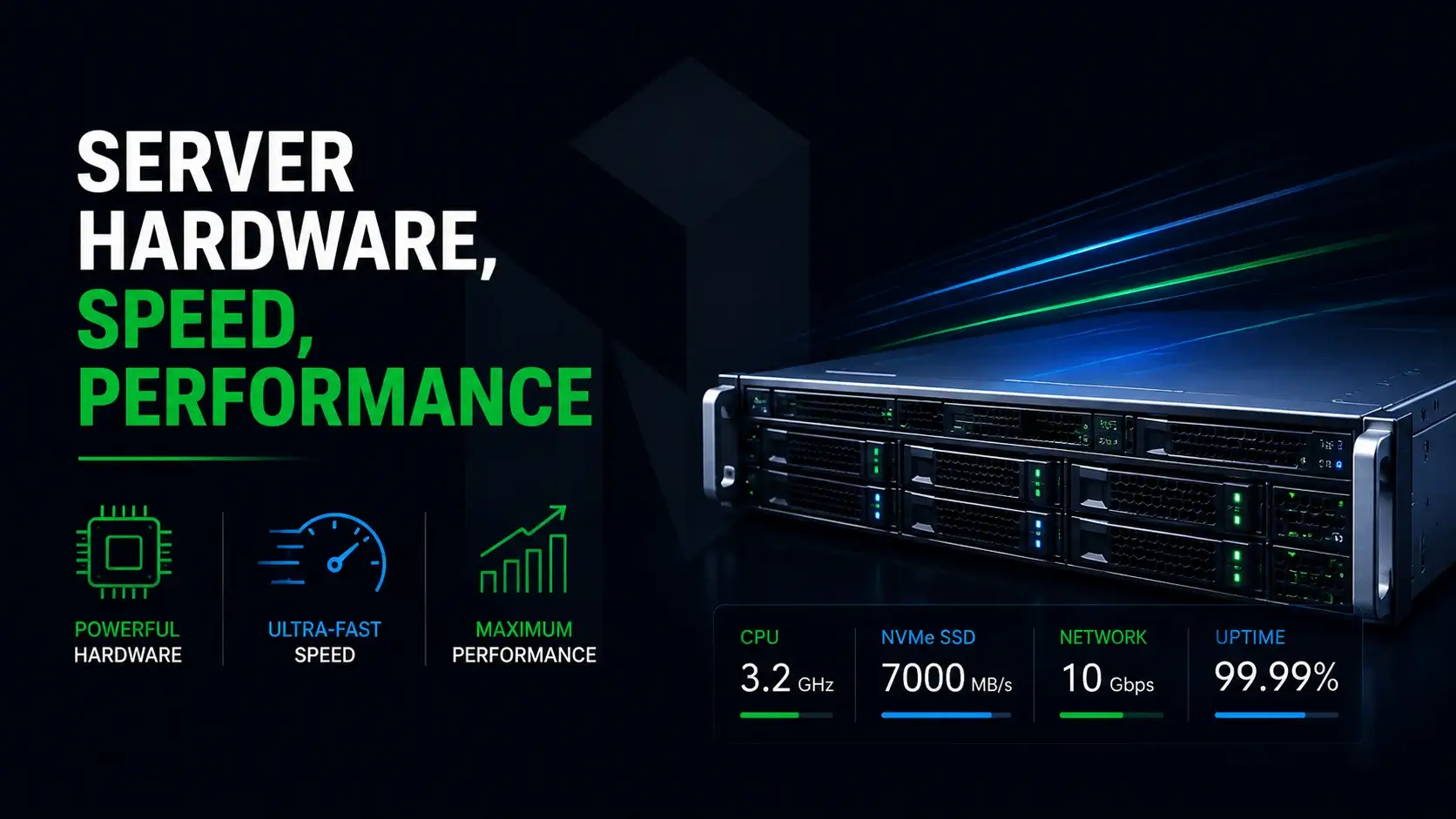
The physical components residing inside the server rack drastically alter how fast your website renders for the end user. Fast load times are vital for user experience and SEO. Hosts that use SSD storage and offer CDN integration can enhance content delivery. Search engines like Google actively penalize sites that take too long to load, pushing them down the search rankings and destroying organic traffic.
Speed and performance are critical. Providers should use SSD or NVMe drives for faster load times than traditional HDDs. Older Hard Disk Drives rely on spinning magnetic platters and physical read arms to fetch data, which creates inherent mechanical latency. Modern Solid State Drives and NVMe protocols use advanced flash memory, fetching database queries and rendering heavy images in absolute milliseconds. When evaluating a host, you must strictly demand modern storage architecture.
The type of RAM installed in the server is equally important. High performance servers utilize specialized memory designed to actively detect and correct common types of internal data corruption in real time. This advanced hardware prevents sudden system crashes and ensures absolute data integrity for your critical applications. If a host is using standard desktop grade memory to save money, your website will be significantly more prone to random, inexplicable restarts.
Data Center Location and Latency
The physical geographic distance between your chosen server and your primary audience directly and significantly impacts your website's loading speed and site speed metrics. Choosing a host with data centers near your target audience reduces latency and improves speed. If your target market is primarily located in Europe, hosting your site in a budget data center located in Asia will cause massive inherent latency delays as the electrical signals physically travel across the globe via underwater fiber optic cables. Elite providers operate multiple advanced data centers globally, allowing you to strategically deploy your digital assets as physically close to your customer base as possible to ensure instant page loads.
When interviewing potential providers, always ask to see an actual map of their network infrastructure. You need to verify that their primary data centers feature premium network routing, utilizing multiple massive internet backbone providers to guarantee redundant, blazing fast connectivity. A single poor connection point in the data center's network can cause severe packet loss and sluggish performance, regardless of how powerful the internal server hardware happens to be.
Storage Space, Bandwidth, and Multiple Add on Domains
You need to deeply and realistically evaluate the exact resource limits placed on your hosting account. Storage dictates exactly how many heavy image files, videos, and complex database entries your site can physically hold. Bandwidth limits determine how much data can be successfully transferred to your visitors each month without triggering massive overage fees or account suspensions.
Beware of unlimited bandwidth claims, as most hosts have hidden caps on database size or file counts buried deep within their terms of service. These hidden limitations, often called inode limits, restrict the sheer number of individual files you can host, regardless of their file size. Additionally, if you plan to launch several different projects, ensure the web hosting plans allow for hosting multiple websites so you can seamlessly manage various domains and brand properties from one centralized dashboard without paying for separate accounts.
You also need to carefully analyze how a provider measures bandwidth. Some companies only measure outbound traffic, while others aggressively count both inbound and outbound data transfers. If you are regularly backing up massive databases to an external off site server, that outbound traffic can quickly consume your monthly bandwidth allowance. Elite providers offer massive data transfer limits and clearly outline exactly what happens if you accidentally exceed them, ensuring your website remains online while you address the sudden surge.

Scalability for Future Growth
Your digital infrastructure must have the capability to aggressively grow right alongside your business without causing friction or demanding extensive technical rewrites. The best web hosting services offer a completely seamless, frictionless upgrade path. They allow you to instantly allocate more RAM or seamlessly migrate from a shared hosting plan to a massive VPS or dedicated server with absolutely zero disruptive downtime. If a provider forces you into a rigid, inflexible hosting package that actively punishes growth with arbitrary limits, you will eventually be forced to endure a painful, highly manual migration to a competitor when your business takes off.
You must also evaluate the financial friction involved in upgrading. A reputable provider will automatically adjust your existing invoice when you upgrade to a more powerful tier, applying the unused balance of your previous plan to the new server. Predatory companies will force you to forfeit the remainder of your existing contract and demand full upfront payment for the new machine. Transparent, fair billing practices are the absolute hallmark of a company that actually wants to be a long term partner in your business success.
Server Density: How Many Customers Are on Each Server?
This is the deeply hidden, closely guarded metric that cheap other web hosting companies pray you never ask about on a sales call. Server density refers to exactly how many individual websites a provider forcefully and greedily crams onto a single physical machine to maximize their profit margins. In budget shared environments, most hosting companies heavily oversell their hardware, packing thousands of sites together. This means your performance will unpredictably crash when a completely unrelated neighbor experiences a minor traffic spike and consumes all the shared processing cycles. Premium providers strictly limit server density to ensure every single user has continuous, unthrottled access to rapid processing speeds and adequate memory allocations.
To avoid this trap, you must actively seek out providers that publicly advertise low server density policies. Premium infrastructure companies guarantee that they never allocate more resources than the physical machine can actually provide. If a server has sixty four gigabytes of RAM, they will only sell a combined total of sixty four gigabytes to their clients. This strict dedication to hardware integrity guarantees that the computing power you pay for is always available, waiting entirely in reserve for the moment your website actually needs it.
Customer Service and Tech Support
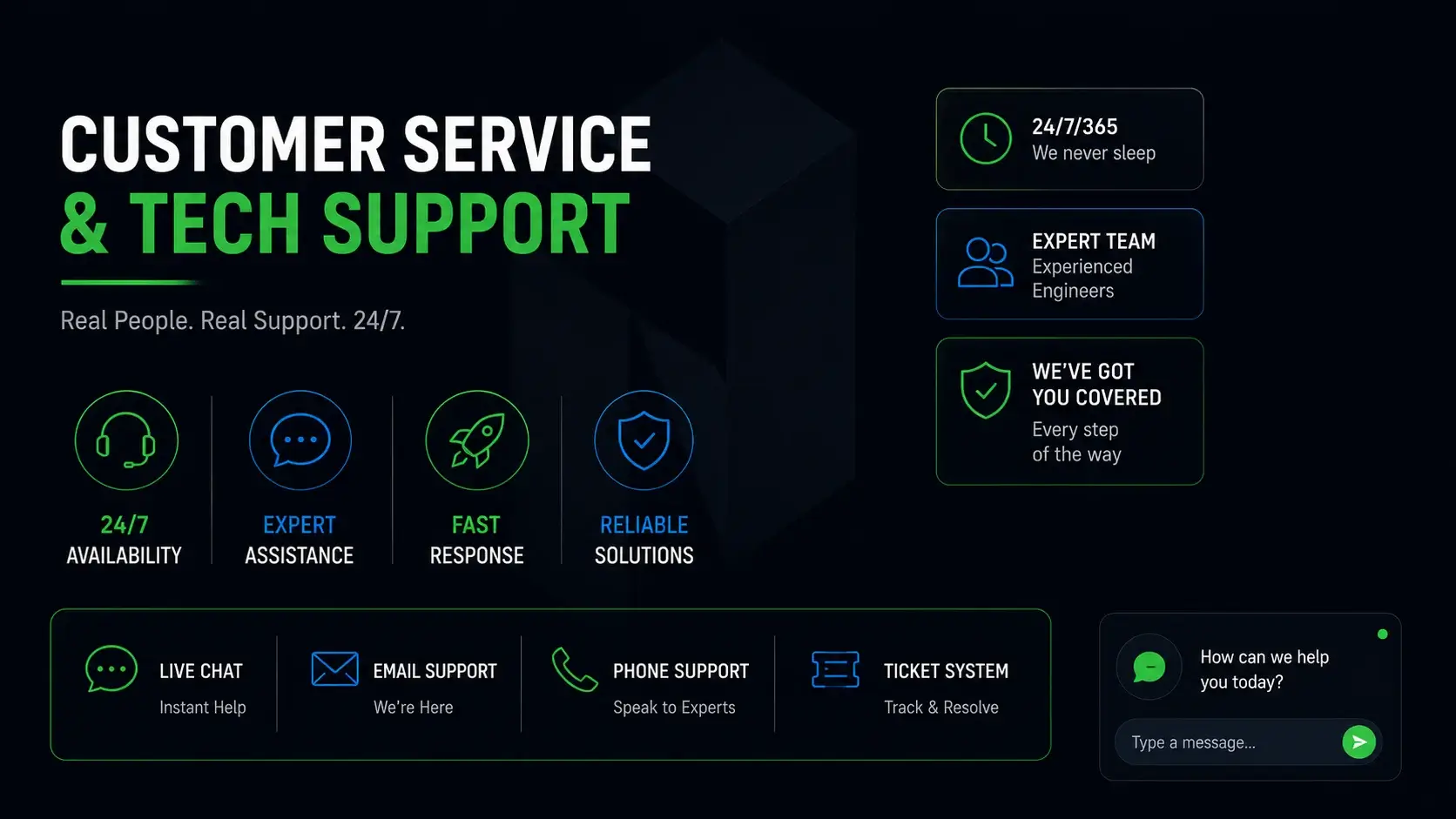
When your high converting sales page suddenly goes down at two in the morning on a Saturday during a massive promotional launch, you simply cannot afford to wait forty eight hours for a generic email reply. Exceptional, always on customer support is completely non negotiable for small business owners who rely on their website for income. Look for hosting services that offer genuine, round the clock technical assistance through live chat interfaces, a robust ticketing system, and direct phone support. Many hosting providers outsource their support tier to untrained call centers located overseas. The truly elite infrastructure companies employ highly experienced, in house system administrators who can directly fix server configurations rather than reading from a basic troubleshooting script.
The difference between basic tier support and advanced engineering support is night and day. Basic support agents can usually only handle simple billing inquiries and password resets. If you have a complex database corruption issue or a deeply confusing network routing problem, you absolutely need immediate access to senior engineers. A high quality provider will ensure that your critical tickets are instantly escalated to senior server administrators who have root access to the machines and possess the deep technical knowledge required to physically repair your broken infrastructure.
Control Panel and Ease of Use
You should never need an advanced degree in computer science or deep knowledge of command line programming just to manage your basic server settings. The provider should offer an intuitive, highly graphical control panel for streamlined site management. This unified dashboard allows you to easily install your preferred content management system with a single click, manage your professional email accounts, update complex network records, and directly interact with your databases without ever needing to touch a confusing, unforgiving terminal window. Even a highly skilled web developer appreciates a clean, incredibly fast interface to accelerate their daily workflow.
Step by Step: How to Choose the Right Hosting Provider
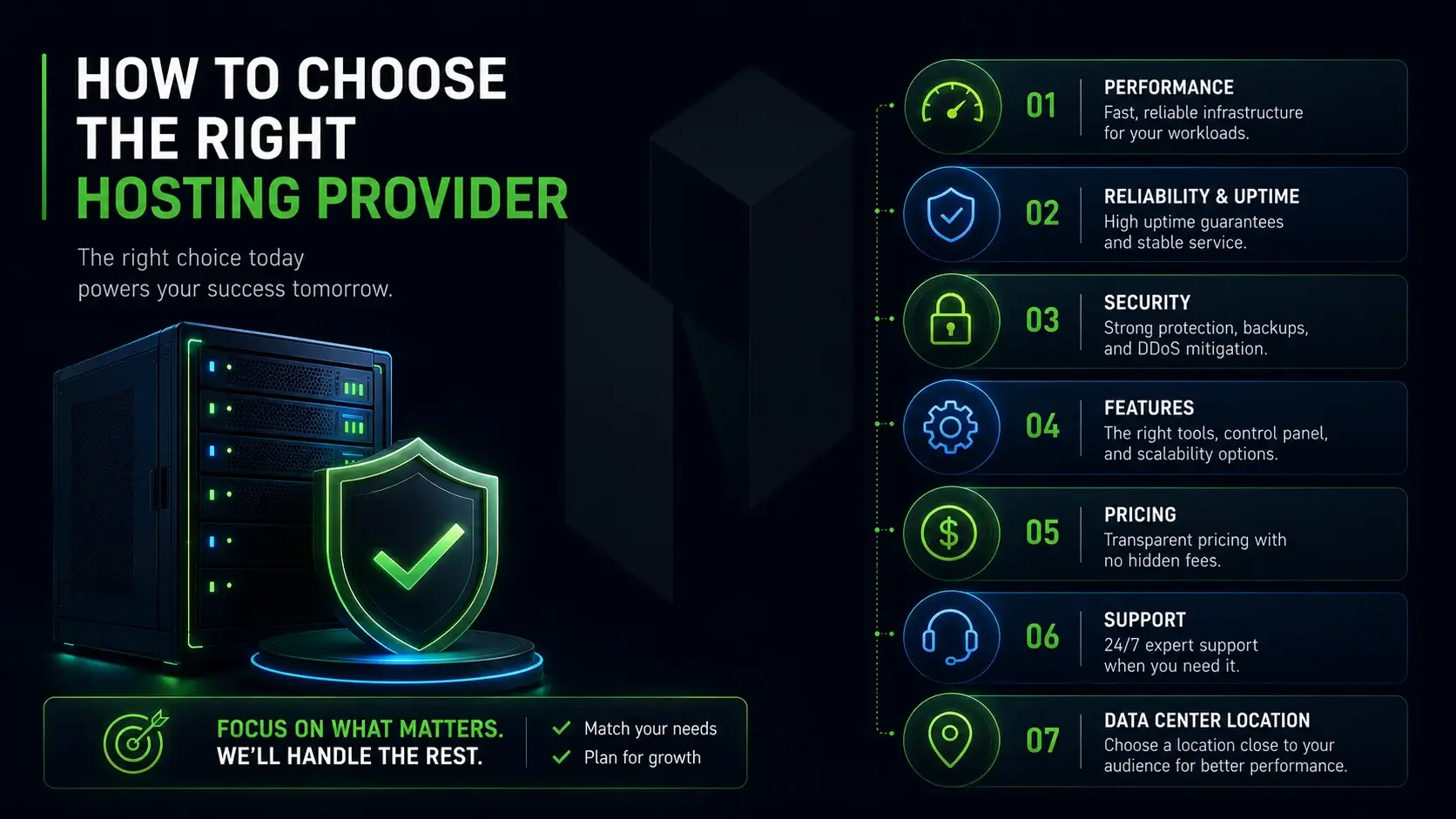
Deciphering the dense technical jargon and making a final, highly confident purchasing decision can easily feel overwhelming given the sheer number of variables. By breaking the massive buying journey down into a highly methodical, step by step process, you can eliminate the marketing noise and confidently select a provider that perfectly aligns with your specific operational requirements and technical capabilities.
Step 1: Identify Your Website Needs
Before looking at a single price tag or comparing feature lists, aggressively audit your own project requirements. Determine exactly what software you are running, estimate your expected monthly visitor volume based on current analytics, and outline any highly specific technical requirements like full root access or unique database versions required by custom applications. You absolutely cannot choose the right web infrastructure if you do not strictly define the technical job first.
If you are a freelance photographer looking to showcase a simple portfolio, your needs are drastically different from a financial technology startup building a custom web application. The photographer simply needs a large amount of storage space for high resolution images and a reliable connection. The financial startup requires massive database processing power, strict compliance protocols, and a highly isolated environment. Documenting these specific operational requirements creates a clear blueprint that will guide the entire purchasing process.
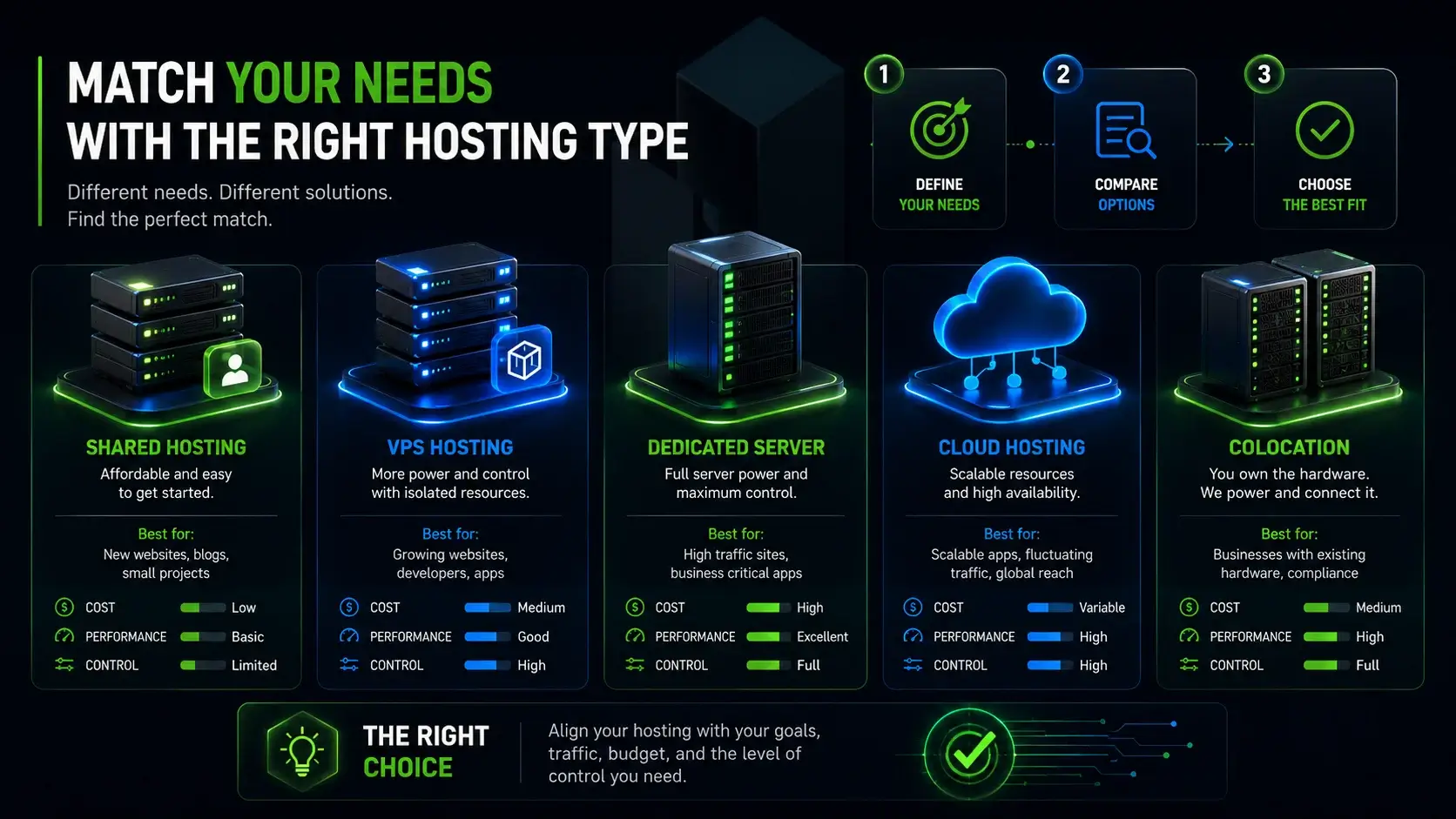
Step 2: Match Your Needs with the Right Hosting Type
Take the highly specific data you gathered in step one and align it perfectly with the correct server architecture. A lightweight informational portfolio site belongs on a high quality shared plan to conserve capital. Conversely, an expanding eCommerce store processing thousands of daily financial transactions absolutely requires the isolated, unthrottled power of a VPS or a completely bare metal dedicated server to maintain compliance and ensure rapid checkouts.
If your daily traffic volume is highly unpredictable, such as a news publication that frequently goes viral, you must strictly rule out traditional fixed servers and look exclusively at auto scaling cloud infrastructure. Matching the physical hardware to your exact business model ensures that you never overpay for massive resources you do not actually need, while simultaneously guaranteeing that you never under provision your server and cause a catastrophic crash during a major product launch.
Step 3: Compare Key Features Across Providers
Once you know the exact tier of hosting you desperately need, put three or four highly reputable providers head to head in a direct comparison. Do not just blindly look at the introductory promotional price listed on the homepage. Directly compare their storage limits, absolute uptime guarantees, security inclusions, and exactly what constitutes an extra fee. For example, look closely at how standard industry benchmarks like inmotion hosting's plans compare to premium boutique providers in terms of raw processing core allocations, memory caching options, and hidden renewal costs.
Create a detailed spreadsheet to track the exact specifications. Note the type of storage drives used, the geographical locations of their data centers, and the specific limitations placed on their automated backup systems. This clinical, highly analytical approach removes all emotion and marketing hype from the decision, leaving you with a clear, mathematical comparison of the raw technical value offered by each competing company.
Step 4: Check Reviews and Real User Experiences
Never take a web hosting company's own marketing copy or affiliate driven blog posts at face value. Dive deeply into trusted, third party review platforms, private developer forums, and highly critical communities like Reddit to see how the provider actually treats its long term, established customers. Look specifically for consistent, angry complaints regarding sudden unexplained downtime, billing nightmares, or severely degraded performance occurring after the first few months of service.
Step 5: Test Customer Support Before Buying
Before handing over your corporate credit card details, put their technical support team to the absolute test. Open a live chat session or submit a complex pre sales email ticket with a highly specific technical question regarding their database configurations or migration processes. The speed, technical accuracy, and overall helpfulness of their immediate response will give you a remarkably clear preview of exactly how you will be treated when a real, revenue threatening emergency strikes your business in the future.
Ask them highly specific questions. Inquire about their exact server density policies, their specific DDoS mitigation hardware, and the exact physical locations of their redundant backup servers. If the sales agent dodges the questions, copy pastes generic marketing material, or refuses to provide specific technical specifications, you should immediately walk away. A highly elite infrastructure provider will proudly and transparently discuss the intricate details of their massive network architecture.
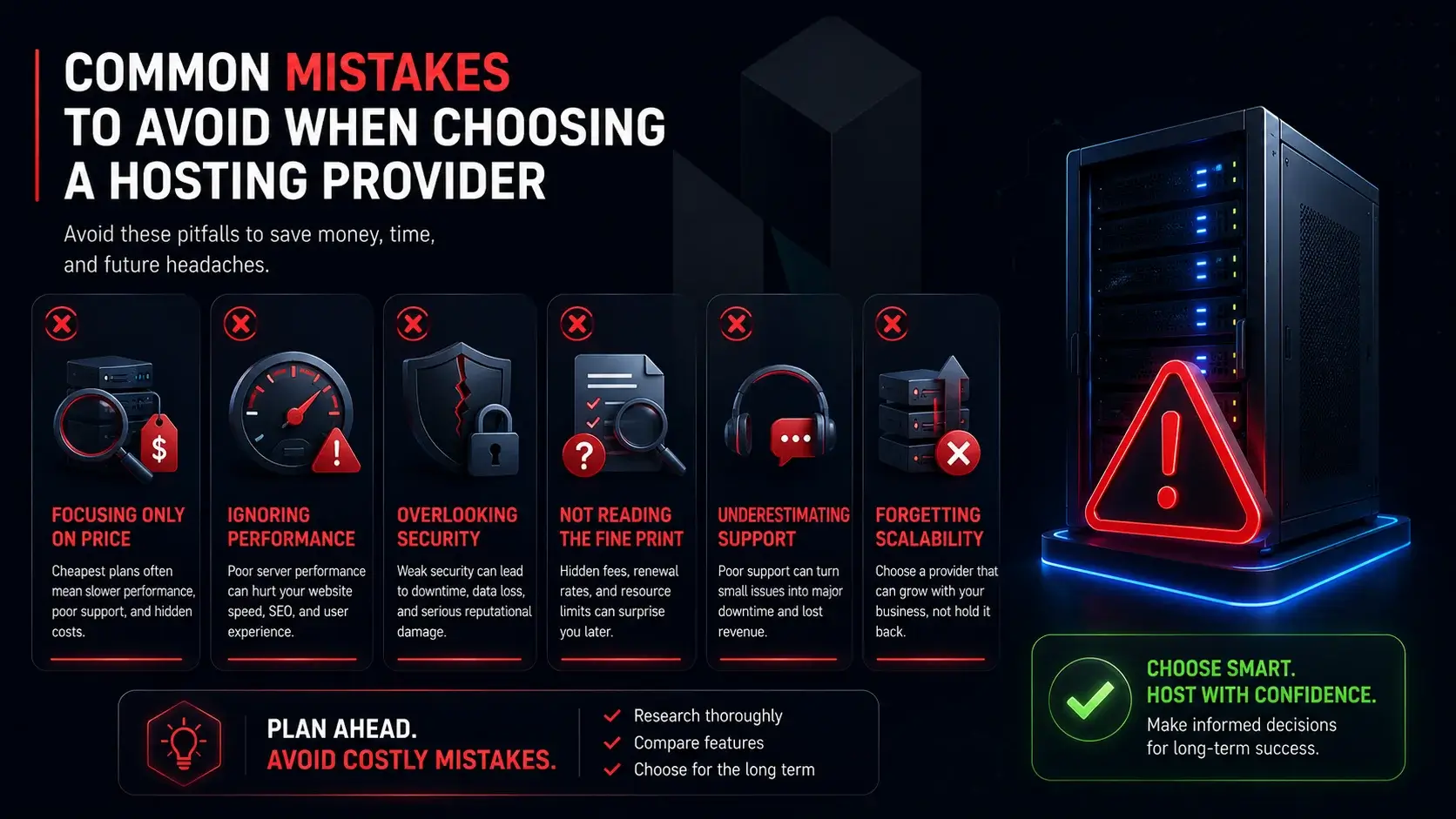
Common Mistakes to Avoid When Choosing a Hosting Provider
In the chaotic, high pressure rush to get a new project online quickly, many business owners make critical, highly shortsighted errors that severely limit their long term potential and expose them to massive unnecessary risk. Avoiding these ubiquitous, industry wide traps is just as important as knowing what premium features to actively look for.
Choosing Based on Price Alone
Opting for the absolute cheapest hosting provider on the open market is universally a disastrous, mathematically flawed strategy. Rock bottom, two dollar a month prices are actively achieved by dangerously overcrowding servers, completely cutting essential security layers, utilizing outdated mechanical hard drives, and outsourcing critical support to completely untrained agents. The few dollars you mistakenly think you save on the initial invoice will be violently wiped out by the thousands of dollars in lost revenue caused by sluggish load times, high bounce rates, and persistent, unexplainable downtime.
Pricing, Renewal Rates, and Hidden Fees
You must be incredibly vigilant regarding billing practices in the web hosting industry. Many web hosting providers offer significant introductory discounts, but renewal rates can be much higher, often doubling the initial price after the first contract period ends. A plan advertised at three dollars a month might require you to prepay for three entire years upfront, and then renew at twelve dollars a month. Many hosts have low introductory prices that significantly increase upon renewal, sometimes by three times or more. You must carefully read the terms of service and calculate the true cost of ownership over a five year period to accurately compare competing providers.
Predatory hosting companies rely heavily on the fact that migrating a massive, complex website is incredibly annoying and technically difficult. They lure you in with an impossibly cheap introductory rate, fully expecting that you will simply swallow the massive price hike upon renewal rather than dealing with the severe headache of moving your massive databases to a new company. You must demand completely transparent, flat rate pricing structures that do not penalize you for remaining a loyal, long term customer.
Ignoring Scalability
Many beginners only purchase exactly enough computing resources to handle their initial launch day, completely ignoring the future growth of their brand. If you successfully execute a viral marketing campaign and your daily traffic suddenly spikes by ten thousand visitors, an unscalable, rigid host will forcefully suspend your account for utilizing too many shared resources. Always ensure your chosen provider offers an instant, one click upgrade path to massive, enterprise grade servers to capture that momentum rather than punishing you for success.
Overlooking Security Features
Assuming that most hosting providers will magically protect your site by default is a massive, incredibly dangerous liability. Many budget hosts deliberately strip out protections and charge exorbitant premium fees for absolute basic security necessities like SSL certificates, automated daily backups, and malware scanning. Failing to manually verify these critical inclusions leaves your digital assets completely exposed to automated botnets, malicious SQL injections, and devastating data breaches.
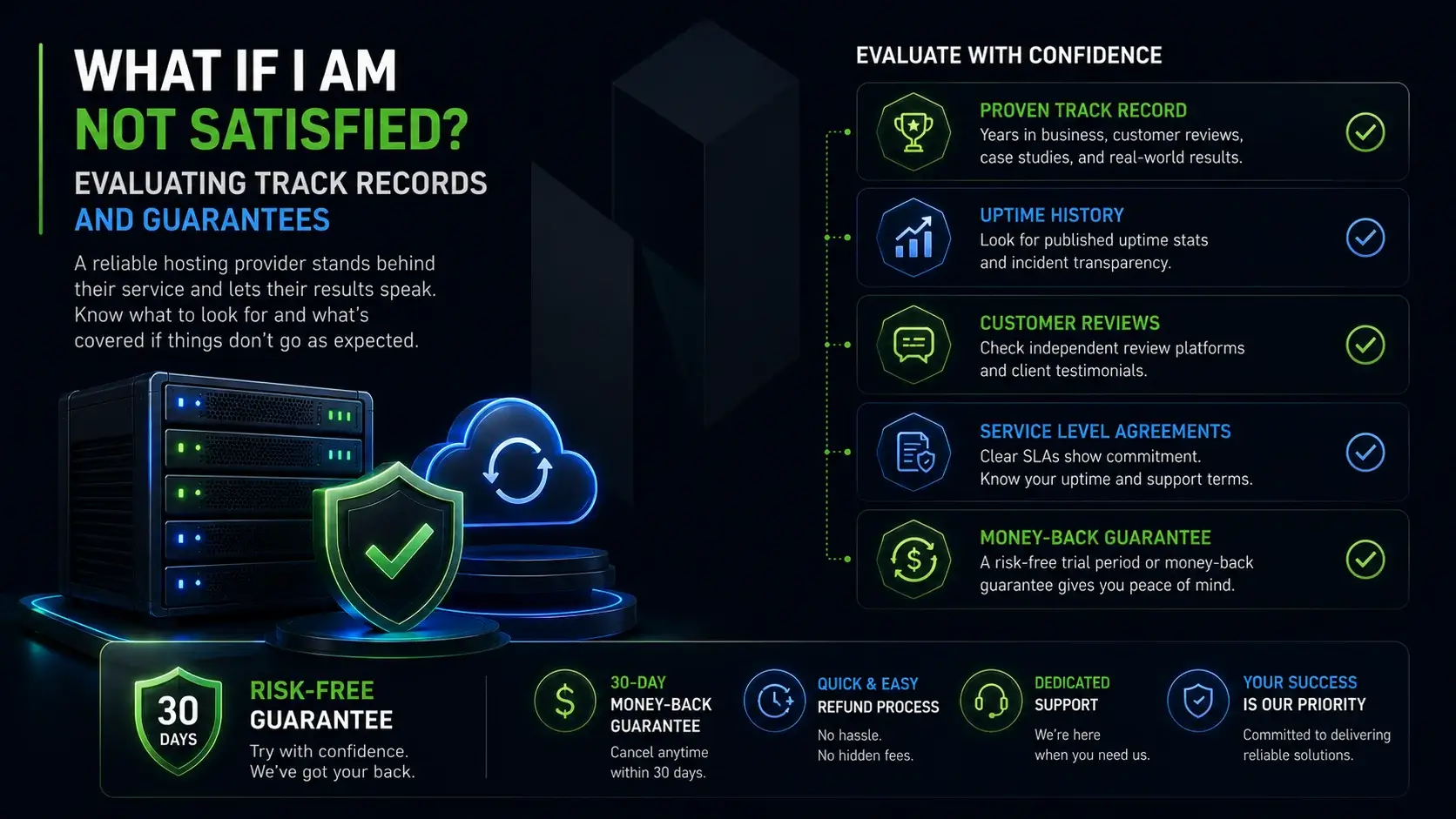
What If I Am Not Satisfied? Evaluating Track Records and Guarantees
Even with the most exhaustive, meticulous, month long research process, a provider might end up being a terrible, fundamentally incompatible fit once you fully migrate your complex application files and go live. It is absolutely imperative that you fully understand your exit strategy and financial protections before you sign a binding, long term annual contract.
Money Back Guarantees and Refund Policies
A confident, highly elite hosting provider will stand firmly and proudly behind their infrastructure by offering a robust, no questions asked money back guarantee, typically ranging from thirty to forty five days. This crucial, entirely risk free trial period allows you to thoroughly test their actual server latency, control panel usability, and support response times completely risk free before committing to an expensive annual billing cycle. It acts as an essential safety net for your investment.
Read the fine print of these guarantees incredibly closely. Many deceptive companies will proudly advertise a total refund, but quietly deduct hefty administrative fees, setup charges, or domain registration costs from the final return amount. A truly honorable infrastructure provider will issue a full, absolute refund without forcing you to jump through ridiculous administrative hoops or argue with aggressive retention agents on the phone.
Reading Real Reviews and Spotting Hidden Limitations
When evaluating a provider's historical track record, you must learn to aggressively filter out the fake, heavily affiliate driven reviews that flood the internet. Look closely for highly detailed, unvarnished user experiences that highlight exactly how the company professionally handles catastrophic server hardware failures, disputed billing charges, and complex data migrations. A company's true, authentic character is revealed entirely by how they professionally handle their angriest, most frustrated customers during a massive network outage.
Look for absolute transparency. If a company suffers a massive network failure, do they attempt to hide it and delete angry comments from their social media pages? Or do they post immediate, highly detailed updates on a public status page, explaining the exact nature of the hardware failure and exactly what their engineers are doing to fix it? A provider that owns their mistakes and communicates clearly during a crisis is infinitely more valuable than a company that hides behind generic corporate apologies.
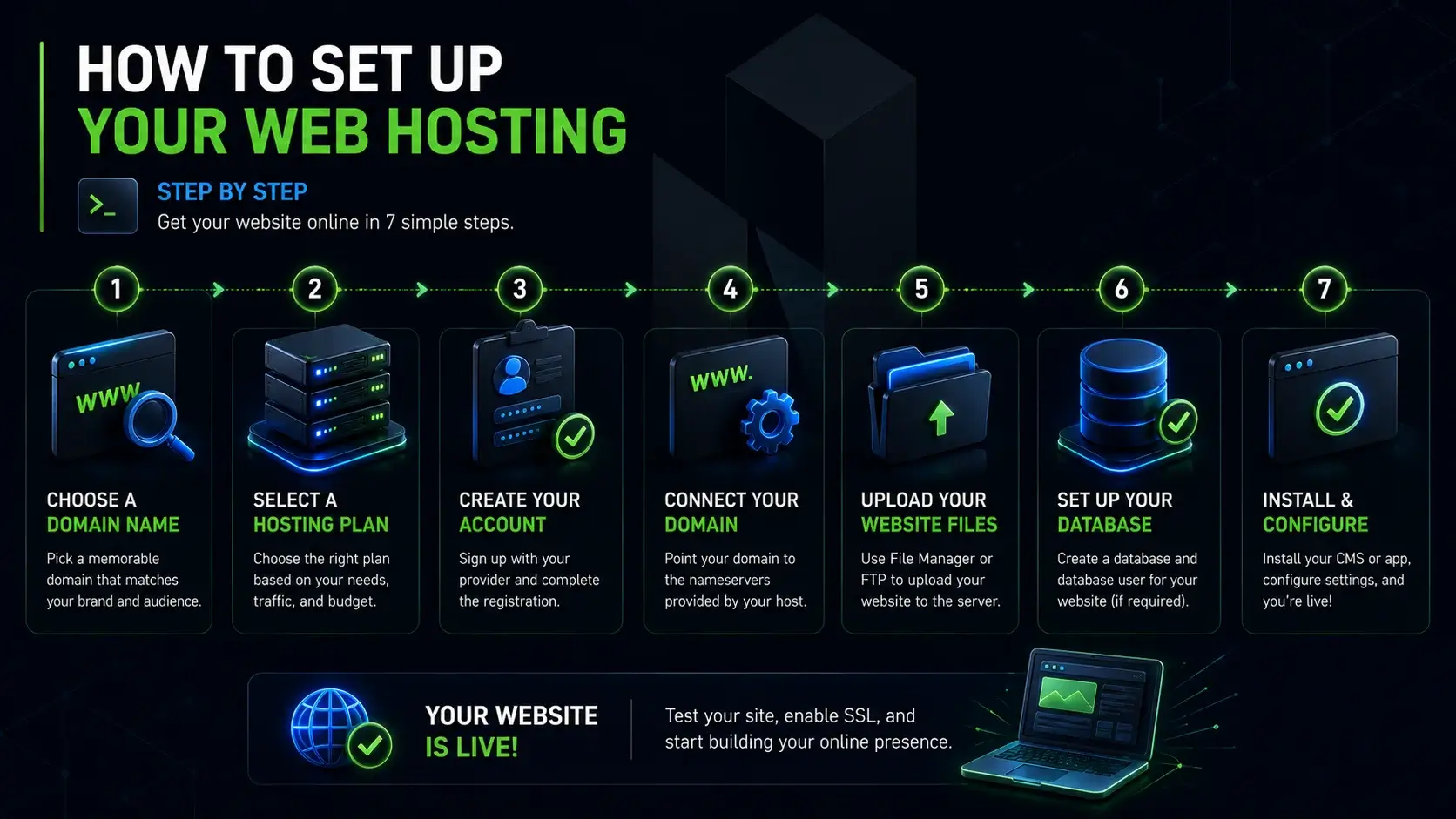
How to Set Up Your Web Hosting (Step by Step)
Once you have successfully navigated the exhaustive research phase and confidently selected a premium provider that meets all your criteria, the final phase is executing the actual, physical deployment. Modern infrastructure companies have heavily streamlined this process, turning what used to be a highly complex technical chore into a few simple clicks on a dashboard.
Step 1: Register Your Domain Name
The absolute first step of deployment is formally securing your unique digital identity. You can purchase your desired URL through a dedicated domain registrar or, for total simplicity, register it directly through your new hosting provider during the checkout process to ensure everything is seamlessly, instantly connected from day one. If you register the domain with a separate company, you will need to log into that account and update the nameservers to point perfectly toward your new infrastructure.
Step 2: Select Your Hosting Plan and Provider
Navigate directly to your chosen provider's website, carefully select the specific architectural tier you decided on based on your research, and configure your preferred billing cycle. This is also the exact stage where you will select your preferred geographic data center location to optimize for latency and add any necessary premium security add ons to your total package. Always choose the data center that is geographically closest to the majority of your paying customers.
Step 3: Configure Your Server and Build Your Site
Upon successfully completing the purchase and verifying your identity, you will receive secure administrative access to your control panel. From here, you will update your domain's DNS records to physically point to your new server IP address. Once the connection successfully propagates globally across the internet routers, you can easily use automated one click installers to deploy your CMS, upload your highly customized theme, and officially begin broadcasting your brand to the entire world. From this moment on, your focus completely shifts from infrastructure management to aggressive business growth.
Frequently Asked Questions
1. What exactly do web hosts provide?
Infrastructure partners supply the physical server infrastructure, robust network connectivity, enterprise grade cooling systems, and specialized backend software required to make your website safely accessible on the internet. When you get your site hosted, they store all your files and essentially act as the highly secure, technically proficient landlord for your digital property, ensuring your data is delivered rapidly to anyone requesting it anywhere in the world.
2. Why do I need to worry about choosing a web hosting provider if I just have a small business?
Choosing a web hosting environment carefully is absolutely critical for a small business because your website's performance directly impacts your professional credibility and your bottom line. If you pick a poor host, your site will be incredibly slow, which massively increases bounce rates and destroys your search engine optimization rankings. Investing in the right web hosting ensures your customers can actually reach you, trust your security protocols, and seamlessly purchase your products without frustration.
3. Can I upgrade my hosting plan later if my website grows?
Yes, absolutely. Most web hosts make it incredibly easy to scale your server resources. You can easily start on a basic, affordable plan and seamlessly upgrade to a robust VPS or even a massive bare metal machine as your traffic exponentially increases over the years. A high quality hosting provider will execute this upgrade for you entirely in the background with zero downtime required.
4. Do I need to buy my domain name from the same company that provides my web hosting?
No, you absolutely do not. You can purchase your domain from a specialized external registrar and buy your web hosting service from an entirely different infrastructure company. However, managing both assets under the exact same hosting account is often vastly more convenient for beginners, as it completely eliminates the technical need to manually point complex DNS records across different platforms.
5. What is the absolute best type of hosting for an online store?
For any serious eCommerce operation handling highly sensitive data and processing payments, you must completely avoid basic shared environments at all costs. The absolute best choices are powerful vps hosting, highly scalable cloud hosting, or a completely isolated server. These elite types of web hosting provide the mandatory security isolation, dedicated RAM, and unthrottled processing power strictly required to process complex financial transactions safely and rapidly.