When it comes to choosing a hosting solution, you may feel a little overwhelmed on how to choose the best service for your business needs. There are two common hosting types that businesses often struggle choosing between: Hosting server vs Colocation. Many commercial entities today rely on colocation services or infrastructure from cloud providers like microsoft azure to assists their operations. Each option offers different levels of control, cost, and scalability. Understanding these differences is essential before making a long-term decision.
Some companies prefer building an own data center, but this requires large investment and expertise. Others choose retail colocation or even wholesale colocation from established colocation companies such as digital realty. These facilities provide secure physical space, strong network connectivity, and access to highly trained engineers. For example, a business may start with a single rack and expand over time within a professional colocation environment. A reliable colo provider also offers direct connections to carriers and cloud ecosystems, while managing environmental issues and isolation from other tenants.
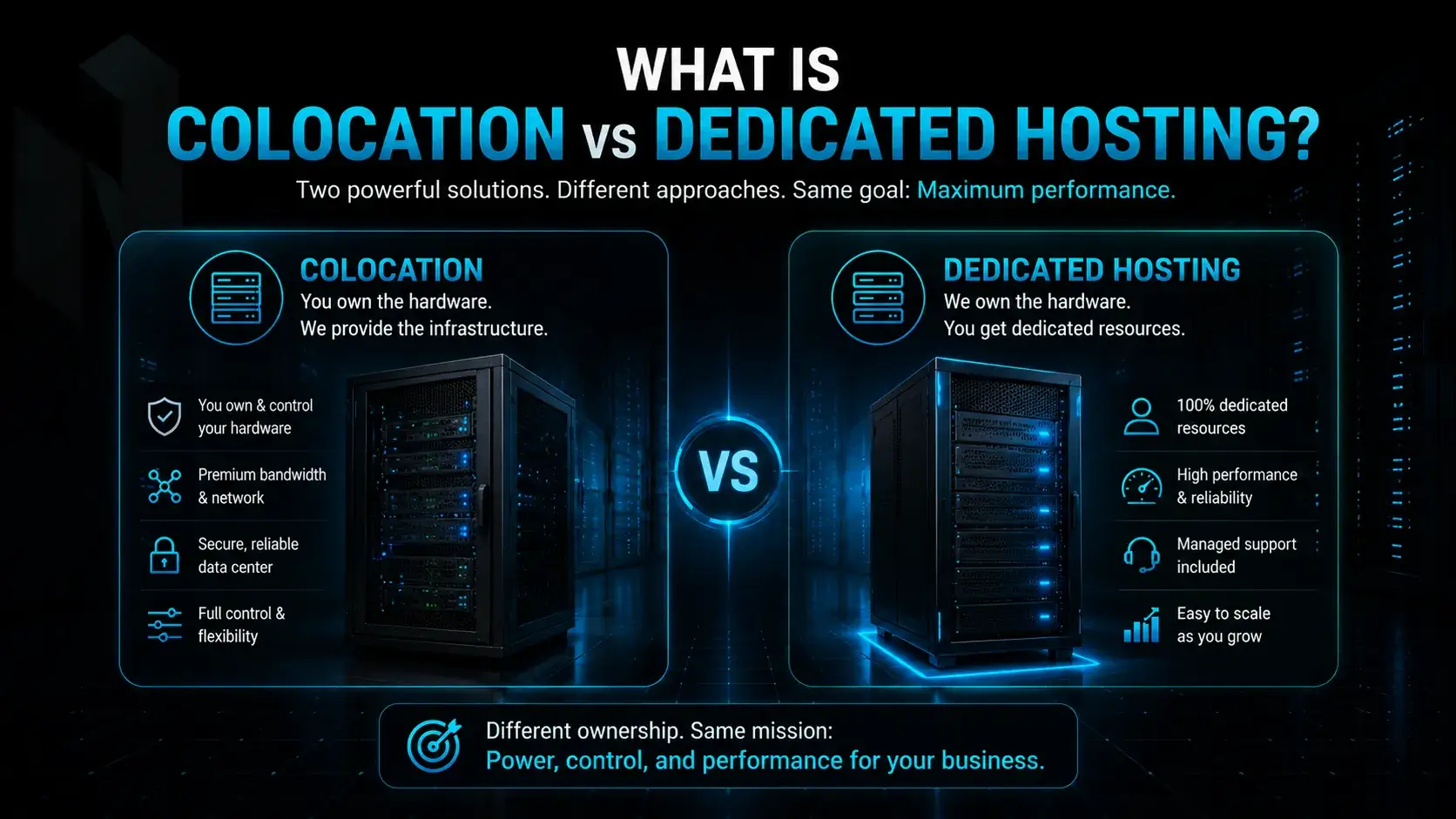
What Is Colocation vs Dedicated Hosting?
This section explains the core meaning of each hosting model. It helps you understand how dedicated the server colocation compares to renting a dedicated the server.
Blog contents
Colocation data centers provide redundant network connections to ensure continuous operation of mission-critical applications, enhancing overall connectivity and reliability.
What Is Dedicated Hosting?
A dedicated hosting is a physical server rented from a provider. The provider owns the hardware and manages the infrastructure. You only use the computing power, storage, and operating of systems. This model is common in modern data centers and works well for many commercial entities.
With dedicated hosting, the provider handles power supply, cooling systems, and network connectivity. You do not need to worry about hardware maintenance or spare parts. Many providers also offer managed services for updates and monitoring. This makes it a simple and cost with effective solution for companies without in-house IT teams.
What Is Colocation Hosting?
Colocation refers to renting data center space in professional colocation data centers. You place your own self hardware inside these facilities. The provider supplies power cooling, physical protection, and network connectivity. This setup gives you full control over your servers.
In a colocation of environment, you are responsible for hardware setup and maintenance. You must manage networking equipment, updates, and troubleshooting. Many colocation providers offer remote hands and technical support when needed. This model is ideal for commercial entities that want a private data center without building an own facility.
Bare Metal Server For Colocation Explained (Hybrid Model Concept)
Bare metal server for colocation combines elements of both models. It allows commercial entities to use bare metal servers within a colocation center. In some cases, providers supply hardware but host it in colocation facilities. This creates a hybrid approach that balances manage and convenience.
This model is growing among large enterprises and high-demand applications. It assists high performance computing and scalable platform foundation. Businesses benefit from enterprise-grade power cooling, battery backup systems, and fire suppression systems. At the same time, they can customize hardware and software configurations.
Key Differences Between Colocation and Bare Metal Servers
This section highlights the main differences in a clear structure. It helps you compare server colocation with traditional hosting.
| Feature | Colocation | Bare Metal Server |
| Hardware Ownership | You own hardware | Provider owns hardware |
| Setup Time | Longer setup | Quick deployment |
| Cost Model | High upfront, low monthly | Low upfront, fixed monthly |
| Control Level | Full control | Limited control |
| Maintenance | Your responsibility | Provider responsibility |
| Scalability | Manual expansion | Easy scaling |
| Security | Physical + self-managed | Provider managed |
| Support | Remote hands, optional | Full technical support |
| Infrastructure | Shared colocation space | Provider-managed infrastructure |
| Best For | Enterprises, custom setups | SMBs, fast deployment |
Hardware Ownership
With colocation, you fully own the servers and equipment. This allows complete customization and long-term control. You decide upgrades, configurations, and replacements. This is ideal for commercial entities needing specific hardware setups.
In contrast, a private server is rented from a provider. You do not own the hardware at any point. This reduces upfront costs and simplifies operations. However, it limits deep customization options.
Management Responsibility
In data center colocation, you manage hardware and software yourself. This includes updates, monitoring, and repairs. You may rely on remote hands for on-site tasks. Still, responsibility remains with your internal team.
Dedicated hosting removes this burden completely. Providers handle hardware failures and replacements. Many also offer managed services for full system assists. This makes it easier for growing commercial entities.
Data Center Infrastructure & Support
Both models operate inside professional data centers. These include advanced cooling systems, redundant power grids, and strong physical protection. However, the level of assists differs between models.
In colocation facilities, assists is often limited to platform foundation. Providers maintain power supply, bandwidth, and environmental controls. Dedicated hosting includes full-stack assists, including server troubleshooting. This is useful for commercial entities without technical teams.
Pros and Cons of Each Hosting Model
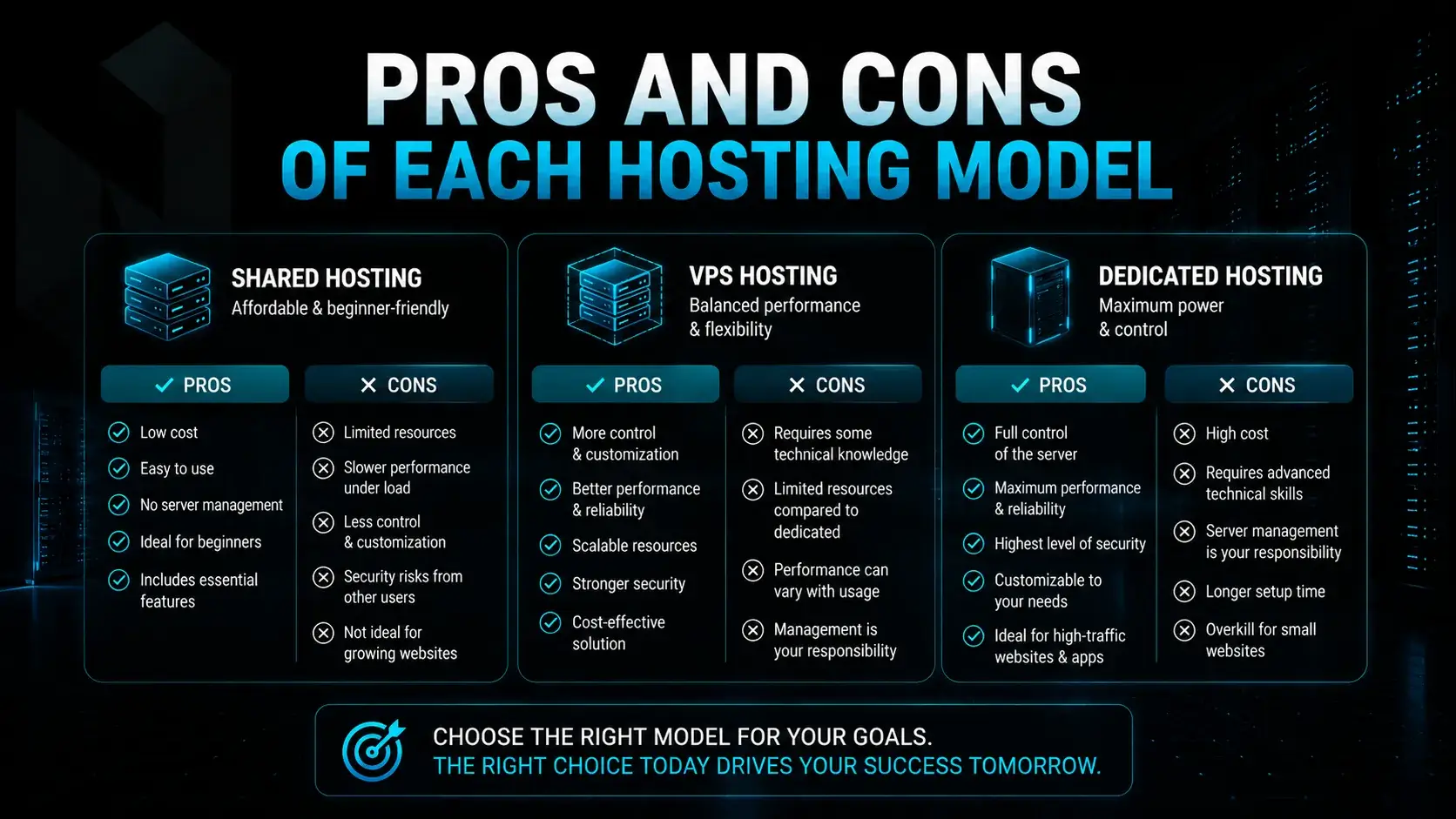
This section breaks down the strengths and weaknesses. It helps you evaluate the real impact of each option.
Pros of Colocation
- Greater flexibility for hardware and software
- Full ownership and full control of equipment
- Lower monthly operational costs
- Access to enterprise-grade colocation solutions
- Ability to build a private data center environment
Cons of Colocation
- High initial investment for hardware
- Requires skilled IT staff
- Responsibility for maintenance and downtime
- Need spare parts for fast recovery
- Limited technical support compared to dedicated hosting
Pros of Private Servers
- Low initial investment
- Fast deployment in regular data centers
- Flexible scaling with more servers
- Strong assists and hardware replacement
- Ideal for e commerce and growing commercial entities
Cons of Private Servers
- Higher long-term cost
- Less hardware customization
- Dependence on provider response time
- Limited monitoring over physical platform foundation
Cost Comparison: Colocation vs Private Servers
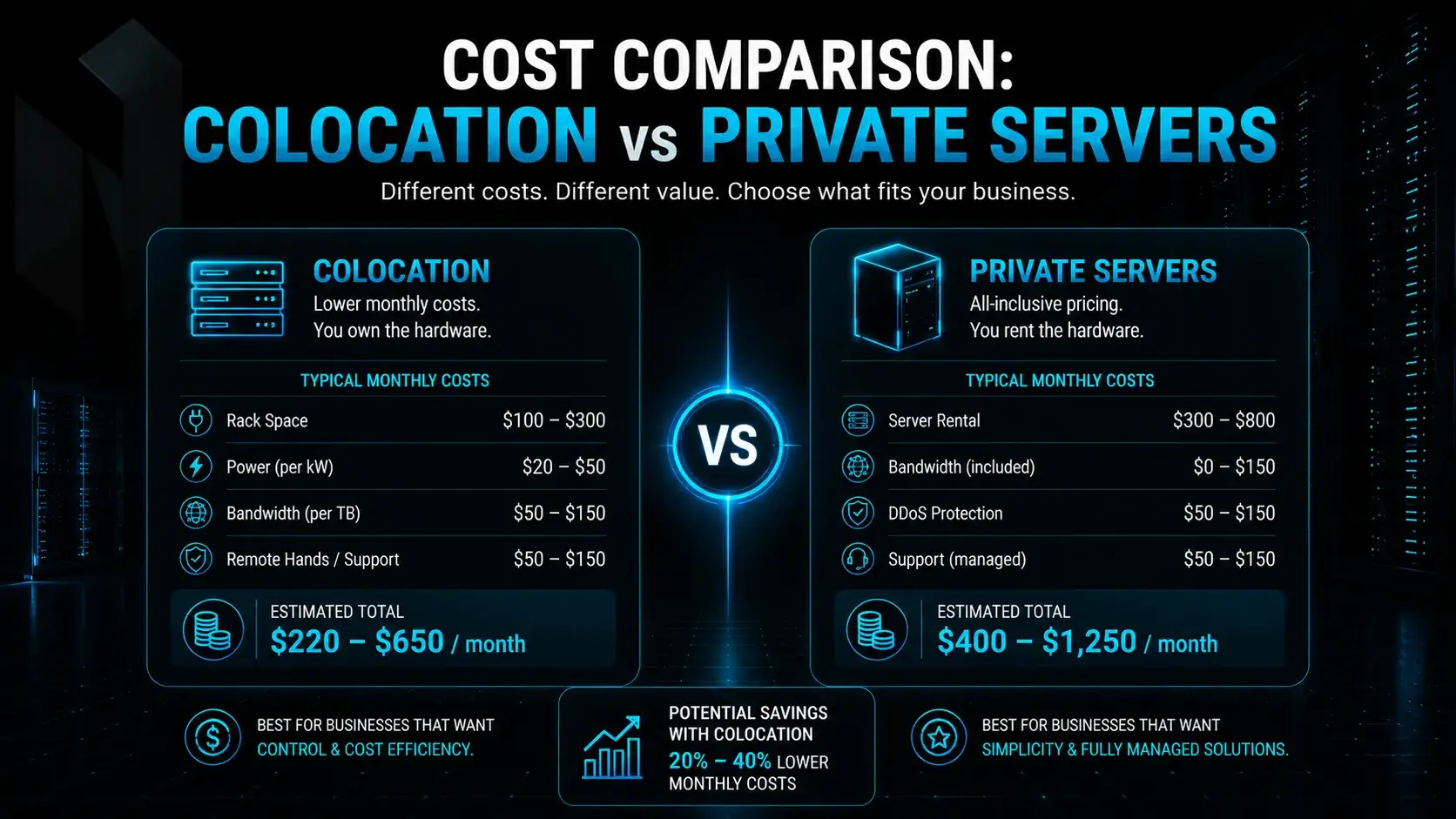
This section explains how pricing works in both models. It focuses on long-term value and hidden expenses.
Colocation server is suitable for established commercial entities with high traffic and strict compliance requirements.
Colocation provides a cost-effective solution for commercial entities by allowing them to share operational costs for power, cooling, and security, which reduces the need for significant capital expenditures associated with building and maintaining a dedicated data center.
Upfront Cost vs Monthly Pricing
Colocation requires large upfront investment. You must purchase servers and networking equipment. However, monthly fees for colocation space are relatively low. This includes power cooling and bandwidth.
Exclusives servers follow a subscription model. You pay predictable monthly fees with no hardware purchase. This makes it easier for budgeting and scaling. It is often more cost effective for smaller commercial entities.
Total Cost of Ownership (TCO)
The TCO of colocation can be lower over time. This is especially true for large enterprises with many systems. Owning self hardware reduces recurring costs in the long run. However, it requires careful planning and maintenance.
Dedicated hosting may cost more over time. Monthly fees add up without building asset ownership. Still, it includes managed services, which reduce internal costs. This balance is important for decision making.
Hidden Costs (Maintenance, Hardware Refresh, Downtime Risk)
Colocation includes hidden costs like hardware upgrades and repairs. You must plan for failures and downtime risk. Spare parts and on site intervention may increase expenses.
Dedicated hosting hides most of these costs in the monthly fee. Providers handle failures and replacements quickly. This reduces operational risks and improves continuous in operation.
Performance, Reliability, and Scalability
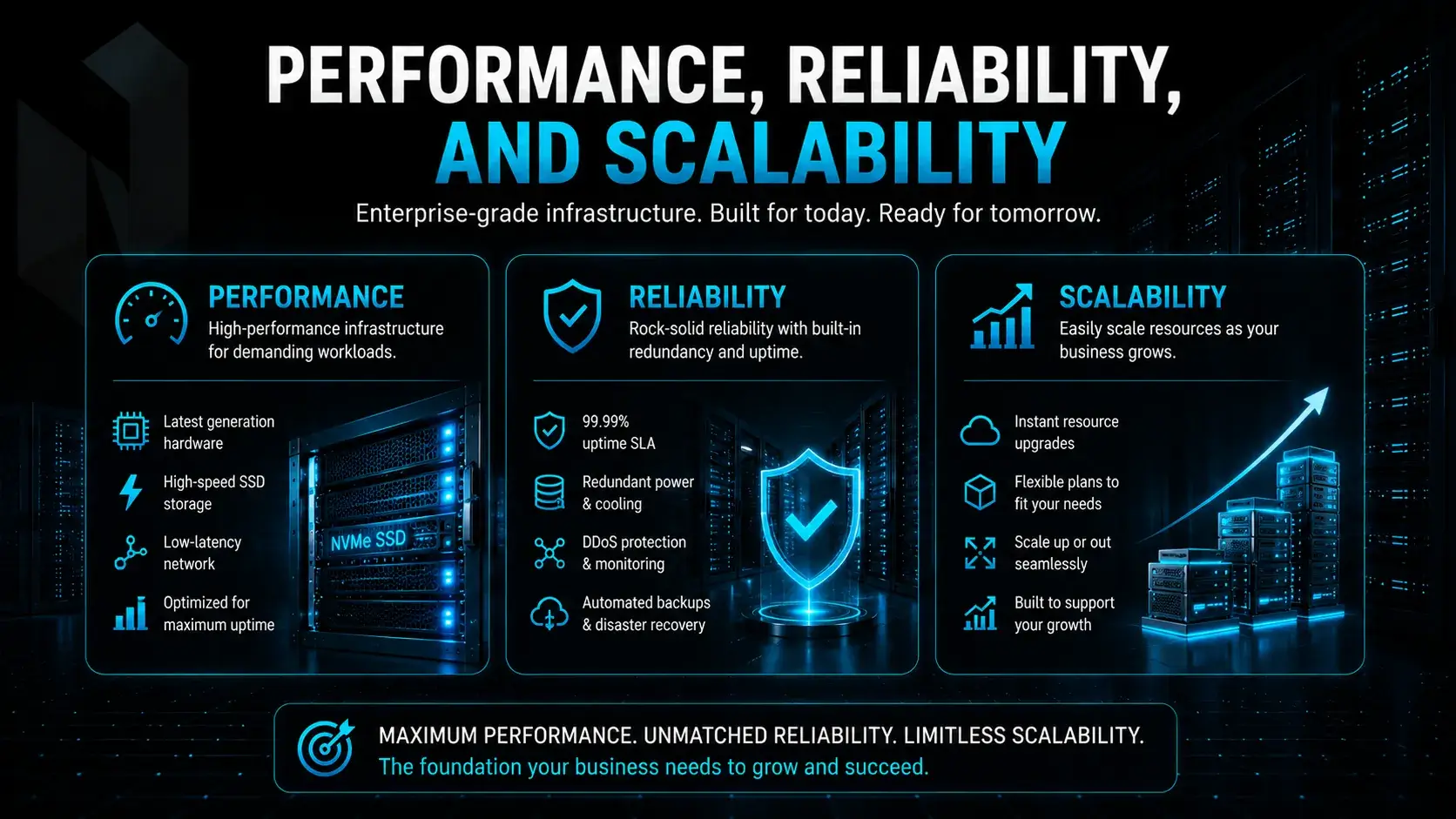
This section focuses on technical performance. It explains how each model handles growth and demand.
Network Performance & Latency
Both models offer strong network of performance in modern carrier hotel facilities. These locations provide direct access to multiple networks. Cross connects and interconnection services improve latency.
Colocation allows custom network optimization. You can choose providers and configure routing. Dedicated hosting offers optimized networks managed by experts. This ensures stable performance for most workloads.
Uptime and Redundancy
Colocation data centers provide redundant PSU, battery backup systems, and fire suppression systems. These ensure high uptime and security. However, uptime also depends on your hardware reliability.
Dedicated hosting includes SLA-backed uptime guarantees. Providers manage redundancy and failover systems. This ensures stable performance without manual intervention.
Scalability for Business Growth
Colocation scaling requires adding new hardware manually. You must install additional servers in your colocation for space. This takes time and planning.
Commercial entities using colocation can adjust their bandwidth without making significant investments, allowing them to respond quickly to increased data processing needs.
Dedicated hosting allows fast scaling. You can deploy new servers instantly. This is ideal for commercial entities experiencing rapid growth or seasonal demand.
Many organizations now use a hybrid cloud strategy, placing sensitive systems in colocation while using the public cloud for scalable applications.
Security and Compliance Differences
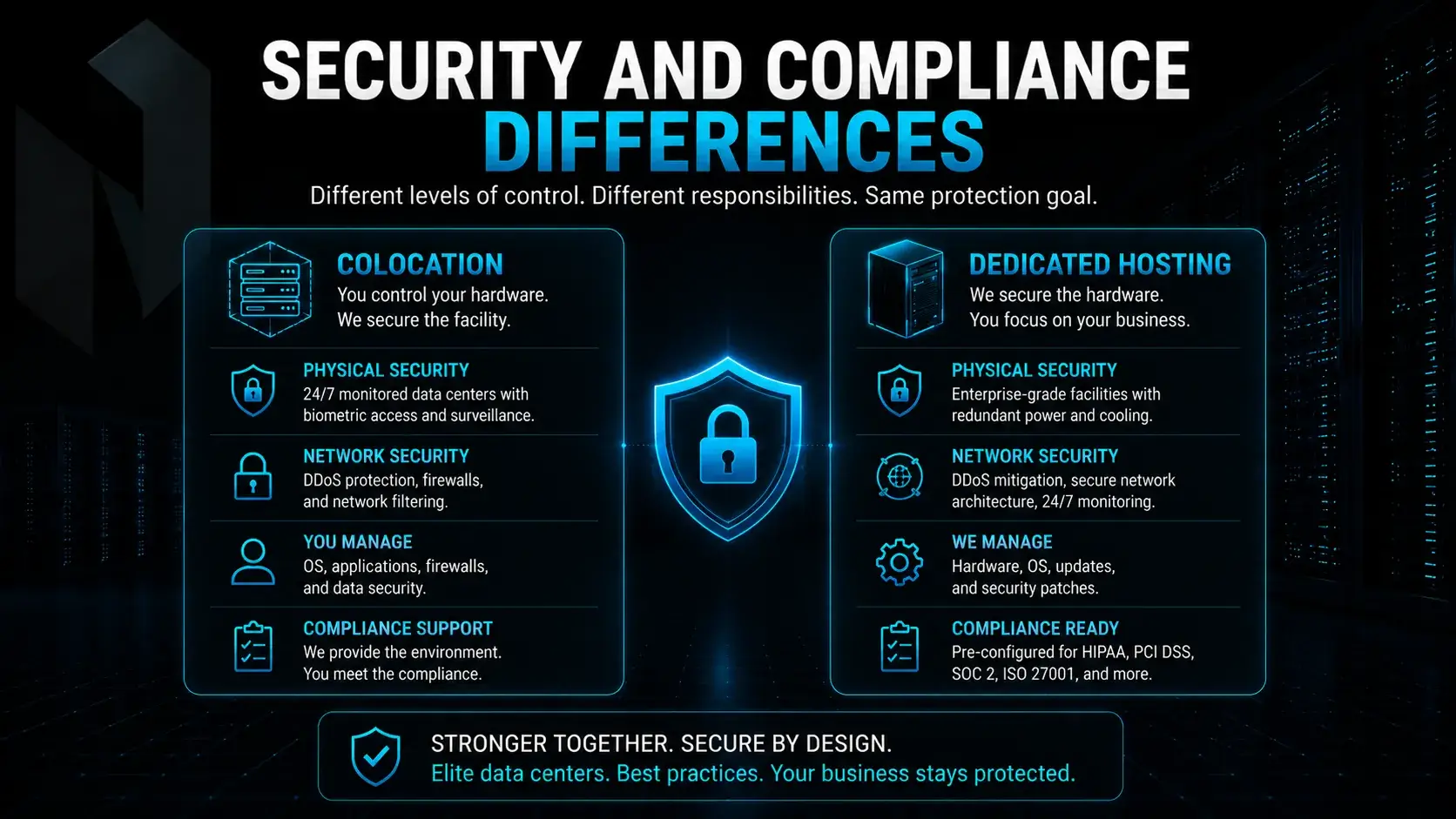
This section explains how each model handles data protection. It focuses on both physical and digital security.
For regulated industries, colocation facilities must hold relevant certifications such as SOC 2, HIPAA, PCI-DSS, or ISO 27001.
Physical Security in Colocation Facilities
Modern colocation facilities provide strong physical security. This includes surveillance, biometric access, and restricted zones. Many also offer private suites for sensitive environments.
You maintain monitor over your hardware security. This is useful for compliance-heavy industries. It ensures that data storage meets strict requirements.
Colocation facilities enforce strict security procedures and higher degrees of physical protection, including video surveillance, private suites, and fire suppression systems to safeguard data and systems from theft and other threats.
Colocation facilities are designed with multi-layer physical protection measures, including perimeter fencing, video monitoring, and biometric access systems, ensuring assets are protected 24/7.
Managed Security in Private Servers
Dedicated hosting includes built-in security features. Providers manage firewalls, monitoring, and updates. Many offer advanced protection through cloud services and integrations.
This reduces the burden on internal teams. It ensures consistent security practices across systems. Commercial entities can focus on operations instead of platform foundation.
Regulatory Compliance (GDPR, Data Protection, Industry Standards)
Colocation is often preferred for compliance. It allows full managed over data and platform foundation. This is critical for finance and healthcare sectors.
Dedicated hosting can also meet compliance standards. Many providers assists regulations like GDPR. However, managing is shared with the provider.
Control vs Convenience: What Do You Prioritize?
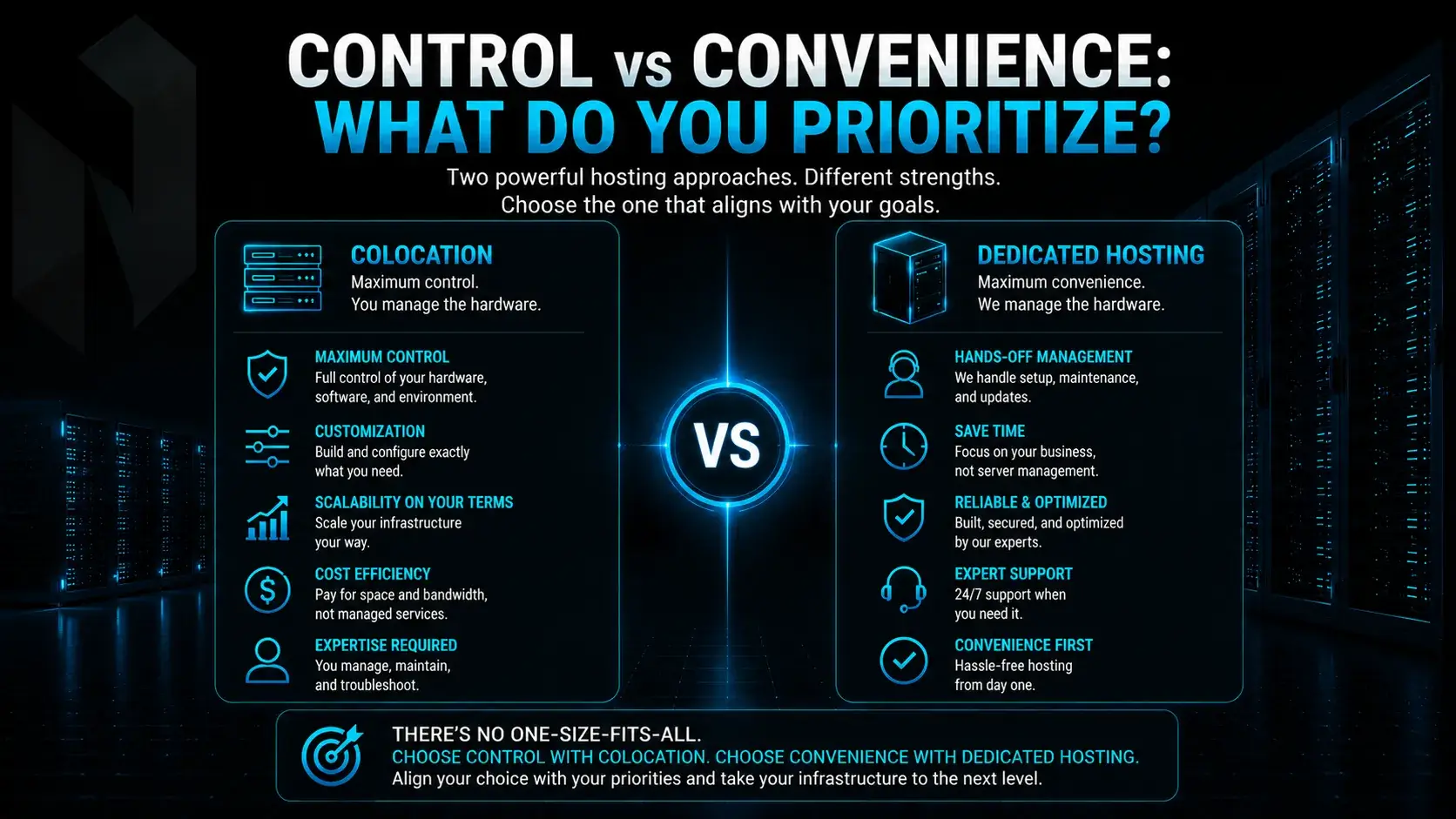
This section helps you decide based on priorities. It compares managed with operational simplicity.
Full Hardware Control (Colocation)
Colocation offers complete control over platform foundation. You decide hardware, software, and configurations. This is ideal for custom environments and specialized workloads.
Fully Managed Infrastructure
Exclusive servers provide convenience. Providers handle hardware and platform foundation management. This reduces workload and simplifies operations.
Finding the Right Balance
Exclusive server for colocation offers a middle ground. It combines control with some managed assists. This model is ideal for commercial entities seeking flexibility without full responsibility.
Which Businesses Should Choose Colocation vs Private Server?
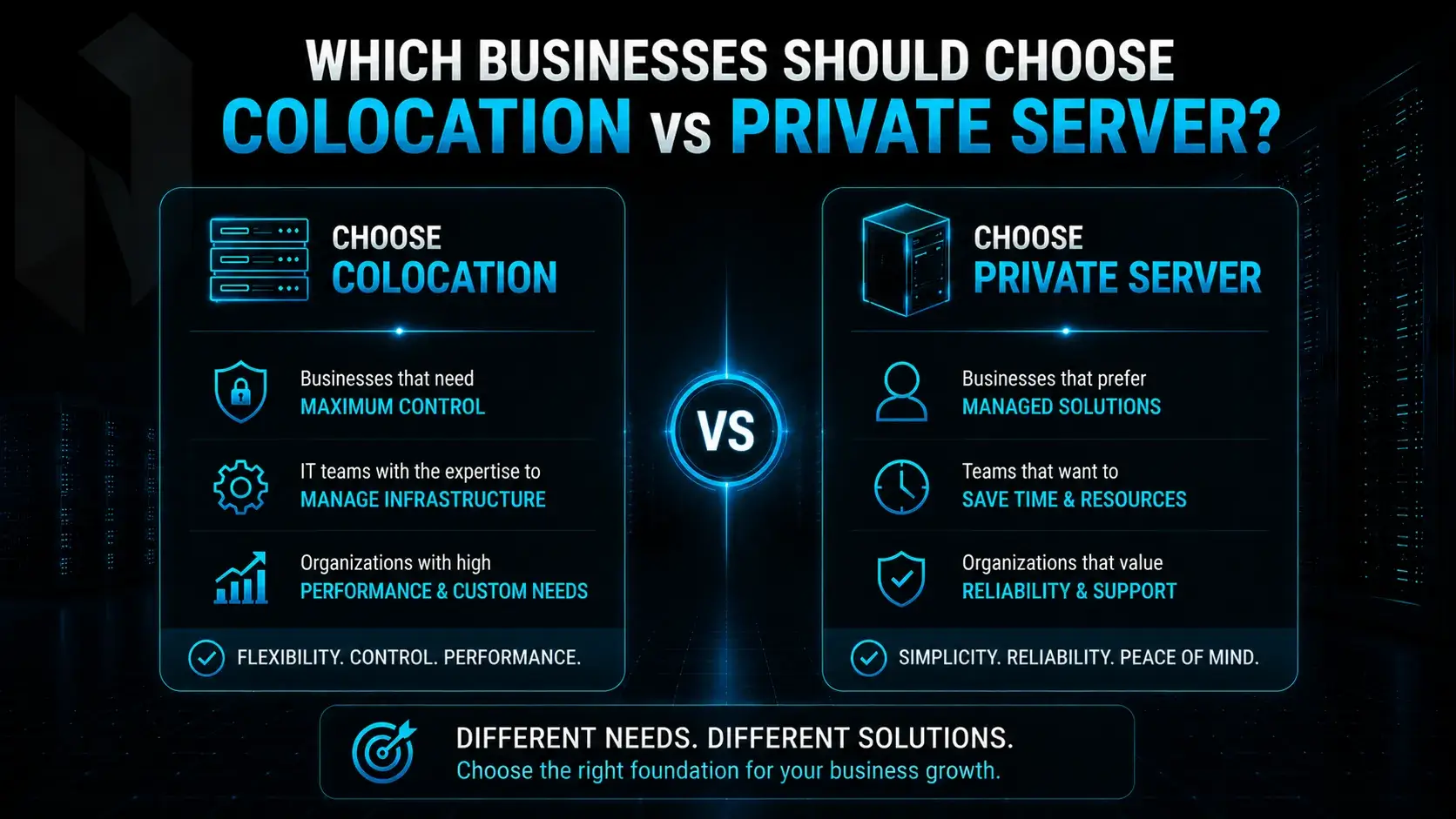
This section explains which model fits different business types. It aligns platform foundation with operational needs.
Best for SMBs and Startups
Dedicated hosting is a strong choice for SMBs and startups that need simplicity and speed. It removes the need to invest in own self hardware or manage complex platform foundation. Providers handle power cooling, network connectivity, and hardware maintenance. This allows small teams to focus on growing their commercial entities instead of managing servers. The predictable monthly pricing also makes budgeting easier and more stable.
In addition, startups can scale quickly by adding more servers as demand increases. This flexibility is important for commercial entities with changing workloads, such as e commerce platforms. Many providers also include assists of technical and optional managed services. This ensures reliable performance without requiring a large IT team. For companies with limited resources, dedicated hosting is a practical and efficient solution.
Best for Enterprises & High-Traffic Applications
Colocation is well suited for large of enterprises and high-traffic applications that require strong performance. It assists high performance of computing and allows full customization of platform foundation. Commercial entities can deploy specialized networking of equipment and optimize network of performance. This level of managing is essential for complex systems and large-scale operations.
Moreover, colocation enables companies to create a dedicated data center environment without building an own facility. By using professional colocation data centers, they gain access to advanced PSU, cooling systems, and secure platform foundation. This ensures stable continuous in operation even under heavy workloads. It is an ideal choice for organizations that need reliability, scalability, and full managed.
Best for Compliance-Heavy Industries (Finance, Healthcare, etc.)
Colocation is often preferred by industries with strict compliance requirements. This includes finance, healthcare, and government sectors. It allows full managed over data storage, hardware, and access policies. Commercial entities can ensure that their platform foundation meets regulatory standards and internal security policies. This is critical for protecting sensitive data and maintaining trust.
In addition, colocation facilities provide advanced physical security and controlled access environments. Features like surveillance, restricted entry, and secure zones help protect critical systems. Companies can also isolate their platform foundation from other tenants using private configurations. This level of control assists compliance with regulations such as data protection laws. It makes colocation a reliable choice for security-focused industries.
Companies can choose a carrier-neutral colocation provider to connect to multiple internet service providers, offering flexibility and redundancy.
When to Choose Colocation Server
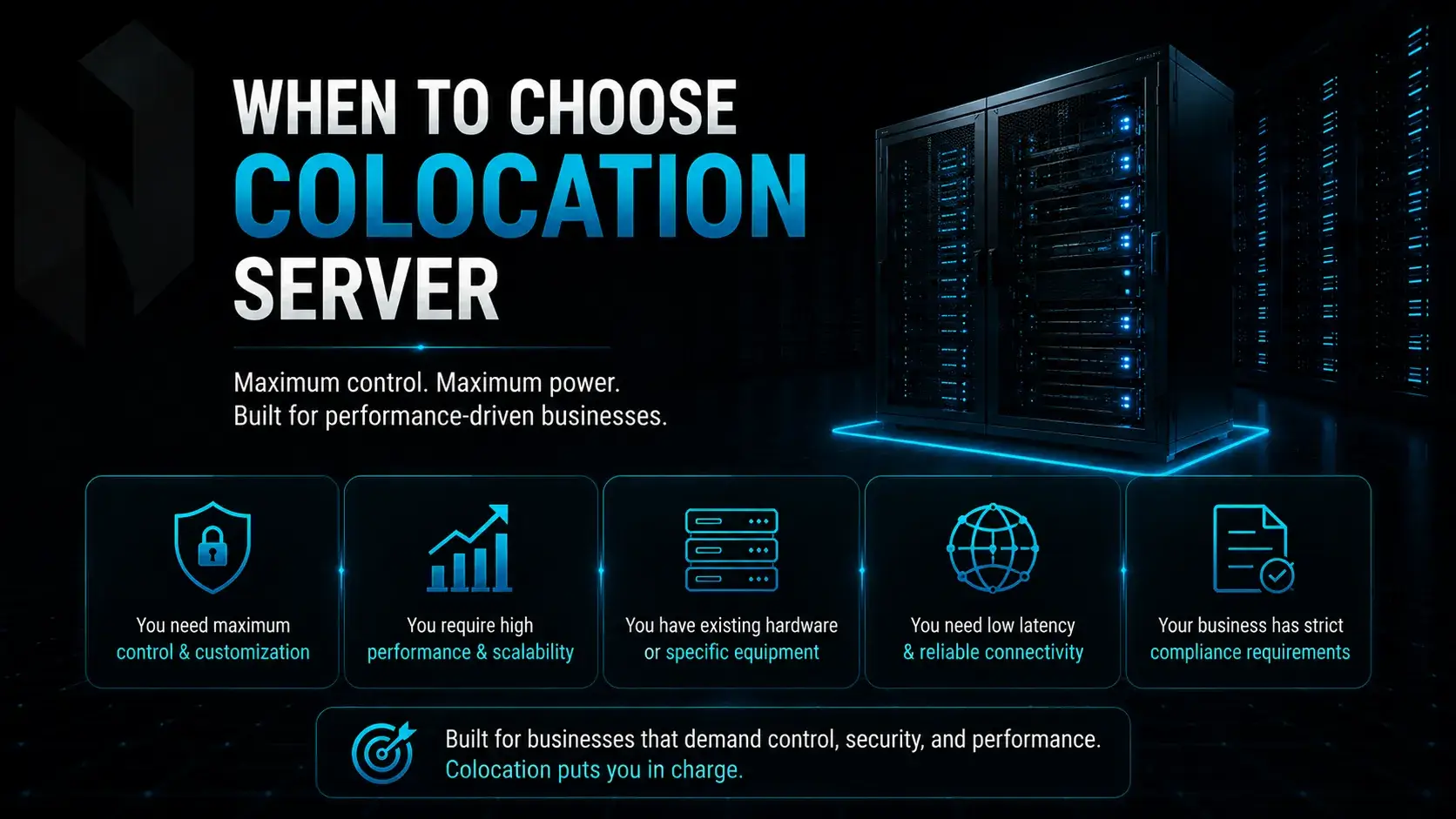
This section highlights specific scenarios. It explains when this hybrid model is most effective.
You Already Own High-End Hardware
If you already have enterprise-grade servers, colocation becomes a practical choice. You can rent space in a professional colocation center and deploy your existing equipment. This allows you to maximize the value of your own self hardware without building an own data center. You also benefit from enterprise-level power and cooling, network connectivity, and secure physical space. Over time, this approach helps reduce long-term platform foundation costs.
In addition, colocation services provide access to advanced data centers with redundant PSU and battery backup systems. You can scale gradually by adding more equipment, such as a single rack or multiple cabinets. Many colocation providers also offer remote hands and technical assists for on-site assistance. This setup ensures efficient continuous in operation while maintaining manage over your platform foundation. It is a strong option for commercial entities that already invested in high-performance systems.
You Need Full Custom Infrastructure Control
Colocation is ideal when full customization is essential for your operations. You have complete control over hardware specifications, operating systems, and networking equipment. This allows you to design infrastructure tailored to specific workloads. It is especially useful for high performance computing, cloud computing, and data-intensive applications. You can also optimize network performance with direct routing and custom configurations.
Furthermore, a colocation of environment assists advanced setups that are not always possible with standard hosting. You can integrate cross connects, direct connections, and hybrid solutions with cloud providers. This level of managing is important for commercial entities handling complex data storage or specialized processing tasks. Many colocation companies also provide flexible colocation for space and private configurations. This ensures your platform foundation aligns perfectly with your technical and operational needs.
When to Choose Hosting Servers Instead
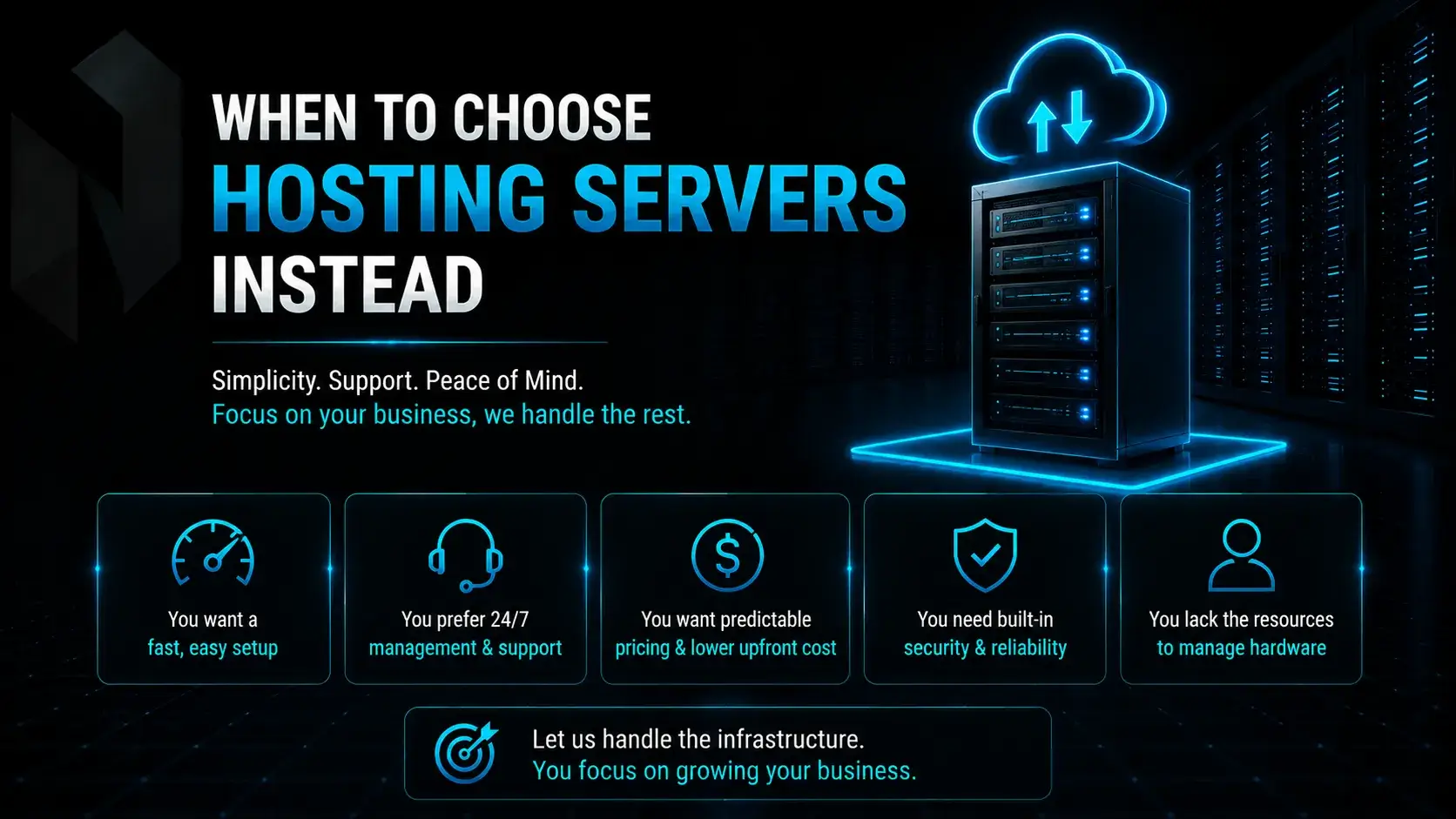
This section focuses on simplicity and speed. It highlights when dedicated hosting is the better choice.
You Want Zero Hardware Management
Private servers are ideal if you want to remove hardware responsibility completely. The provider manages repairs, replacements, and monitoring tasks. This includes handling failures, upgrades, and ongoing maintenance. You do not need to deal with spare parts or on site troubleshooting. This approach allows your internal team to focus on core business operations instead of infrastructure.
In addition, providers often include technical assists and optional managed of services. These services ensure your systems run smoothly with minimal downtime. Issues are handled by highly trained engineers within professional data centers. This setup assists stable continuous operation without adding operational complexity. It is especially useful for companies without dedicated IT resources.
You Prefer Predictable Monthly Costs
Dedicated hosting offers clear and predictable pricing structures. You pay a fixed monthly fee that includes hardware, power cooling, and network of connectivity. This makes financial planning easier and reduces unexpected expenses. commercial entities can scale resources up or down depending on demand. This flexibility supports growth without large upfront investment.
For companies with limited capital, this model is highly cost effective. There is no need to invest in own hardware or build an own data center. Everything is included within the provider’s infrastructure and service level agreement. This ensures stable performance and budgeting consistency. It is a practical choice for startups and growing organizations.
Side-by-Side Comparison Summary
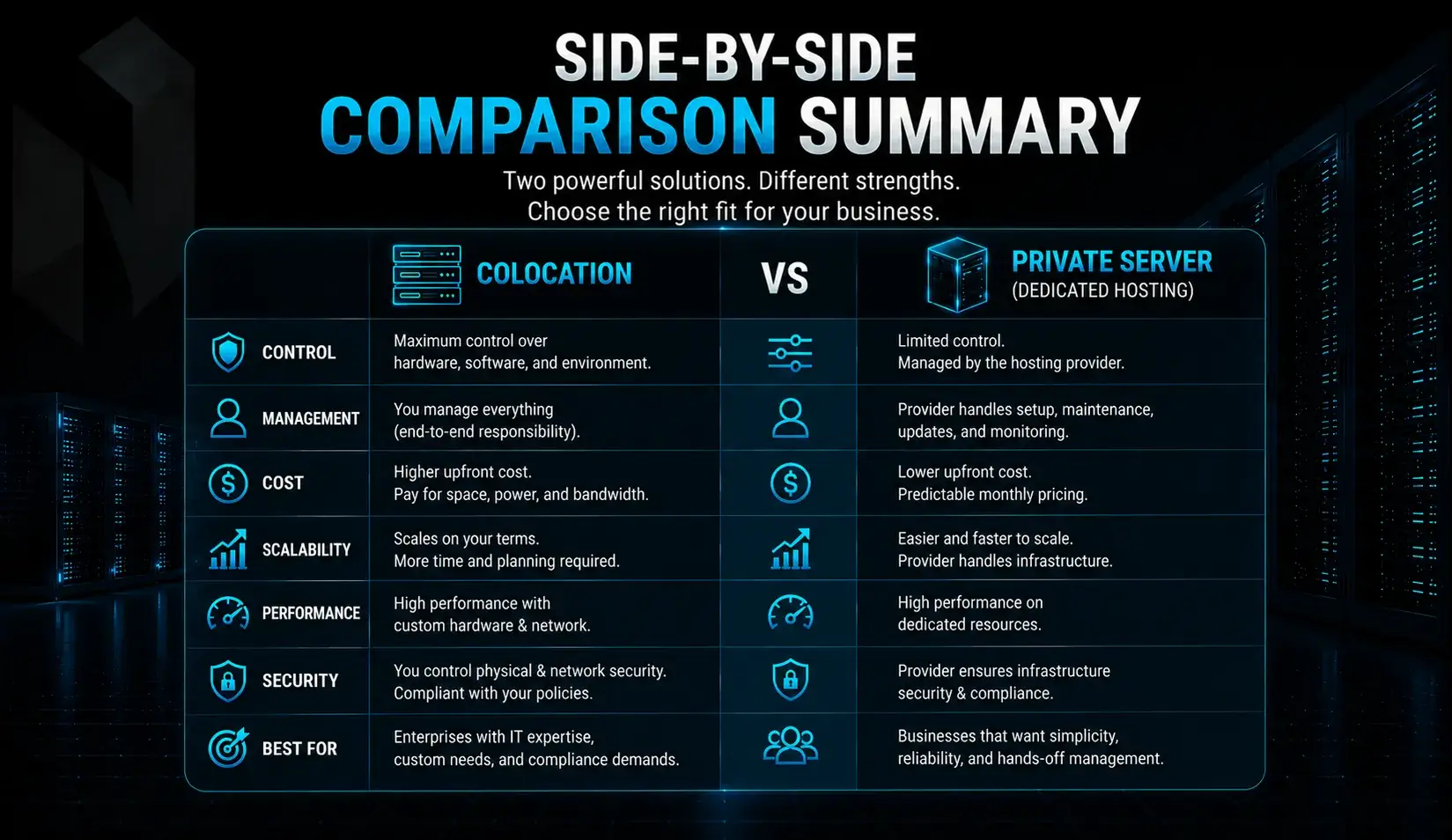
This section summarizes key differences. It provides a quick overview for decision making.
Cost Comparison Overview
Colocation requires a significant upfront investment. You must purchase own hardware, networking gear, and backup components. This includes planning for power supply, redundancy, and future upgrades. However, monthly fees for colocation space are usually lower. Over time, this model can become more cost effective for businesses with stable workloads.
Private server hosting follows a different cost structure. There is little to no upfront expense because you rent the infrastructure. Monthly pricing is predictable and includes power and cooling, hardware replacement, and support of technical. However, long-term costs can increase since you never own the equipment. This makes it suitable for companies prioritizing flexibility over asset ownership.
Control & Flexibility
Colocation provides maximum manage over your infrastructure. You can configure operating systems, hardware, and networking exactly as needed. This is ideal for businesses running specialized applications or high performance computing workloads. You also gain full access to your systems within a secure colocation environment.
In contrast, a private server offers convenience with some limitations. Providers define hardware options and configurations. While customization is available, it does not match the depth of colocation. However, this simplicity allows faster deployment and easier management. It works well for businesses that value speed and efficiency over full managed.
Security & Compliance
Both models operate in secure data centers with advanced physical security systems. These include surveillance, restricted access, and environmental monitoring. In colocation facilities, you maintain direct managed over your hardware. This helps meet strict compliance requirements and protects sensitive data storage environments.
Dedicated hosting simplifies security management. Providers handle updates, monitoring, and infrastructure protection. Many include security as part of their managed services and service level agreement. This reduces risk for companies without dedicated security teams. It ensures consistent protection without adding operational complexity.
Performance & Scalability
Both colocation and private servers deliver strong network performance. They operate within high-quality data centers with optimized bandwidth and network of connectivity. Colocation allows deeper tuning of hardware and network paths. This is beneficial for advanced workloads and custom environments.
Dedicated hosting excels in scalability. You can deploy more servers quickly without managing hardware installation. This assists fast business growth and changing demand. Colocation scaling requires planning and physical setup. However, it provides greater customization for long-term infrastructure strategies.
Support & Maintenance
In a colocation setup, your internal team handles maintenance and troubleshooting. You are responsible for hardware health, upgrades, and replacements. Many colocation providers offer remote hands for basic on-site assistance. However, deep knowledge of your environment remains your responsibility.
Dedicated hosting includes full provider support. The provider manages hardware failures, replacements, and system monitoring. Many also offer advanced assists of technical and proactive maintenance. This reduces workload and ensures continuous operation. It is ideal for businesses that want reliable infrastructure without managing it directly.
Final Decision Guide: Which One Is Better for Your Business?
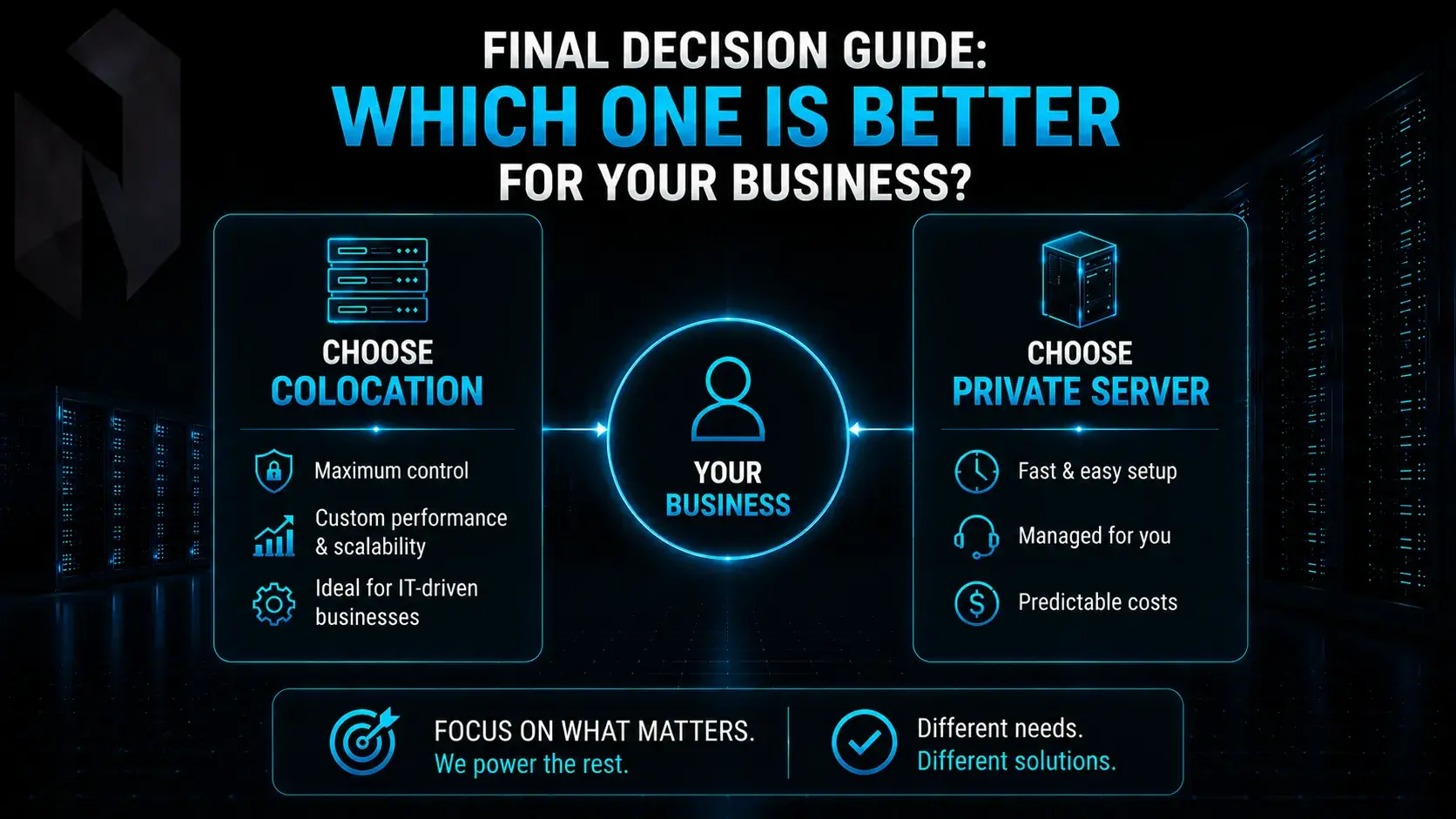
This section helps you make a final decision. It focuses on real business needs.
Businesses using colocation can benefit from enhanced physical security measures, including video surveillance and controlled access, which are typically more robust than what they could implement on their own.
Key Questions Before Choosing
- Do you need full in manage over hardware?
- Do you have an in-house IT team?
- What is your budget for infrastructure?
- How fast do you need to scale?
Decision Based on Budget, IT Resources, and Growth Stage
If you need flexibility and long-term savings, choose colocation. This model allows you to use your own hardware inside professional colocation data centers. You gain full managed over configurations, upgrades, and performance tuning. Over time, this can become more cost effective, especially for businesses running stable workloads. It also helps companies that want to simulate an own data center without building a full facility.
If you want simplicity and fast deployment, choose private server hosting. This option removes the need to manage hardware, power and cooling, and maintenance tasks. Providers deliver ready-to-use infrastructure with strong network connectivity and built-in technical of support. For a balanced approach, consider private server for colocation as a hybrid model. It combines the manage of colocation with the convenience of managed infrastructure, making it suitable for growing businesses that need both flexibility and efficiency.
Which option is best for you?
When determining which application are best suited for your business, there is no right answer. Instead, it is important to understand your options, your (business)needs and what requirements you need to create the most effective and efficient IT infrastructure for your businesses.
Netrouting is here to help you make the right decision for your business needs. Our experts are happy to assess your business needs with you to help improve your business’ IT infrastructure. Please contact us at sales@netrouting.com or +31 (0)88 270 02 00