Trying to choose between shared hosting and a dedicated server? It is a classic dilemma that almost every growing online business eventually faces. While both of these infrastructures ultimately get your website online and accessible to the public, they cater to wildly different needs, budgets, and technical capabilities. Making the right choice is absolutely critical, as your hosting environment directly impacts your site's speed, user experience, and even your search engine optimization (SEO) rankings. Search engines heavily penalize slow-loading sites, making your underlying infrastructure and chosen hosting package a cornerstone of your digital strategy.
Picture shared hosting as renting a small apartment in a massive, bustling high-rise building. You share the core utilities, the plumbing, the electricity, and the elevators, with hundreds of your neighbors. In the digital realm, this translates to sharing a single server's CPU, RAM, and bandwidth. It is incredibly cheap, straightforward, and perfect for getting a brand-new project off the ground without breaking the bank. A dedicated server, on the other hand, is like owning a massive, gated private estate. You do not share a single thing. This isolated setup gives you your own server, complete with complete control, infinitely tighter security, and serious performance capabilities capable of handling intense data routing or massive e-commerce traffic spikes.
Ultimately, analyzing the key differences between the two boils down to evaluating your budget, monitoring your daily traffic volume, and deciding exactly how much complete control you actually want over your backend systems. A deep dive into shared hosting vs dedicated server environments reveals that the choice you make will define the trajectory of your digital growth.
Blog contents
What is shared hosting?
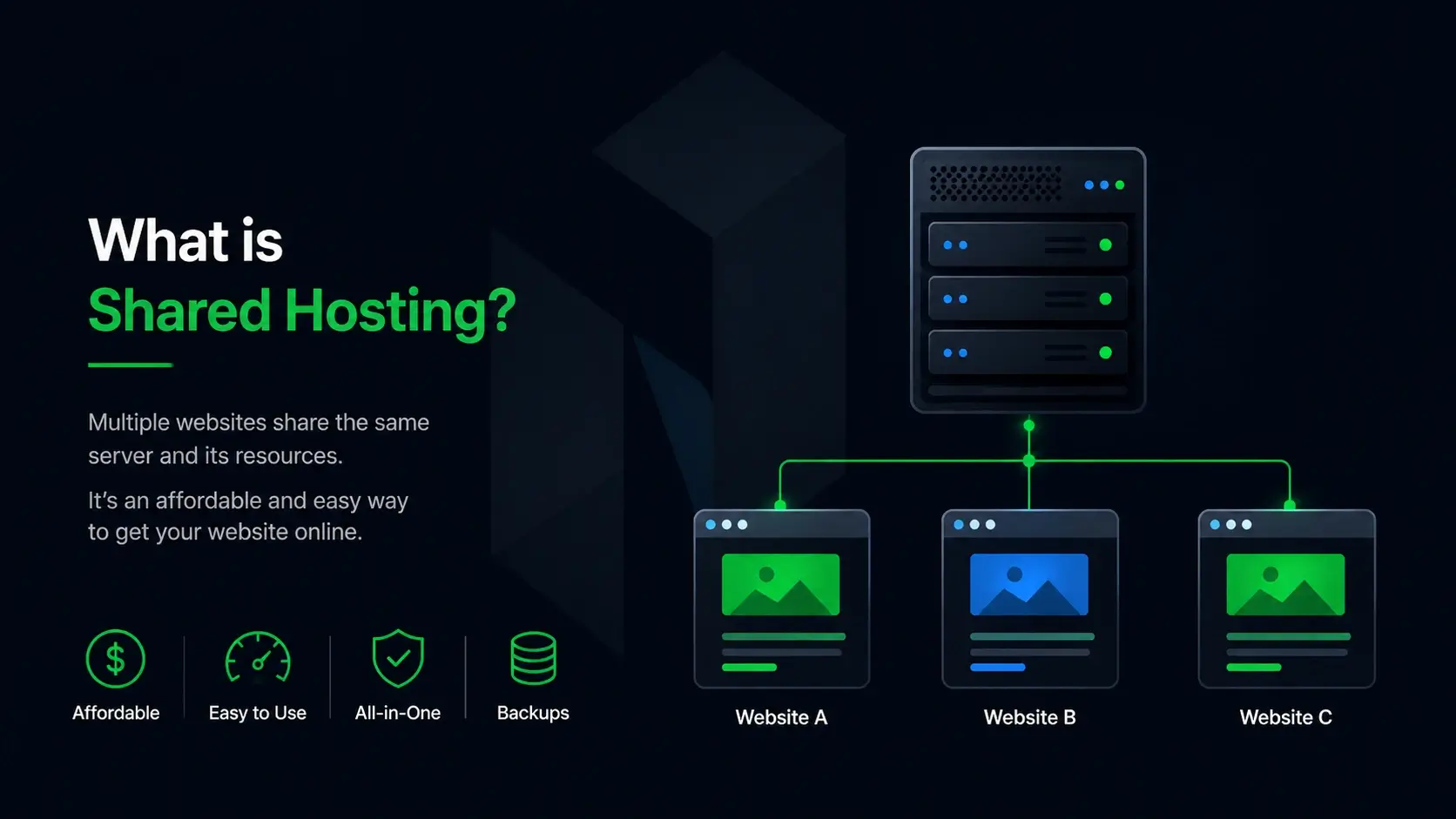
Simply put, shared hosting packs multiple websites onto a single physical server. Everyone dipping into this environment utilizes the same server resources to keep their digital storefronts running. It is the most ubiquitous form of web hosting on the internet today, primarily because it dramatically lowers the barrier to entry for individuals and small businesses who aren't quite ready for a dedicated server.
The underlying beauty of this setup is that the infrastructure provider takes care of all the heavy lifting and backend management. They handle the complex server maintenance, apply necessary security patches across the network, and manage systemic updates. Because the provider manages the hosting server completely, you do not need to be a seasoned system administrator or a networking guru to get your site running smoothly. Because the hardware and operating costs are split among dozens, sometimes hundreds, of multiple users, it stands as an incredibly cost effective hosting solution compared to premium dedicated server hosting.
Most website hosting providers offer highly competitive shared hosting plans bundled with attractive perks. It is incredibly common to find packages that include a free domain for your first year, free SSL certificates to secure your user data, and plenty of disk space for a standard site, all managed via user friendly control panels like cPanel or Plesk. These dashboards allow for easy website management without ever needing to touch a command line.
The catch? Because you are functioning on the same server, if a neighboring site suddenly goes viral and hogs the bandwidth, your site's performance might take a severe hit. That shared ecosystem is the fundamental bottleneck when comparing shared and dedicated hosting, highlighting why high-demand operations eventually must migrate away from sharing a single server.
Who uses Shared Hosting?
If you are launching personal blogs, a localized startup portfolio, or a small business website that serves a specific community, shared hosting is usually your absolute best bet. It is tailor-made for website owners who simply want a functional, attractive digital presence without navigating a steep technical learning curve.
Many shared hosting providers actively target entrepreneurs, hobbyists, and freelance creators who require a reliable hosting package without the overwhelming complexity of managing infrastructure. If your daily visitor count is relatively low to moderate, say, under a few thousand visitors a month, jumping straight to a virtual private server (VPS hosting) or an entire server is likely massive overkill and a waste of financial resources. It provides a comfortable, secure sandbox for early-stage growth.
Benefits of shared hosting
Shared hosting plans remain massively popular because they are practical, widely accessible, and require very little friction to deploy. It is the logical, traditional starting point for almost every website before traffic demands force scaling up.
Affordability
This is the big one. Sharing the server space means splitting the bill. Shared hosting is generally more affordable than dedicated hosting because the costs related to server upkeep are shared among multiple users, while dedicated hosting requires payment for an entire server and its exclusive resources. By dividing the massive hardware and bandwidth costs across a wide user base, a website hosting provider can offer these plans for just a few dollars a month. As of 2025, entry-level shared hosting pricing usually starts at around $2 per month, making it a cost-effective option for small businesses and personal sites. It is by far the most cost effective way to carve out your corner of the internet, allowing startups to allocate their precious capital toward marketing, outreach campaigns, and content creation rather than expensive server costs.
Beginner-friendly
You absolutely do not need to know how to code, configure an operating system, or manage complex network routing to thrive here. Modern, user friendly control panels make handling software installations, setting up professional email accounts, and managing databases a simple, one-click affair. This frictionless environment allows users with zero technical skills to build and maintain beautiful websites with ease.
Eco-friendly
There is a distinct environmental advantage to this model. Maxing out the capacity of a single physical server means fewer idle machines constantly running and drawing power in massive data centers. By densely packing multiple websites onto shared infrastructure, the hosting industry significantly reduces its overall energy consumption, translating to a much smaller carbon footprint per website compared to every small blog running on its own dedicated hardware.
Limitations of shared hosting
While it is a fantastic launchpad for new ideas, a shared environment does have a hard ceiling. As your online presence expands, your SEO efforts pay off, and your traffic surges, the cracks in a shared architecture will rapidly start to show.
Shared resources
Because you are sharing processing power and memory, sudden traffic spikes on someone else's website can unexpectedly drag your load times down. This "noisy neighbor" syndrome is the most frustrating aspect of this hosting type. If another user on the same physical server runs a heavy script or gets hit by a sudden influx of visitors, your site's performance degrades instantly, potentially costing you hard-earned search engine rankings and frustrating your visitors.
Less control
You are fundamentally playing in the host's sandbox, meaning you must abide by their rules and limitations. You simply do not have the root access or administrative permissions required to deploy proprietary applications, deeply tweak the hosting environment, or optimize the server settings for specific frameworks. Unlike dedicated hosting, where you dictate the rules, here you must adapt to whatever the host has configured.
Security risks
While reputable hosts work incredibly hard to isolate individual user accounts within a shared space, sharing a machine inherently carries a slightly higher baseline risk. If a critical vulnerability exposes the hosting server through another user's outdated plugin or weak password, your site could potentially be caught in the crossfire. You lack the advanced security features and total isolation that come with owning the entire infrastructure.
What is dedicated hosting?
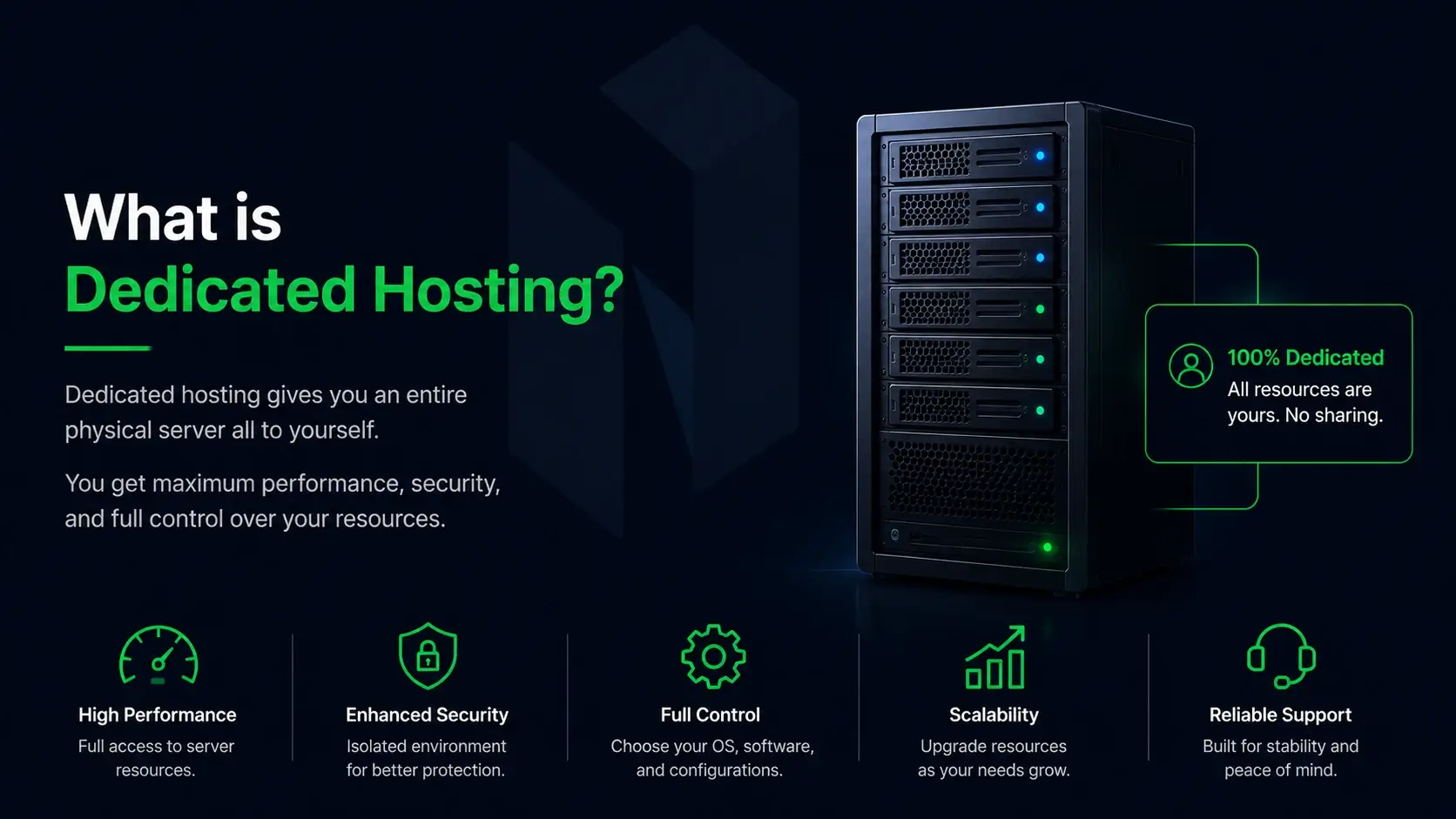
Dedicated hosting is exactly what it sounds like: a whole physical server dedicated exclusively to you and your digital assets. No roommates. No shared resources. No noisy neighbors slowing down your critical operations.
The result? Uncompromised speed, rock-solid stability, and the absolute freedom to configure the hosting environment exactly how your specific application demands. You aren't competing for processing power, which leads to wildly better reliability and uptime. Furthermore, you call the shots on the operating system, the firewall rules, the security protocols, and the entire software stack. A dedicated server gives you the raw horsepower necessary to run complex databases, manage high-volume data routing, or host multimedia-heavy enterprise platforms without breaking a sweat.
Who uses Dedicated Hosting?
This is strictly enterprise and high-end professional territory. E-commerce giants, SaaS platforms, complex technical routing networks, and large organizations rely heavily on dedicated hosting plans to keep things running perfectly smooth during massive, unpredictable traffic surges.
It is also an absolute, non-negotiable necessity if you are handling highly sensitive data, like medical records or massive volumes of payment information, or running specialized software that a restricted, shared environment simply cannot support. When downtime equates to massive revenue loss, or when a slow time-to-first-byte (TTFB) destroys an outreach and SEO campaign, serious businesses migrate to their own dedicated resources.
Benefits of dedicated hosting
When you reach the point where you need raw, unadulterated power and absolute architectural flexibility, dedicated web hosting delivers on every front. The dedicated hosting offers unmatched capabilities for scaling operations.
Exclusive resources
With 100% of the server's processing power, RAM, and bandwidth at your complete disposal, performance bottlenecks caused by other users are a thing of the past. You have exclusive access to everything the machine can output. Whether you are running complex data queries or serving high-definition video to thousands of concurrent users, your own dedicated resources ensure that your platform remains blazing fast and perfectly responsive under heavy load.
Increased security
In a dedicated setup, you aren't sharing an IP address, a hard drive, or an operating system with anyone else. This fundamental isolation drastically reduces your exposure to malicious cross-site attacks and shared vulnerabilities. Furthermore, you can implement highly advanced security features, custom firewalls, and stringent intrusion detection systems tailored exactly to your threat model, making it the premier choice for protecting sensitive data.
Customization options
Having root access means you have the proverbial keys to the entire castle. You can modify absolutely anything. Do you need a highly specific database version, a custom caching layer, or the ability to deploy proprietary applications that isn't supported on standard platforms? With complete control over your own server, you can meticulously craft and optimize your server configurations to match your exact technical specifications without asking anyone for permission.
Limitations of dedicated hosting
All that immense power and freedom comes with its own set of serious challenges. Running an whole physical machine requires a significant investment, both financially and technically. It is not for the faint of heart.
Higher cost
You are entirely responsible for footing the bill for the entire physical machine, its housing in the data center, the network connection, and the electricity it consumes. It is a massive jump in cost compared to a basic shared plan. In 2025, prices for dedicated servers typically start at $100 to $284 per month, depending on the level of maintenance provided by the hosting company. Dedicated server hosting is a premium service, and you must ensure that your revenue, business model, and web traffic truly justify the substantial monthly expense before making the leap.
Technical expertise
Unless you are willing to pay a significant premium for a fully managed hosting solution, you need serious technical expertise to keep the system secure, optimized, and running. You must possess the technical knowledge to navigate command-line interfaces, securely configure firewalls, and troubleshoot complex backend errors. It demands advanced technical skills that most average website owners simply do not possess.
Maintenance tasks
With great power comes great responsibility. Routine server maintenance, executing crucial daily backups, applying complex software updates, conducting 24/7 monitoring, and troubleshooting sudden hardware or software failures fall squarely on your shoulders. Unlike shared hosting, where the provider acts as a safety net, managing an entire server means you are your own IT department.
How to Choose the Right Hosting Option for Your Business?
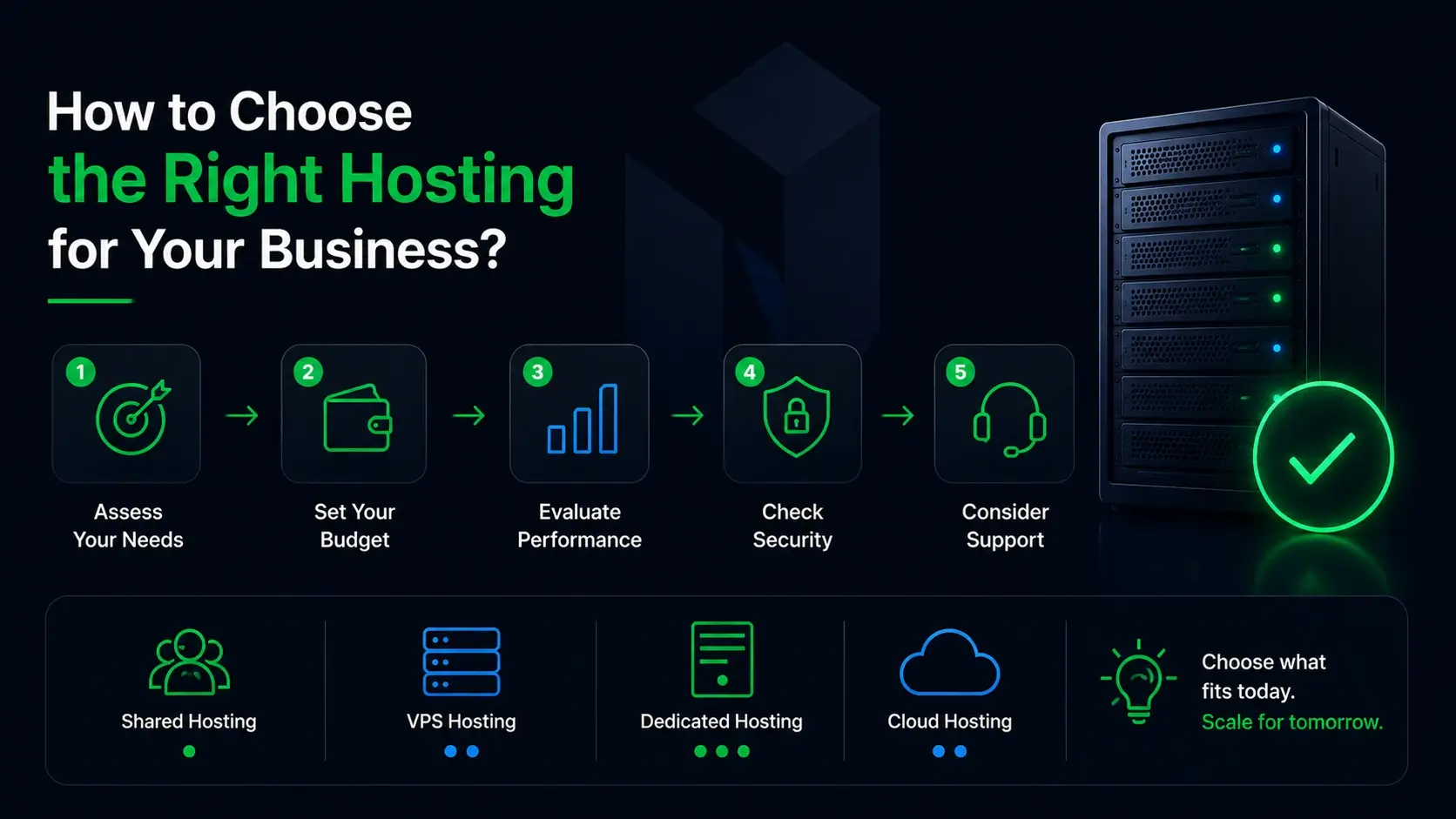
Finding the absolute perfect fit for your digital infrastructure requires a brutally honest look at your current metrics, your available capital, and your long-term operational goals. Understanding the key differences between shared hosting vs dedicated server architectures is just step one.
1. Consider your resource needs
You must deeply evaluate exactly how much CPU power, RAM, and bandwidth your website actually consumes on a daily basis. Dive into your current analytics. A small informational site or a localized blog thrives perfectly well on a shared server where multiple users share resources. However, if you manage high traffic websites, complex web applications, or data-heavy platforms, an entire server or a robust virtual private server provides the dedicated resources necessary to maintain optimal website performance.
2. Evaluate your budget
Your available capital plays a massive role in this decision. Shared hosting is undeniably more cost effective, allowing you to establish a footprint for mere pocket change. Conversely, dedicated hosting plans require a much higher financial investment since you are leasing an entire server with exclusive access. You must weigh the cost against the potential return on investment that improved speed and reliability will bring.
3. Assess the performance requirements
If your entire business model depends on lightning-fast speed and unshakeable uptime, perhaps you are running an SEO-driven content hub where bounce rates destroy rankings, performance is incredibly critical. In shared environments, your site's performance can and will be negatively affected by other websites. With a dedicated server, performance remains flawlessly stable because you do not share the same server resources with anyone else.
4. Determine the necessary features
Take inventory of your technical prerequisites. If your web developer insists that you need root access, highly custom server configurations, or the explicit ability to install custom software and unique routing scripts, then dedicated hosting is the only viable choice. For basic needs, standard shared hosting plans usually include all the standard features like free SSL certificates, automated backups, and user friendly control panels that are more than sufficient.
5. Consider your technical knowledge
Be honest about your internal capabilities. If you or your team have limited technical knowledge regarding system administration, a managed shared environment is vastly easier to operate. If you have deep technical expertise or the budget to hire a dedicated systems administrator, a dedicated server gives you the ultimate flexibility and more control over every facet of your digital delivery.

Finding a hosting provider, you can trust!
Choosing a reliable hosting provider is arguably just as important as choosing the correct hosting type. You are essentially picking a long-term business partner. Look incredibly closely for a hosting company that offers rock-solid, financially backed uptime guarantees, exceptionally strong 24/7 technical support, and highly scalable infrastructure options.
Most web hosting providers offer clear upgrade paths, meaning you can seamlessly move your hosting account from a basic shared setup to VPS hosting, and eventually to dedicated hosting as your enterprise expands. Finding a provider that allows for this vertical scaling means you won't have to endure painful, complicated migrations to a different company when you finally outgrow your initial setup. Read reviews, test their support response times, and examine their hardware specifications before committing.
The Core Differences Between Shared and Dedicated Hosting
When analyzing shared hosting vs dedicated hosting, the core, fundamental difference is isolation versus communal living. Shared hosting relies on utilizing one server to power multiple websites simultaneously, meaning everyone fights for the same pool of processing power. A dedicated server, however, gives one single user exclusive access to an entire physical server, offering radically better performance, profound stability, and ultimate administrative control over the hardware.
The Key Advantages of Shared Hosting
Shared hosting is phenomenally affordable, incredibly easy to set up, and allows you to manage websites with virtually zero technical knowledge. The hosting provider handles all the complex backend infrastructure, making it the perfect, stress-free launchpad for beginners and small businesses looking to establish their first digital presence quickly.
The Primary Benefits of Dedicated Hosting
Dedicated hosting delivers raw, unadulterated computing power and absolute freedom. You receive elite, unthrottled performance, substantially stronger security perimeters since you aren't sharing hardware, and complete, unrestricted control over your server configurations with the ability to install custom software completely tailored to your ecosystem.
The Main Limitations and Disadvantages of Shared Hosting
The most glaring disadvantage is the strict limitation on more resources and physical server access. Because you share the machine with dozens of other sites, your website's performance can plummet unpredictably if those other websites suddenly experience massive traffic surges and consume too much of the shared processing power.
Upgrading from Shared to Managed Hosting
The vast majority of reputable web hosting providers offer seamless, built-in upgrade paths from basic shared hosting to more robust VPS hosting or fully dedicated hosting environments. This allows you to scale your server space and processing power precisely as your web traffic and business needs grow over time.
The Benefits of a Dedicated IP Address in Dedicated Hosting
A dedicated IP address, which comes standard with an entire server, drastically improves your digital reputation. It helps guarantee that your critical business emails do not end up flagged in spam folders because of another user's bad behavior, it bolsters your SSL security implementations, and it grants you direct, uninterrupted access to your hosting server and server settings even if complex DNS routing issues temporarily occur.